
California, often referred to as the Golden State, represents a vibrant tapestry of cultures, unparalleled natural beauty, and economic opportunity. From the sun-kissed beaches of Southern California to the majestic forests of the north, and from the bustling tech hubs of Silicon Valley to the agricultural heartland, the state beckons countless individuals seeking a new chapter in their lives. However, merely moving to California does not automatically confer residency status. Establishing official residency is a nuanced process, critical for accessing a multitude of state benefits, from in-state tuition at public universities to various social services, and for fulfilling tax obligations. Understanding the intricate definitions, requirements, and practical steps is paramount for anyone planning to make this dynamic state their permanent home.
The journey to becoming a California resident is not just about physical relocation; it’s about demonstrating a clear and unequivocal intent to integrate into the state’s fabric and commit to its laws and community. This comprehensive guide will delve into the essential criteria, practical steps, and significant implications involved in establishing California residency, providing a clear roadmap for your transition. Whether you’re moving for work, education, or simply to embrace the California lifestyle, a thorough understanding of these processes will ensure a smoother and more successful transition.
Understanding California Residency: Defining Domicile and Intent
At the core of California residency lies the concept of “domicile” and the demonstration of “intent to remain indefinitely.” These are not merely legal terms but represent a fundamental shift in one’s primary allegiance and permanent home. Unlike simple residence, which can be temporary, domicile signifies your true, fixed, and permanent home, where you intend to return whenever you are absent.
Domicile vs. Residence: A Key Distinction
It’s crucial to distinguish between mere “residence” and “domicile.” You can have multiple residences, perhaps a vacation home in Lake Tahoe and a primary home in San Francisco, but you can only have one domicile at any given time. Your domicile is the place you consider your true home, the center of your personal, social, and economic life. For the purposes of California residency, particularly concerning matters like taxation or in-state tuition, the state assesses where your domicile is. If you’re physically present in California but maintain significant ties (like voting registration, driver’s license, or bank accounts) in another state, you might be considered a resident for some purposes but not domiciled in California.
To establish domicile in California, two primary elements must be satisfied:
- Physical Presence: You must be physically present in California. This means you have actually moved to the state and are living within its borders. There isn’t a strict minimum duration, but a substantial and continuous physical presence is generally expected. For many, this begins when they find suitable accommodation, whether it’s a long-term apartment rental in Los Angeles or purchasing a home in San Diego.
- Intent to Remain Indefinitely: This is arguably the more critical and often more complex element. It requires a clear demonstration of your intention to make California your permanent home and to abandon your prior domicile. This intent cannot be fleeting or temporary; it must be genuine and enduring.

Demonstrating Intent to Remain
Proving intent isn’t a single action but a culmination of multiple actions and choices that collectively paint a picture of your commitment to California. The state looks for objective evidence, not just subjective statements. Here are key indicators that can demonstrate your intent:
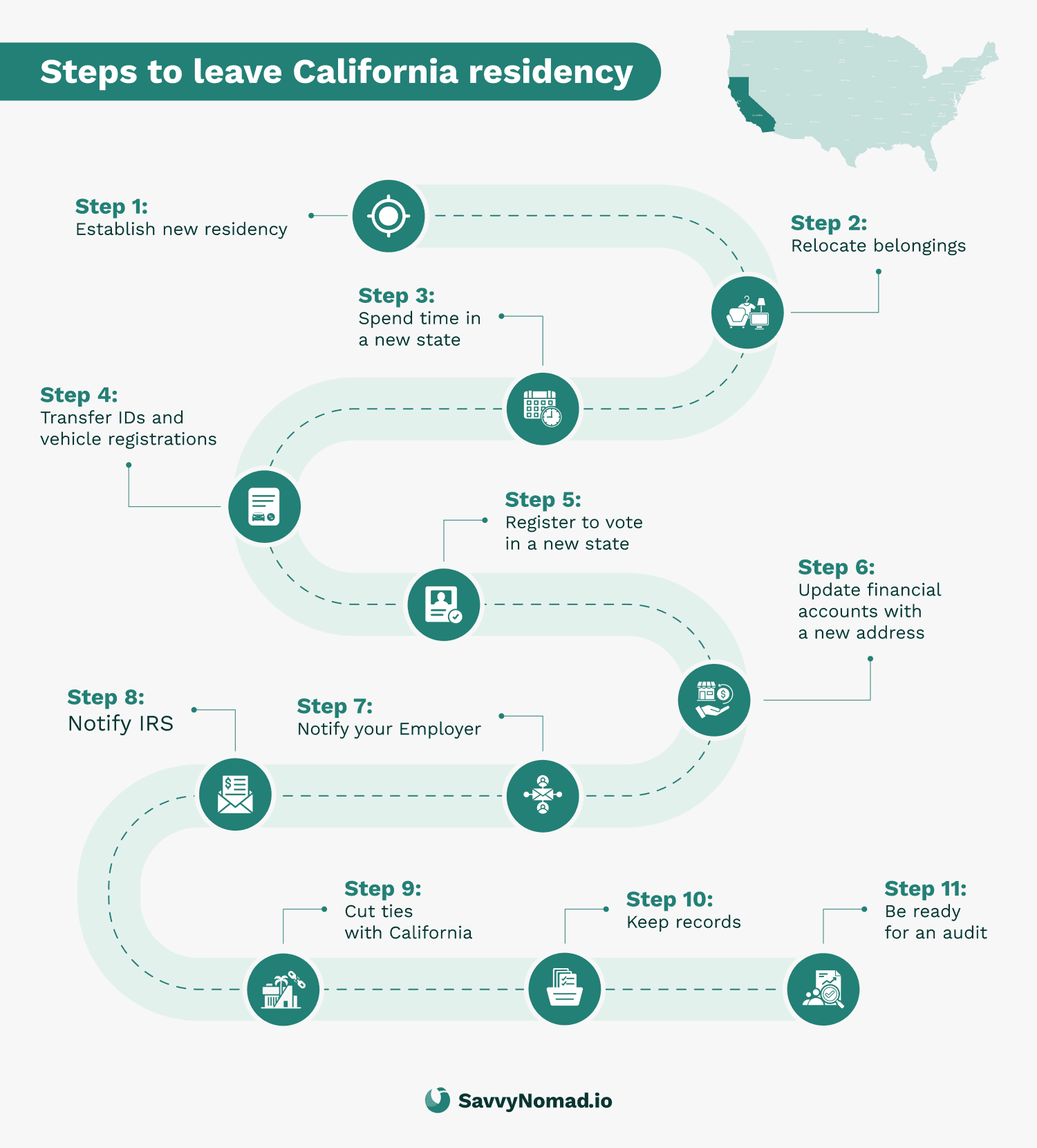
- Severing Ties with Former State: This is crucial. If you intend to be a California resident, you must cut significant ties with your previous state of domicile. This includes surrendering your old driver’s license, changing your voter registration, closing bank accounts in your former state, and updating all mailing addresses.
- Establishing Ties in California: Conversely, you must proactively establish significant ties within California. This is where the practical steps detailed below come into play. Your actions should clearly indicate that California is where you conduct your daily life, pay taxes, and participate in community affairs.
- Duration of Physical Presence: While no specific time frame is mandated for domicile, a continuous physical presence over a substantial period strengthens your claim. For instance, public universities often require a full year of physical presence combined with demonstrated intent before granting in-state tuition status.
The concept of intent is fluid and can be challenging to prove if your actions don’t align with your stated intentions. It’s an ongoing process of aligning your life choices with your desired residency status.
Practical Steps to Establish California Residency
Once you understand the fundamental concepts of domicile and intent, the next phase involves taking concrete, verifiable steps to solidify your residency status. These actions provide the necessary evidence to state authorities, demonstrating your commitment to California as your permanent home. They range from official documentation to integrating into the local economic and social fabric.
Official Documentation and Registrations
These are often the first and most critical steps, providing official proof of your new domicile.
- Obtain a California Driver’s License or ID Card: This is perhaps the most significant single action. Upon moving to California, you generally have 10 days to apply for a California driver’s license if you intend to drive, or an identification card. This process involves visiting the California Department of Motor Vehicles (DMV), surrendering your out-of-state license, passing relevant tests, and providing proof of identity and residency. Having a California license immediately signals your commitment to the state.
- Register to Vote in California: Registering to vote in California and canceling your registration in your previous state is a powerful indicator of your intent. It demonstrates your desire to participate in California’s civic life and local governance, connecting you directly to the state’s future.
- Register Your Vehicle(s) in California: If you bring a vehicle from another state, you must register it with the California DMV within 20 days of establishing residency. This involves paying registration fees and potentially undergoing vehicle inspections.
- Update Your Mailing Address: Change your mailing address for all official correspondence, including the United States Postal Service (USPS), banks, credit card companies, and other institutions, to your new California address. This consistency across all records is vital.
- Register for Selective Service (if applicable): If you are a male United States citizen or immigrant, you must register for Selective Service within 30 days of your 18th birthday. Updating your address to California reinforces your residency claim.
Financial and Personal Connections
Beyond official documents, establishing strong financial and personal ties within California further solidifies your intent to make it your permanent home.
- Open California Bank Accounts: Transferring your primary checking and savings accounts to a California-based bank or credit union is a clear financial commitment. This indicates that your financial life is centered within the state.
- Establish Employment in California: Having a job in California provides a strong economic tie. Your employer will withhold California state income tax, further connecting you to the state’s tax system. If you’re moving for work, this is a natural and strong piece of evidence.
- Secure Permanent Housing: While temporary hotels or short-term rentals can suffice initially, securing permanent housing, whether through buying a home or signing a long-term lease for an apartment or villa, demonstrates a commitment to building roots. For those looking for suitable accommodation, exploring various resorts or suites might be part of the initial transition.
- File California State Income Tax Returns: As soon as you establish residency, you become subject to California state income tax. Filing your tax returns as a California resident is a definitive statement of your domicile, and often the Franchise Tax Board (FTB) will be a key arbiter of your residency status.
- Obtain California Professional Licenses: If your profession requires a state license (e.g., doctor, lawyer, real estate agent), obtaining a California license strengthens your claim of intent to practice and reside permanently in the state.
- Enroll Children in California Schools: For families, enrolling children in California public schools is a strong indicator of establishing family roots and a long-term commitment to the state.
- Join Local Organizations and Community Groups: Becoming involved in local clubs, religious organizations, or volunteer groups in your California city (e.g., San Jose, Oakland) further illustrates your integration into the community and your intent to stay. Embracing the local culture through activities and experiences can be a rewarding part of this journey.
- Healthcare Providers: Establishing relationships with California healthcare providers and transferring medical records to the state further demonstrates your life is centered there.
The more of these actions you take, and the more consistently you maintain them, the stronger your case for California residency becomes. It’s not about ticking off a checklist, but rather demonstrating a holistic change in your life’s center of gravity.
The Tangible Benefits and Obligations of Residency
Becoming a California resident comes with both significant advantages and important responsibilities. Understanding these implications is crucial for anyone making the move.
Educational and Financial Advantages
One of the most compelling reasons for many to establish California residency is access to its world-renowned public education system at in-state tuition rates.
- In-State Tuition: For students, this is a game-changer. Attending institutions like the University of California (UC) system or the California State University (CSU) system as an in-state resident can save tens of thousands of dollars annually. To qualify, a student typically needs to prove physical presence in California for more than one year and one day, along with a clear demonstration of intent to establish domicile. This often requires financial independence or, for dependents, that their parents have established California residency.
- Access to State-Funded Programs and Services: California residents are eligible for various state-funded programs, including social services, healthcare initiatives, and specific grants or benefits aimed at supporting the state’s population.
- Voting Rights: As a registered voter, you gain the right to participate in local, state, and federal elections within California, influencing the policies and leadership that shape your community.
Tax and Legal Considerations
With the benefits come corresponding obligations, particularly concerning taxation and legal matters.
- California State Income Tax: California has a progressive state income tax system, meaning higher earners pay a higher percentage. As a resident, you are generally taxed on all your income, regardless of where it was earned. Understanding your California tax obligations is paramount to avoid penalties. The Franchise Tax Board (FTB) is the state agency responsible for administering California’s personal income tax and corporate franchise tax.
- Other State Taxes: Residents are also subject to various other state and local taxes, including sales tax, property tax (if you own real estate), and potentially local city taxes depending on your location, such as in San Francisco.
- Jury Duty: Establishing legal domicile in California means you are eligible and may be summoned for jury duty in California courts.
- Legal Protections and Rights: As a resident, you are afforded the full legal protections and rights under California state law, in addition to federal law.
It’s important to note that the state is vigilant in assessing residency, especially for tax and tuition purposes. The burden of proof typically lies with the individual to demonstrate clear intent and actions consistent with establishing California domicile. Maintaining strong ties to a previous state while attempting to claim California residency for benefits can lead to complications, including tax audits or denial of in-state tuition. Therefore, a clean and decisive break from your former state and a concerted effort to integrate into California are highly recommended.
Embracing the California Lifestyle
Beyond the legalities, becoming a California resident is about embracing a new way of life. The state offers an incredible diversity of experiences and destinations, catering to every interest and preference. From the iconic Golden Gate Bridge in San Francisco to the vibrant nightlife of Hollywood in Los Angeles, and from the majestic peaks of the Sierra Nevada Mountains to the serene vineyards of Napa Valley, California is a treasure trove of adventure.
New residents have the opportunity to explore world-renowned landmarks like Yosemite National Park and Redwood National Park, or delve into the unique local culture and food scene in cities like San Diego or Sacramento. Whether you’re interested in luxury travel, budget travel, family trips, or business stays, California provides an extensive array of tourism options. Finding your perfect accommodation – be it stylish suites, sprawling resorts, cozy apartments, or private villas – is part of the exciting process of settling in. Engaging with the diverse communities, taking advantage of the abundant outdoor activities, and integrating into the local rhythm are what truly define living in California.
Making California your home is a significant decision, requiring careful planning and deliberate action. By understanding the distinction between residence and domicile, taking proactive steps to establish official and personal ties within the state, and acknowledging both the benefits and obligations, you can successfully navigate the process of becoming a true California resident. This commitment will not only grant you access to the state’s resources but also open the door to a unique and enriching lifestyle unlike any other.
