
In a world increasingly driven by digital convenience and the desire for flexibility, the concept of a “free” credential often seems too good to be true. Yet, for residents of the Sunshine State, the path to becoming a Notary Public in Florida can indeed be surprisingly cost-effective, even verging on free under certain circumstances. This isn’t just a dry bureaucratic exercise; for individuals passionate about travel, keen on a flexible lifestyle, or looking to augment their income, becoming a notary can unlock a surprising array of benefits that resonate deeply with the core themes of travel, accommodation, and a dynamic modern lifestyle.

Imagine being able to provide essential legal services on the go, whether you’re a digital nomad working from a charming Key West villa or a professional serving business travelers in a bustling Orlando convention hotel. A Florida notary commission equips you with the authority to witness signatures, administer oaths, and verify identities – critical functions for everything from real estate transactions and travel consent forms to legal affidavits and business contracts. For those embracing a budget-conscious lifestyle, it means saving money on personal notarizations; for the entrepreneurial spirit, it opens doors to a flexible side hustle. This guide will delve into how you can pursue this valuable commission with minimal out-of-pocket expense, transforming a bureaucratic necessity into a personal and professional advantage.
The Strategic Advantage of a Florida Notary in a Mobile World
The role of a Notary Public might traditionally conjure images of stuffy law offices or bank branches, but in the modern age, especially in a vibrant, transient state like Florida, it’s far more dynamic. For anyone living a life out of the box, a notary commission isn’t just a certification; it’s a tool for empowerment, offering both personal convenience and a pathway to a flexible income stream that complements a travel-oriented or location-independent lifestyle.
Enhancing Your Travel & Lifestyle Freedom
Think about the myriad documents that require notarization: power-of-attorney forms for family members, consent forms for minors traveling internationally without both parents, vehicle titles for RV adventurers, or even international visa applications. As a Notary Public, you eliminate the recurring costs and inconvenience of seeking out a third-party notary for your own needs. This directly contributes to a budget travel philosophy, turning a potential expense into an easily managed in-house service. You gain an invaluable degree of autonomy, a boon for those who cherish flexibility in their personal and professional lives.
Beyond personal use, a Florida notary commission offers unparalleled opportunities for a truly mobile lifestyle. Imagine operating as a mobile notary, offering services directly at clients’ preferred locations – be it a luxurious Miami high-rise, a beachfront vacation rental in Naples, or even a bustling cruise ship terminal at PortMiami or Port Canaveral. This kind of work is ideal for digital nomads or those seeking supplementary income that doesn’t tie them to a traditional office. With the advent of Remote Online Notarization (RON) in Florida, the concept of mobility has expanded even further. A RON-commissioned notary can perform notarizations for clients located anywhere in the United States (and even internationally, under specific conditions), all from the comfort of their home office or temporary accommodation. This truly embodies a lifestyle of freedom, allowing you to blend work with exploration, serving a diverse clientele while maintaining an independent schedule.
A Niche Service for Florida’s Thriving Tourism & Accommodation Sector
Florida’s economy is inextricably linked to tourism, hospitality, and real estate, creating a constant demand for notary services. This dynamic environment presents a unique opportunity for notaries to carve out a niche.
Consider the needs of hotels and accommodations. Business travelers frequently require notarized documents for contracts, expense reports, or legal proceedings. International visitors might need affidavits or travel documents authenticated for their home countries. High-end resorts, like The Breakers Palm Beach, or popular hotel chains such as Marriott and Hilton, could significantly enhance their guest services by having a commissioned notary on staff, providing a convenient amenity that sets them apart. Imagine a guest at the Hyatt Regency Orlando needing a document notarized before a crucial business meeting – a quick, in-house solution would be invaluable.
Beyond general hospitality, tourism itself generates notary needs. Adventure tour operators often require notarized waivers. Cruise lines might need documents processed for their crew or passengers. In popular destinations like Sarasota or Fort Lauderdale, where second homes and vacation properties are common, real estate transactions for both domestic and international buyers frequently call for a notary’s services. Long-term accommodation rentals or even property management agreements can also necessitate notarization, making a notary commission a highly relevant asset for anyone involved in these sectors. For an individual, offering these services can generate a steady stream of income, making your notary commission not just a convenience, but a profitable venture within the vibrant tourism and accommodation landscape of Florida.
Unpacking “Free”: Minimizing Costs to Become a Florida Notary
The promise of becoming a Notary Public in Florida “for free” captures attention, but it’s important to approach this with a clear understanding. While a truly zero-cost path is rare, it’s entirely possible to significantly minimize your out-of-pocket expenses, potentially making the venture close to free through smart choices, sponsorships, and leveraging available resources. The key lies in understanding the mandatory requirements and exploring avenues to cover those costs.
Understanding the Core Requirements and Associated Costs
To become a Notary Public in Florida, you must meet several non-negotiable criteria and incur some essential costs:
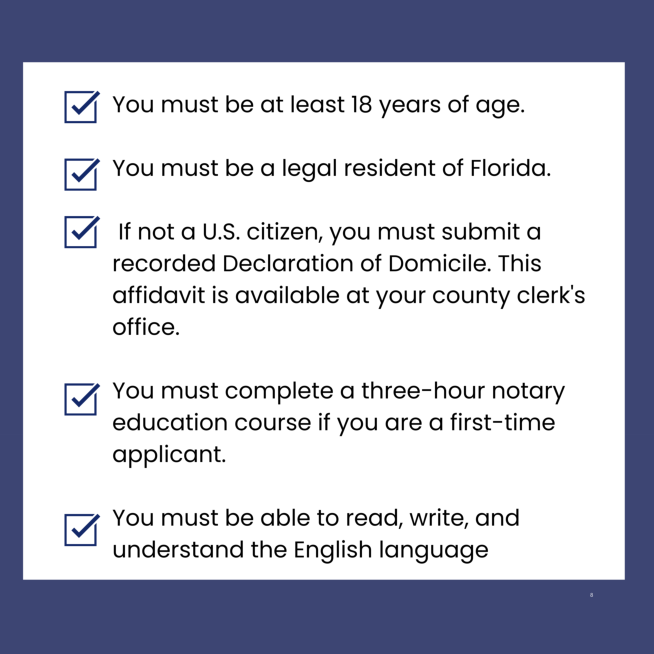
- Eligibility Criteria: You must be at least 18 years of age, a legal resident of Florida, and able to read, write, and understand English. You also cannot have a disqualifying criminal record. These are fundamental and carry no direct monetary cost, but they are crucial prerequisites.
- Application Fee: The Florida Department of State charges a non-refundable application fee. This is typically the first direct cost.
- Notary Bond: Florida law requires all notaries to obtain a four-year, $7,500 notary bond. This bond protects the public from financial damages caused by potential notarial errors or misconduct. While it’s a mandatory cost, the premium for this bond is generally quite low, often ranging from $20 to $50 for the entire four-year term.
- Notary Stamp/Seal: You must possess an official notary seal or stamp that meets specific design requirements. This is a one-time purchase, costing anywhere from $15 to $30, depending on the vendor and stamp type (self-inking, embosser).
- Notary Education Course: While Florida does not mandate a specific training course for first-time notaries, it is highly recommended and often included in notary supply packages. Some online providers offer free or very low-cost educational resources to ensure you understand your duties and responsibilities. For those pursuing Remote Online Notarization (RON), additional specific training is required, which usually comes with a fee from approved RON providers.
- Background Check (Indirect): While not a direct fee for the background check itself, the application process requires a clear criminal record. Any issues might necessitate legal consultation, which could be an indirect cost.

When we talk about “free,” we’re aiming to either eliminate or minimize these costs through strategic planning, external support, or finding the most economical options for each required item.
Pathways to Cost Reduction: Sponsorships, Bundles, and Smart Choices
Achieving a near-free notary commission in Florida is often about smart navigation and leveraging opportunities:
- Employer Sponsorship: This is perhaps the most straightforward path to a truly “free” commission. Many businesses, particularly those in legal, real estate, banking, or hospitality sectors, require employees to be notaries. A hotel, for example, might sponsor an employee’s notary commission to offer a valuable service to its guests, especially in locations like Tampa or Jacksonville where business travel is prominent. If your current or prospective employer covers the application fee, bond, and stamp, your out-of-pocket expense effectively becomes zero. It’s always worth inquiring if this is an option when considering a new role or discussing professional development with your current employer.
- Notary Package Deals: Many notary supply companies offer bundled packages that include the application processing, the bond, and the notary stamp at a discounted rate compared to purchasing each item separately. While not free, these packages can significantly reduce the overall cost. Some even include basic notary education materials. Shopping around and comparing different providers is crucial for finding the most cost-effective solution.
- Leveraging Free Online Resources: For the notary education component, numerous websites and the Florida Department of State itself provide comprehensive guides and FAQs regarding notary duties and best practices. Utilizing these free resources can help you prepare for your role without incurring additional educational fees. While a formal course isn’t mandated for traditional notary public commissions in Florida, thorough self-education is essential to avoid errors and potential liability.
- Exploring Community & Professional Organizations: Occasionally, legal aid societies, community centers, or professional organizations might offer assistance or sponsorship for individuals looking to become notaries, especially if they plan to use their commission for public service or within specific under-served communities. This is less common but worth investigating if other options aren’t viable.
By strategically approaching each required cost and actively seeking out sponsorship or bundled deals, the goal of becoming a Notary Public in Florida for little to no personal expense becomes an achievable reality.
Navigating the Application Process: Your Step-by-Step Guide
Once you understand the strategic advantages and the ways to minimize costs, the next step is to navigate the actual application process. Becoming a Notary Public in Florida is a structured process managed by the Florida Department of State, designed to ensure that all commissioned notaries are competent and trustworthy. For those interested in expanding their reach and embracing a truly mobile lifestyle, understanding the additional steps for Remote Online Notarization (RON) is also paramount.
From Application to Commission: The Essentials
The journey to becoming a commissioned Florida Notary Public involves several key stages:
- Meet the Eligibility Requirements: Before you even fill out a form, confirm you meet the foundational criteria:
- You must be at least 18 years of age.
- You must be a legal resident of Florida.
- You must be able to read, write, and understand the English language.
- You must not have been convicted of a felony unless your civil rights have been restored.
- You must not have had a notary commission revoked in Florida or any other state.
- It’s crucial to be honest about any past legal issues as the state conducts a background check. Discrepancies can lead to application denial.
- Complete the Notary Application Form: The official application is available through the Florida Department of State’s website or via authorized notary bonding agencies. This form will request your personal information, residency details, and a declaration of eligibility.
- Secure Your Notary Bond: As discussed, a four-year, $7,500 notary bond is mandatory. You can purchase this bond from various surety companies or through notary package providers. It’s typically a straightforward process, often completed online. The bond is submitted along with your application.
- Obtain a Notary Seal/Stamp: While you can order this after receiving your commission, it’s often more efficient to include it in a notary package if you’re pursuing one. Ensure the stamp adheres to Florida’s specific requirements, including your name, the words “Notary Public – State of Florida”, and your commission number and expiration date.
- Submit Your Application: Your completed application, along with proof of your notary bond, and the required application fee, must be submitted to the Florida Department of State. Many applicants choose to submit through a bonding agency, which often streamlines the process and ensures all paperwork is correctly filed.
- Receive Your Commission: Once your application is approved and processed, the Florida Department of State will mail you your official Notary Public Commission certificate. This certificate is your legal authorization to perform notarial acts. Upon receipt, it’s advisable to keep it in a safe, accessible place and begin using your stamp.
The entire process, from application submission to receiving your commission, typically takes a few weeks, though processing times can vary. Careful attention to detail and ensuring all requirements are met will help prevent delays.
Embracing Remote Online Notarization (RON) in Florida
For those truly seeking to maximize their flexibility and reach, Florida offers the option to become a Remote Online Notary (RON). This innovative system allows notaries to perform official acts for signers located anywhere in the world, as long as the notary is physically located within Florida at the time of the notarization and follows specific technological protocols. This is particularly appealing for digital nomads, individuals catering to an international clientele, or businesses needing quick and efficient notarization from any corner of the state, from Tallahassee to Fort Lauderdale.
The benefits of RON are immense:
- Expanded Reach: Serve clients regardless of their physical location, perfect for real estate transactions involving out-of-state buyers, or for vacationers needing documents while enjoying their accommodation in a Florida resort.
- Convenience: Notarize documents from your home, a cafe, or any secure location with an internet connection.
- Efficiency: Reduces travel time and allows for faster completion of notarial acts.
To become a RON in Florida, you must first hold an active traditional notary commission. Then, you’ll need to fulfill additional requirements:
- Complete a RON Training Course: You must successfully complete a mandatory two-hour training course from an approved RON provider. This course covers the specific legal, ethical, and technological requirements of online notarization.
- Register with an Approved RON Provider: Florida law requires notaries to contract with an approved third-party technology provider for performing RONs. These providers offer the secure audio-visual platform, identity proofing services, and electronic journal functionality necessary for online notarization. Examples include Notarize.com, DocVerify, and Pavaso.
- Register with the Florida Department of State: After completing the training and registering with a provider, you must inform the Florida Department of State of your intent to perform RONs by submitting the required registration form.
- Obtain an Electronic Seal and Digital Certificate: You will need an electronic seal that meets state standards and a digital certificate to securely sign and seal electronic documents. Your chosen RON provider will typically assist you in obtaining these.
While becoming a RON involves additional costs for training and technology provider fees, the potential for increased income and unparalleled flexibility often makes this investment well worth it for those looking to integrate notary services into a modern, mobile, and financially savvy lifestyle. The ability to notarize documents online is a game-changer, especially for tourism and accommodation industries where clients may be constantly on the move.
Becoming a Notary Public in Florida, and particularly embracing Remote Online Notarization, is more than just obtaining a credential. It’s an investment in your personal and professional flexibility, offering a tangible skill that supports a budget-conscious lifestyle while simultaneously opening doors to unique income opportunities within Florida’s dynamic travel, hospitality, and real estate sectors. By understanding the true meaning of “for free”—minimizing costs through strategic choices like employer sponsorship and leveraging online resources—you can embark on this journey with confidence. Whether for personal convenience, a flexible side hustle, or to enhance your professional offerings in a bustling travel destination, a Florida notary commission is a powerful asset for living life out of the box.
LifeOutOfTheBox is a participant in the Amazon Services LLC Associates Program, an affiliate advertising program designed to provide a means for sites to earn advertising fees by advertising and linking to Amazon.com. Amazon, the Amazon logo, AmazonSupply, and the AmazonSupply logo are trademarks of Amazon.com, Inc. or its affiliates. As an Amazon Associate we earn affiliate commissions from qualifying purchases.