
Navigating the intricacies of establishing a business entity can seem daunting, especially when venturing into the vibrant economic landscape of California. For many entrepreneurs and small business owners, the Limited Liability Company (LLC) structure offers a compelling blend of personal asset protection and operational flexibility. This guide is designed to demystify the process, providing a comprehensive, step-by-step approach to forming an LLC in the Golden State. We will explore the fundamental requirements, essential documentation, and key considerations to ensure your entrepreneurial journey in California begins on a solid legal and operational footing.
Understanding the Basics of an LLC in California
Before diving into the procedural aspects, it’s crucial to grasp what an LLC is and why it’s an attractive choice for businesses operating in California. The LLC structure allows for a separation between the business’s finances and debts and the personal assets of its owners, known as members. This “limited liability” protection is a primary driver for entrepreneurs seeking to shield their personal wealth from potential business liabilities. Furthermore, LLCs offer pass-through taxation, meaning the business itself does not pay separate income taxes. Instead, profits and losses are passed through to the members and reported on their individual tax returns, simplifying tax compliance and avoiding the potential for double taxation often associated with traditional corporations.
What is a Limited Liability Company (LLC)?
A Limited Liability Company (LLC) is a hybrid business structure that combines the pass-through taxation of a partnership or sole proprietorship with the limited liability of a corporation. This dual nature makes it a popular choice for a wide range of businesses, from startups to established enterprises. In California, the legal framework governing LLCs is primarily found in the California Corporations Code. The state recognizes LLCs as distinct legal entities, empowering them to enter into contracts, own property, sue, and be sued in their own name.
Advantages of Forming an LLC in California
The allure of forming an LLC in California stems from several key advantages. Foremost is the limited liability protection. This shields your personal assets – such as your home, savings accounts, and vehicles – from business debts and lawsuits. If the LLC incurs significant debt or faces legal action, creditors and claimants generally can only pursue the assets of the LLC, not the personal assets of its members.
Another significant advantage is tax flexibility. As mentioned, LLCs typically benefit from pass-through taxation. This means that profits and losses are distributed to the members, who then report this income on their personal tax returns. This avoids the “double taxation” that can occur with C-corporations, where profits are taxed at the corporate level and again when distributed to shareholders as dividends. While the default is pass-through taxation, an LLC can elect to be taxed as a corporation if that proves more advantageous for their specific financial situation.
Operational flexibility is another hallmark of an LLC. Unlike the rigid management structures often found in corporations, LLCs can be managed by their members or by appointed managers. The operating agreement, a crucial internal document, outlines the management structure, member responsibilities, profit and loss distribution, and other critical operational details, offering a high degree of customization.
Finally, the simplicity of formation and maintenance compared to corporations makes LLCs appealing. While there are still requirements and filings, the ongoing compliance and administrative burdens are generally less extensive than those for corporations. This allows business owners to focus more on growing their business and less on complex corporate governance.
Step-by-Step Guide to Forming Your California LLC
Embarking on the formation of an LLC in California requires a structured approach to ensure all legal requirements are met. The process involves several distinct stages, from choosing a name to filing the necessary documents with the state. Following these steps meticulously will pave the way for a compliant and successful business launch.
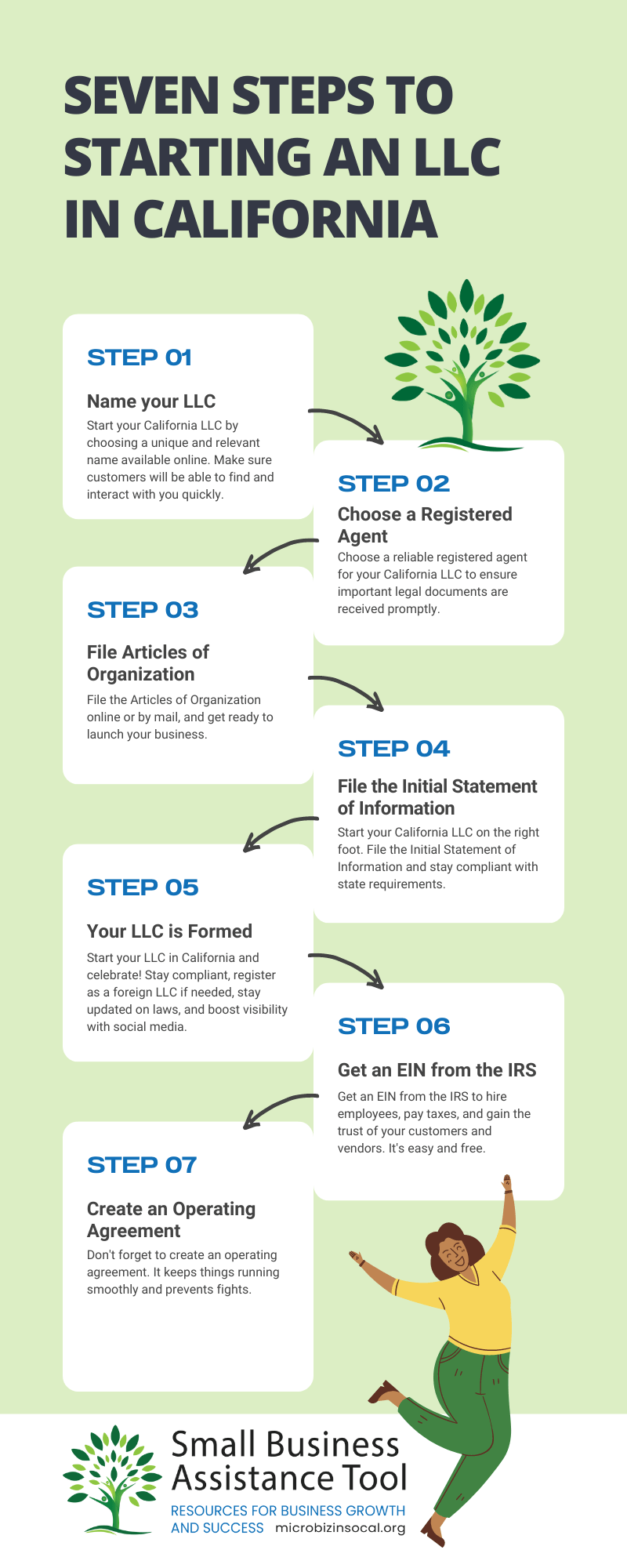
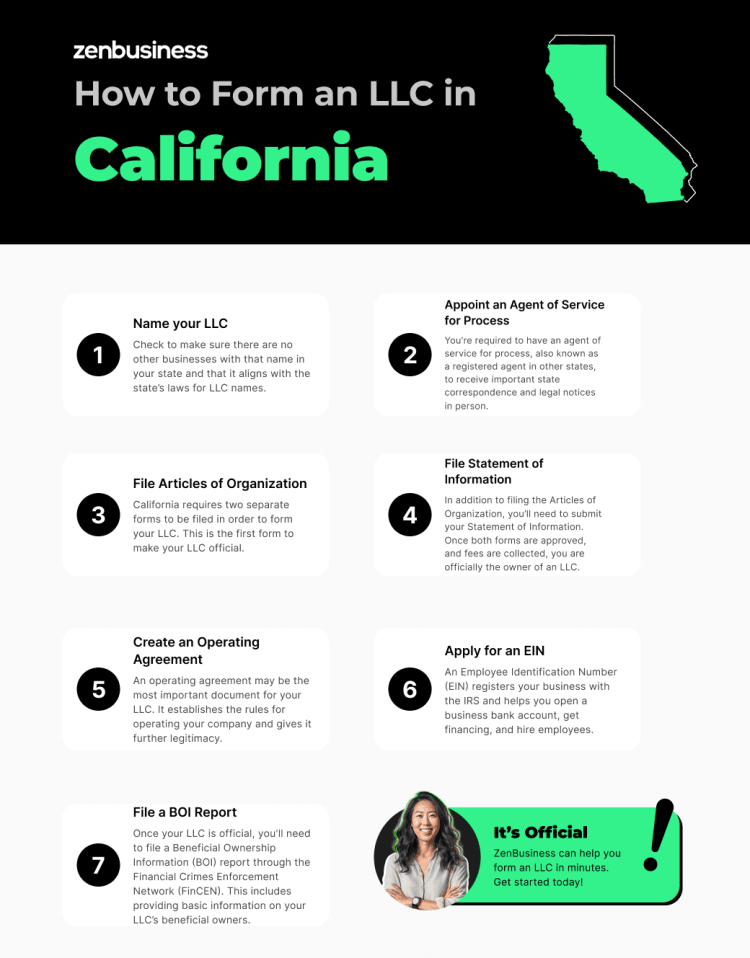
Step 1: Choose a Business Name
The first critical step is selecting a distinctive and legally permissible name for your LLC. California has specific naming rules you must adhere to. The name must include the words “Limited Liability Company” or the abbreviation “LLC” or “L.L.C.” This designation clearly identifies your business as an LLC. Furthermore, the name must not be deceptively similar to the names of other existing businesses registered in California. To check for availability, you can conduct a name search on the California Secretary of State website. It’s also advisable to search for federal trademarks to avoid potential conflicts. Once you find an available name you like, you can reserve it for a fee for 60 days by filing a “Name Reservation Request” form, though this is not mandatory for formation.
Step 2: Designate a Registered Agent
Every LLC in California must designate a registered agent for service of process. This individual or company is responsible for receiving official legal documents, such as lawsuits or subpoenas, on behalf of the LLC. The registered agent must have a physical street address in California (a P.O. Box is not sufficient) and be available during normal business hours. You can act as your own registered agent if you meet these requirements and have a physical address in California. However, many businesses opt for a professional registered agent service. This ensures that legal documents are received promptly and confidentially, and it also offers privacy by not listing your home address as the official point of contact.
Step 3: File the Articles of Organization
The core document for forming an LLC in California is the “Articles of Organization.” This document must be filed with the California Secretary of State. The Articles of Organization typically include:
- The name of the LLC: This must be the name you selected in Step 1.
- The purpose of the LLC: A general statement like “to engage in any lawful act or activity for which a limited liability company may be organized under the laws of the State of California” is usually sufficient.
- The name and street address of the registered agent: As designated in Step 2.
- Whether the LLC is managed by its members or by managers: This is a key decision point for your business structure.
- The name and address of the principal office of the LLC: This is the main business address.
There is a filing fee associated with submitting the Articles of Organization. Once the Secretary of State approves and files your Articles, your LLC is legally formed.
Step 4: Create an Operating Agreement
While not a document filed with the state, an Operating Agreement is a crucial internal document that governs the operations and member relations of your LLC. It’s highly recommended for all LLCs, regardless of size or number of members. This agreement outlines:
- Ownership percentages: How the LLC is owned by its members.
- Management structure: Who makes decisions and how.
- Profit and loss distribution: How profits and losses will be allocated among members.
- Member duties and responsibilities: The roles and obligations of each member.
- Procedures for admitting new members or for members leaving the LLC: How the ownership structure can change over time.
- Dissolution procedures: How the LLC will be wound down if necessary.
A well-drafted Operating Agreement can prevent future disputes among members and provides clarity on how the LLC will function, which is essential for smooth operations.
Step 5: Obtain an Employer Identification Number (EIN)
An Employer Identification Number (EIN), also known as a Federal Tax Identification Number, is a unique nine-digit number assigned by the Internal Revenue Service (IRS) to businesses operating in the United States. You will need an EIN if your LLC plans to hire employees, operate as a corporation or partnership for tax purposes, or if you file excise tax returns. Even if not strictly required, obtaining an EIN is often beneficial for opening business bank accounts and establishing business credit. You can apply for an EIN for free directly through the IRS website.
Ongoing Compliance and Tax Obligations for California LLCs
Forming an LLC is just the first step. To maintain its legal standing and avoid penalties, your California LLC must adhere to ongoing compliance and tax requirements. Understanding these obligations is vital for long-term business success and to preserve the liability protections afforded by the LLC structure.
Annual Franchise Tax and Statement of Information
California imposes an annual minimum franchise tax on all LLCs, regardless of their income or activity. This tax is currently $800 and is due by April 15th each year. Failure to pay this tax can result in penalties and interest, and eventually, the forfeiture of your LLC’s status.
In addition to the franchise tax, LLCs are required to file a “Statement of Information” (Form LLC-12) with the California Secretary of State within 90 days of filing their initial Articles of Organization. Subsequently, this statement must be filed every two years. The Statement of Information provides updated information about the LLC’s registered agent, principal office, and managing members. Missing these filing deadlines can also lead to penalties and the suspension of your LLC’s powers, rights, and privileges in California.
Business Licenses and Permits
Depending on the nature of your business and its location within California, you may need to obtain various business licenses and permits at the federal, state, and local levels. These can include general business licenses, professional licenses, health permits, zoning permits, and seller’s permits for businesses selling tangible goods. It is crucial to research the specific requirements for your industry and geographic area to ensure full compliance. For instance, a restaurant in Los Angeles will have different permit requirements than an online consulting firm based in San Francisco.
Federal, State, and Local Tax Requirements
Beyond the annual franchise tax, your California LLC will have other tax obligations. This includes federal income tax, which is typically handled through pass-through taxation to the members’ personal tax returns. You will also need to consider state income tax. If your LLC has employees, you are responsible for payroll taxes, including federal and state income tax withholding, Social Security, and Medicare taxes, as well as unemployment insurance taxes. Sales tax is applicable for businesses selling goods or taxable services. Staying informed about these tax obligations and consulting with a tax professional is highly recommended to ensure accurate and timely filings.
Maintaining Your LLC for Success
The journey of forming an LLC in California is not merely about the initial filing; it’s about cultivating a sustainable and compliant business. Proactive management and adherence to best practices will not only safeguard your legal entity but also foster a professional image and operational efficiency.
Keeping Business and Personal Finances Separate
A cornerstone of maintaining the limited liability protection of an LLC is to scrupulously keep business and personal finances separate. This means opening dedicated business bank accounts, using business credit cards, and avoiding commingling funds. Commingling assets is one of the quickest ways to “pierce the corporate veil,” which can expose your personal assets to business liabilities. Always use business accounts for all business transactions and ensure all income and expenses are clearly attributed to the LLC.
Regular Review of Your Operating Agreement
Your Operating Agreement is a living document. As your business grows and evolves, your initial agreement may need amendments. It is wise to review your Operating Agreement periodically, at least annually, or whenever significant changes occur within the business, such as a new member joining or a substantial shift in management. This ensures that the agreement continues to accurately reflect the current operations and understanding among the members, preventing potential conflicts and misunderstandings down the line.

Understanding Dissolution Procedures
While the goal is growth and longevity, it’s also prudent to understand the legal process for dissolving an LLC in California should that ever become necessary. Dissolution involves winding down the business’s affairs, paying off debts and liabilities, and distributing any remaining assets to the members. The specific procedures are often outlined in the Operating Agreement and must comply with California state law. Proper dissolution ensures that the LLC is legally closed and that members are not held liable for post-dissolution obligations.
By meticulously following these steps and maintaining ongoing compliance, entrepreneurs can confidently establish and operate their Limited Liability Company in California, leveraging the structure’s benefits for a secure and thriving business venture.
LifeOutOfTheBox is a participant in the Amazon Services LLC Associates Program, an affiliate advertising program designed to provide a means for sites to earn advertising fees by advertising and linking to Amazon.com. Amazon, the Amazon logo, AmazonSupply, and the AmazonSupply logo are trademarks of Amazon.com, Inc. or its affiliates. As an Amazon Associate we earn affiliate commissions from qualifying purchases.