
California, often perceived as a state with stringent gun control measures, presents a unique landscape for firearm acquisition. Navigating this regulatory environment requires a thorough understanding of state and federal laws, as well as the specific procedures involved. This guide aims to demystify the process for prospective gun owners in the Golden State, focusing on the legal framework and practical steps.
Understanding California’s Firearm Laws
California maintains some of the most comprehensive gun laws in the United States. These laws are designed to enhance public safety by regulating who can own firearms, what types of firearms are permissible, and how they are transferred. Key legislation includes the Handgun Safety Certificate (HSC) program, the 10-day waiting period, and the prohibition of certain types of firearms commonly referred to as “assault weapons.”
Federal Background Checks
All firearm purchases from licensed dealers in California, as in the rest of the country, are subject to a federal background check. This process is managed by the Federal Bureau of Investigation (FBI) through the National Instant Criminal Background Check System (NICS). The purpose of this check is to ensure that the buyer is not prohibited from owning a firearm under federal law. Prohibited categories typically include convicted felons, individuals with a history of domestic violence, and those adjudicated as mentally defective.
California-Specific Requirements
Beyond federal mandates, California imposes several additional layers of requirements. One of the most significant is the 10-day waiting period. This mandatory waiting period applies to all firearm purchases, regardless of whether the firearm is a handgun or a long gun (rifle or shotgun). The intent behind this waiting period is to provide a cooling-off period for individuals who might be considering a firearm purchase impulsively, potentially in a moment of anger or distress.
Another crucial element is the Firearm Safety Device (FSD) requirement. All firearms sold in California must be accompanied by an FSD, or the buyer must provide proof of possessing one. FSDs are devices designed to prevent the firearm from being discharged by unauthorized users, such as children. Examples include trigger locks, cable locks, and gun safes.
Furthermore, California has specific regulations regarding the types of firearms that can be purchased. The state maintains a list of California-approved handguns, and only handguns on this list can be legally sold by dealers. This list is maintained by the California Department of Justice (DOJ) and undergoes regular updates. The state also has strict regulations on what constitutes an “assault weapon,” prohibiting the sale or possession of many semi-automatic rifles and shotguns with certain features.
The Process of Purchasing a Firearm
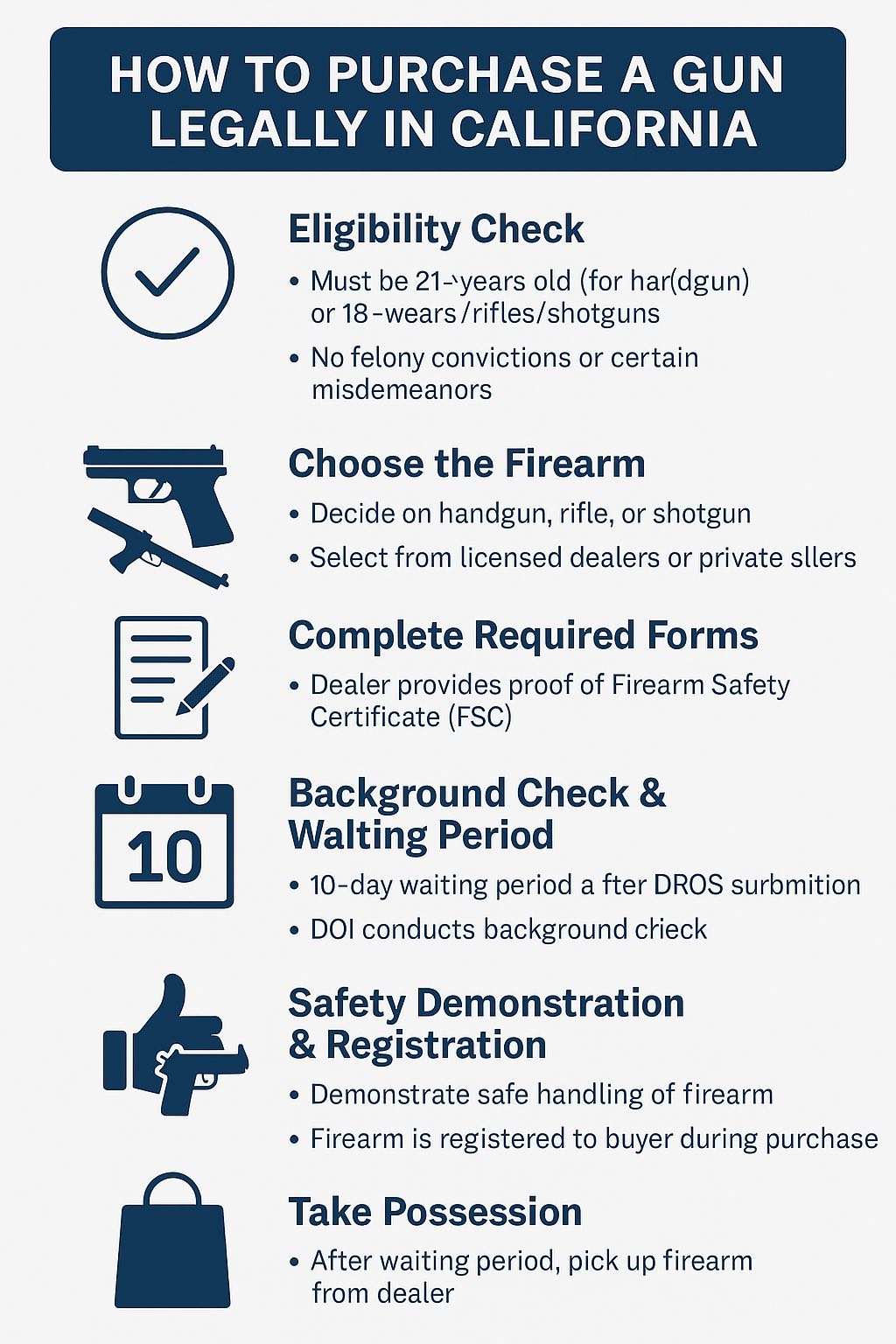
The journey to legally owning a firearm in California typically begins with identifying a licensed firearm dealer. These are often referred to as Federal Firearms License (FFL) holders. Once a firearm is selected, the buyer must undergo a series of steps to ensure compliance with all applicable laws.
Step 1: Eligibility Verification and Documentation
The first formal step involves completing the Firearms Transaction Record Part 1 (DROS) form. This document, officially known as the Dealer Record of Sale, is a federal and state requirement. It collects personal information about the buyer, including their name, address, date of birth, and physical description. This information is then submitted to the California DOJ for a background check.
During the DROS process, buyers will also need to provide proof of residency in California. This typically requires presenting a valid government-issued ID, such as a driver’s license or state identification card, along with a secondary document that verifies residency, such as a utility bill or lease agreement.
Step 2: The Safety Certificate and Training
For handgun purchases, or any firearm if the buyer does not already possess a valid Firearm Safety Certificate (FSC), obtaining this certificate is mandatory. The FSC is obtained by passing a written test administered by a DOJ-certified instructor. The test covers firearm safety, laws pertaining to firearm ownership and use in California, and responsible gun handling. The FSC is valid for five years. For long gun purchases, while a separate long gun safety certificate isn’t mandated in the same way as the FSC for handguns, the general principles of safe handling and understanding firearm laws are implicitly covered by the DROS process and the expectation of responsible ownership.
Step 3: The 10-Day Waiting Period and Background Check
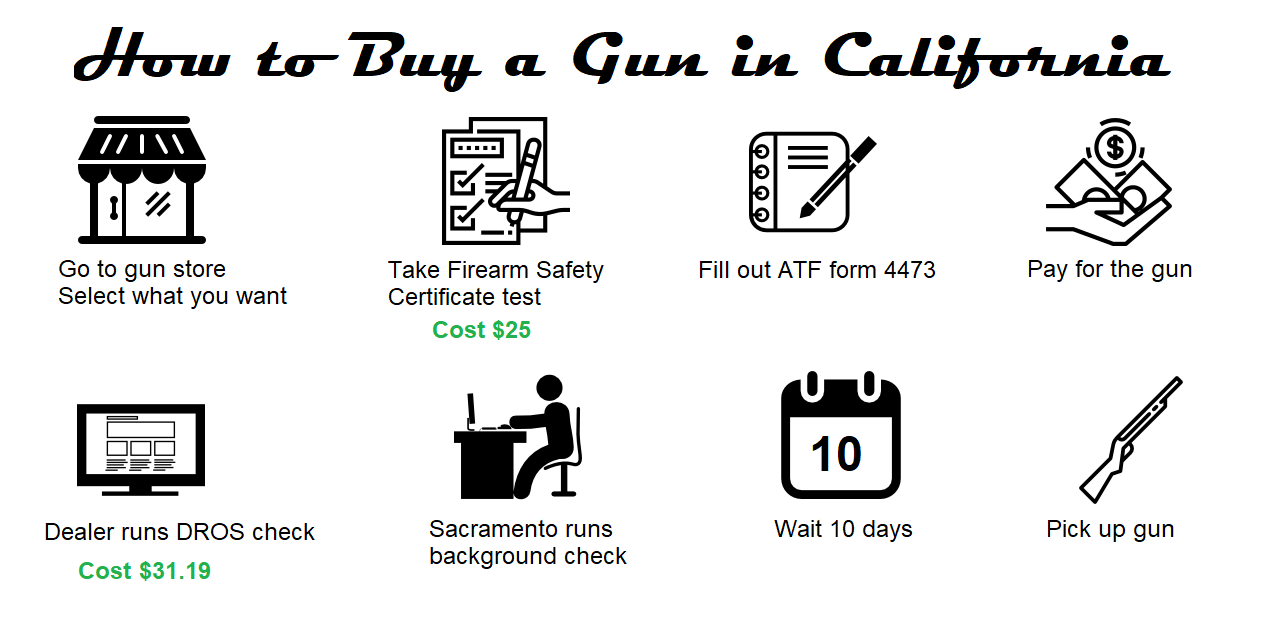
After submitting the DROS form and completing the initial paperwork, the 10-day waiting period commences. This period begins the day after the DROS is submitted to the DOJ and ends on the tenth calendar day. During this time, the DOJ conducts a thorough background check, reviewing state and federal databases for any disqualifying factors.
If the background check is cleared, the buyer will be notified, and they can proceed with picking up their firearm on or after the 11th day. If there are any issues or disqualifying factors, the DROS may be denied, or the buyer may receive a notice for further review.
Step 4: Firearm Pick-Up and Finalization
Upon completion of the waiting period and a successful background check, the buyer can return to the FFL dealer to pick up their firearm. At this point, any remaining fees are paid, and the buyer will typically sign additional paperwork confirming the transfer of ownership. It is also at this stage that the buyer will ensure they have a compliant Firearm Safety Device to take possession of the firearm.
Types of Firearms and Their Regulations
California’s regulatory approach distinguishes between handguns, rifles, and shotguns, with varying rules and restrictions for each.
Handguns
The purchase of handguns in California is subject to the most stringent regulations. As mentioned, only handguns that have been tested and approved by the DOJ and are listed on the Roster of Handguns Certified for Sale can be sold by dealers. This roster ensures that handguns meet specific safety standards, such as loaded chamber indicators and magazine disconnect mechanisms. Buyers must also possess a valid FSC.
Rifles and Shotguns
While generally less regulated than handguns, the purchase of rifles and shotguns in California still requires adherence to federal and state laws. This includes the federal background check and the 10-day waiting period. California’s “assault weapon” ban also significantly impacts the types of rifles and shotguns that can be purchased. These bans typically target firearms with certain military-style features, such as pistol grips, folding stocks, and flash suppressors. Many commonly available rifles and shotguns in other states are considered assault weapons in California and are thus prohibited unless they meet specific exemption criteria, often involving registration as a “pre-ban” firearm.
Considerations for Out-of-State Purchases
For residents of California, purchasing a firearm out of state presents a more complex scenario. Federal law mandates that all firearms purchased out of state must be shipped to a California-licensed FFL dealer. The buyer cannot directly bring a firearm purchased out of state into California. The firearm will then be processed through the California DROS system, including the 10-day waiting period and background check, as if it were purchased from a local dealer. This ensures that the firearm meets all California-specific requirements before it enters the state.
Responsible Gun Ownership
Acquiring a firearm in California is a significant responsibility. Beyond understanding the legal framework, responsible gun ownership encompasses a commitment to safety, proper storage, and ongoing education.
Safe Storage
California law requires that firearms be stored in a manner that prevents unauthorized access, particularly by children. This can be achieved through the use of trigger locks, cable locks, gun safes, or lockboxes. Many firearm retailers offer a variety of safe storage solutions. Safe storage not only complies with the law but is crucial for preventing accidents and theft.
Continued Education and Training
Even after purchasing a firearm, continuous learning is recommended. Many organizations offer advanced firearm safety courses, concealed carry training, and proficiency classes. These courses can enhance a gun owner’s understanding of safe handling, marksmanship, and the legal responsibilities associated with firearm ownership. Staying informed about any changes in state or federal firearm laws is also an integral part of responsible ownership.
In conclusion, purchasing a firearm in California involves a detailed and regulated process. By understanding and adhering to the state’s specific laws, federal requirements, and best practices for safe gun ownership, individuals can navigate this process legally and responsibly.
LifeOutOfTheBox is a participant in the Amazon Services LLC Associates Program, an affiliate advertising program designed to provide a means for sites to earn advertising fees by advertising and linking to Amazon.com. Amazon, the Amazon logo, AmazonSupply, and the AmazonSupply logo are trademarks of Amazon.com, Inc. or its affiliates. As an Amazon Associate we earn affiliate commissions from qualifying purchases.