
Embracing a New Identity: Why Consider a Name Change?
A name is more than just a label; it is a cornerstone of personal identity, a reflection of heritage, and often, a statement of self. For many in Colorado, the decision to change a name marks a significant life transition, a conscious step towards aligning one’s identity with their evolving lifestyle and personal truth. Whether driven by profound personal growth, a desire to honor new beginnings, or practical considerations, the process of legally changing one’s name in the Centennial State is a journey of self-affirmation. This pivotal decision often stems from a variety of deeply personal and practical motivations, each reflecting a unique life story and a vision for the future.
One of the most common reasons for a name change is marriage or divorce, symbolizing a shift in marital status and familial identity. While common, these are far from the only catalysts. Individuals may choose a new name to affirm their gender identity, creating an authentic alignment between their inner self and their legal presentation. Others might seek to revert to a maiden name, adopt a new family name, or correct a historical error. Some find their given name no longer resonates with their adult personality or professional aspirations, opting for a name that better reflects their brand or public persona. Furthermore, a desire for privacy, a need to escape a difficult past, or simply a preference for a different appellation can all be powerful motivators. Understanding the ‘why’ behind this decision is the first, often deeply introspective, step in the journey, setting the stage for the legal and administrative processes that follow.
The Colorado Legal Landscape: Understanding the Process
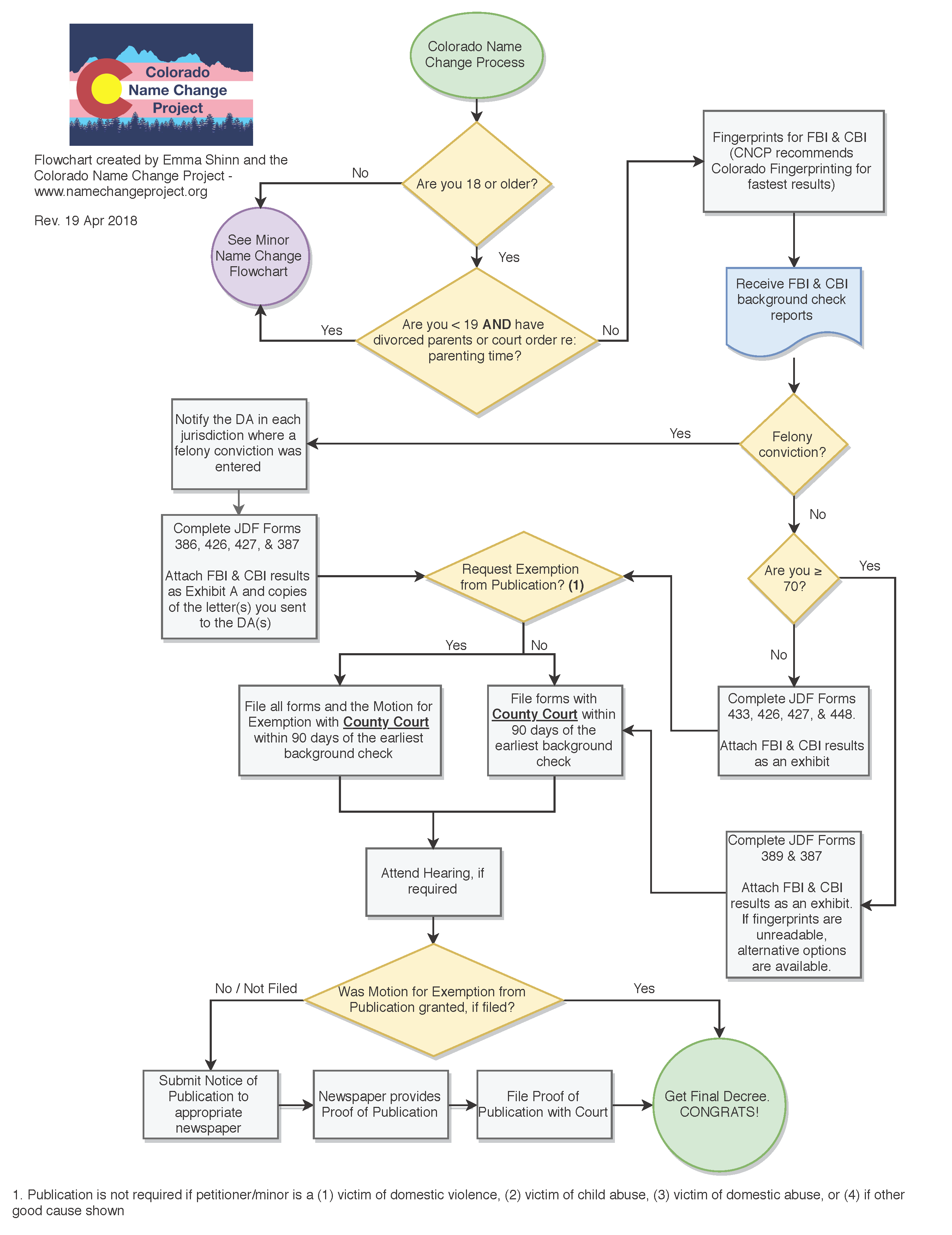
Navigating a name change in Colorado involves adherence to specific legal procedures designed to ensure clarity and prevent fraud. The process is primarily governed by state statute, particularly the Colorado Revised Statutes concerning district courts and their jurisdiction over name change petitions. While the fundamental steps are generally consistent across the state, minor procedural variations might exist between different county courts. The type of name change – for an adult, a minor, or in conjunction with marriage or divorce – dictates the specific forms and evidentiary requirements. Understanding these nuances is crucial for a smooth and successful application.
General Adult Name Change
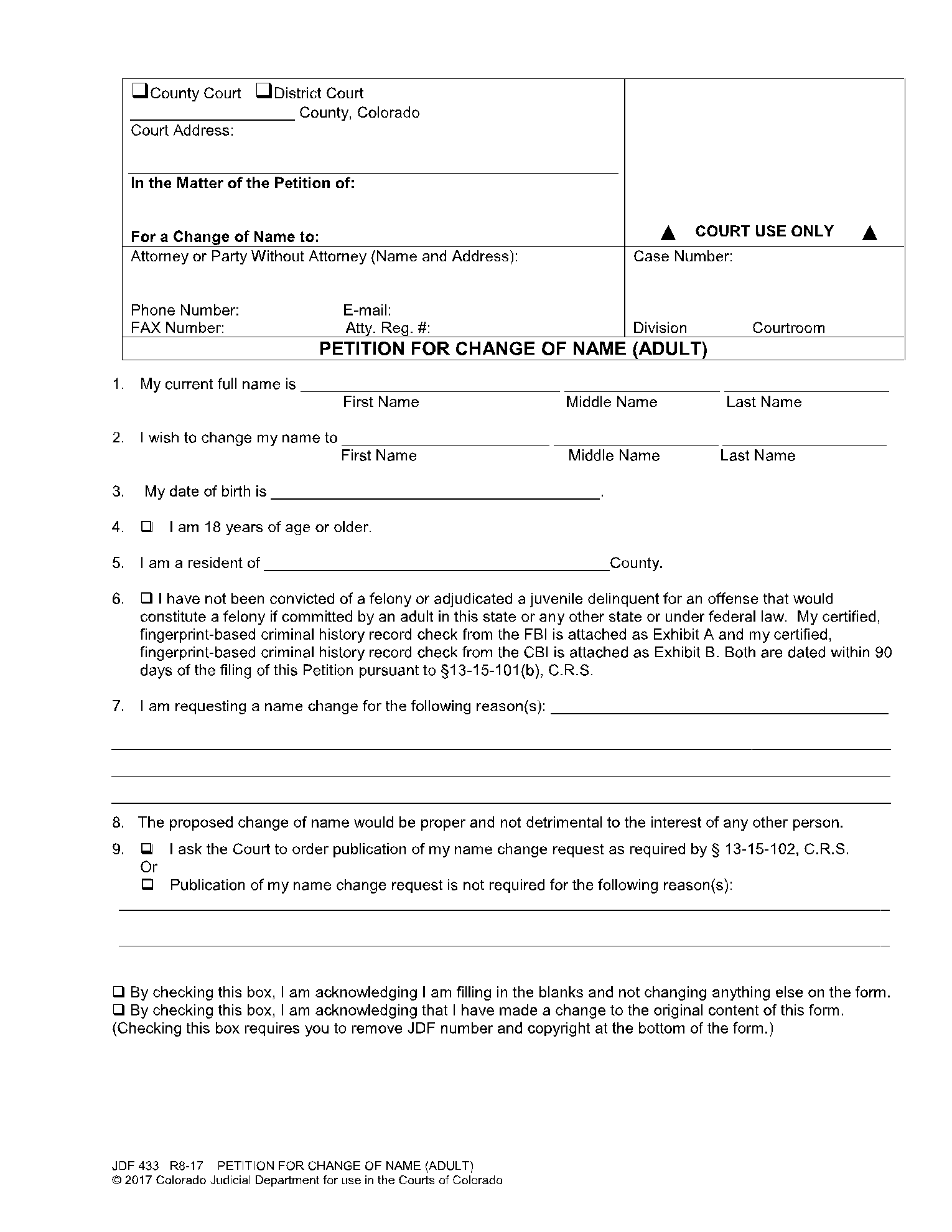
For adults seeking to change their name for reasons other than marriage or divorce, the process typically begins by filing a Petition for Change of Name in the district court of the county where the individual resides. This petition must clearly state the current name, the desired new name, and the reasons for the change. Importantly, Colorado law requires that the name change not be sought for any unlawful or fraudulent purpose, such as avoiding creditors or criminal prosecution. The petitioner must also affirm that they are not on the sex offender registry or, if they are, that they have provided notice to the appropriate authorities. These safeguards are in place to protect public safety and maintain the integrity of legal identity.
Name Change for Minors
Changing a minor’s name in Colorado is a more complex undertaking, as it directly impacts parental rights and the child’s best interests. A Petition for Change of Name for a Minor must be filed, typically by a parent or legal guardian. The court will require consent from both parents (if both have parental rights), or proper notice must be given to any non-consenting parent, allowing them an opportunity to object. If one parent objects, the court will hold a hearing to determine if the name change is in the minor’s best interest, considering factors such as the child’s wishes (if old enough to express them), the reasons for the change, and the potential impact on the child’s relationship with both parents. These cases often involve additional scrutiny to ensure the child’s welfare is paramount.
Name Change After Marriage or Divorce
Name changes associated with marriage or divorce are generally simpler, often integrated into existing legal processes. Upon marriage, individuals can typically adopt their spouse’s surname, hyphenate names, or retain their original name without a separate court petition. This change is usually handled by presenting a certified marriage certificate to various agencies (e.g., Social Security Administration, Colorado Division of Motor Vehicles) to update records. Similarly, during a divorce, the divorce decree can include an order restoring a former name, typically a maiden name. If the divorce decree does not include such an order, or if an individual wishes to adopt a new name post-divorce (not a prior name), a separate Petition for Change of Name would be required. These integrated processes streamline the identity transition during significant life events.
Navigating the Courts: Step-by-Step Guide
The actual journey through the Colorado court system, while appearing daunting, can be systematically approached. Each step is critical to ensuring the legal validity of your desired name change. Diligence and attention to detail throughout this process are key to a successful outcome, allowing you to move forward with your newly affirmed identity.
Petition Filing and Fees
The first tangible step is to obtain and accurately complete the necessary forms. The Colorado Judicial Branch website provides a comprehensive array of self-help forms, including the Petition for Change of Name (JDF 240 for adults, JDF 241 for minors) and related affidavits. It’s imperative to fill these out entirely, ensuring all information is current and correct. Once completed, the petition is filed with the Clerk of the District Court in your county of residence. For instance, if you reside in Denver, you would file with the Denver District Court. A filing fee, which can vary slightly, is required at this stage. If you are unable to afford the fee, you may petition the court for a waiver using Form JDF 205, “Motion to File Without Payment and Supporting Financial Affidavit.”
Publication Requirements
A unique aspect of the name change process in Colorado, particularly for adult petitioners (unless specifically waived by the court in certain circumstances, like domestic violence victims), is the requirement to publish notice of the requested name change. This typically involves publishing a legal notice in a local newspaper of general circulation once a week for three consecutive weeks. The purpose of this publication is to inform the public of the impending name change, providing an opportunity for any interested parties to object. After the publication period, the newspaper will provide an Affidavit of Publication, which must be filed with the court as proof that the requirement has been met. This step ensures transparency and prevents fraudulent name changes.
Court Hearing and Order
Once the petition has been filed and, if required, the publication completed, the court will schedule a hearing. During this hearing, a judge will review your petition, verify that all procedural requirements have been met, and may ask questions about your reasons for the name change. It is essential to attend this hearing and be prepared to explain your motivations clearly and concisely. If the judge finds that the name change is not sought for any unlawful purpose and is in the best interest of the petitioner (or minor, if applicable), they will issue an Order for Change of Name. This court order is the legal document officially granting your new name and is the foundation for updating all your other identification and records. It is highly recommended to obtain several certified copies of this order, as you will need them for subsequent updates.

Beyond the Courtroom: Updating Your New Identity
Receiving your court order is a significant milestone, but the process doesn’t end there. To fully embrace your new identity and ensure legal consistency, you must systematically update your name across all official records. This post-court administrative phase is critical for preventing future complications and fully integrating your new name into your daily life.
Social Security Administration
The first and most crucial step is to notify the Social Security Administration (SSA). You will need to complete Form SS-5, Application for a Social Security Card, and submit it along with your certified court order and proof of identity (e.g., driver’s license, passport). The SSA will issue a new Social Security card reflecting your new name. This update is foundational, as many other agencies rely on SSA records for verification.
Department of Motor Vehicles
Next, update your driver’s license or state identification card with the Colorado Division of Motor Vehicles. You will typically need to bring your old ID, the certified court order, and proof of identification. It’s important to do this relatively quickly after updating your Social Security records, as your driver’s license is a primary form of identification. Remember to also update your vehicle registration and title if applicable.
Passport Agency
If you possess a U.S. passport, updating it with your new name is essential, especially for international travel. Depending on how recently your passport was issued, you will follow different procedures through the U.S. Passport Agency. Generally, you’ll need to submit Form DS-11, DS-82, or DS-5504, along with your current passport, the certified court order, and new passport photos. Ensure your passport reflects your current legal name to avoid travel complications.
Financial Institutions
Notify all banks, credit card companies, and other financial institutions of your name change. You will typically need to present a certified court order and updated identification. This ensures your accounts remain accessible and that your credit history is accurately maintained under your new name. Failing to update these records can lead to significant inconvenience.
Other Important Records
Beyond these primary updates, remember to change your name on:
- Birth Certificate: While generally not altered unless there was an error, some states (including Colorado, through the Colorado Department of Public Health and Environment) may allow amendments for gender affirmation or adoption-related changes. For a standard adult name change, the court order typically serves as sufficient proof of the legal name.
- Voter Registration: Update your voter registration with the Colorado Secretary of State’s office.
- Employment Records: Inform your employer and human resources department.
- Educational Institutions: If applicable, update diplomas and transcripts.
- Medical Providers and Insurance: Ensure your health records reflect your new name.
- Utility Companies: Update your accounts for continuity of service.
- Property Deeds and Leases: Consult with a legal professional regarding property records.
Common Pitfalls and Expert Tips
While the name change process in Colorado is designed to be straightforward, certain challenges can arise. Being prepared and proactive can significantly smooth your journey.
Accuracy and Consistency
The most common pitfall is inconsistency. Ensure your new name is spelled identically on all forms and documents, precisely as it appears on your court order. Any discrepancies can lead to delays and complications across various agencies. Double-check every form before submission.
Required Documents
Always bring original or certified copies of all required documents to every agency. Copies are often not accepted, and relying on digital versions without physical verification can cause significant setbacks. Keep your certified court order in a safe and accessible place, as it will be your primary proof of name change for months or even years.
Legal Assistance
While many individuals successfully navigate the name change process on their own, complex situations – such as objections from a non-consenting parent for a minor’s name change, criminal history, or concerns about legal fraud – may warrant consulting with an attorney. A legal professional can offer invaluable guidance, ensure all statutory requirements are met, and represent your interests in court, providing peace of mind during a significant personal transition. Embracing a new name is a profound personal decision, and ensuring its legal validity lays the groundwork for a future lived authentically.
LifeOutOfTheBox is a participant in the Amazon Services LLC Associates Program, an affiliate advertising program designed to provide a means for sites to earn advertising fees by advertising and linking to Amazon.com. Amazon, the Amazon logo, AmazonSupply, and the AmazonSupply logo are trademarks of Amazon.com, Inc. or its affiliates. As an Amazon Associate we earn affiliate commissions from qualifying purchases.