
When embarking on research for any travel-related project, whether it’s a deep dive into the history of ancient ruins, a comparative analysis of luxury resorts, or a guide to local culinary traditions, proper citation is paramount. Academic integrity demands that we give credit where credit is due, acknowledging the sources that informed our work. This is especially crucial when engaging with the wealth of information available, from scholarly articles and books to reputable online guides. Among the various citation styles, the Chicago Manual of Style (CMOS) is a widely adopted standard, particularly in the humanities and social sciences, fields often intertwined with the study of travel, culture, and history. Understanding how to cite a paper in Chicago style ensures your research is credible, your arguments are well-supported, and you avoid the pitfalls of plagiarism.
This guide will demystify the process of citing a paper in Chicago style, focusing on its two primary systems: Notes and Bibliography and Author-Date. While the original query focuses on citing a “paper,” the principles apply broadly to various sources you might encounter during your travel research, including journal articles, books, and even web pages. We will break down the essential components, provide clear examples, and highlight how these citation methods can enhance the professionalism and trustworthiness of your travel writing, whether for academic purposes or for engaging content on platforms like Life Out of the Box.
Understanding Chicago Style: Notes and Bibliography vs. Author-Date
The Chicago Manual of Style offers two distinct systems for citing sources. Choosing between them often depends on the specific requirements of your publication or academic institution, or your personal preference for a particular workflow.
The Notes and Bibliography System
The Notes and Bibliography system is favored in many humanities disciplines, such as literature, history, and art history. It utilizes footnotes or endnotes to indicate source material within the text, accompanied by a comprehensive bibliography at the end of the work.
In-Text Citations: Footnotes and Endnotes
When you quote, paraphrase, or refer to information from a source, you insert a superscript Arabic numeral at the end of the sentence or clause containing the information. This numeral corresponds to a note at the bottom of the page (footnote) or at the end of the document (endnote).
- First Reference: The first time you cite a particular source, the note will contain full bibliographic information. This allows readers to locate the source easily without having to refer to the bibliography.
- Subsequent References: For any subsequent references to the same source, a shortened form of the note is used, typically including the author’s last name, a shortened title of the work, and the page number.
Example of a Footnote/Endnote (First Reference for a Book):
Imagine you are citing a book about the architectural marvels of Paris.
¹ Jean-Pierre Dubois, Gothic Grandeur: The Cathedrals of France (Paris: Éditions Lumière, 2022), 45.
Example of a Footnote/Endnote (Subsequent Reference):
If you refer to Dubois’s book again:
² Dubois, Gothic Grandeur, 88.
Example of a Footnote/Endnote (First Reference for a Journal Article):
When researching the impact of tourism on local economies, you might cite a journal article.
³ Anya Sharma, “Sustainable Tourism and Community Development in Southeast Asia,” Journal of Travel Research 58, no. 3 (2023): 112.
Example of a Footnote/Endnote (Subsequent Reference):
⁴ Sharma, “Sustainable Tourism,” 115.
The Bibliography
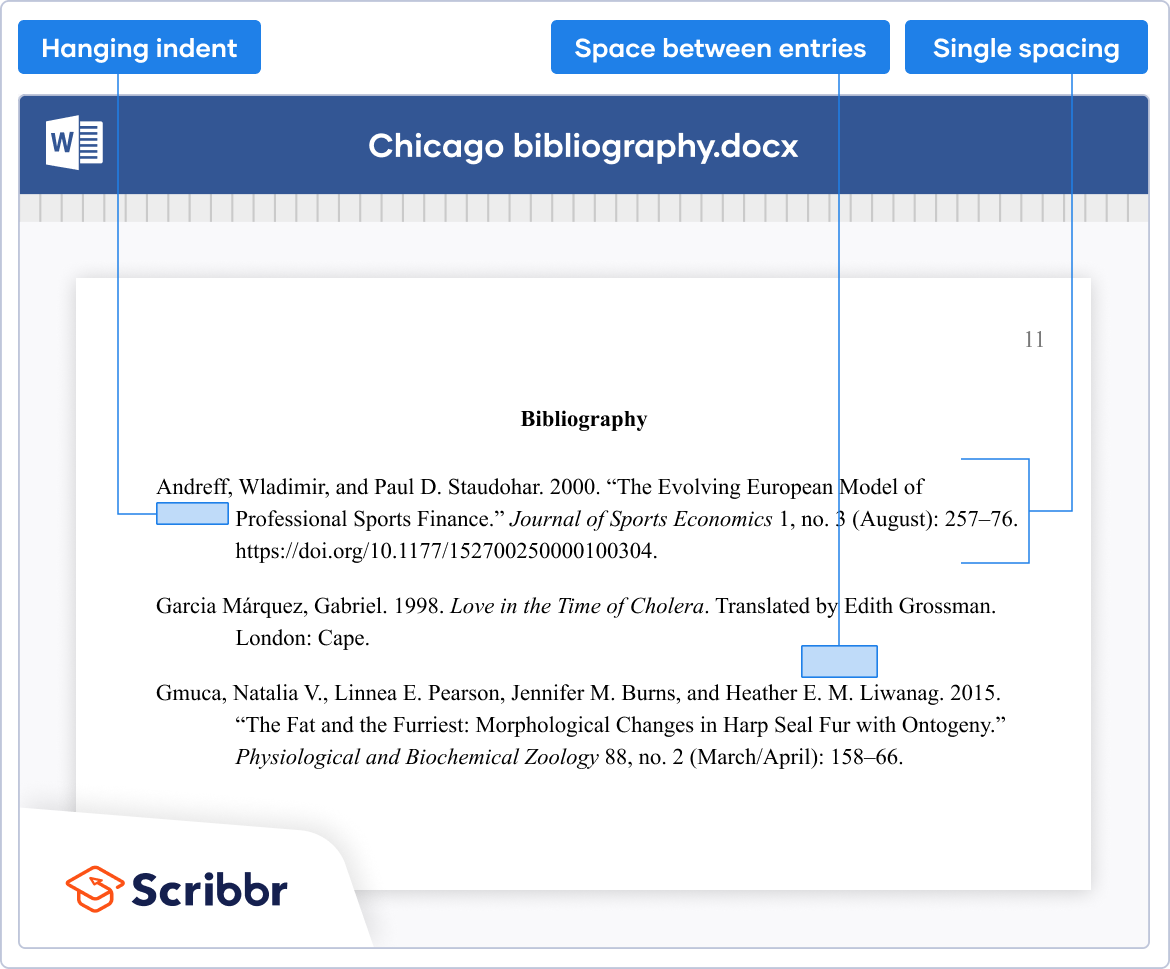
The bibliography, located at the end of your paper, lists all the sources cited in your notes, alphabetized by the author’s last name. It provides complete bibliographic information for each entry, serving as a consolidated reference list. The format for bibliography entries is similar to the first reference note but with some key differences in punctuation and order.
Example of a Bibliography Entry for a Book:
Dubois, Jean-Pierre. Gothic Grandeur: The Cathedrals of France. Paris: Éditions Lumière, 2022.
Example of a Bibliography Entry for a Journal Article:
Sharma, Anya. “Sustainable Tourism and Community Development in Southeast Asia.” Journal of Travel Research 58, no. 3 (2023): 110-125.
Example of a Bibliography Entry for a Website:
If you are citing a travel guide from a reputable website, such as an article on Life Out of the Box:
Lee, Chen. “A Culinary Journey Through Kyoto: Must-Try Dishes.” Last modified October 15, 2023. https://lifeoutofthebox.com/a-culinary-journey-through-kyoto.
Key Differences between Notes and Bibliography:
- Punctuation: Notes use commas to separate elements, while bibliographies often use periods.
- Author’s Name: In notes, the author’s name is in the standard first-name-last-name order. In the bibliography, the author’s last name comes first.
- Publication Information: For books, the publication information (city, publisher, year) is typically in parentheses in the note, but not in the bibliography.
The Author-Date System
The Author-Date system is more commonly used in the sciences and social sciences. It relies on parenthetical in-text citations and a reference list at the end of the paper.
In-Text Citations: Parenthetical References
In the Author-Date system, you insert a parenthetical citation directly into the text, usually at the end of a sentence or clause. This citation typically includes the author’s last name, the year of publication, and the page number (if applicable).
Example of a Parenthetical Reference for a Book:
Citing the same book about Parisian architecture:
The intricate stonework of Notre-Dame Cathedral showcases remarkable Gothic engineering (Dubois 2022, 45).
Example of a Parenthetical Reference for a Journal Article:
Referencing the research on sustainable tourism:
The integration of local communities is crucial for long-term tourism viability (Sharma 2023, 112).
Example of a Parenthetical Reference for a Website:
Referring to the Kyoto food guide:
Exploring the diverse street food scene is an essential part of experiencing Kyoto (Lee 2023).
The Reference List
The reference list, appearing at the end of your paper, includes all the sources cited in the text. Unlike the bibliography, it is organized alphabetically by the author’s last name, and each entry provides all the necessary details to identify and retrieve the source.
Example of a Reference List Entry for a Book:
Dubois, Jean-Pierre. 2022. Gothic Grandeur: The Cathedrals of France. Paris: Éditions Lumière.
Example of a Reference List Entry for a Journal Article:
Sharma, Anya. 2023. “Sustainable Tourism and Community Development in Southeast Asia.” Journal of Travel Research 58, no. 3: 110-125.
Example of a Reference List Entry for a Website:
Lee, Chen. 2023. “A Culinary Journey Through Kyoto: Must-Try Dishes.” Last modified October 15. https://lifeoutofthebox.com/a-culinary-journey-through-kyoto.
Key Differences between Author-Date and Notes/Bibliography:
- In-text cues: Author-Date uses brief parenthetical citations, while Notes/Bibliography uses superscript numbers.
- Reference List vs. Bibliography: Both contain comprehensive source information, but the Author-Date system’s list is solely for sources cited in the text, whereas a bibliography might include sources consulted but not directly cited.
- Flow: The Author-Date system can sometimes interrupt the reading flow with parenthetical citations, while footnotes are less intrusive but may require readers to repeatedly look to the bottom of the page.
Citing Specific Source Types in Chicago Style
The general principles of Chicago style apply to various source types. However, specific formatting details will vary depending on whether you are citing a book, a journal article, a website, or another format. Mastering these nuances is key to accurate citation.
Citing Books
Books are fundamental sources for travel research, offering in-depth explorations of destinations, history, and culture.
Books with One Author:
- Notes and Bibliography:
- Note (first reference): ¹ Author Last Name, Book Title (City of Publication: Publisher, Year), page number.
- Bibliography: Author Last Name, First Name. Book Title. City of Publication: Publisher, Year.
- Example (Book on the History of Rome):
- Note: ¹ Marcus Bellini, Imperial Echoes: A History of Ancient Rome (Rome: Edizioni Storiche, 2021), 78.
- Bibliography: Bellini, Marcus. Imperial Echoes: A History of Ancient Rome. Rome: Edizioni Storiche, 2021.
Books with Two or More Authors:
- Notes and Bibliography:
- Note (first reference for two authors): ¹ Author 1 Last Name and Author 2 Last Name, Book Title (City of Publication: Publisher, Year), page number.
- Note (first reference for three or more authors): ¹ Author 1 Last Name et al., Book Title (City of Publication: Publisher, Year), page number.
- Bibliography (two authors): Author 1 Last Name, First Name, and Author 2 Last Name, First Name. Book Title. City of Publication: Publisher, Year.
- Bibliography (three or more authors): Author 1 Last Name, First Name, Author 2 Last Name, First Name, and Author 3 Last Name, First Name. Book Title. City of Publication: Publisher, Year.
- Example (Guide to Machu Picchu):
- Note: ² Sofia Rodriguez and Javier Morales, Lost City of the Incas: A Visitor’s Guide to Machu Picchu (Lima: Andes Press, 2020), 102.
- Bibliography: Rodriguez, Sofia, and Javier Morales. Lost City of the Incas: A Visitor’s Guide to Machu Picchu. Lima: Andes Press, 2020.
Books with Editors:
When a book has an editor instead of an author, or is a collection of essays.
- Notes and Bibliography:
- Note (first reference): ¹ Editor First Name Last Name, ed., Book Title (City of Publication: Publisher, Year), page number.
- Bibliography: Editor Last Name, First Name, ed. Book Title. City of Publication: Publisher, Year.
- Example (Collection of Essays on African Culture):
- Note: ³ Anya Petrova, ed., Voices of Africa: Traditions and Modernity (Cape Town: Africana Books, 2019), 215.
- Bibliography: Petrova, Anya, ed. Voices of Africa: Traditions and Modernity. Cape Town: Africana Books, 2019.
Citing Journal Articles
Journal articles are vital for staying current with academic research in fields like tourism studies, cultural anthropology, and environmental science related to travel.
Journal Articles:
- Notes and Bibliography:
- Note (first reference): ¹ Author Last Name, “Article Title,” Journal Title Volume, no. Issue (Year): page number.
- Bibliography: Author Last Name, First Name. “Article Title.” Journal Title Volume, no. Issue (Year): page range.
- Example (Article on Venetian Festivals):
- Note: ⁴ Isabella Rossi, “The Evolution of Carnival in Venice,” Journal of European Cultural Studies 25, no. 2 (2022): 145.
- Bibliography: Rossi, Isabella. “The Evolution of Carnival in Venice.” Journal of European Cultural Studies 25, no. 2 (2022): 140-155.
Journal Articles with Page Range in Bibliography:
Notice that the bibliography entry includes the full page range of the article, while the note refers to a specific page being cited.
Citing Websites and Online Content
The digital realm offers a vast and often dynamic source of travel information. Citing websites accurately is crucial for acknowledging online resources.
Web Pages:
- Notes and Bibliography:
- Note (first reference): ¹ Author Last Name, “Page Title,” Website Name, last modified Month Day, Year, URL.
- Bibliography: Author Last Name, First Name. “Page Title.” Website Name. Last modified Month Day, Year. URL.
- Example (Blog Post on Bali Travel Tips):
- Note: ⁵ David Miller, “Insider Tips for Exploring Bali‘s Hidden Beaches,” Travel Explorer, last modified July 20, 2023, https://travelexplorer.com/bali-beaches.
- Bibliography: Miller, David. “Insider Tips for Exploring Bali‘s Hidden Beaches.” Travel Explorer. Last modified July 20, 2023. https://travelexplorer.com/bali-beaches.
Websites with No Author or Publication Date:
When information is missing, you cite what you have.
- Notes and Bibliography:
- Note (first reference): ¹ “Page Title,” Website Name, accessed Month Day, Year, URL.
- Bibliography: “Page Title.” Website Name. Accessed Month Day, Year. URL.
- Example (Information on Giza Pyramids from an Encyclopedia):
- Note: ⁶ “Great Pyramid of Giza,” National Geographic, accessed November 10, 2023, https://www.nationalgeographic.com/travel/landmarks/pyramids-of-giza.
- Bibliography: “Great Pyramid of Giza.” National Geographic. Accessed November 10, 2023. https://www.nationalgeographic.com/travel/landmarks/pyramids-of-giza.
Formatting and Consistency: Pillars of Chicago Style
Beyond understanding the structure of individual citations, adhering to the overall formatting guidelines of the Chicago Manual of Style is essential for presenting a polished and professional paper. Consistency in your formatting choices reinforces the credibility of your work and makes it easier for your readers to navigate.
General Formatting Guidelines
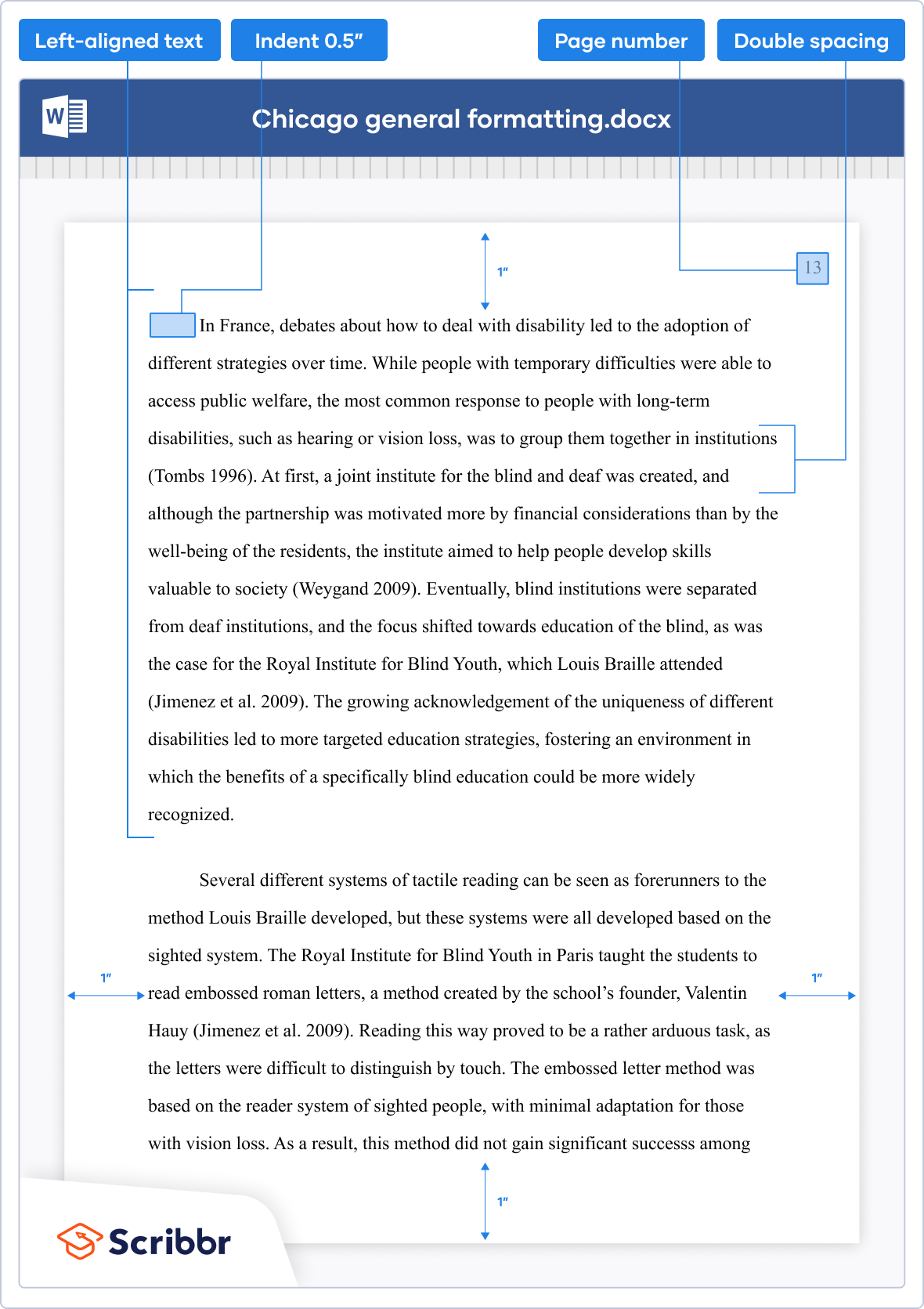
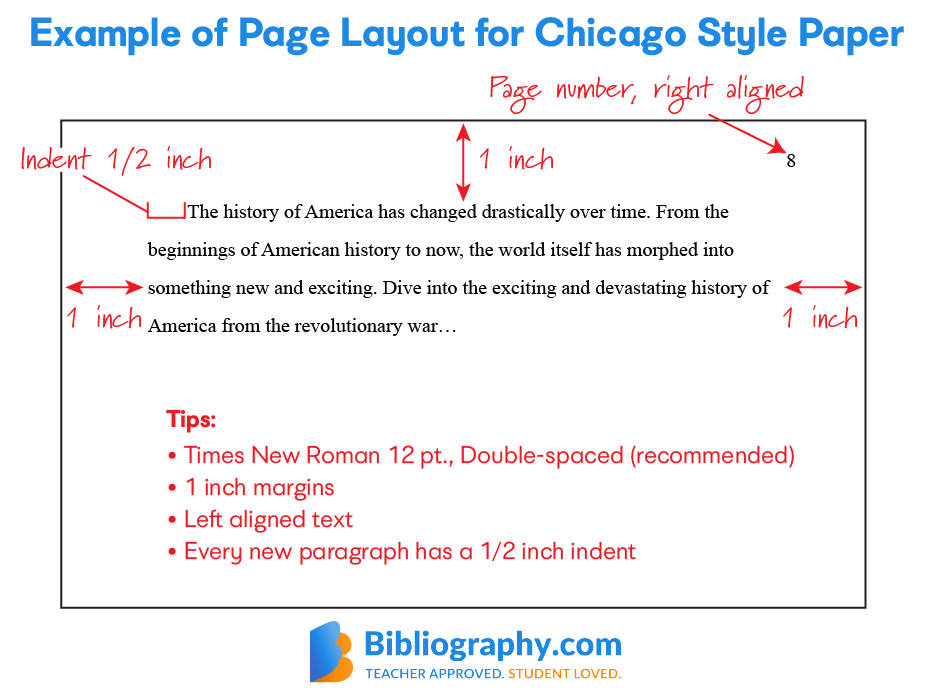
- Font and Spacing: Typically, the main text should be double-spaced, using a readable font like Times New Roman or Arial, in 12-point size. Footnotes and endnotes are often single-spaced with a double space between entries, or double-spaced throughout, depending on institutional guidelines.
- Margins: Standard 1-inch margins on all sides are generally recommended.
- Page Numbers: Page numbers should appear in the upper right-hand corner of each page, starting with the second page of your document. The first page may have a title block.
- Running Heads: While not always mandatory, a running head (a shortened version of the title or the chapter title) can be included at the top of each page, particularly in academic papers.
Consistency is Key
The most critical aspect of Chicago style, or any citation style, is consistency. Once you choose between the Notes and Bibliography system or the Author-Date system, stick with it throughout your entire paper. Similarly, if you decide to abbreviate certain terms or use a particular punctuation style, apply it uniformly. Inconsistencies can be distracting and may lead your readers to question the meticulousness of your research.
- Capitalization: Ensure consistent capitalization for titles of books, articles, and journals, following the Chicago style rules (often title case for English titles).
- Punctuation: Pay close attention to commas, periods, and colons in your citations. Small errors can change the meaning or clarity of an entry.
- Abbreviations: If you choose to use abbreviations (e.g., for months or certain publishers), ensure they are used consistently.
Revisiting Your Citations
After completing your research and writing, it is imperative to thoroughly review your citations. This is often best done by printing your paper, as errors can be more easily spotted on paper than on a screen.
- Check for Completeness: Ensure every source mentioned in your notes or parenthetical citations appears in your bibliography or reference list, and vice-versa.
- Verify Accuracy: Double-check that all bibliographic details (author names, titles, publication years, page numbers, URLs) are correct and match the original sources.
- Proofread for Typos: Even the most diligent researcher can make typos. A final proofread specifically for citation errors is crucial.
By embracing the principles of Chicago Style, whether you’re documenting research for a thesis on the cultural significance of the Great Wall of China or crafting a detailed travel guide to the culinary delights of Vietnam, you are elevating the quality and trustworthiness of your work. This attention to detail not only satisfies academic requirements but also builds confidence in your readers, assuring them that your insights are grounded in solid research and properly attributed sources, much like the well-researched content found on Life Out of the Box.
LifeOutOfTheBox is a participant in the Amazon Services LLC Associates Program, an affiliate advertising program designed to provide a means for sites to earn advertising fees by advertising and linking to Amazon.com. Amazon, the Amazon logo, AmazonSupply, and the AmazonSupply logo are trademarks of Amazon.com, Inc. or its affiliates. As an Amazon Associate we earn affiliate commissions from qualifying purchases.