
When embarking on academic research, travel writing, or any endeavor requiring meticulous documentation, accurately citing sources is paramount. For aspiring travel bloggers, researchers focusing on the burgeoning field of digital ethnography within tourism, or students compiling a travelogue, understanding how to cite a platform as ubiquitous and dynamic as YouTube according to the Chicago Manual of Style is essential. The Chicago Manual of Style (CMOS), known for its flexibility with both notes-bibliography and author-date systems, offers a comprehensive framework for referencing online content. This guide will delve into the nuances of citing [YouTube] videos using the Chicago style, ensuring your work is both credible and compliant.
Understanding the Chicago Style for Digital Media
The Chicago Manual of Style acknowledges the evolving landscape of information dissemination and provides guidelines for citing various digital formats. Unlike traditional print media, online sources, particularly those on platforms like [YouTube], present unique challenges due to their ephemeral nature, varying levels of stability, and the collaborative or user-generated content they often feature. The core principle remains consistent: provide enough information for your reader to locate the original source.
The Notes-Bibliography System
The notes-bibliography system, often preferred in the humanities, uses footnotes or endnotes to cite sources, followed by a bibliography at the end of the work.
Footnotes/Endnotes for YouTube Videos
When citing a [YouTube] video in a footnote or endnote, the following elements are generally included:
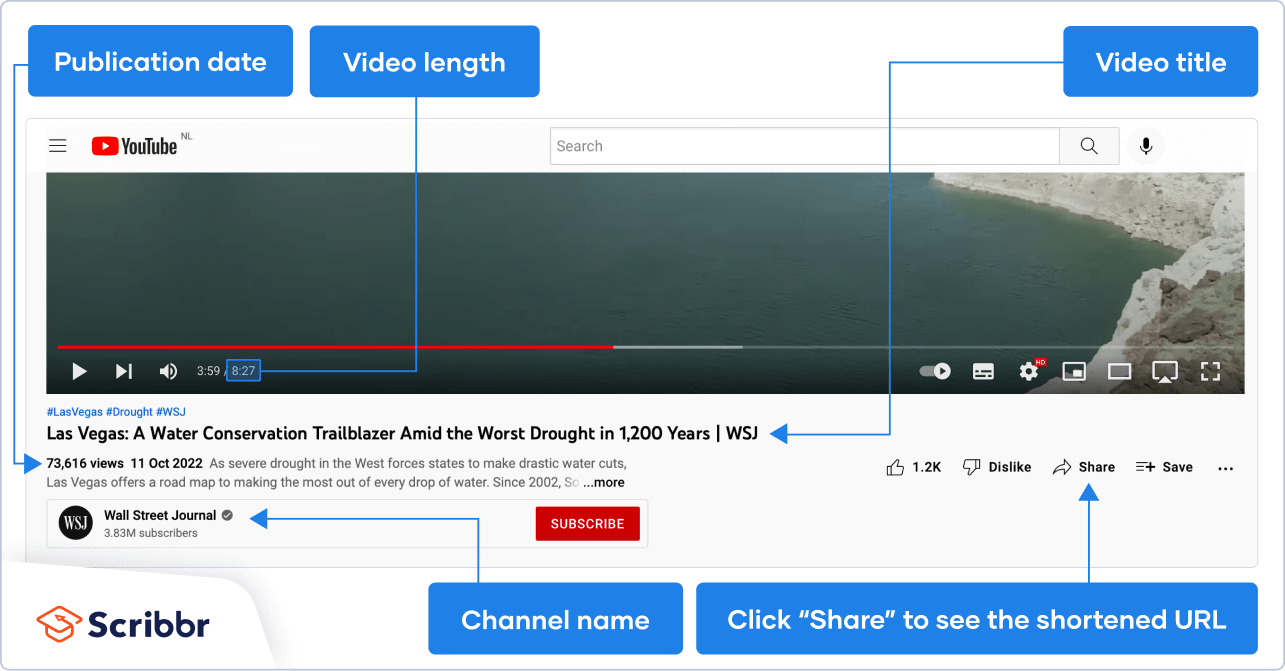
- Author or Channel Name: This is typically the name of the individual creator or the channel producing the video. If an individual’s name is clearly stated as the presenter, use that. Otherwise, the channel name suffices.
- Title of Video: This should be the exact title as it appears on [YouTube], enclosed in quotation marks.
- Title of Website: In this case, “YouTube.”
- Publication Date: The date the video was uploaded, as indicated on [YouTube].
- URL: The direct web address of the video.
- Access Date (Optional but Recommended): The date you accessed the video. This is particularly important for online sources that may change or be removed.
Example Footnote/Endnote:
- Anthony Bourdain, “Parts Unknown: Vietnam – Episode 1: Hanoi,” directed by Christopher Collins, video, YouTube, uploaded by CNN, January 15, 2013.
Explanation of Components:
- Anthony Bourdain: The primary individual associated with the content, even if he is not the sole creator.
- “Parts Unknown: Vietnam – Episode 1: Hanoi”: The specific title of the video, enclosed in quotation marks.
- directed by Christopher Collins: If a director is explicitly credited and relevant to your citation, include them.
- video: Indicates the medium.
- YouTube: The platform name followed by the URL.
- uploaded by CNN: The entity responsible for uploading the video, especially if it differs from the primary content creator.
- January 15, 2013: The upload date.
Bibliography Entry for YouTube Videos
The bibliography entry for a [YouTube] video is similar to the footnote but formatted slightly differently, with the author/channel name reversed (last name first) if it’s an individual.
Example Bibliography Entry:
Bourdain, Anthony. “Parts Unknown: Vietnam – Episode 1: Hanoi.” Directed by Christopher Collins. Video. YouTube. Uploaded by CNN, January 15, 2013.
Key Differences in Bibliography:
- The author/channel name is reversed if it’s an individual’s name.
- The entry begins with the author/channel name.
- The URL is typically placed at the end.
The Author-Date System
The author-date system, commonly used in the social sciences and sciences, uses parenthetical in-text citations and a reference list at the end.
In-Text Citations for YouTube Videos
In-text citations in the author-date system are brief and direct the reader to the full entry in the reference list.
Example In-Text Citation:
(Bourdain 2013)
If you are referencing a specific point in the video, you might include a timestamp.
Example In-Text Citation with Timestamp:
(Bourdain 2013, 00:15:32)
Reference List Entry for YouTube Videos
The reference list entry in the author-date system is structured to provide the necessary details for locating the source.
Example Reference List Entry:
Bourdain, Anthony. 2013. “Parts Unknown: Vietnam – Episode 1: Hanoi.” Directed by Christopher Collins. Video. YouTube. Uploaded by CNN, January 15.
Key Differences in Reference List:
- The year of publication (upload date) immediately follows the author’s name.
- The structure is generally more concise than the bibliography entry in the notes-bibliography system.
Navigating Specific Challenges in Citing YouTube Videos
Citing [YouTube] videos can present unique situations that require careful consideration.
Crediting the Creator vs. The Uploader
Sometimes, the individual who created the content might be different from the channel that uploaded it. For instance, a documentary filmmaker might have their work uploaded by a specific educational institution’s channel.
- If the uploader is the primary entity and also the creator: “Channel Name. ‘Video Title.’ YouTube, Date.”
- If the creator is distinct from the uploader: You generally prioritize the most direct source or the entity that controls the content’s presentation. Often, the channel name that uploaded it is sufficient, but you can add details if crucial for context.
Example:
- Footnote/Endnote: Nomadic Matt, “How to Pack a Carry-On Suitcase Like a Pro,” video, YouTube, uploaded by Nomadic Matt, March 5, 2022.
- Bibliography: Nomadic Matt. “How to Pack a Carry-On Suitcase Like a Pro.” Video. YouTube. Uploaded by Nomadic Matt, March 5, 2022.
When an Individual’s Name Isn’t Clearly Provided
If a video is uploaded by a channel that doesn’t clearly attribute authorship to a specific individual (e.g., a corporate travel agency channel), use the channel name as the author.
Example:
- Footnote/Endnote: National Geographic, “Journey Through Patagonia: A Visual Expedition,” video, YouTube, uploaded by National Geographic, June 20, 2020.
- Bibliography: National Geographic. “Journey Through Patagonia: A Visual Expedition.” Video. YouTube. Uploaded by National Geographic, June 20, 2020.
Videos Embedded on Other Websites
If you encountered a [YouTube] video embedded on another website (e.g., a travel blog or news site), you generally cite the [YouTube] source directly, not the embedding website, unless the embedding website has added significant commentary or context that is the focus of your citation. The logic is that [YouTube] is the original repository and point of access for the video itself.
Citing Archived or Unavailable Videos
If a video has been removed or made private, this is a significant issue for citation. In academic contexts, it’s best to avoid citing sources that cannot be accessed. If you absolutely must reference it (e.g., you have a personal copy), you would note its unavailability. However, for typical travel writing or research, stick to accessible content.
The Importance of Accuracy and Context in Travel Citations
For travel writers and researchers, citing [YouTube] videos is not merely an academic formality; it’s about giving credit where it’s due and allowing your audience to explore further. A well-cited video can:
- Validate your claims: If you’re discussing a specific travel hack or a unique viewpoint on a destination, linking to a [YouTube] video that corroborates your information adds significant weight.
- Enhance reader experience: Readers can visually experience a place, a cooking demonstration of local cuisine, or an activity you’ve described, enriching their understanding and inspiring their own travel plans.
- Support your research: For academic papers on tourism trends, digital nomads, or destination marketing, precise citations are crucial for scholarly integrity.
When citing travel-related content on [YouTube], consider the authority and perspective of the creator. Is it a professional travel vlogger like Kara and Nate, a documentary from a reputable source like National Geographic, or a personal account from a fellow traveler? This context can be implicitly or explicitly conveyed through your citation and accompanying text.

Citing Specific Travel Content Types
Travel Guides and Vlogs:
Often produced by individuals or dedicated channels, these are frequently cited for destination information, practical tips, and visual portrayals of places.
- Example: “For an immersive look at the bustling streets of Marrakech, one traveler’s detailed vlog offers invaluable insights into navigating the souks and finding authentic local eateries.”
- Footnote/Endnote: “Exploring the Medina of Marrakech,” video, YouTube, uploaded by TravelWithMe, July 12, 2023.
Cultural Documentaries and Explorations:
Channels dedicated to culture, history, or specific regions often produce high-quality content relevant to tourism.
- Example: “The rich tapestry of Kyoto‘s traditional arts is beautifully captured in this documentary segment, showcasing the intricate processes of kimono making.”
- Footnote/Endnote: “The Art of Kimono Making in Kyoto,” video, YouTube, uploaded by Culture Explorer, September 1, 2021.
Food and Culinary Experiences:
Videos demonstrating local recipes, market tours, or restaurant reviews are common in travel content.
- Example: “To understand the authentic preparation of Pad Thai, viewing this instructional video by a seasoned street food vendor in Bangkok is highly recommended.”
- Footnote/Endnote: “Authentic Pad Thai Recipe from Bangkok Street Food Vendor,” video, YouTube, uploaded by ThaiFoodie, April 18, 2022.
By meticulously applying the Chicago Manual of Style guidelines, you can effectively incorporate [YouTube] video evidence into your travel narratives, research, and guides, ensuring your work is both informative and academically sound. Remember that consistency in application, whether using the notes-bibliography or author-date system, is key to maintaining clarity and professionalism in your citations.
LifeOutOfTheBox is a participant in the Amazon Services LLC Associates Program, an affiliate advertising program designed to provide a means for sites to earn advertising fees by advertising and linking to Amazon.com. Amazon, the Amazon logo, AmazonSupply, and the AmazonSupply logo are trademarks of Amazon.com, Inc. or its affiliates. As an Amazon Associate we earn affiliate commissions from qualifying purchases.