
Embarking on a new business venture in the Grand Canyon State is an exciting prospect. For many entrepreneurs, establishing a Limited Liability Company (LLC) is a crucial first step, offering a blend of personal liability protection and operational flexibility. Arizona provides a business-friendly environment, making it an attractive location for forming an LLC. This guide will walk you through the essential steps to successfully create your LLC in Arizona, ensuring a solid foundation for your business endeavors.
Understanding the Arizona LLC Framework
An LLC is a business structure that combines the pass-through taxation of a sole proprietorship or partnership with the limited liability of a corporation. This means that the personal assets of the LLC owners (called members) are protected from business debts and lawsuits. In Arizona, LLCs are governed by the Arizona Limited Liability Company Act, which outlines the requirements for formation, operation, and dissolution.
Key Advantages of an Arizona LLC
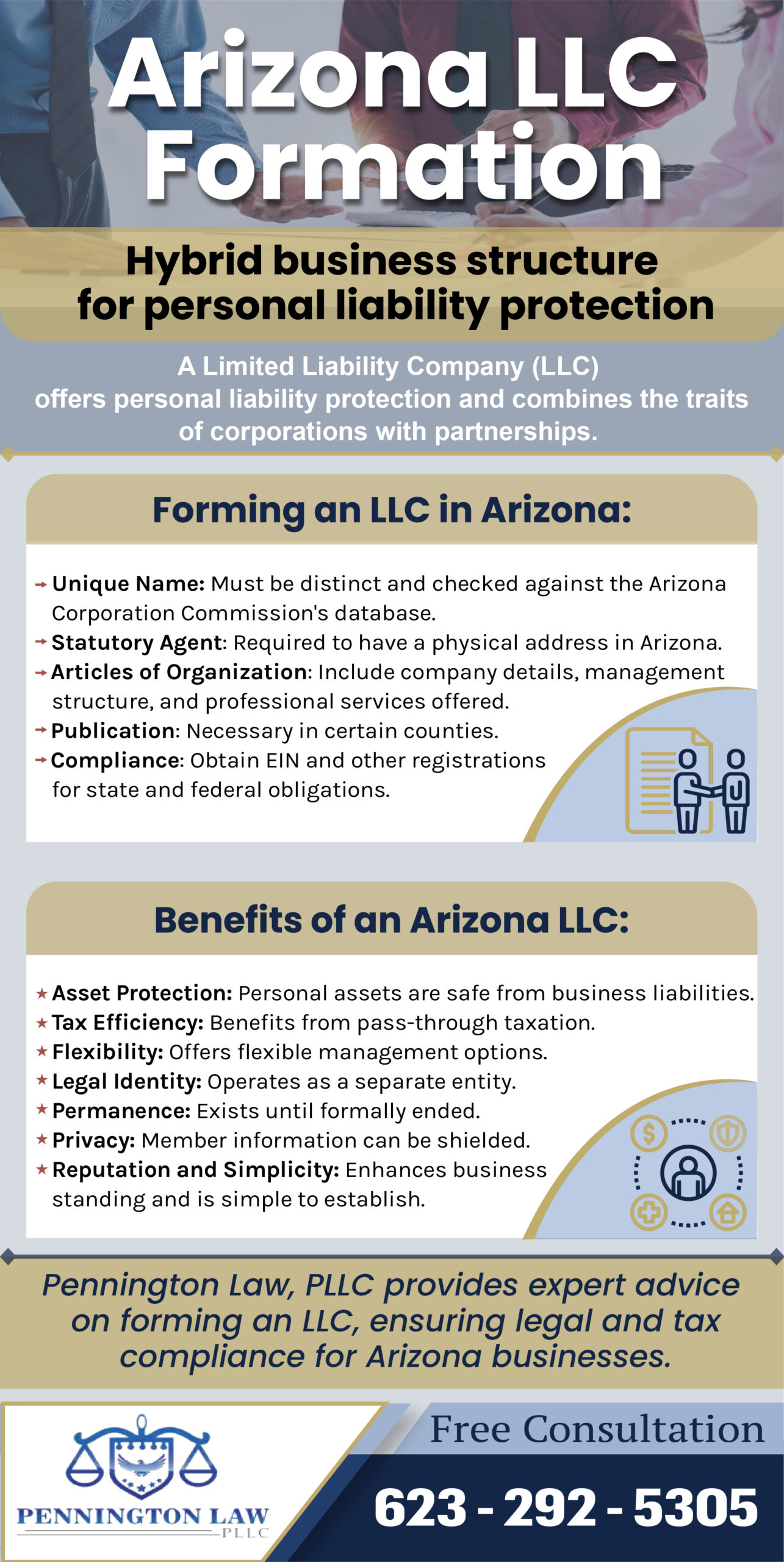
- Limited Liability Protection: This is the primary benefit. Your personal assets, such as your home, car, and savings, are shielded from business debts and legal claims against the LLC.
- Pass-Through Taxation: By default, LLCs are taxed as pass-through entities. This means that the business’s profits and losses are passed through to the members’ personal income tax returns, avoiding the “double taxation” often associated with traditional C-corporations.
- Operational Flexibility: LLCs have fewer formal requirements than corporations, such as mandatory annual meetings or extensive record-keeping. Management can be structured in various ways, either by members or by appointed managers.
- Credibility: Forming an LLC can lend an air of professionalism and credibility to your business, which can be beneficial when dealing with clients, suppliers, and lenders.
- Simplicity: The formation and ongoing compliance requirements for an LLC in Arizona are generally less complex than those for other business structures.
Choosing the Right Business Name
Selecting a unique and appropriate name for your LLC is a critical initial step. The Arizona Corporation Commission (ACC) requires that your business name be distinguishable from existing business names registered in the state.
Name Availability Search
Before committing to a name, it is imperative to conduct a thorough name availability search. You can do this directly on the Arizona Corporation Commission’s website. This search will reveal if your desired name, or a name confusingly similar, is already in use by another registered entity.
Naming Requirements
Your LLC name must adhere to specific guidelines set by the state:
- It must contain the words “Limited Liability Company” or the abbreviation “LLC” or “L.L.C.”
- It cannot contain words that might mislead the public into believing it is a government agency or a different type of business entity (e.g., “Bank,” “Trust,” “Insurance”).
- Avoid using words that are restricted by state law, such as “Certified Public Accountant” if your LLC is not providing accounting services.
Reserving Your Business Name
If you have found an available name but are not ready to file your Articles of Organization, you have the option to reserve the name. This can be done by filing a Name Reservation Request with the Arizona Corporation Commission. This reservation is typically valid for a specified period, allowing you time to finalize your formation documents.
The Formation Process: Filing with the Arizona Corporation Commission
The core of establishing your LLC in Arizona lies in filing the correct documentation with the Arizona Corporation Commission. This process officially registers your business with the state and grants it legal standing.
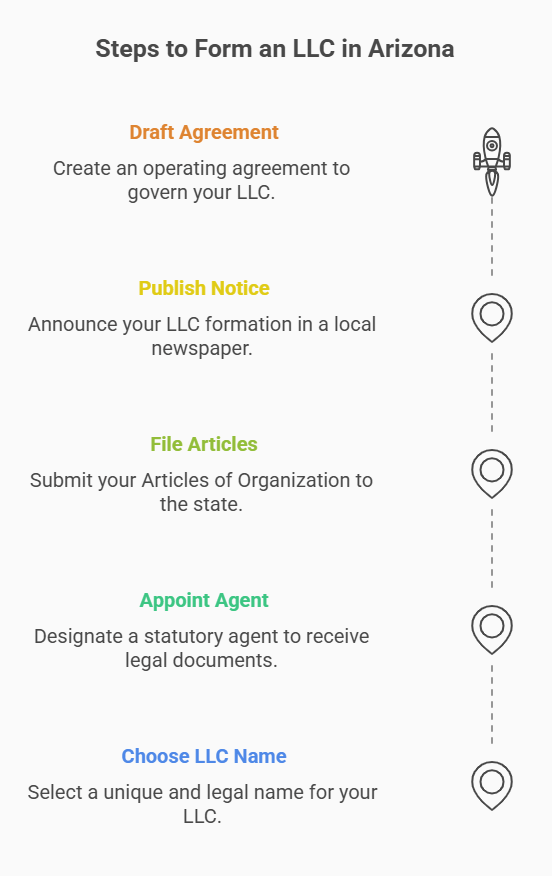
Step 1: Appointing a Registered Agent
Every LLC in Arizona must designate a registered agent. This is an individual or a business entity responsible for receiving official legal documents, such as service of process (lawsuit notifications), on behalf of the LLC.
Requirements for a Registered Agent
- The registered agent must have a physical street address in Arizona (a P.O. Box is not acceptable).
- The agent must be available during normal business hours to accept deliveries.
- The registered agent can be an individual resident of Arizona, or a business entity authorized to do business in Arizona.
Choosing Your Registered Agent
You can choose to act as your own registered agent if you meet the criteria and have a reliable business address in Arizona. Alternatively, many businesses opt for a professional registered agent service, which can provide convenience, privacy, and ensure that important legal documents are never missed. Companies like Northwest Registered Agent or Incorporate.com offer these services.
Step 2: Filing the Articles of Organization
The Articles of Organization is the primary document filed with the Arizona Corporation Commission to legally form your LLC. This document contains essential information about your business.
Key Information Required
- LLC Name: The chosen and verified name of your LLC.
- Registered Agent Information: The name and physical address of your designated registered agent.
- Principal Office Address: The main business address of your LLC.
- Management Structure: Whether the LLC will be member-managed (run by its owners) or manager-managed (run by appointed managers).
- Organizer’s Name and Address: The name and address of the person filing the document.
- Effective Date: You can specify a future date for the LLC to become effective, if desired.
Filing Methods
You can file your Articles of Organization electronically through the Arizona Corporation Commission’s website, by mail, or in person. Electronic filing is often the fastest and most efficient method. There is a filing fee associated with this submission.
Post-Formation Essentials for Your Arizona LLC
Once your Articles of Organization are approved and your LLC is officially formed, there are several crucial steps to take to ensure your business operates smoothly and remains compliant with state and federal regulations.

Step 3: Obtaining an Employer Identification Number (EIN)
An Employer Identification Number (EIN), also known as a Federal Tax Identification Number, is a unique nine-digit number assigned by the Internal Revenue Service (IRS) to business entities operating in the United States.
When You Need an EIN
- If your LLC has more than one member.
- If your LLC plans to hire employees.
- If your LLC operates as a corporation or partnership for tax purposes.
- If your LLC files tax returns for excise taxes, alcohol, tobacco, or firearms.
- If your LLC is involved with certain types of organizations, such as trusts or estates.
How to Apply
You can apply for an EIN online directly through the IRS website. This is a free and straightforward process that typically results in receiving your EIN immediately.
Step 4: Drafting an Operating Agreement
While not legally required by the state of Arizona, an Operating Agreement is a vital internal document for any LLC. It is essentially a roadmap that outlines the ownership structure, operating procedures, and management responsibilities of your LLC.
Benefits of an Operating Agreement
- Defines Ownership Percentages: Clearly states each member’s ownership stake and their contributions.
- Outlines Management Roles: Details how decisions will be made, who has authority, and the responsibilities of managers or members.
- Specifies Profit and Loss Distribution: Dictates how profits and losses will be allocated among members.
- Handles Member Changes: Establishes procedures for admitting new members, members leaving, or the transfer of ownership interests.
- Establishes Dispute Resolution: Provides a framework for resolving disagreements among members.
- Preserves Limited Liability: A well-drafted agreement can help reinforce the separation between the business and its owners, further protecting personal assets.
Key Provisions to Include
Your Operating Agreement should cover aspects such as:
- Member voting rights.
- Capital contributions.
- Distribution of profits and losses.
- Management duties and powers.
- Procedures for dissolution.
- Buy-sell provisions.
Step 5: Opening a Business Bank Account
It is essential to maintain a clear separation between your personal finances and your business finances. This is best achieved by opening a dedicated business bank account for your LLC.
Why a Separate Account is Crucial
- Maintains Limited Liability: Commingling personal and business funds can jeopardize your LLC’s liability protection, potentially allowing creditors to access your personal assets.
- Simplifies Accounting: Having a dedicated account makes bookkeeping, tax preparation, and financial tracking much easier and more accurate.
- Enhances Professionalism: Using a business account for all transactions presents a more professional image to clients and vendors.
Requirements for Opening
When opening a business bank account, you will typically need:
- Your LLC’s Articles of Organization.
- Your LLC’s EIN.
- A copy of your Operating Agreement (though some banks may not require it initially).
- Personal identification for authorized signers.
Ongoing Compliance in Arizona
Forming your LLC is just the beginning. To maintain your LLC’s good standing with the state and avoid potential penalties, it’s important to stay on top of ongoing compliance requirements.
Annual Reporting and Fees
Arizona does not require a separate annual report for LLCs in the same way some other states do. However, LLCs are subject to an annual fee that must be paid to the Arizona Corporation Commission. This fee helps fund the commission’s operations and is critical for maintaining your LLC’s active status. Failure to pay this fee can result in administrative dissolution of your LLC.
Business Licenses and Permits
Depending on the nature of your business and its location, you may need to obtain various federal, state, and local licenses and permits.
- Federal Licenses: These are required for certain industries, such as alcohol sales, firearms, or transportation.
- State Licenses: These are issued by various Arizona state agencies and may be industry-specific. Examples include licenses for contractors, real estate agents, or healthcare professionals.
- Local Licenses and Permits: Cities and counties in Arizona often have their own business license requirements, zoning regulations, and permits for specific activities. It is essential to research the requirements for the specific city or county where your business will operate.
Tax Obligations
As a pass-through entity, your LLC’s profits and losses will be reported on your personal income tax return. However, you still have federal and state tax obligations to consider:
- Federal Taxes: You will file IRS Form 1065 (U.S. Return of Partnership Income) if your LLC is multi-member, and then members will report their share of income or loss on IRS Form 1040. Single-member LLCs are generally treated as sole proprietorships for tax purposes and report income on Schedule C of Form 1040.
- Arizona State Taxes: Arizona has its own state income tax. You will need to comply with Arizona Department of Revenue requirements for reporting and paying state income taxes. Additionally, if your business sells tangible goods, you will likely need to collect and remit Arizona Transaction Privilege Tax (TPT), which is similar to a sales tax.
By diligently following these steps and understanding the ongoing responsibilities, you can successfully create and maintain a robust LLC in Arizona, paving the way for your entrepreneurial success.
LifeOutOfTheBox is a participant in the Amazon Services LLC Associates Program, an affiliate advertising program designed to provide a means for sites to earn advertising fees by advertising and linking to Amazon.com. Amazon, the Amazon logo, AmazonSupply, and the AmazonSupply logo are trademarks of Amazon.com, Inc. or its affiliates. As an Amazon Associate we earn affiliate commissions from qualifying purchases.