
Louisiana, a state brimming with unparalleled culture, historic landmarks, and a vibrant tourism industry, offers a unique landscape for entrepreneurs. From the bustling streets of New Orleans to the serene bayous of Cajun Country, the opportunities for businesses in travel, accommodation, and lifestyle are immense. If you’re dreaming of launching a boutique hotel, a unique tour company, a short-term rental property, or any venture catering to the millions who visit this enchanting state annually, forming a Limited Liability Company (LLC) is a crucial first step.
An LLC provides a robust legal structure that safeguards your personal assets, offers flexibility in taxation, and lends credibility to your business endeavors. For those immersed in the hospitality and tourism sectors, where interactions with the public, property management, and diverse operational needs are common, the protection an LLC offers is invaluable. This guide will walk you through the process of creating an LLC in Louisiana, specifically tailored with insights for travel, hotel, and lifestyle entrepreneurs looking to capitalize on the state’s rich allure.
Why Form An LLC In The Louisiana Travel & Tourism Sector?
The allure of Louisiana as a travel destination is undeniable. Its unique blend of French, Spanish, African, and Caribbean influences creates a distinct cultural tapestry that attracts visitors worldwide. This translates into a thriving market for tourism-related businesses, but it also comes with specific operational considerations. Forming an LLC is not just a formality; it’s a strategic business decision that offers multiple advantages, especially for those operating within the dynamic travel and tourism industries.
1. Personal Asset Protection (Limited Liability): This is arguably the most significant benefit of an LLC. In the hospitality industry, businesses often deal with numerous clients, employees, and physical properties. Accidents can happen, disputes can arise, and unforeseen circumstances can lead to legal claims. Without an LLC, your personal assets – such as your home, car, and personal savings – could be at risk if your business faces a lawsuit or significant debt. An LLC creates a legal separation between you and your business, ensuring that your personal assets remain protected from business liabilities. Imagine running a charming bed and breakfast in the Garden District of New Orleans, and a guest slips and falls. An LLC ensures that only the assets of your business are exposed, not your personal fortune.
2. Enhanced Credibility and Professionalism: In the competitive travel and tourism market, credibility is paramount. Whether you’re pitching to investors for a new resort development near Lake Charles, seeking partnerships with local attractions, or advertising your unique tour experiences along the Mississippi River, operating as an LLC signals a serious, legitimate enterprise. It instills confidence in potential clients, partners, and financial institutions, making it easier to secure funding, sign contracts, and attract customers. A registered LLC name adds a professional sheen that sole proprietorships often lack.
3. Flexible Taxation Options: LLCs offer significant flexibility when it comes to how your business is taxed. By default, an LLC is taxed as a “pass-through” entity, meaning profits and losses are reported on the owner’s personal tax return, avoiding “double taxation” common with C-corporations. However, an LLC can also elect to be taxed as an S-corporation or even a C-corporation if it offers tax advantages for your specific business structure and income level. This flexibility is particularly beneficial for growing businesses in the travel sector, allowing owners to optimize their tax strategy as their venture expands from a single short-term rental to a portfolio of luxury villas.
4. Operational Simplicity and Flexibility: Compared to corporations, LLCs are generally easier to set up and maintain, with fewer ongoing administrative requirements. This simplicity allows entrepreneurs to focus more on the core aspects of their travel or accommodation business – curating experiences, managing bookings, and enhancing guest satisfaction – rather than getting bogged down in complex corporate governance. The ability to structure management (member-managed or manager-managed) also provides operational flexibility to suit various partnership arrangements common in the hospitality industry, such as co-owning a guesthouse or running a tour company with multiple guides.
5. Attracting Investment and Partnerships: As your travel business grows, you might seek outside investment or wish to bring on partners. An LLC structure makes this process smoother. It allows for different ownership percentages and distribution of profits, which can be clearly outlined in an operating agreement. For those looking to expand their footprint from a local Baton Rouge food tour to a statewide network of culinary experiences, an LLC provides the legal framework to accommodate growth and strategic alliances.
In essence, forming an LLC in Louisiana provides a secure, credible, and adaptable foundation for any entrepreneur looking to tap into the state’s thriving travel, hotel, and lifestyle market. It protects your personal future while empowering your business to flourish.
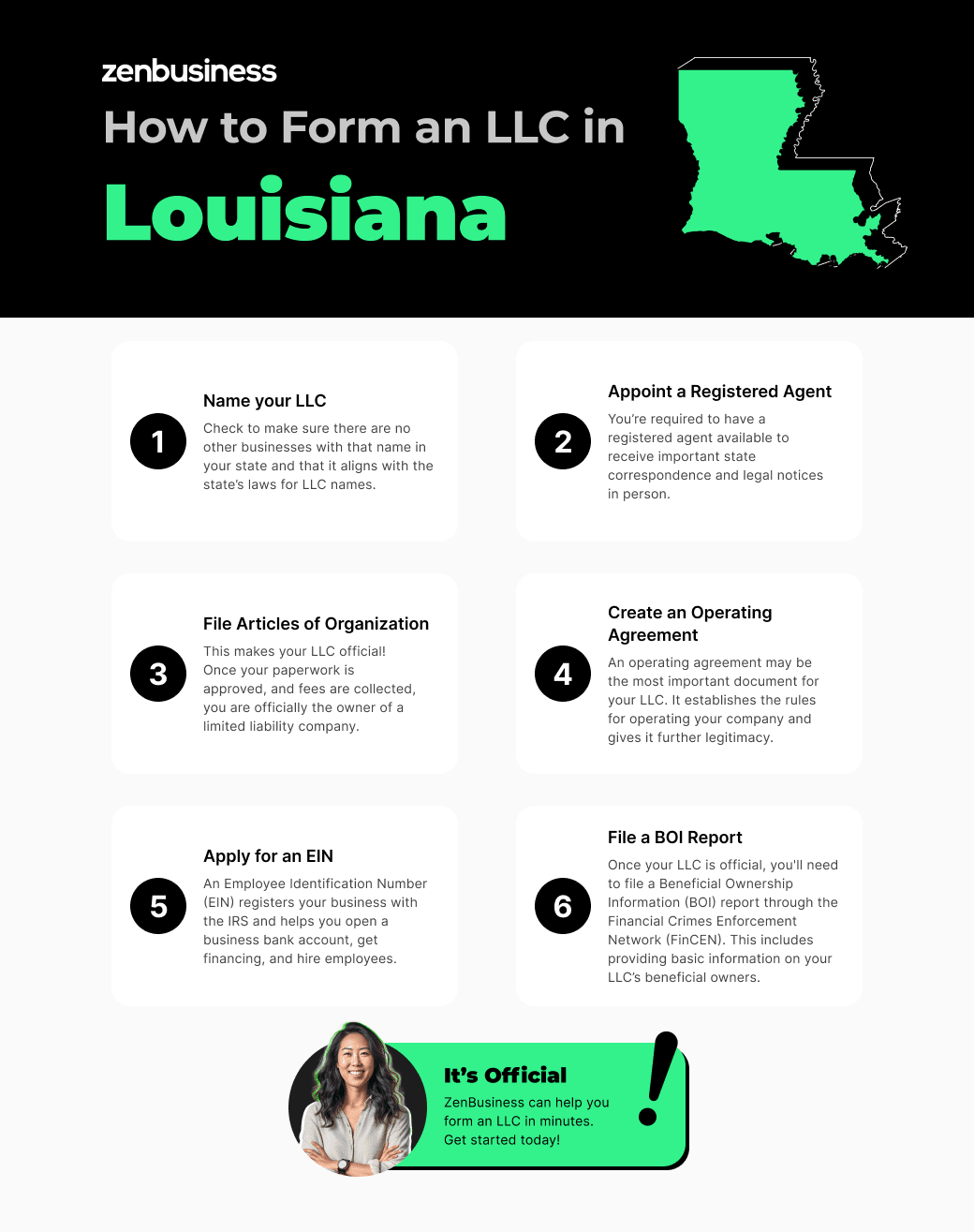
Essential Steps To Form Your Louisiana LLC
Forming an LLC in Louisiana involves a series of clear steps. While the overall process is straightforward, attention to detail is crucial, especially when considering the unique regulations that may apply to specific travel or hospitality businesses.
Step 1: Choose A Unique Business Name
Your business name is your brand identity, especially vital in the image-driven travel and tourism sectors. It should be memorable, relevant, and convey the essence of your offering, whether it’s a cozy inn, an adventurous swamp tour, or a luxury travel consultancy.
- Availability Search: Before you fall in love with a name, you must ensure it’s available in Louisiana. The Louisiana Secretary of State website allows you to search for existing business names. This is critical to avoid legal conflicts and ensure your chosen name can be registered.
- Legal Requirements: Your LLC name must include “Limited Liability Company,” “L.L.C.,” or “LLC.” For instance, “Bayou Adventures LLC” or “Creole Charm Inn, L.L.C.”
- Branding for Travel: Consider names that evoke the local culture, landmarks like the French Quarter, or the specific experiences you offer. A catchy and descriptive name will attract tourists searching for unique Louisiana experiences. You can also reserve a name for a fee if you’re not ready to file immediately.
Step 2: Appoint A Registered Agent
Every LLC in Louisiana must designate a Registered Agent. This is a crucial role for legal compliance.
- What is a Registered Agent? A Registered Agent is an individual or entity (corporation or another LLC) with a physical street address in Louisiana (not a P.O. Box) who is available during normal business hours to receive official legal documents, tax notices, and service of process on behalf of your LLC.
- Who can be one? You can act as your own Registered Agent if you meet the requirements, or you can appoint another individual (e.g., an attorney or a business partner) who resides in Louisiana. Many businesses, especially those focused on travel and constantly on the move, prefer to use a professional Registered Agent service. This ensures that important documents are always received promptly, even if you’re guiding a tour through Audubon Zoo or managing bookings from afar.
Step 3: File Your Articles Of Organization

This is the core legal document that officially creates your LLC with the state.
- Where to File: You will file your Articles of Organization with the Louisiana Secretary of State. This can typically be done online, by mail, or in person.
- Information Required: The Articles of Organization typically include:
- The name of your LLC.
- The name and address of your Registered Agent.
- A statement that the LLC is organized for any lawful purpose.
- The duration of the LLC (typically perpetual).
- Name and address of each organizer.
- Impact on Travel Businesses: For a tour company or hotel, timely filing ensures your business is legally recognized, allowing you to secure permits, open bank accounts, and enter into contracts for services like booking platforms or linen suppliers.
Step 4: Create An Operating Agreement
While not legally required to file with the state, an Operating Agreement is a critical internal document for any LLC, especially for those in dynamic industries like travel and hospitality where partnerships and property management are common.
- Purpose: This document outlines the ownership structure, management responsibilities, voting rights, profit and loss distribution, and procedures for adding or removing members. It acts as a foundational blueprint for how your LLC will operate.
- For Hospitality Entrepreneurs: If you’re co-owning a rental property in Lafayette, running a group travel agency, or have multiple partners in a Shreveport resort, a clear Operating Agreement prevents future disputes and provides a framework for decision-making. It details what happens if a partner wants to sell their share or if there’s a disagreement on expanding the business.
Step 5: Obtain An EIN (Employer Identification Number)
An EIN is like a Social Security number for your business.
- When is it needed? You’ll need an EIN from the IRS if your LLC has more than one member, if it plans to hire employees (e.g., tour guides, hotel staff, front desk clerks), or if it elects to be taxed as a corporation. Even single-member LLCs often get an EIN for banking and credibility purposes.
- How to get one: You can obtain an EIN for free directly from the IRS website. The process is quick and simple. Having an EIN is essential for opening business bank accounts, filing federal and state taxes, and processing payroll.
Step 6: Secure Necessary Licenses & Permits
This step is arguably the most critical and varied for travel, hotel, and lifestyle businesses in Louisiana, as requirements can differ significantly by industry and even by parish or city.
- State Level: Check with the Louisiana Department of Revenue for sales tax permits, especially if you’re providing accommodations or selling goods (e.g., souvenirs at the National WWII Museum). Businesses dealing with food and beverages (e.g., a café in a boutique hotel, a culinary tour) will need health permits.
- Local Level (City/Parish): This is where it gets highly specific.
- Hotels & Short-Term Rentals: Cities like New Orleans have strict zoning, occupancy, and permit requirements for hotels and short-term rentals (STRs). You’ll need to research specific ordinances for the city and parish where your property is located. This might involve special permits, inspections, and even restrictions on where STRs can operate (e.g., only in specific zones or for owner-occupied properties).
- Tour Operators: Depending on the type of tour (e.g., swamp tours, historical walking tours, bus tours), you may need specific licenses, insurance, and possibly even permits for operating in certain historical districts or natural areas.
- Food & Beverage: If your lifestyle business involves serving food or drinks (e.g., a cooking class, a bar within a hotel), you’ll need local health permits and potentially liquor licenses, which can be complex and time-consuming to obtain.
- General Business Licenses: Most cities and parishes require a general business license to operate within their jurisdiction. Check with the respective city clerk or parish government office.
Failing to obtain the proper licenses and permits can lead to hefty fines, business closure, and reputational damage. It is advisable to consult with local government offices or a business attorney familiar with Louisiana regulations to ensure full compliance.

Navigating Louisiana’s Unique Business Landscape For Travel Entrepreneurs
The journey to establishing an LLC in Louisiana extends beyond the initial filing. For entrepreneurs in the travel, hotels, and lifestyle sectors, understanding the nuances of the state’s business environment is paramount to long-term success. The unique charm of Louisiana comes with specific regulations and market dynamics that can greatly impact your operations.
1. Taxation Specifics for Hospitality:
Louisiana has both state and local sales taxes, which can vary significantly by parish. For accommodation businesses, there are often additional hotel/motel occupancy taxes at both state and local levels. These tourism-specific taxes are crucial to factor into your pricing and accounting. For instance, operating a guesthouse in New Orleans will involve different tax rates and reporting requirements than running a fishing lodge near Lake Charles. An LLC, with its distinct legal identity, makes it easier to manage and report these complex tax obligations separate from your personal finances. It’s advisable to consult with a local accountant who specializes in Louisiana tax law, especially for hospitality businesses.
2. Local Regulations & Zoning Challenges:
While the state sets general guidelines, individual parishes and cities often have their own specific rules that heavily impact travel and accommodation businesses. Short-term rentals (STRs), for example, have faced significant regulatory changes in popular tourist destinations like New Orleans. Zoning laws dictate where commercial activities, including hotels, bed & breakfasts, and even certain tour operations, can be established. Before investing in property or setting up a physical location, thorough research into local ordinances is non-negotiable. For a new boutique hotel entrepreneur, understanding the historical district’s preservation guidelines, for example, is as important as market research. The structure of an LLC provides a clear legal entity through which to navigate these local bureaucratic processes.
3. Insurance & Liability in a High-Traffic State:
The high volume of tourists visiting landmarks like the French Quarter, experiencing Mardi Gras, or exploring natural attractions like the Global Wildlife Center means businesses face increased liability risks. Whether you operate a tour bus, a restaurant on Bourbon Street, or a serene resort by Oak Alley Plantation, comprehensive insurance is vital. This includes general liability, property insurance, workers’ compensation (if you have employees), and potentially specialized coverages like marine insurance for swamp tours or professional liability for travel advisors. The limited liability provided by your LLC works in tandem with robust insurance policies to create a strong protective shield for your personal assets.
4. Building Your Brand & Marketing in a Culturally Rich Environment:
Louisiana’s tourism market is both vibrant and competitive. An LLC provides a formal business structure that enhances your brand’s legitimacy, which is critical for effective marketing and advertising. A registered business name and structure make it easier to secure domain names, establish social media presence, and enter into agreements with online travel agencies (OTAs) or local tourism boards. Highlighting your connection to Louisiana’s unique lifestyle, food, and music, whether you’re running a jazz club or a historical walking tour, becomes more impactful when backed by a professional business entity.
5. Accessing Funding and Resources:
As an LLC, your business appears more structured and credible to lenders, investors, and grant providers. This is particularly important for capital-intensive ventures such as hotel development, renovation of historic properties for accommodation, or purchasing a fleet of tour vehicles. Louisiana also offers various state and local business support programs, some of which may require a formally registered business entity like an LLC. These resources can be crucial for growing your travel-related enterprise, from small bed and breakfasts to large-scale experiential tourism operations.
In conclusion, forming an LLC in Louisiana is more than just paperwork; it’s a strategic move that sets the foundation for a resilient, credible, and professionally managed travel, hotel, or lifestyle business. By understanding the state’s specific requirements, anticipating the unique challenges of the hospitality sector, and leveraging the protective and flexible nature of an LLC, entrepreneurs can confidently embark on their journey to create memorable experiences for visitors and thrive in the enchanting Pelican State. Whether your dream is to open a cozy café in Baton Rouge or a luxurious retreat in a secluded bayou, the LLC structure provides the legal backbone to turn that vision into a successful reality.
LifeOutOfTheBox is a participant in the Amazon Services LLC Associates Program, an affiliate advertising program designed to provide a means for sites to earn advertising fees by advertising and linking to Amazon.com. Amazon, the Amazon logo, AmazonSupply, and the AmazonSupply logo are trademarks of Amazon.com, Inc. or its affiliates. As an Amazon Associate we earn affiliate commissions from qualifying purchases.