
Navigating the process of establishing a business entity is a crucial step for any entrepreneur, and for those looking to set up shop in the heartland of America, understanding how to create an LLC in Nebraska is paramount. A Limited Liability Company (LLC) offers a compelling blend of operational flexibility and liability protection, making it a popular choice for businesses of all sizes. This guide will walk you through the essential steps, from initial considerations to the final filing, ensuring a smooth and efficient formation process.
Understanding the LLC Structure in Nebraska
Before diving into the procedural aspects, it’s beneficial to grasp the core advantages and characteristics of an LLC. In Nebraska, an LLC is a business structure that combines the pass-through taxation of a partnership or sole proprietorship with the limited liability of a corporation. This means that the personal assets of the owners (known as members) are generally protected from business debts and lawsuits.
Key Benefits of an LLC
- Limited Liability Protection: This is arguably the most significant advantage. Your personal assets, such as your home, car, and savings, are typically shielded from business liabilities. If the LLC incurs debt or faces a lawsuit, only the LLC’s assets are at risk.
- Pass-Through Taxation: Unlike traditional corporations, LLCs do not pay corporate income tax. Instead, profits and losses are “passed through” to the members and reported on their individual income tax returns. This avoids the “double taxation” that C-corporations face.
- Operational Flexibility: LLCs offer a high degree of flexibility in how they are managed. Members can choose to manage the company themselves or appoint a manager. The operating agreement can be customized to reflect the specific needs and preferences of the members.
- Credibility and Professionalism: Forming an LLC lends a level of professionalism and legitimacy to your business in the eyes of customers, suppliers, and potential investors.
Nebraska-Specific Considerations
While the general principles of LLC formation are similar across states, Nebraska has its own specific requirements and nuances. It’s essential to be aware of these to ensure compliance and avoid potential delays. The primary state agency overseeing business filings in Nebraska is the Nebraska Secretary of State.
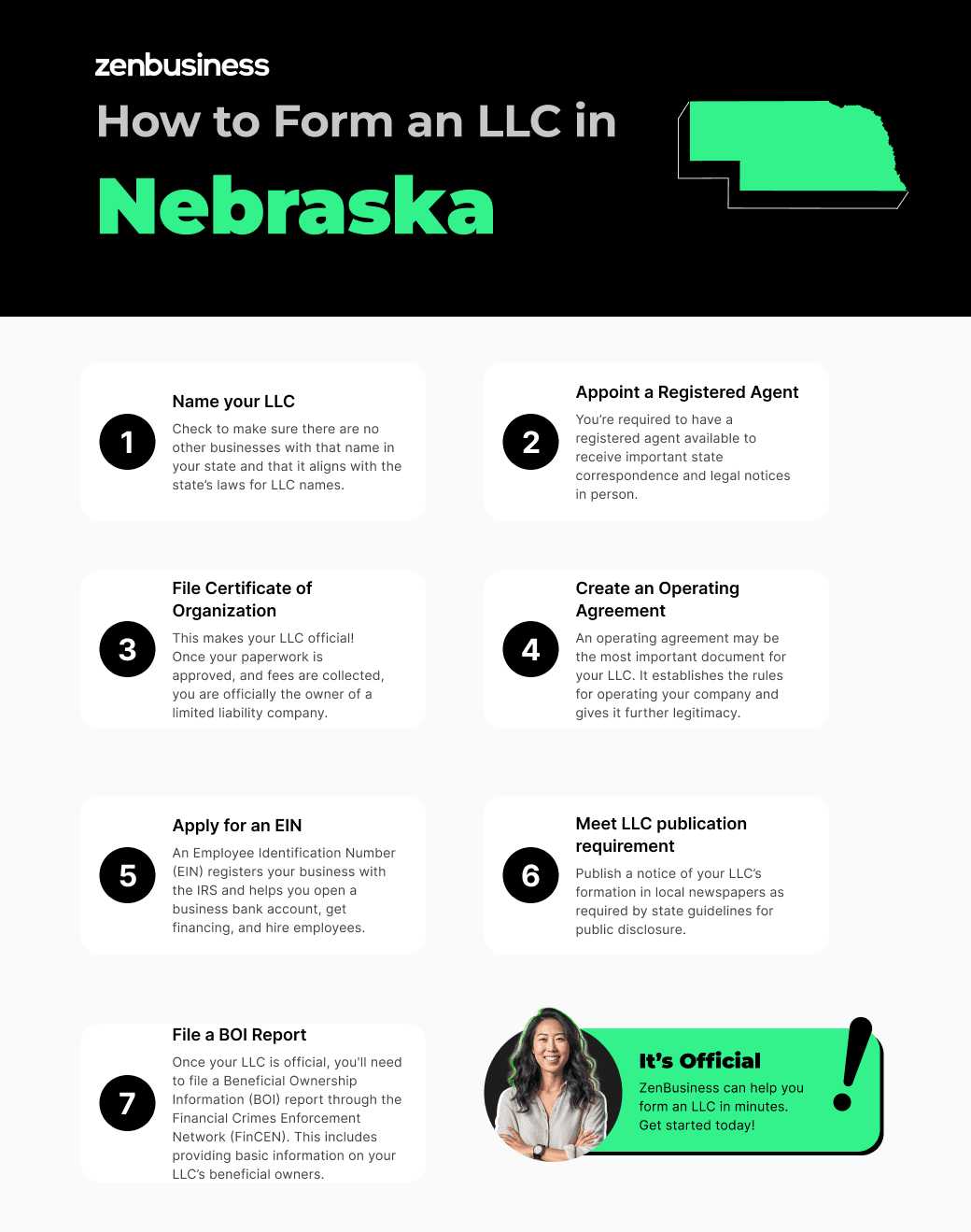
Step-by-Step Guide to Forming Your Nebraska LLC
The formation of an LLC in Nebraska involves several distinct steps. Taking a methodical approach can help prevent errors and ensure a comprehensive filing.
1. Choose a Business Name
The first critical step is selecting a name for your LLC. Nebraska has specific naming rules that must be followed:
- Uniqueness: The name must be distinguishable from the names of other entities already on file with the Nebraska Secretary of State. You can check for name availability on the Secretary of State’s website.
- Designator: The name must include an LLC designator, such as “Limited Liability Company,” “LLC,” or “L.L.C.”
- Restrictions: Certain words, like “Bank,” “Credit Union,” “Insurance,” or “Trust,” may be restricted or require special licensing.
Checking Name Availability
Before you get too attached to a name, it’s crucial to verify its availability. The Nebraska Secretary of State’s Business Search tool allows you to search the state’s database for existing business names. It’s also advisable to check for domain name availability if you plan to establish an online presence.
Reserving Your Business Name (Optional)
If you have a name in mind but are not yet ready to file your formation documents, you can reserve the name for a period by filing a Name Reservation form with the Secretary of State. This can prevent another entity from taking your chosen name while you finalize other aspects of your business.
2. Appoint a Registered Agent
Every LLC in Nebraska must designate a registered agent. This individual or entity is responsible for receiving official legal documents and state correspondence on behalf of the LLC.
Who Can Be a Registered Agent?
- An individual resident of Nebraska.
- A domestic business entity authorized to do business in Nebraska.
- A foreign business entity authorized to do business in Nebraska.
The registered agent must have a physical street address in Nebraska (a P.O. Box is generally not acceptable for this purpose) and be available during normal business hours to accept service of process. You can serve as your own registered agent if you meet these requirements, but many businesses opt for a professional registered agent service for convenience and to maintain privacy.
3. File the Articles of Organization

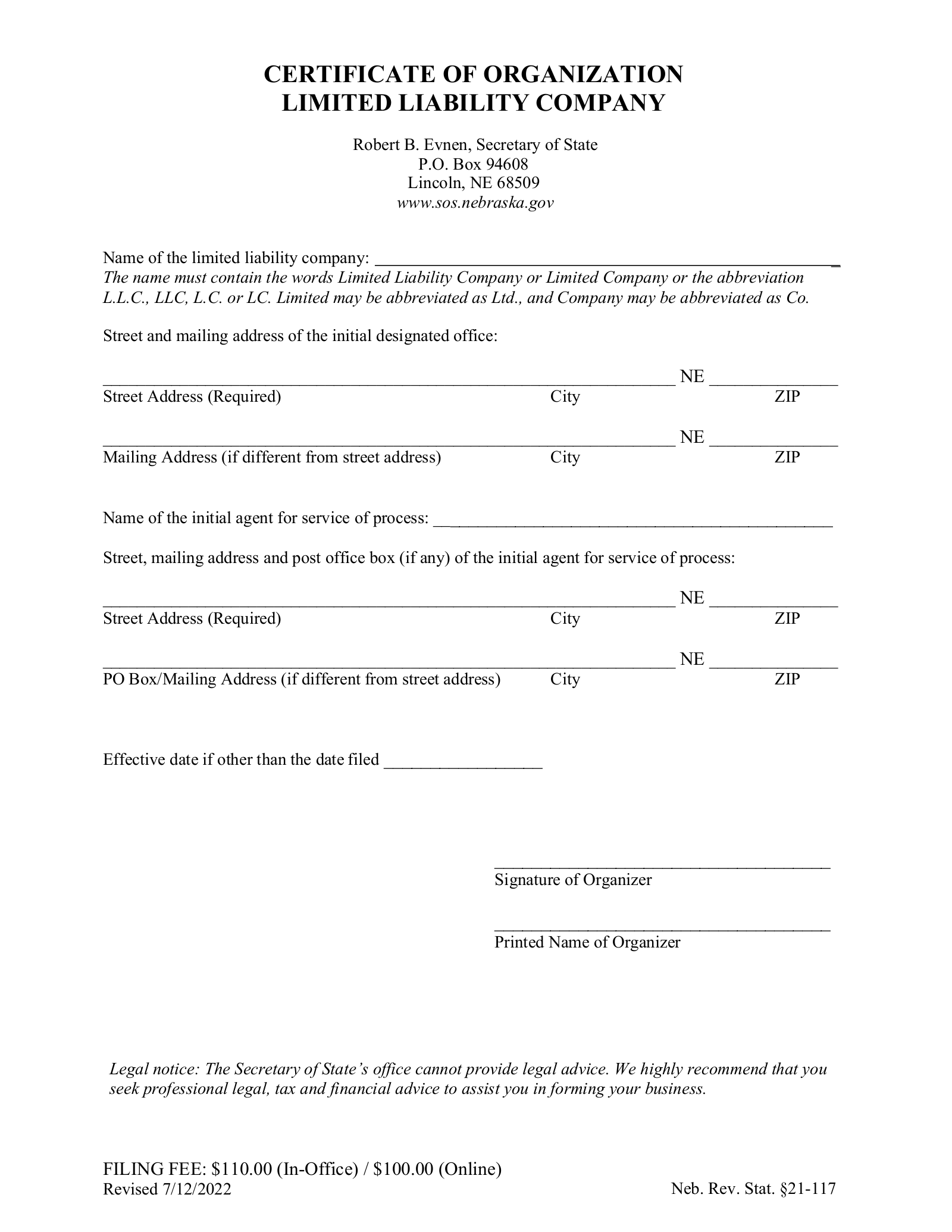
The formation document for an LLC in Nebraska is called the Articles of Organization. This document officially creates your LLC in the state.
Key Information Required in the Articles of Organization:
- Name of the LLC: The chosen and verified business name.
- Registered Agent Information: The name and physical street address of the registered agent.
- Principal Office Address: The address of the LLC’s principal place of business. This can be the same as the registered agent’s address or a different location.
- Mailing Address: If different from the principal office address, a separate mailing address.
- Management Structure: Whether the LLC will be managed by its members or by appointed managers.
- Organizer’s Name and Address: The name and address of the person filing the Articles of Organization.
You can file the Articles of Organization online through the Nebraska Secretary of State’s website or by mail. There is a filing fee associated with this document, which is subject to change by the state.
4. Create an Operating Agreement
While not a legally required document to be filed with the state in Nebraska, an Operating Agreement is highly recommended for all LLCs, especially those with multiple members. This internal document outlines the ownership structure, operational procedures, and management responsibilities of the LLC.
What an Operating Agreement Typically Includes:
- Member Contributions: Details on initial capital contributions from each member.
- Profit and Loss Distribution: How profits and losses will be allocated among members.
- Management Structure: Specific roles and responsibilities of members or managers.
- Voting Rights: How decisions will be made and what voting power each member holds.
- Member Admission and Withdrawal: Procedures for adding new members or for existing members to leave the LLC.
- Dissolution Procedures: How the LLC will be dissolved if necessary.
A well-drafted Operating Agreement can prevent future disputes among members and clarify expectations, ensuring the smooth operation of your business.
5. Obtain an Employer Identification Number (EIN)
An Employer Identification Number (EIN), also known as a Federal Tax Identification Number, is like a Social Security number for your business. It is issued by the Internal Revenue Service (IRS) and is required if your LLC plans to:
- Hire employees.
- Operate as a corporation or partnership for tax purposes.
- File excise tax returns.
- Operate a Keogh plan.
- Are involved with certain types of organizations.
Even if not strictly required by the IRS, many banks will require an EIN to open a business bank account. You can apply for an EIN for free on the IRS website.
6. Fulfill Ongoing Obligations
Once your LLC is formed, there are ongoing responsibilities to maintain its good standing with the state and federal government.
Annual Reports and Fees
Nebraska does not require a formal annual report filing in the same way some other states do. However, LLCs are subject to franchise taxes and other fees that must be paid annually to the state. It is crucial to stay informed about these requirements and ensure timely payment to avoid penalties or the dissolution of your LLC. The Nebraska Department of Revenue is the agency responsible for these tax matters.
Business Licenses and Permits
Depending on the nature of your business and its location within Nebraska, you may need to obtain specific federal, state, or local licenses and permits. Researching these requirements early in the process is vital. For example, a restaurant in Omaha might need different permits than a consulting firm in rural Nebraska.
Maintaining Separate Finances
To preserve the limited liability protection afforded by an LLC, it is essential to maintain a clear separation between your personal and business finances. This means opening a dedicated business bank account and avoiding commingling funds.
Conclusion
Creating an LLC in Nebraska is a structured process that, when followed diligently, can provide a solid foundation for your business venture. By understanding the benefits of the LLC structure, carefully selecting your business name, appointing a reliable registered agent, and completing the necessary state filings, you can establish a legally sound and protected business entity. Remember to create a comprehensive operating agreement and secure an EIN to manage your tax obligations effectively. Staying informed about ongoing compliance requirements, such as annual fees and potential licensing, will ensure your Nebraska LLC continues to operate smoothly and successfully.
LifeOutOfTheBox is a participant in the Amazon Services LLC Associates Program, an affiliate advertising program designed to provide a means for sites to earn advertising fees by advertising and linking to Amazon.com. Amazon, the Amazon logo, AmazonSupply, and the AmazonSupply logo are trademarks of Amazon.com, Inc. or its affiliates. As an Amazon Associate we earn affiliate commissions from qualifying purchases.