
For many entrepreneurs and business owners, the journey of establishing and nurturing a corporation in a vibrant economic hub like California is an exhilarating chapter. Yet, just as there are seasons for growth and expansion, there are also times when winding down a business becomes the most strategic and fulfilling path forward. Whether it’s to embrace retirement, pursue a new passion, or simply restructure your professional life, understanding how to legally dissolve a corporation in the Golden State is crucial. This guide provides a comprehensive overview, framed not just as a legal procedure, but as a pivotal step towards unlocking new opportunities for travel, lifestyle changes, and personal fulfillment.
Imagine the freedom that comes with closing one chapter to embark on another—perhaps a dream of exploring ancient ruins in Rome, basking on the beaches of Thailand, or discovering the rich culture of Japan. Dissolving your California corporation can be the launchpad for these adventures, transforming a demanding business schedule into a flexible itinerary of global exploration. This process, while seemingly complex, can be seamlessly navigated with the right information and approach, setting the stage for your next grand adventure.
The Journey to a New Chapter: Why Dissolve Your California Corporation?
The decision to dissolve a corporation is rarely made lightly. It often comes after careful consideration of personal goals, market conditions, and future aspirations. For many, it’s not just about ending a business; it’s about beginning a new lifestyle—one perhaps centered around travel, leisure, or pursuing long-held personal dreams that business responsibilities once kept at bay.
Unlocking Freedom for Travel and New Adventures
One of the most compelling reasons to dissolve a corporation is to free up invaluable time, mental energy, and financial resources that can then be redirected towards personal pursuits, especially travel. Operating a business, particularly in bustling metropolitan areas like Los Angeles or San Francisco, demands significant dedication. From managing daily operations to navigating market shifts, the demands can be relentless. By formally dissolving your corporation, you shed these responsibilities, opening the door to a world of possibilities.
Think of the ability to book a spontaneous trip to a boutique hotel in Paris, explore the vineyards of Napa Valley, or embark on an extended journey through South America without the constant pull of business obligations. This newfound freedom allows for deep immersion in diverse cultures, savoring local cuisines, and experiencing the world’s most breathtaking landmarks. It’s about transitioning from a life defined by business hours to one shaped by passport stamps and cherished memories. Perhaps you dream of a long-term accommodation in a coastal Italian village, or a series of resort stays across the Caribbean. Dissolution paves the way for such a lifestyle.
Strategic Restructuring for Future Lifestyle Ventures
Beyond immediate travel, dissolving a corporation can be a strategic move to restructure your professional life in alignment with a desired future lifestyle. This might involve transitioning from a traditional corporate structure to a freelance consultancy, a passive income model, or even launching a new venture directly related to travel, tourism, or hospitality. For instance, you might decide to leverage your business acumen to become a travel blogger, a tour operator specializing in adventure travel, or an owner of a charming bed and breakfast in a scenic destination like Santa Barbara.
This strategic shift allows you to harness your entrepreneurial spirit in ways that genuinely excite you and contribute to a more balanced life. It’s about being proactive in designing your ideal existence, where work seamlessly integrates with personal passions. Perhaps you’re considering a move abroad and need to tie up all loose ends in California first. Or maybe you’ve always dreamed of owning a small villa in Tuscany and generating income through short-term rentals—dissolving your existing corporation can simplify your financial and legal landscape to make such a transition smoother.
Navigating the Official Steps: A Guide for California Businesses
The process of dissolving a corporation in California involves several key legal and administrative steps designed to ensure all obligations are met and the entity is properly closed down. While the paperwork might seem daunting, understanding each stage ensures a smooth transition, allowing you to focus on planning your post-business adventures.
Initial Considerations and Shareholder Approval
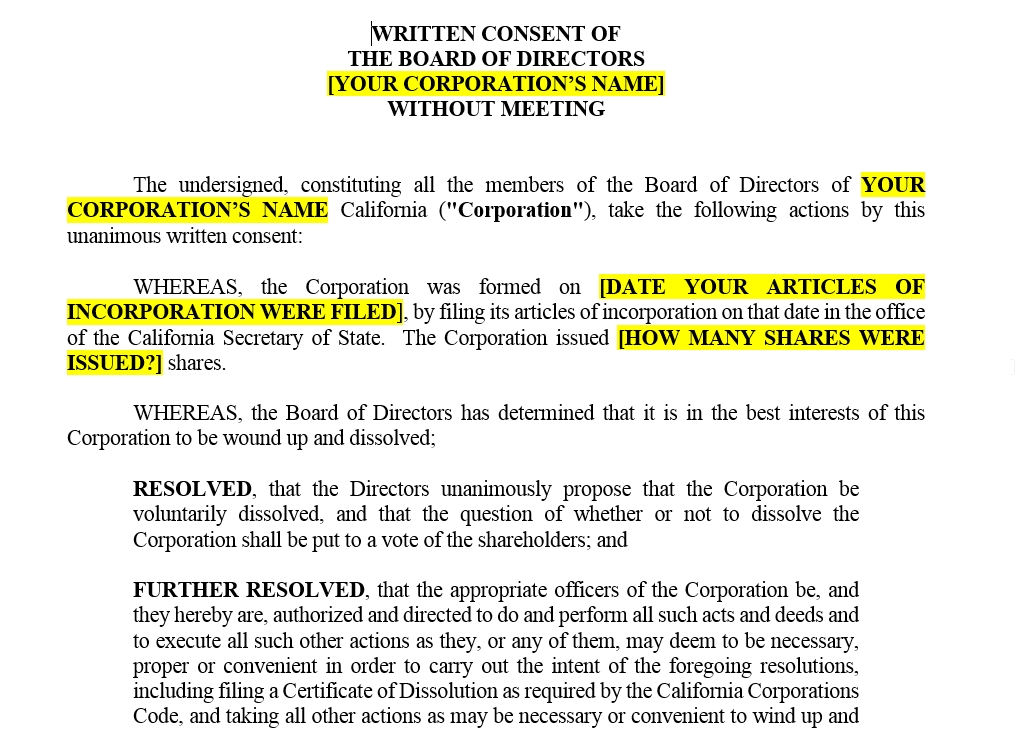
Before any forms are filed, the decision to dissolve must be formally made and approved. For most California corporations, this requires a vote by the board of directors and then by the shareholders.
- Board Resolution: The corporation’s board of directors typically initiates the dissolution process by passing a resolution recommending dissolution. This resolution outlines the reasons for dissolving and sets the stage for shareholder approval.
- Shareholder Approval: Unless otherwise specified in the articles of incorporation, dissolution usually requires the approval of shareholders holding 50% or more of the voting power. This can be achieved through a formal meeting or by written consent. Ensure all corporate records, including meeting minutes, reflect this crucial decision. This formal closure of the business chapter can be thought of as clearing your desk, not just physically, but legally and financially, before you pack your bags for a global exploration.
- Winding Up Period: Once approved, the corporation enters a “winding up” period. During this time, the corporation continues to exist for the purpose of concluding its affairs, but it cannot engage in new business activities. This phase is crucial for resolving all outstanding matters before you can truly be free to plan your trip to Machu Picchu or a long stay at a beach resort.
Filing the Necessary Paperwork with the California Secretary of State
After obtaining internal approvals and beginning the winding-up process, the next critical step is to formally notify the state of California. This involves filing specific documents with the California Secretary of State.
- Certificate of Election to Wind Up and Dissolve (Form ELEC STK or ELEC NP): This form is filed by the corporation to formally declare its election to wind up and dissolve. The specific form depends on whether it’s a stock corporation or a non-profit corporation. Filing this document signals the official intent to dissolve and makes the decision public. It’s a bit like getting your visa approved; it’s an official green light from the authorities that your journey to closure has begun.
- Certificate of Dissolution (Form DISS STK or DISS NP): Once all corporate affairs have been wound up, debts settled, and assets distributed, the corporation files the Certificate of Dissolution. This document certifies that the winding-up process is complete and the corporation is ready to cease its legal existence. This is the final step in terminating your entity’s legal life. Until this document is filed, your corporation technically still exists, potentially accruing fees or obligations. Completing this step effectively closes the chapter, freeing you up to plan your next adventure, whether it’s a visit to the Grand Canyon or a month-long retreat in the Swiss Alps.
- Statement of Information (Form SI-100): Ensure that your Statement of Information is current. While not a dissolution form itself, having up-to-date information is often a prerequisite for processing other filings.
The California Secretary of State provides detailed instructions and forms on their website, which are essential resources for navigating this process. Accuracy and completeness are paramount to avoid delays, much like ensuring all travel documents are in order before a major international trip.
Financial and Legal Closure: Paving the Way for Your Next Destination
Beyond the corporate filings, a significant part of dissolving a corporation involves meticulously handling its financial and legal obligations. This phase is critical to prevent future liabilities and ensure a clean break, allowing you to truly relax and enjoy your post-business ventures, be they global destinations or a quiet life in Mendocino.
Settling Debts and Distributing Assets
Before a corporation can be fully dissolved, all its financial obligations must be addressed. This includes paying off creditors, satisfying outstanding debts, and resolving any legal disputes.
- Notifying Creditors: The corporation must notify all known creditors of its intent to dissolve, providing them with an opportunity to present claims. This is a crucial protective step to prevent unforeseen liabilities from surfacing years later, potentially disrupting your plans for a serene vacation or a new business endeavor.
- Paying Debts and Liabilities: All corporate debts, including loans, supplier invoices, and employee wages, must be paid in full. If the corporation has insufficient assets to cover all debts, the assets must be distributed according to legal priority.
- Distributing Remaining Assets: After all debts and liabilities are settled, any remaining assets of the corporation are distributed to its shareholders according to their respective ownership interests. This distribution should be carefully documented. This financial closure is akin to settling all bills and packing your financial house in order before embarking on a long-term holiday or retirement. It ensures you leave no financial loose ends that could follow you around the globe. This might mean the proceeds from asset sales could fund a significant luxury travel experience, such as a cruise around the Mediterranean or an extended stay at a Five-Star Hotel.
Final Tax Obligations and Regulatory Compliance
Tax obligations are often one of the most complex aspects of corporate dissolution and require careful attention to detail. Both state and federal tax agencies need to be satisfied before the corporation can be truly considered closed.
- California Franchise Tax Board (FTB):
- Final Tax Return: The corporation must file a final tax return with the California Franchise Tax Board (FTB). This return should clearly indicate that it is a final return and that the corporation is dissolving.
- Tax Clearance Certificate: In some cases, depending on the type of dissolution and the corporation’s tax history, the FTB may require a tax clearance certificate before allowing the California Secretary of State to process the final dissolution documents. It’s vital to confirm if this is required for your specific situation. Obtaining this certificate is like getting your final stamp of approval from the state, confirming that all financial goodbyes have been said.
- Internal Revenue Service (IRS):
- Final Federal Tax Return: A final federal income tax return must be filed with the Internal Revenue Service (IRS) (Form 1120 for C corporations, Form 1120-S for S corporations). Mark it as the “final return.”
- Employer Identification Number (EIN): The corporation’s Employer Identification Number (EIN) should be closed down with the IRS once all final returns and payments are complete.
- Other Regulatory Agencies: Depending on the nature of your business, there might be other state or local licenses, permits, or regulatory agencies that need to be notified of the dissolution. For example, if your business dealt with specific environmental regulations or health permits in Oakland, those agencies must be informed.
Ensuring compliance with all tax and regulatory requirements is paramount. Neglecting these can lead to penalties or lingering liabilities that could cloud your post-dissolution peace of mind. A diligent approach now ensures that your future is truly free for embarking on new experiences, whether it’s exploring the historical streets of London or indulging in a culinary tour of Vietnam.
Post-Dissolution: Embracing Your Travel-Filled Future
With the corporate dissolution process behind you, the world truly becomes your oyster. This marks the exciting transition from business owner to global explorer, hobbyist, or simply someone enjoying a well-earned respite.
Planning Your Dream Destinations
The newfound freedom from corporate responsibilities opens up an unparalleled opportunity to meticulously plan and execute your dream travel adventures. No longer bound by quarterly reports or client meetings, you can design itineraries that truly reflect your desires.
- Bucket List Journeys: Finally tackle that lifelong dream of hiking the Inca Trail to Machu Picchu, exploring the wildlife of the Galapagos Islands, or witnessing the majestic Northern Lights.
- Extended Stays: Instead of short bursts of travel, consider longer immersive stays in cities like Kyoto, Florence, or Buenos Aires. Rent an apartment, learn the local language, and truly live like a local.
- Themed Travel: Perhaps you want to embark on a culinary tour of France, a historical exploration of Egypt, or a wellness retreat in Bali. The possibilities are limitless. This is where you leverage your hard-earned freedom to craft personalized experiences that fulfill deep-seated aspirations.

Exploring New Accommodation and Experiences
The shift in lifestyle also invites a more flexible and adventurous approach to accommodation and experiences.
- Diverse Accommodation Choices: From luxurious suites in five-star hotels like the Ritz-Carlton in San Diego to charming villas in rural Portugal, or unique boutique stays, you can explore options that perfectly suit each destination and your current mood. Consider a tranquil stay at a spa resort after years of high-pressure work.
- Immersive Local Experiences: Dive deeper into local culture by participating in cooking classes in Italy, artisan workshops in Mexico, or guided historical walks that reveal hidden gems of cities like Prague. This is the time to embrace authentic interactions and create unforgettable memories, moving beyond typical tourist attractions to truly meaningful engagement.
- Budget to Luxury: Whether you’re planning a budget travel adventure exploring youth hostels across Europe or indulging in luxury travel with private tours and stays at renowned establishments like a Four Seasons Resort, the choice is entirely yours.
Dissolving a corporation in California is more than just a legal formality; it’s a strategic decision that can dramatically reshape your future. By meticulously handling the procedural requirements, you can effectively close one significant chapter and enthusiastically open another—one filled with new destinations, enriching experiences, and the profound satisfaction of living life on your own terms. Your next grand journey awaits.
LifeOutOfTheBox is a participant in the Amazon Services LLC Associates Program, an affiliate advertising program designed to provide a means for sites to earn advertising fees by advertising and linking to Amazon.com. Amazon, the Amazon logo, AmazonSupply, and the AmazonSupply logo are trademarks of Amazon.com, Inc. or its affiliates. As an Amazon Associate we earn affiliate commissions from qualifying purchases.