
The Texas Rig is a foundational technique in bass fishing, renowned for its versatility and effectiveness in navigating a variety of underwater environments. Whether you’re a seasoned angler or just embarking on your bass fishing journey, mastering this rig is an essential step towards increasing your success on the water. This guide will break down the components, the rigging process, and the strategic advantages of using a Texas Rig, empowering you to fish with confidence and precision.
Understanding the Components of a Texas Rig
The beauty of the Texas Rig lies in its simplicity and the minimal number of components required. Each element plays a crucial role in its functionality, from weedless presentation to secure hooksets.
The Hook
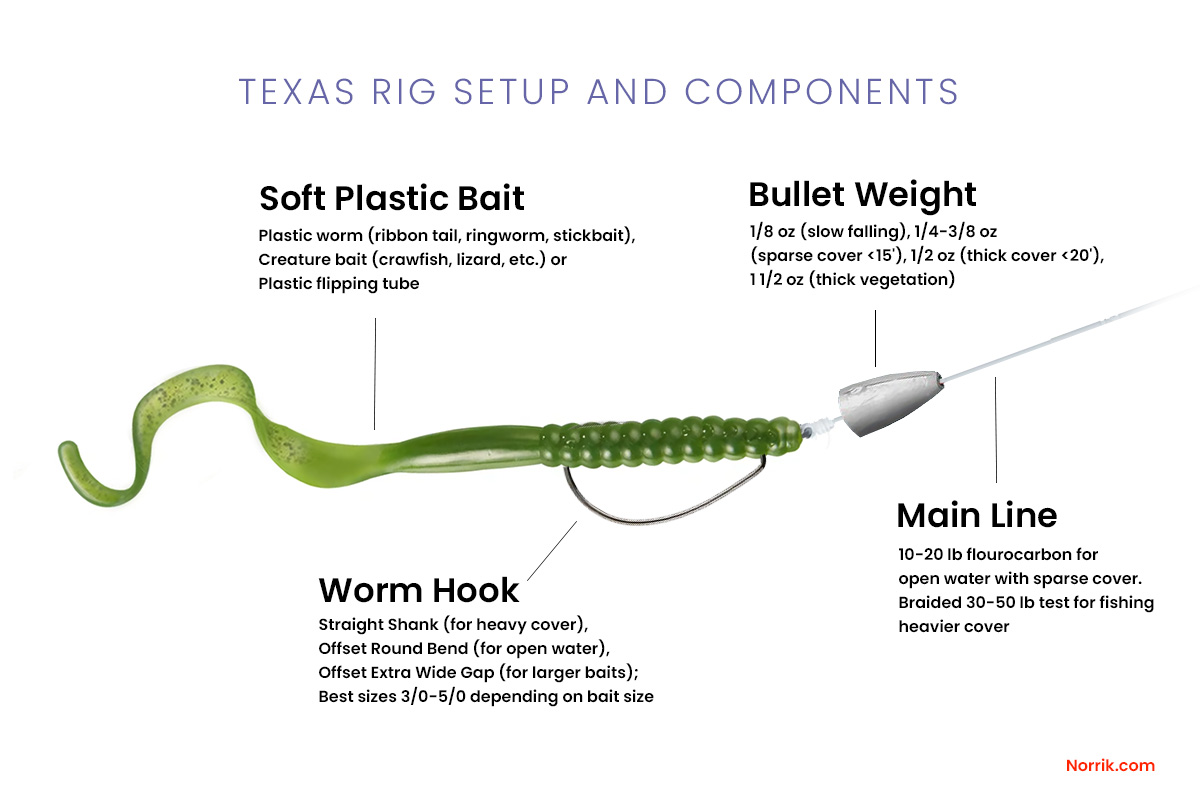
The heart of the Texas Rig is its hook. For this specific rig, an offset worm hook is the preferred choice. These hooks feature an angled shank that allows the worm to be threaded onto the hook in a straight line, with the point of the hook lying flush against the worm’s body. This design is critical for achieving the rig’s signature weedless nature.
- Offset Shank: The bend or “offset” in the hook shank serves to keep the bait material securely in place, preventing it from sliding down the hook, especially after aggressive strikes or during casting.
- Point Orientation: The offset shank also ensures that the hook point is naturally positioned to pierce the fish’s mouth when a strike occurs, but is protected from snagging on cover when moving through vegetation.
- Hook Size: The size of the hook should be matched to the size of your soft plastic bait. Generally, a 3/0 or 4/0 offset worm hook is a good starting point for most standard-sized soft plastic worms and creatures. Larger baits might require a 5/0 or even 6/0 hook.
The Soft Plastic Bait
The Texas Rig is most commonly associated with soft plastic baits, particularly worms. However, its adaptability means it can be rigged with a wide array of soft plastic lures designed for bass fishing.
- Worms: Traditional, straight-tailed worms, ribbon-tail worms, and finesse worms are classic choices. Their subtle action can entice wary bass, while their shape is perfectly suited for the Texas Rig’s weedless presentation.
- Creature Baits: Lures designed to mimic crawfish, lizards, or other aquatic creatures often have multiple appendages that provide enticing action. These are excellent for a Texas Rig, as their bulk can help protect the hook point.
- Grubs and Craws: Smaller, more compact baits like grubs and plastic crawfish can also be effectively rigged Texas style, particularly for more finicky bites or in clearer water conditions.
- Color Selection: The color of your soft plastic should be chosen based on water clarity and light conditions. Brighter, more vibrant colors are often effective in stained or murky water, while natural, subtle hues work best in clear conditions.
The Weight (or Bullet)
A weight, often referred to as a “bullet weight” due to its shape, is essential for imparting action to the bait and ensuring it reaches the desired depth. These weights are typically made of lead, but tungsten and brass are also available, offering different advantages in terms of sensitivity and sound.
- Shape: The streamlined bullet shape allows the weight to slide through cover like weeds, rocks, and submerged timber with minimal resistance.
- Material: Lead is the most common and cost-effective material. Tungsten weights are denser, meaning you can use a lighter weight for the same depth, and they transmit vibrations and bottom composition much more effectively to the angler’s hand. Brass weights offer a middle ground and can produce a subtle clicking sound as they hit other weights or the bottom.
- Weight Size: The size of the weight is determined by water depth, current, and the type of bait being used. Lighter weights (1/8 to 1/4 ounce) are suitable for shallow water or finesse presentations, while heavier weights (3/8 to 1 ounce or more) are needed for deeper water, strong currents, or when fishing through thick vegetation.
The Bullet/Slip-Style Sinker
The weight is typically threaded onto the fishing line before the hook is tied. This allows the weight to slide freely along the line, giving the bait a more natural, independent action when twitched or retrieved.
- Plastic or Metal Insert: Many bullet weights come with a plastic or metal insert to protect the fishing line from abrasion against the weight’s lead.
- Line Attachment: The weight is simply threaded onto the monofilament or fluorocarbon line.
Optional: The Bobber Stopper or Bead
While not strictly necessary for a basic Texas Rig, some anglers opt to add a small rubber bobber stopper or a bead between the weight and the hook.
- Bobber Stopper: A bobber stopper can be slid onto the line to create a “stop” for the weight, preventing it from sliding all the way up to the hook. This can make the bait act more like a Carolina Rig, with the weight and bait moving independently at a greater distance. However, for the classic weedless Texas Rig, this is generally omitted.
- Bead: Adding a bead between the weight and the hook can create an audible “rattle” as the weight bumps against it, which can sometimes attract aggressive fish, especially in stained water.
The Rigging Process: Step-by-Step
Rigging a Texas Rig is a straightforward process that can be mastered quickly. Precision and attention to detail will ensure the rig performs optimally.
Step 1: Thread the Weight
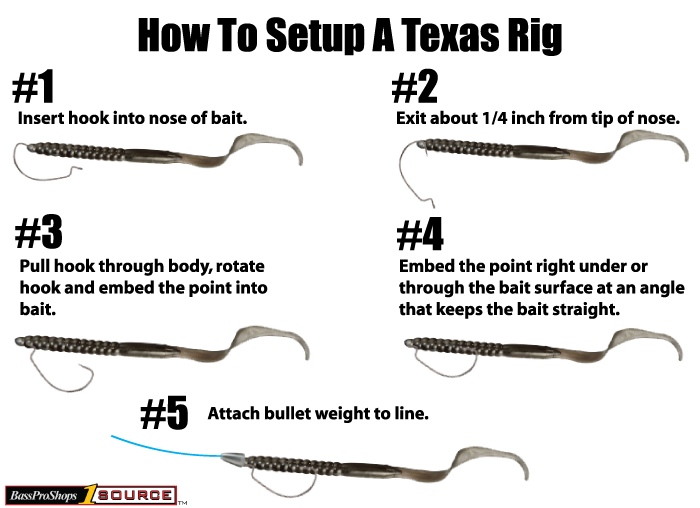
Begin by threading your fishing line through the eye of your chosen offset worm hook. Then, slide your bullet weight onto the line, ensuring the weight’s nose faces the hook. Push the line through the weight until it protrudes slightly from the back.
Step 2: Insert the Hook Point
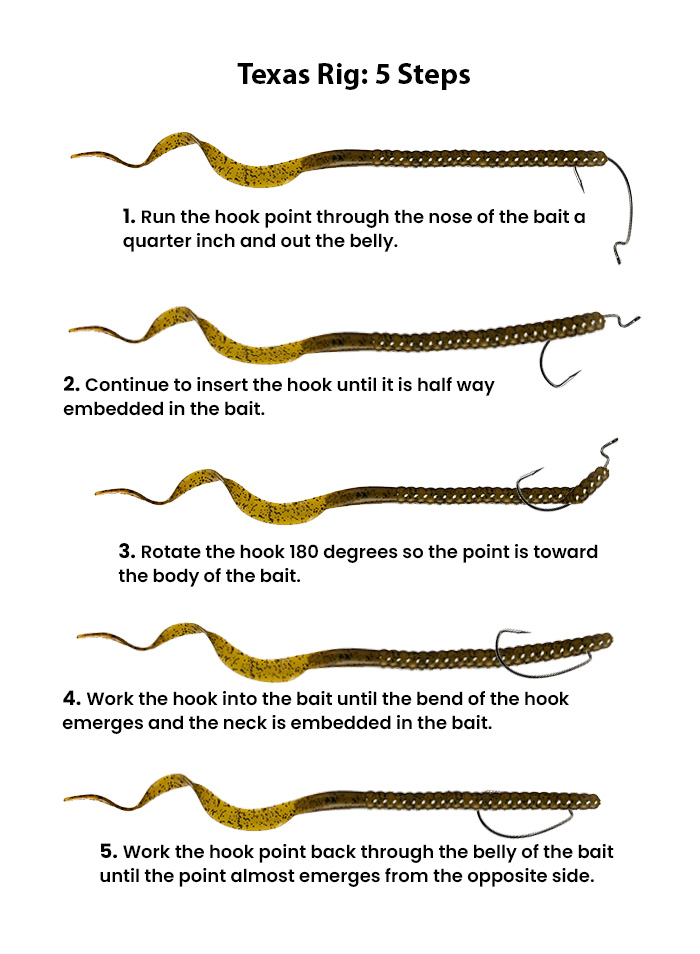
Take your soft plastic bait and determine the correct placement for the hook. For most worms, you’ll want to insert the hook point into the very tip of the worm’s nose, about a quarter-inch to a half-inch in.
Step 3: Drive the Hook Through the Bait
Gently pull the bait forward along the hook shank until the eye of the hook is snug against the worm’s nose. Now, carefully drive the hook point through the soft plastic bait at an angle that aligns with the bait’s length. The goal is to have the hook point re-emerge from the underside of the bait, approximately halfway down its body, depending on the bait’s length and your desired hook exposure.
Step 4: Secure the Hook Point (The Weedless Tuck)
This is the critical step for achieving weedlessness. Once the hook point has emerged from the bait, gently press the hook point back into the soft plastic body. The tip of the hook point should be embedded flush within the plastic. This “tuck” ensures that the sharp point is protected by the bait material, preventing it from snagging on weeds, rocks, wood, or other underwater obstructions. The bait should lie straight and appear natural on the hook.
Step 5: Check for Straightness and Weedlessness
Gently pull on the line to snug the weight against the worm’s nose. Ensure the entire bait and hook assembly is straight. A crooked rig will not cast or swim properly. Test the weedlessness by gently pushing the bait against your hand or a rough surface – it should not easily snag.
Strategic Advantages and Fishing Techniques
The Texas Rig is more than just a way to rig a bait; it’s a system that opens up a multitude of fishing possibilities and is exceptionally effective in various scenarios.
Navigating Cover
The primary advantage of the Texas Rig is its ability to be fished through dense cover without snagging. The weedless tuck protects the hook point, allowing anglers to cast directly into or near submerged vegetation, laydowns, docks, and other structure where bass often hide. This ability to present a bait precisely where the fish are holding is paramount to successful bass fishing.
Versatility in Presentation
Once rigged, the Texas Rig can be fished in numerous ways to trigger strikes:
- The Worm “Fall”: Simply cast the rig to your target and let it slowly sink. Many strikes occur on the fall as bass ambush their prey.
- The Twitch and Reel: After the bait hits the bottom, impart a series of sharp twitches with your rod tip, followed by short retrieves. This mimics the erratic movement of injured prey.
- The Drag and Pause: Slowly drag the rig along the bottom, pausing frequently. This action can entice cautious or less active bass.
- The Hop: For thicker cover, a subtle hopping retrieve can dislodge the bait and create movement that attracts bass.
Weight Adjustments for Conditions
As mentioned, the weight is crucial. Experimenting with different weights allows you to adapt to changing conditions:
- Shallow Water (2-8 feet): 1/8 to 1/4 ounce weights are ideal for a slower fall and a more subtle presentation.
- Mid-Depth (8-15 feet): 3/8 ounce weights offer a good balance of sink rate and sensitivity.
- Deep Water (15+ feet) or Heavy Cover: 1/2 ounce to 1 ounce weights are necessary to get your bait down quickly and maintain contact with the bottom.
Line Choice Matters
The type of fishing line used with a Texas Rig can significantly impact its performance.
- Fluorocarbon Line: This is the preferred line for Texas Rigging. Fluorocarbon is nearly invisible underwater, sinks well, and offers excellent sensitivity and abrasion resistance, which is crucial when fishing around cover.
- Monofilament Line: A more budget-friendly option, monofilament can also be used. It has more stretch than fluorocarbon, which can aid in hooksets, but it’s more visible and floats, which can sometimes impede the bait’s fall.
Hooksets with the Texas Rig
When a bass strikes, the hookset needs to be firm and decisive. Because the hook point is buried in the bait, it requires a bit more force to drive the hook through the plastic and into the fish’s jaw.
- Feel the Strike: Recognize the subtle tap or the distinct weight of a fish taking the bait.
- Engage the Reel: If using a baitcasting reel, release the tension on your thumb bar. If using a spinning reel, close the bail.
- Sweep the Rod: Make a strong, sweeping motion with your rod, pulling firmly to set the hook. The offset hook and fluorocarbon line will help ensure a solid connection.
The Texas Rig is a testament to the power of simplicity and effectiveness in fishing. By understanding its components and mastering the rigging technique, anglers can unlock a world of opportunities, confidently targeting bass in their most protected environments. Its weedless nature, combined with a variety of presentation options, makes it an indispensable tool in any bass angler’s arsenal, from the vast waters of Lake Fork to the smaller, intimate lakes found across the United States.
LifeOutOfTheBox is a participant in the Amazon Services LLC Associates Program, an affiliate advertising program designed to provide a means for sites to earn advertising fees by advertising and linking to Amazon.com. Amazon, the Amazon logo, AmazonSupply, and the AmazonSupply logo are trademarks of Amazon.com, Inc. or its affiliates. As an Amazon Associate we earn affiliate commissions from qualifying purchases.