
In the dynamic world of travel, where every journey tells a story and every destination offers a unique perspective, the credibility of information is paramount. Whether you’re a seasoned travel blogger documenting intricate cultural nuances, a historian researching the origins of famous landmarks, or simply an enthusiast sharing well-researched guides, the ability to accurately cite your sources lends unparalleled authority to your narrative. While the allure of Paris, the mystique of Machu Picchu, or the serenity of a luxury resort in the Maldives often takes center stage, the backbone of compelling content is rigorous research. This is where the Chicago Manual of Style (CMOS), particularly its notes-bibliography system, becomes an indispensable tool.

Often perceived as strictly academic, Chicago Style footnotes offer a precise and comprehensive method for attributing information, making your travel features, destination guides, and historical analyses not just engaging, but also verifiable. For travel writers keen on moving beyond mere anecdotes to providing richly documented insights into global tourism, local cultures, and historical sites, mastering Chicago Style footnotes is a game-changer. It transforms a simple account into a scholarly exploration, deepening trust with your audience and positioning your content as a reliable source in the vast ocean of online travel information.
This comprehensive guide will demystify the process of crafting full form footnotes in Chicago Style, tailored for those passionate about travel, hotels, tourism, accommodation, landmarks, and lifestyle. We’ll explore the philosophy behind this citation style, its practical application for various source types relevant to travel content, and strategies for seamlessly integrating it into your research and writing workflow. By the end, you’ll be equipped to lend academic rigor to your adventurous tales, from the bustling markets of Marrakech to the serene temples of Kyoto.
Understanding the Essence of Chicago Style Footnotes for Travel Narratives
The core principle of Chicago Style’s notes-bibliography system revolves around providing detailed source information the first time a source is cited, followed by a shortened version for subsequent references. This approach ensures readers can easily locate the original source for further reading or verification, a crucial aspect when discussing complex historical facts about a landmark or cultural etiquette in an unfamiliar country.
The Philosophy Behind Full Form Footnotes
Chicago Style offers two primary documentation systems: Notes-Bibliography and Author-Date. For travel writing and much of the humanities, the Notes-Bibliography system, which relies on footnotes (and sometimes endnotes) and a comprehensive bibliography, is most commonly employed. Its strength lies in its ability to offer complete citation information at the point of reference, providing immediate context for the reader without disrupting the flow of the main text.
Imagine you’re writing a detailed historical guide about the Great Wall of China or exploring the architectural evolution of the Louvre Museum in Paris. You might draw information from various historical texts, architectural journals, and museum archives. Instead of merely stating a fact, a footnote immediately tells your reader exactly where that information came from. This not only bolsters your credibility but also educates your audience on the depth of your research. This comprehensive approach is particularly beneficial when presenting less common or highly specific facts about a destination, such as the exact year a particular wing of a hotel like the Grand Hyatt Hotel was constructed or the historical significance of a specific monument in Rome. It elevates your content from anecdotal observations to well-supported scholarly discourse, even within a travel context.
When to Use Full Form Footnotes in Your Travel Content
The application of full form footnotes in travel writing is broader than you might initially think. They become invaluable in scenarios where accuracy and depth are paramount:
- Historical Facts: When detailing the history of a landmark, city, or even a specific hotel. For example, discussing the construction phases of the Eiffel Tower or the historical events that shaped London’s Tower Bridge.
- Cultural Insights: Providing nuanced explanations of local customs, traditions, or culinary practices in places like Vietnam or Japan, often drawing from ethnographic studies or cultural guides.
- Statistical Data: Referencing tourism statistics for a region like the Caribbean, visitor numbers for national parks in the United States, or economic impacts of a new resort development like the Atlantis The Palm in Dubai.
- Direct Quotations: Whenever you quote directly from a travel guide, a historical document, an interview with a local expert, or a review of a specific boutique hotel.
- Specialized Information: When discussing specific architectural styles found in Barcelona, unique ecological features of the Galapagos Islands, or the intricate details of a cruise ship‘s engineering.
- Comparisons and Analyses: When comparing different travel styles (e.g., budget travel vs. luxury travel) based on research, or analyzing the effectiveness of various tourism initiatives.
By citing these elements, you not only avoid plagiarism but also empower your readers to delve deeper into topics that pique their interest, fostering a more engaged and informed travel community. This level of detail can significantly differentiate your content, establishing your platform as a trusted resource for in-depth travel exploration.
Mastering the Mechanics: Crafting Your First Footnote
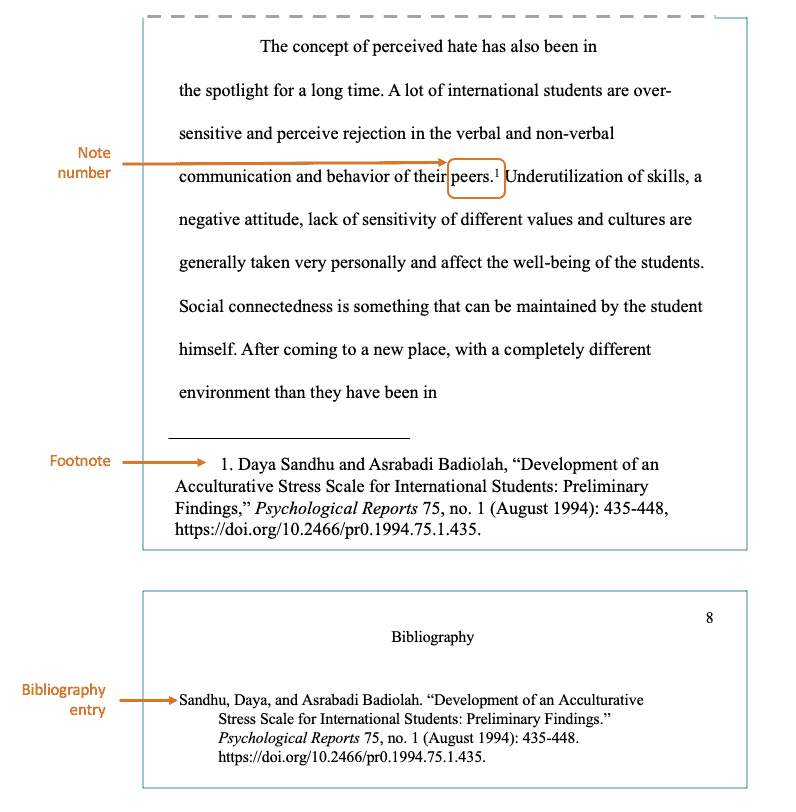
Creating a full form footnote in Chicago Style involves adhering to specific formats for different types of sources. The key is consistency and attention to detail. Remember, the first time you cite a source, it’s a full citation; subsequent citations are shortened.
Basic Structure for Common Source Types
Here are the fundamental structures for sources you’re likely to encounter in travel research, along with examples:
- Books:
The basic format includes the author’s full name, title of the book (italicized), place of publication, publisher, year of publication, and page number(s).
1. First Name Last Name, *Title of Book* (Place of Publication: Publisher, Year), Page Number(s).
Example:
1. Isabella Rossi, *Venetian Journeys: A Cultural History* (London: Thames & Hudson, 2020), 78.
This might be used when discussing the historical canals of Venice or the famous landmarks such as St. Mark’s Basilica.
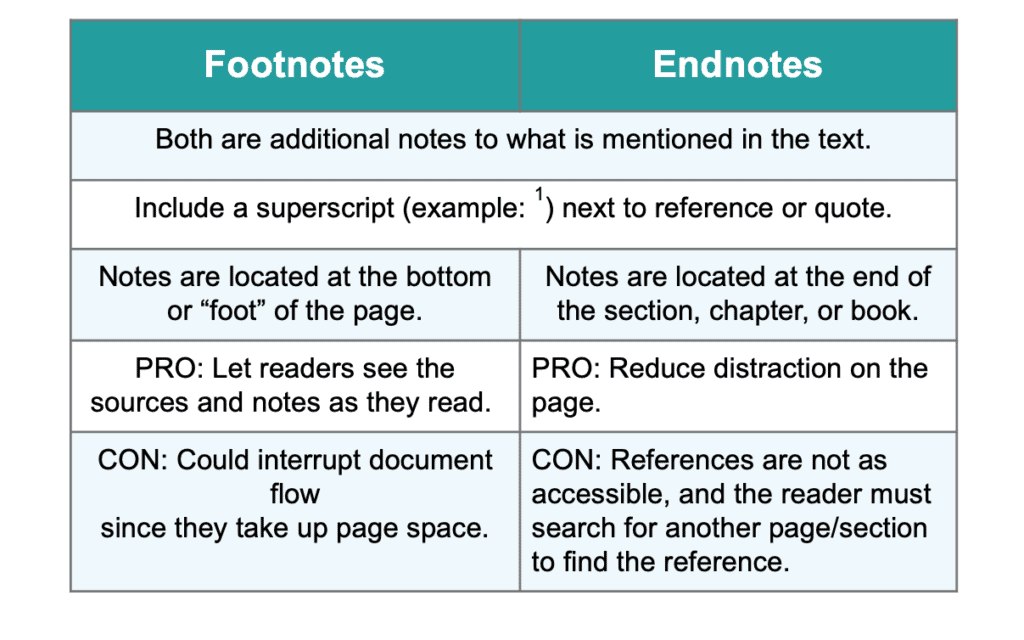
-
Journal Articles:
For articles in academic journals, include the author’s full name, “title of the article” (in quotation marks), title of the journal (italicized), volume and issue number, year of publication, and page range.
2. First Name Last Name, "Title of Article," *Title of Journal* Volume, no. Issue (Year): Page Number(s).
Example:
2. Dr. Anya Sharma, "Ecotourism's Impact on the Amazon Rainforest Communities," *Journal of Global Tourism Studies* 25, no. 4 (2019): 112-125.
This could be relevant when discussing sustainable tourism practices in regions like the Amazon or environmental efforts around the Great Barrier Reef. -
Website Content:
Citing web pages requires careful attention to available information. Include the author (if listed), “title of the page” (in quotation marks), website name, date of publication or last modification (if available), and the URL.
3. First Name Last Name, "Page Title," Website Name, Last Modified Date, URL.
Example (with author):
3. John Peterson, "Exploring the Ancient Ruins of Tulum," Yucatán Explorer, August 15, 2023, https://yucatanexplorer.com/tulum-ruins.
Example (without author, using the lifeoutofthebox.com domain as per linking rules):
4. "A Deep Dive into Balinese Cultural Festivals," Life Out of the Box, July 1, 2023, https://lifeoutofthebox.com/balinese-cultural-festivals.
This is particularly useful for referencing travel blogs, official tourism sites for Spain or Thailand, or online reviews of places like the Ritz Paris. When an access date is crucial (for highly volatile web content), it can be added: “accessed October 26, 2023.” -
Interviews/Personal Communication:
When you conduct an interview with a local guide, a hotel manager, or a culinary expert, this also serves as a source. The format is simpler:
5. Type of Communication with First Name Last Name, Title (if applicable), City, Date.
Example:
5. Interview with Sofia Garcia, Chef at El Sabor Restaurant, Madrid, July 15, 2023.
This adds a personal and authentic touch to your content, especially when discussing local cuisine or lesser-known attractions in cities like Berlin.
Subsequent References and the Power of Short Forms
Once you’ve provided the full citation in the first footnote, subsequent references to the same source can be shortened significantly. This prevents redundancy and keeps your footnotes concise.
-
Ibid.(Same source, same page):
If the subsequent citation refers to the immediately preceding source and the exact same page number, useIbid.(Latin for “in the same place”).
Example:
6. Ibid.(Refers to note 5) -
Ibid., N(Same source, different page):
If the subsequent citation refers to the immediately preceding source but a different page number, useIbid.followed by the new page number.
Example:
7. Ibid., 85.(Refers to Rossi, Venetian Journeys, page 85) -
Shortened Form (Different source, or same source but not immediately preceding):
For any other subsequent reference to a source already cited, use a shortened form: Author’s Last Name, Shortened Title, Page Number(s). The shortened title usually consists of the main title or a significant part of it.
Example (for Rossi’s book):
8. Rossi, *Venetian Journeys*, 102.
Example (for Sharma’s article):
9. Sharma, "Ecotourism's Impact," 118.
Example (for Peterson’s web page):
10. Peterson, "Ancient Ruins," paragraph 3.(For web pages, use paragraph numbers or section titles if page numbers aren’t available).
Mastering these short forms is crucial for maintaining readability and efficiency, especially in lengthy articles that might reference the same sources multiple times. This system ensures that readers can quickly glance at a footnote and understand the origin of the information, whether they’re analyzing the economic impact of the Burj Al Arab Jumeirah on Dubai’s tourism or researching the historical context of a site in Greece.
Integrating Footnotes into Your Travel Research Workflow
Beyond merely knowing the formats, effectively integrating Chicago Style footnotes into your research and writing process can transform how you gather, organize, and present travel information. It’s about building a robust system that supports accuracy and efficiency, much like a well-planned itinerary for exploring New York City.
Tools and Strategies for Seamless Citation
The modern researcher has access to a variety of tools that can simplify the often-tedious task of citation management:
- Citation Management Software: Tools like Zotero, Mendeley, or EndNote are invaluable. They allow you to collect, organize, and cite your sources automatically in Chicago Style (or other styles). Imagine researching various historical accounts of Ancient Rome or collecting data on different accommodation options in Singapore. These tools can generate footnotes and a bibliography with just a few clicks, saving immense time and reducing errors. Think of them as your personal travel assistants for academic rigor.
- Immediate Citation: One of the most effective strategies is to cite as you go. Whenever you take a note from a source—whether it’s a book about the history of Antarctica, an article on local cuisine in Mexico City, or an official tourism board website for Portugal—immediately capture the full citation information. Don’t wait until the end; it’s easy to forget details or misattribute facts.
- Research Log/Bibliography in Progress: Maintain a dedicated document or section in your notes for each article or destination you’re researching. This “master list” of sources can evolve into your bibliography, making it easier to track what you’ve used and ensuring all cited sources appear in your final reference list. For instance, if you’re compiling a comprehensive guide to Thailand, this log would contain all the travel guides, academic papers, and local interviews you’ve consulted.
Best Practices for Travel Bloggers and Researchers
Beyond the mechanics, applying a thoughtful approach to footnotes can significantly enhance the quality and impact of your travel content:
- Consistency is Key: Once you commit to Chicago Style, apply it uniformly across your entire article. Inconsistencies undermine credibility, even if the information itself is accurate. Whether you’re writing about a family trip to Disneyland or a business stay in Frankfurt, the citation style should remain constant.
- Footnotes Enhance Credibility, Especially for Sensitive Topics: When discussing topics that might be culturally sensitive, historically contentious, or environmentally impactful (e.g., the ethics of wildlife tourism, indigenous land rights, or the economic implications of mega-resorts like the Marina Bay Sands), footnotes are vital. They demonstrate that your statements are based on thorough research and not mere speculation, promoting responsible reporting.
- Consider Your Audience: While full academic papers demand exhaustive citation, a travel blog might use footnotes strategically to support key facts, historical claims, or data points, rather than citing every single sentence. The goal is to inform and add depth without overwhelming the casual reader. If a specific point is highly debated or pivotal to your argument, a footnote is crucial.
- The Complementary Role of the Bibliography: Although the focus here is on footnotes, remember that Chicago Style’s notes-bibliography system usually requires a complete bibliography (or “References” list) at the end of your article. This list provides an alphabetical overview of all sources cited, formatted slightly differently than the footnotes (e.g., last name first for alphabetical sorting, and no specific page numbers for book entries). This offers a comprehensive resource for readers who wish to explore your research in its entirety.
Embracing Chicago Style footnotes in your travel writing transforms your content into a robust, reliable, and deeply researched resource. It’s a commitment to accuracy that resonates with discerning readers and sets your work apart in a crowded digital landscape. From the ancient wonders of Egypt to the vibrant nightlife of Rio de Janeiro, every piece of information you share gains authority when backed by solid documentation. This not only elevates your personal brand but also enriches the collective knowledge base for travelers and enthusiasts worldwide.
By committing to these practices, you’re not just writing about travel; you’re contributing to a well-documented and trustworthy repository of global exploration and cultural understanding. This journey into meticulous citation is as rewarding as any expedition to a far-flung destination, building a foundation of trust that will keep your audience coming back for more insightful, credible, and well-supported travel narratives.
LifeOutOfTheBox is a participant in the Amazon Services LLC Associates Program, an affiliate advertising program designed to provide a means for sites to earn advertising fees by advertising and linking to Amazon.com. Amazon, the Amazon logo, AmazonSupply, and the AmazonSupply logo are trademarks of Amazon.com, Inc. or its affiliates. As an Amazon Associate we earn affiliate commissions from qualifying purchases.