
Navigating the world of academic writing and research can feel like charting an unfamiliar territory. Just as a seasoned traveler meticulously plans their itinerary and understands local customs, a diligent researcher must master the art of proper citation. Among the various citation styles, the Chicago Manual of Style is a prominent and widely adopted system, particularly in the humanities. While the full Chicago Manual of Style encompasses a comprehensive guide to grammar, publishing, and citation, this article focuses specifically on a crucial element for any writer: in-text citations. Understanding how to correctly attribute your sources within the body of your work is paramount for academic integrity, avoiding plagiarism, and providing readers with the necessary information to track down your original sources. This guide will demystify the process of creating in-text citations in the Chicago style, ensuring your travelogues, hotel reviews, or research papers are not only informative but also impeccably sourced.

The Chicago Manual of Style offers two distinct systems for in-text citation: the Notes and Bibliography system and the Author-Date system. Both are valid and widely used, and the choice often depends on the specific discipline or publication guidelines. This article will primarily focus on the Notes and Bibliography system, as it is frequently favored in fields like history, literature, and the arts. However, we will also touch upon the Author-Date system for comprehensive understanding.
Understanding the Core Principles of In-Text Citations
At its heart, in-text citation is about acknowledging the ideas, information, and words that are not your own. It’s a sign of respect for the original creators and a testament to the foundation upon which your own work is built. Imagine you’re writing a travel guide about the vibrant streets of Kyoto. If you mention a specific historical fact about the Kinkaku-ji (Golden Pavilion) that you learned from a particular book, you must credit that source. Failing to do so is akin to claiming someone else’s discovery as your own, which is not only unethical but also undermines the credibility of your writing.
The fundamental purpose of in-text citations, regardless of the style, is twofold:
- To give credit where credit is due: This is the ethical imperative. By citing your sources, you acknowledge the intellectual contributions of others.
- To allow readers to verify your information: A well-cited work empowers your audience to delve deeper into the topics you discuss by providing them with a roadmap to your research.
When engaging with content related to travel, hotels, tourism, accommodation, landmarks, or lifestyle, you will frequently encounter situations requiring citation. For instance, when discussing the architectural marvel of the Burj Al Arab Jumeirah in Dubai, you might cite an architectural journal or a historical document. Similarly, when reviewing a luxurious resort like The Ritz Paris, quoting guest testimonials or referencing its history necessitates proper attribution. Even when presenting factual data about local cuisine or tourism statistics, citing the source is crucial.
The beauty of Chicago style lies in its flexibility and its meticulous approach to detail. It aims to provide clarity and consistency, ensuring that your readers can easily follow your train of thought and the evidence supporting it.
The Notes and Bibliography System: A Detailed Exploration
The Notes and Bibliography system is characterized by the use of numbered footnotes or endnotes for in-text citations, coupled with a comprehensive bibliography at the end of the work. This system is particularly favored for its ability to integrate extensive source information directly into the text without disrupting the reading flow with lengthy parenthetical citations.
How Footnotes and Endnotes Work
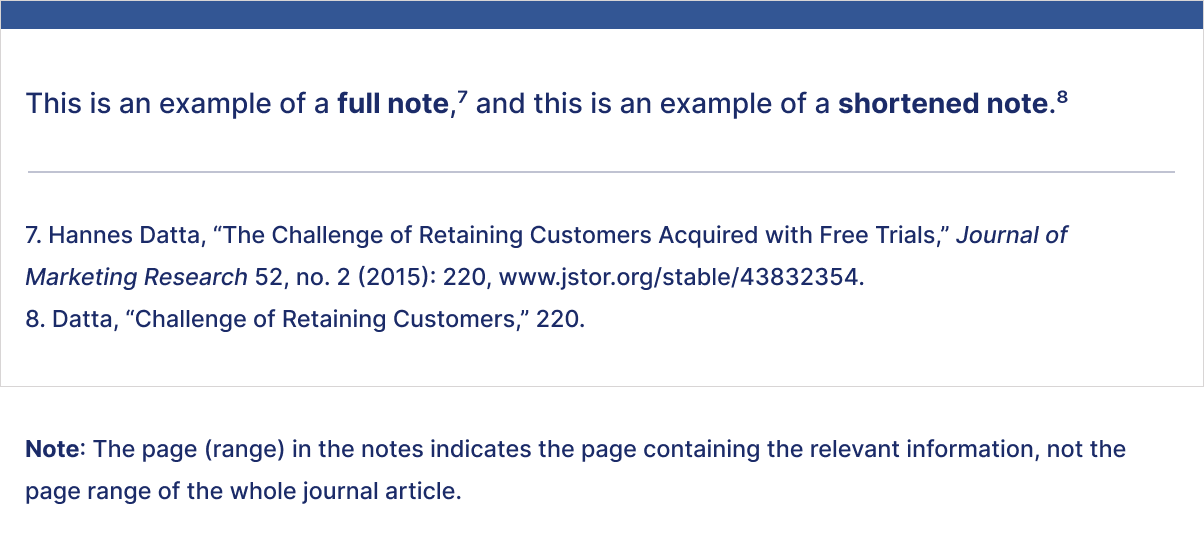
When you refer to a source within your text, you will insert a superscript number immediately after the relevant sentence or clause, before any punctuation. This number corresponds to a note at the bottom of the page (footnote) or at the end of the document (endnote).
Example:
“The rich history of Machu Picchu, the ancient Inca citadel, continues to captivate archaeologists and travelers alike. ¹”
The superscript “1” would then lead to a corresponding note:
¹ Hiram Bingham, The Lost City of the Incas (New York: Harcourt, Brace & Company, 1948), 157.
Key elements of a footnote/endnote citation:
- Author’s full name: First name, then last name.
- Title of the work: Italicized for books and italicized or in quotation marks for articles and chapters, depending on the source type.
- Publication information: City of publication, publisher, and year of publication.
- Page number(s): The specific page or pages from which the information was drawn.
Subsequent citations:
For subsequent references to the same source, the citation is shortened.
¹ Bingham, Lost City of the Incas, 210.
If you cite a work by the same author multiple times consecutively, you can use “Ibid.” (Latin for “in the same place”) for subsequent citations to the immediately preceding source.
¹ Bingham, Lost City of the Incas, 157.
² Ibid., 210.
³ Ibid. (if it refers to the same page as note 2)
However, if another source intervenes, you must use the shortened form.
The Bibliography:
At the end of your paper, you will include a bibliography, which lists all the sources you consulted and cited. The format for bibliography entries is similar to the first citation in a footnote but with slight variations in punctuation and order.
Example of a bibliography entry:
Bingham, Hiram. The Lost City of the Incas. New York: Harcourt, Brace & Company, 1948.
Notice that in the bibliography, the author’s last name comes first, followed by their first name.
When to Use Which Note
The decision between footnotes and endnotes often comes down to personal preference or departmental guidelines.
- Footnotes: Appear at the bottom of the page where the citation is made. They are convenient for readers as they can be consulted without leaving the current page. However, they can sometimes disrupt the visual layout of a page if they become too numerous.
- Endnotes: Are compiled at the end of the document, typically after the bibliography. They allow for a cleaner page layout but require readers to navigate to the end of the work to find the source information.
The Author-Date System: An Alternative Approach
While the Notes and Bibliography system is prevalent, the Chicago Manual of Style also supports an Author-Date system. This system is more common in the sciences and social sciences and resembles citation styles like APA or MLA.
In this system, in-text citations typically consist of the author’s last name and the year of publication, enclosed in parentheses.
Example:
“The architectural ingenuity displayed in the Eiffel Tower is a testament to 19th-century engineering prowess (Smith 2019, 45).”
Key elements of an author-date in-text citation:
- Author’s last name:
- Year of publication:
- Page number(s): (optional, but highly recommended for direct quotes or specific information)
The Reference List:
Similar to the bibliography in the Notes and Bibliography system, the Author-Date system requires a reference list at the end of the document. This list includes all cited sources, alphabetized by author’s last name.
Example of a reference list entry:
Smith, John. 2019. The Iron Lady: An Architectural Biography. Paris: Gallimard.
The primary difference in formatting between the reference list and the initial in-text citation is the placement of the year of publication. In the reference list, the year follows the author’s name.
Practical Application: Citing Travel-Related Content
Let’s consider how these principles apply to content within the scope of our website:
Citing a Travel Guidebook
Suppose you’re writing a section on exploring the bustling markets of Marrakech and found valuable information in a guidebook.
Using Notes and Bibliography:
- First Citation: “The vibrant scent of spices fills the air in the Djemaa el-Fna, a UNESCO World Heritage site and the heart of the old city.¹”
¹ Eleanor Vance, The Rough Guide to Morocco (London: Rough Guides, 2022), 185. - Subsequent Citation: “Local artisans often display their wares in the surrounding souks.²”
² Vance, Rough Guide to Morocco, 190. - Bibliography Entry: Vance, Eleanor. The Rough Guide to Morocco. London: Rough Guides, 2022.
Using Author-Date:
- In-text Citation: “The vibrant scent of spices fills the air in the Djemaa el-Fna, a UNESCO World Heritage site and the heart of the old city (Vance 2022, 185).”
- Reference List Entry: Vance, Eleanor. 2022. The Rough Guide to Morocco. London: Rough Guides.
Citing a Hotel Review or Website
When discussing the amenities of a particular resort, like the Four Seasons Resort Maui at Wailea, and referencing information from their official website or a published review.
Using Notes and Bibliography:
- First Citation: “Guests often praise the exceptional service and the stunning ocean views from the Ocean Front Suites.³”
³ “Guest Experiences at Four Seasons Resort Maui,” accessed October 26, 2023, https://www.fourseasons.com/maui/guest-reviews/.
Note: For web pages without a clear author or publication date, you can use the title or organization name and the access date. - Bibliography Entry: “Guest Experiences at Four Seasons Resort Maui.” Accessed October 26, 2023. https://www.fourseasons.com/maui/guest-reviews/.
Using Author-Date:
- In-text Citation: “Guests often praise the exceptional service and the stunning ocean views from the Ocean Front Suites (Four Seasons Resort Maui 2023).”
Note: For websites without a specific author, you can use the organization name and a relevant year. If no year is available, you can use “n.d.” for “no date.” - Reference List Entry: Four Seasons Resort Maui. 2023. “Guest Experiences at Four Seasons Resort Maui.” Accessed October 26, 2023. https://www.fourseasons.com/maui/guest-reviews/.
Citing Historical Information About a Landmark
If you’re detailing the history of a famous landmark like the Colosseum in Rome.
Using Notes and Bibliography:
- First Citation: “Construction of the Colosseum began under Emperor Vespasian in 72 AD.⁴”
⁴ Adrian Goldsworthy, How Rome Fell: Death of a Superpower (New Haven: Yale University Press, 2009), 35. - Bibliography Entry: Goldsworthy, Adrian. How Rome Fell: Death of a Superpower. New Haven: Yale University Press, 2009.
Using Author-Date:
- In-text Citation: “Construction of the Colosseum began under Emperor Vespasian in 72 AD (Goldsworthy 2009, 35).”
- Reference List Entry: Goldsworthy, Adrian. 2009. How Rome Fell: Death of a Superpower. New Haven: Yale University Press.

Consistency is Key
Regardless of whether you choose the Notes and Bibliography system or the Author-Date system, the most critical aspect of in-text citations Chicago style is consistency. Ensure that every source you cite within the text is meticulously documented in your bibliography or reference list, and vice versa. Pay close attention to punctuation, capitalization, and the order of information in your citations. While the initial learning curve may seem steep, practicing these citation methods will quickly become second nature. By diligently applying these principles, your writing will not only be compliant with academic standards but will also stand as a testament to your thorough research and respect for the intellectual work of others. Whether you are sharing your adventures in a travel blog, analyzing accommodation options, or detailing the nuances of local tourism, mastering Chicago style in-text citations will elevate the credibility and professionalism of your content.
LifeOutOfTheBox is a participant in the Amazon Services LLC Associates Program, an affiliate advertising program designed to provide a means for sites to earn advertising fees by advertising and linking to Amazon.com. Amazon, the Amazon logo, AmazonSupply, and the AmazonSupply logo are trademarks of Amazon.com, Inc. or its affiliates. As an Amazon Associate we earn affiliate commissions from qualifying purchases.