
Establishing residency in Arizona is a pivotal step for those seeking to plant roots in the Grand Canyon State, whether for its burgeoning economy, its stunning natural beauty, or its appealing tax structure. This process is more than just a declaration; it involves fulfilling specific legal requirements designed to demonstrate a genuine intent to make Arizona your permanent home. Understanding these requirements is crucial for activities such as obtaining an Arizona driver’s license, registering to vote, and claiming in-state tuition rates at state universities.
Understanding the Legal Definition of Residency
In Arizona, residency is generally defined by two key factors: physical presence and intent. You must physically reside in the state and demonstrate a clear intention to remain indefinitely. The state’s legal framework, primarily established through legislative statutes and court interpretations, outlines various proofs and conditions that constitute bona fide residency. This is distinct from simply being present in the state, such as for a vacation or temporary business trip. The intent component is often the most scrutinized aspect, requiring concrete actions to support your claim.
Physical Presence
The most straightforward aspect of establishing residency is physical presence. While there isn’t a rigid number of days mandated for initial residency establishment for all purposes (like getting a driver’s license, which has specific timelines), a consistent and substantial period of physical presence is expected. For purposes like voting or claiming in-state tuition, specific timeframes are typically outlined by the relevant state agencies. For instance, the Arizona Department of Transportation (ADOT) will have specific requirements for driver’s license applications, often necessitating proof of residency within a certain period. Similarly, the Arizona Board of Regents will detail the duration of physical presence required for in-state tuition at institutions like Arizona State University or the University of Arizona.
Intent to Remain
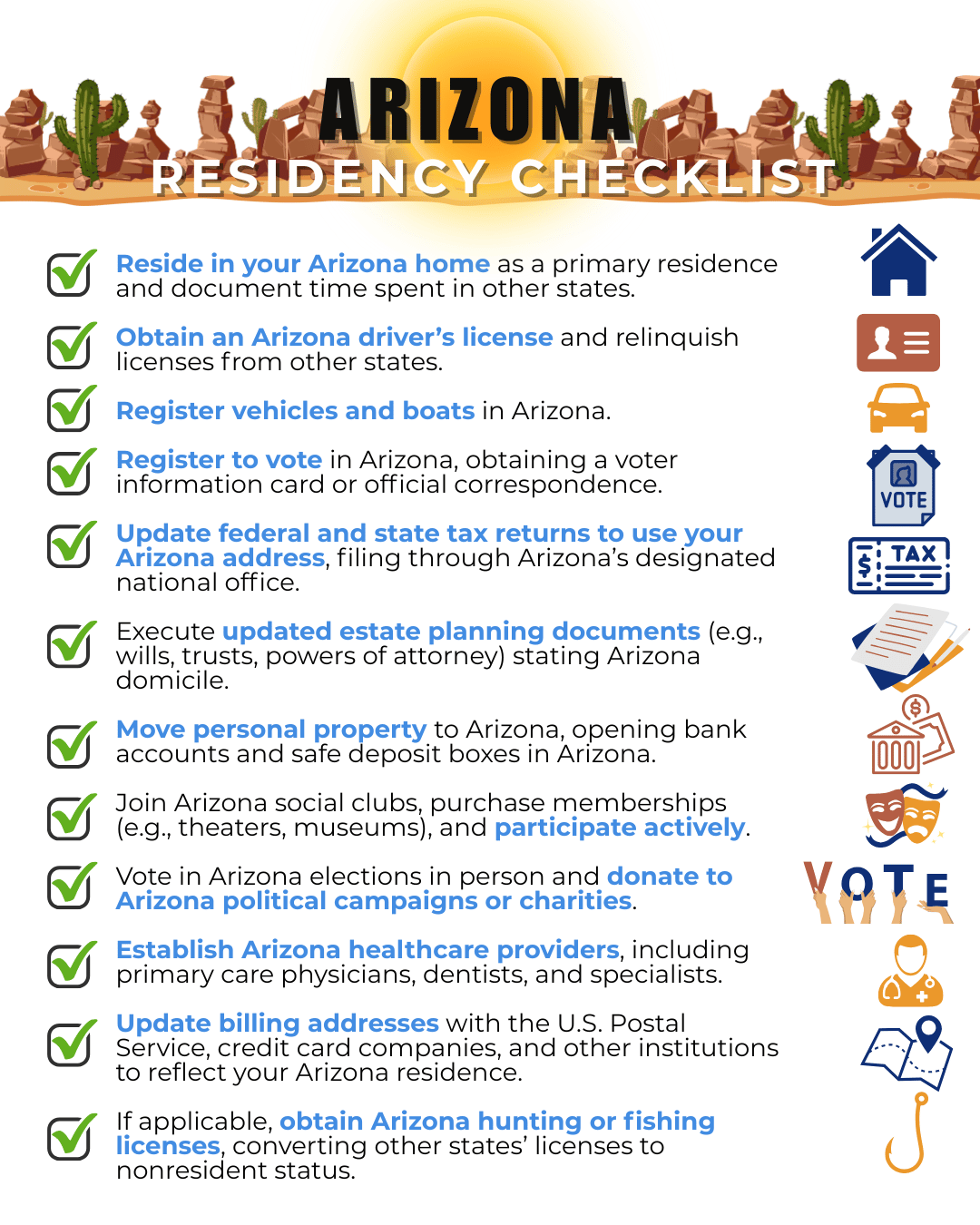
Proving your intent to remain in Arizona indefinitely is critical. This is where actions speak louder than words. The state looks for evidence that you are not just visiting but are integrating yourself into the community and establishing a life there. This can be demonstrated through a variety of actions and documentation.
Establishing a Primary Residence
Securing a permanent abode is a primary indicator of intent. This means more than just renting a hotel room indefinitely or staying with friends. It typically involves signing a lease agreement for an apartment, purchasing a home, or establishing a long-term rental agreement. The address must be a fixed, physical location where you regularly sleep and receive mail. Short-term rentals, like those found on platforms for vacation stays, are generally not sufficient on their own.
Employment and Financial Ties
Actively seeking and obtaining employment within Arizona is a strong indicator of your intent to remain. This includes starting a new job, opening a business, or transferring an existing business to the state. Furthermore, establishing financial ties, such as opening a local bank account, obtaining an Arizona-issued driver’s license or state ID, and registering your vehicles in Arizona, further solidifies your commitment. Filing Arizona state income taxes is also a significant piece of evidence.
Community Involvement and Personal Affairs
Engaging with the local community demonstrates a vested interest in Arizona. This can include registering to vote in Arizona, joining local clubs or organizations, enrolling children in Arizona schools, or establishing ties with local healthcare providers. Transferring professional licenses to Arizona and discontinuing ties with your previous state of residence, such as closing bank accounts or terminating leases there, are also strong indicators.
Key Documentation for Proving Residency
When applying for official state identification, driver’s licenses, or registering to vote, you will likely be required to present specific documentation to prove your residency. The Arizona Department of Transportation (ADOT) and the Arizona Secretary of State have detailed lists of acceptable documents. Typically, a combination of at least two documents is required, from separate categories, to substantiate your claim.
Primary Proofs of Residency
These are documents that directly show your name and Arizona address.
- Lease Agreement or Mortgage Statement: A signed lease for a rental property or a mortgage statement for a purchased home in Arizona.
- Utility Bills: Recent bills (usually within the last 60 days) for services like electricity, gas, water, or internet, addressed to you at your Arizona residence.
- Bank Statements: Official statements from an Arizona-based bank showing your name and address.
- Pay Stubs or Employment Verification: Recent pay stubs or a letter from your Arizona employer confirming your employment and Arizona address.
Secondary Proofs of Residency
These documents can support your primary proofs or be used when primary documents are not readily available, but they still need to demonstrate your connection to the state.
- Arizona Driver’s License or Identification Card: If you are transferring from another state, your old license might be surrendered, but if you are applying for a new one, this is a goal rather than a proof. However, if you have a valid out-of-state license and can show other proofs of residency, it can assist.
- Vehicle Registration: Proof of registration for your vehicle(s) in Arizona.
- Voter Registration Card: An Arizona voter registration card.
- School Records: Enrollment documentation from an Arizona school or university, such as a transcript or enrollment verification, showing your Arizona address.
- Insurance Policies: Homeowners or renters insurance policy for your Arizona property.
- Medical Records: Recent medical bills or statements from an Arizona-based healthcare provider.

It is always advisable to check the most current requirements with the specific agency you are dealing with, as documentation lists can be updated.
Specific Scenarios for Establishing Residency
The specific requirements and proofs needed can vary depending on the purpose for which you are establishing residency.
Obtaining an Arizona Driver’s License or State ID
The Arizona Department of Transportation (ADOT) requires new residents to obtain an Arizona driver’s license or state ID within a specific timeframe after moving to the state. This typically involves:
- Surrendering your out-of-state license: If you hold a valid driver’s license from another state, you will generally need to surrender it.
- Providing proof of identity and legal presence: This usually involves documents like a birth certificate or passport.
- Providing proof of Social Security number: Your Social Security card or W-2 form.
- Providing proof of residency: As detailed above, a combination of documents like utility bills, lease agreements, or bank statements showing your Arizona address.
You will also need to pass vision and written knowledge tests. For a driver’s license, a driving test may also be required.
Registering to Vote
To register to vote in Arizona, you must be a U.S. citizen, a resident of Arizona, and at least 18 years old on Election Day. The registration process typically requires you to provide your Arizona residential address. While you may not always need to provide specific proof of residency at the time of registration, your address must be truthful and reflect your intent to reside in the precinct where you are registering. The Arizona Secretary of State’s office oversees voter registration and provides forms and information online.
Qualifying for In-State Tuition
For students attending public universities in Arizona, such as Arizona State University, the University of Arizona, or Northern Arizona University, establishing legal residency is crucial for qualifying for lower in-state tuition rates. This typically requires demonstrating continuous physical presence in Arizona for at least 12 consecutive months prior to the start of the academic term for which you are seeking in-state classification. The Arizona Board of Regents has specific guidelines and forms for residency classification, which often involve extensive documentation of financial independence, employment, domicile, and intent to remain in the state. Simply attending a university in Arizona does not automatically grant in-state status.
Avoiding Common Pitfalls
When establishing residency, it’s important to be aware of potential pitfalls that could invalidate your claim.
Maintaining Ties to Another State
One of the most significant issues is continuing to maintain strong ties to your previous state of residence. This includes:
- Voting in elections in your previous state: This is a clear contradiction to establishing residency elsewhere.
- Registering your vehicles in your previous state: All vehicles you own and operate should be registered in your new state of residence.
- Maintaining a business or professional license in another state without demonstrating a clear move: Unless you have a legitimate reason for maintaining such ties temporarily, they can undermine your residency claim.
- Continuing to pay taxes in another state: Beyond any obligations related to property you might still own there, you should not be filing income taxes as a resident of another state.
Relying Solely on Temporary Arrangements
As mentioned, temporary living situations like extended hotel stays or living with friends without a formal arrangement are generally insufficient to prove residency for official purposes. Your residence should be stable and intended to be long-term.
Misrepresenting Information
Providing false information or misrepresenting facts on any application for residency-related services is a serious offense and can have severe legal consequences, including fines, denial of services, and potential criminal charges.
Making Arizona Your Home
Establishing residency in Arizona is a multi-faceted process that requires careful attention to detail and a genuine commitment to making the state your permanent home. By understanding the legal definitions of residency, gathering the appropriate documentation, and being mindful of common pitfalls, you can successfully navigate this process. Whether you are drawn by the vibrant culture of cities like Phoenix and Tucson, the breathtaking landscapes of the Grand Canyon and Sedona, or the economic opportunities, a well-established residency will allow you to fully enjoy the benefits and privileges of living in the truly remarkable state of Arizona. It is always recommended to consult with legal counsel or the relevant state agencies if you have complex questions or unique circumstances regarding your residency status.
LifeOutOfTheBox is a participant in the Amazon Services LLC Associates Program, an affiliate advertising program designed to provide a means for sites to earn advertising fees by advertising and linking to Amazon.com. Amazon, the Amazon logo, AmazonSupply, and the AmazonSupply logo are trademarks of Amazon.com, Inc. or its affiliates. As an Amazon Associate we earn affiliate commissions from qualifying purchases.