
The process of evicting a renter in Texas is a legal procedure governed by specific state laws and court rules. Landlords cannot simply change locks or remove a tenant’s belongings. A lawful eviction requires a court order. Understanding these steps is crucial for property owners to navigate the process efficiently and legally, protecting both their rights and the tenant’s. This guide outlines the essential stages of a Texas eviction, often referred to as a “Forcible Entry and Detainer” lawsuit.
Understanding the Legal Framework for Eviction in Texas
In Texas, landlord-tenant relationships are primarily governed by Chapter 24 of the Texas Property Code. This chapter details the grounds for eviction, notice requirements, and the legal steps involved in the eviction lawsuit. It’s important to note that Texas law does not permit “self-help” evictions. This means a landlord cannot take matters into their own hands. Any attempt to physically remove a tenant or their property without a court order can result in legal penalties against the landlord. The court system provides a structured mechanism to resolve disputes between landlords and tenants regarding possession of a property.
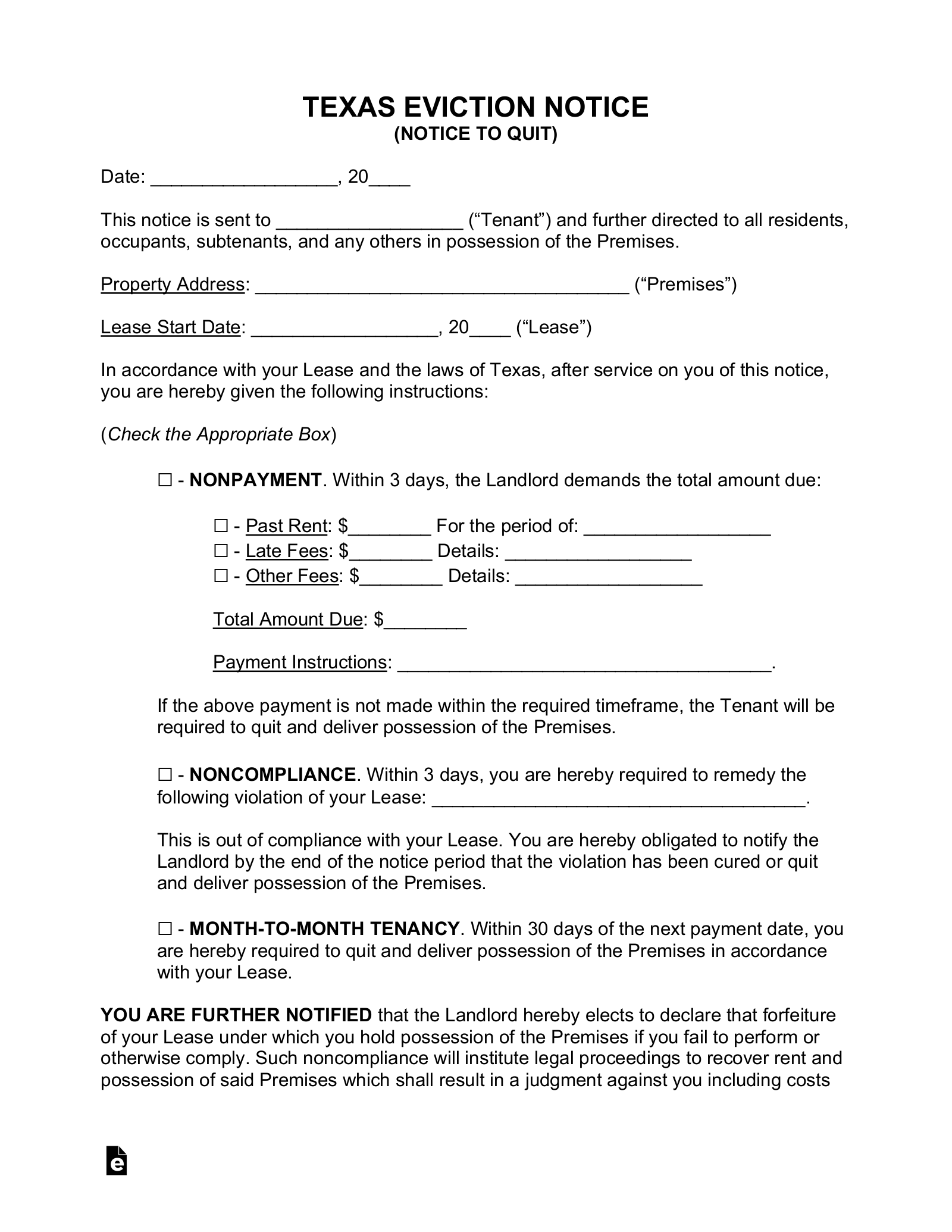
Grounds for Eviction
The most common reasons for initiating an eviction lawsuit in Texas include:
- Non-Payment of Rent: This is the most frequent ground for eviction. If a tenant fails to pay rent by the due date, the landlord has cause to begin eviction proceedings. The lease agreement will specify the rent amount and due date.
- Violation of Lease Terms: A lease agreement is a legally binding contract. If a tenant violates a significant term of the lease, such as having unauthorized pets, engaging in illegal activities on the property, or causing damage beyond normal wear and tear, the landlord may have grounds for eviction.
- End of Lease Term: If a lease agreement has expired and the tenant remains on the property without a new agreement or the landlord’s permission, they are considered a holdover tenant, and the landlord can proceed with eviction.
- Illegal Activity: If a tenant uses the rental property for illegal purposes, such as manufacturing controlled substances or conducting illegal gambling operations, the landlord can initiate eviction proceedings.
Notice Requirements
Before filing an eviction lawsuit, a landlord must provide the tenant with a written notice to vacate. This notice is a critical prerequisite, and its content and delivery method are strictly defined by Texas law.
- Three-Day Notice to Vacate: For most non-payment of rent and lease violation cases, a landlord must give the tenant at least three days’ written notice to vacate the premises. This notice must inform the tenant of the reason for the eviction and state that the landlord will file a lawsuit if the tenant does not move out. The three days do not include the day the notice is served or any weekend or legal holiday.
- Delivery of Notice: The notice must be delivered in a specific manner. It can be:
- Personally delivered to the tenant.
- Delivered to another occupant of suitable age and discretion, and mailed to the tenant’s last known address.
- If the tenant’s or an occupant’s whereabouts are unknown, the notice can be posted on the inside of the front door or other conspicuous place on the property, and the landlord must also mail a copy to the tenant at the property’s address.
Filing the Eviction Lawsuit (Forcible Entry and Detainer)
If the tenant does not vacate the property after the notice period has expired, the landlord can then file an eviction lawsuit. This is done by filing a “Petition for Eviction” or “Forcible Entry and Detainer” with the justice court in the precinct where the property is located.
The Eviction Petition
The eviction petition is a formal legal document that initiates the lawsuit. It must contain specific information, including:
- The names of the landlord and tenant.
- A description of the property.
- The legal grounds for the eviction.
- A statement that proper notice to vacate has been given.
- The amount of rent owed, if applicable.
Landlords can draft their own petitions, but it is highly recommended to consult with an attorney to ensure all legal requirements are met. Errors in the petition can lead to delays or dismissal of the case.
Service of Citation
Once the petition is filed, the court will issue a citation to the tenant. This citation, along with a copy of the eviction petition, must be officially served on the tenant by a constable or a private process server. This service formally notifies the tenant that a lawsuit has been filed against them and informs them of the date and time of the court hearing. The constable or process server will typically attempt to hand-deliver the citation to the tenant. If personal service is unsuccessful, alternative methods of service may be employed, similar to the notice requirements.
The Court Hearing
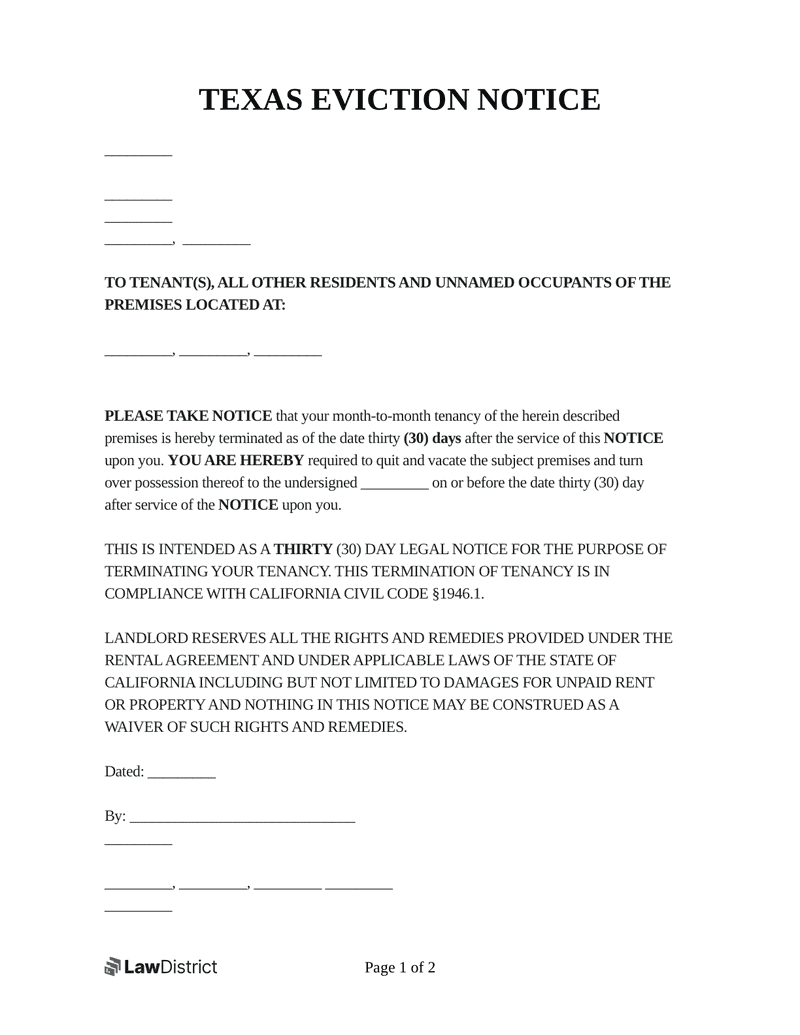
In Texas, eviction cases are typically heard in the justice court. The court will schedule a hearing date, usually within a short timeframe after the citation is served.
- Tenant’s Response: The tenant has the right to appear in court on the hearing date and present their defense. If the tenant fails to appear, the landlord may be granted a default judgment, allowing them to proceed with the eviction.
- Landlord’s Case: At the hearing, the landlord must present evidence to support their claim for eviction. This may include a copy of the lease agreement, rent payment records, photographs of damages, or testimony from witnesses.
- Court’s Decision: The judge will listen to both sides and review the evidence. If the judge rules in favor of the landlord, they will issue a judgment for possession. This judgment will specify a date by which the tenant must vacate the property.
Writ of Possession and Enforcement
If the tenant still refuses to leave the property after a judgment for possession has been issued, the landlord cannot forcibly remove them. The landlord must obtain a “Writ of Possession” from the court.
Obtaining the Writ of Possession
The Writ of Possession is a court order directing the constable or sheriff to remove the tenant and their belongings from the property. The landlord must request this writ from the justice court clerk. There is typically a fee associated with obtaining the writ.
Execution of the Writ
Once the Writ of Possession is issued, it is delivered to the constable or sheriff’s department. Law enforcement will then schedule a date and time to execute the writ. On the scheduled day, the constable will go to the property and physically remove the tenant if they are still present. The landlord is usually required to be present during the execution of the writ to take possession of the property.
Dealing with Abandoned Property
In Texas, landlords must follow specific procedures if a tenant leaves personal property behind after being evicted. The landlord cannot simply dispose of the property. They must:
- Inventory the property.
- Store the property safely.
- Provide the tenant with written notice of the storage and the tenant’s right to reclaim the property within a specified period (usually 30 days).
- If the tenant does not reclaim the property within the allotted time, the landlord may be able to sell or dispose of it.
Important Considerations and Legal Advice
Navigating the eviction process can be complex and emotionally taxing. It is highly advisable for landlords to seek legal counsel.
The Importance of Legal Representation
An experienced attorney specializing in landlord-tenant law can:
- Ensure all legal requirements are met, from drafting notices to filing court documents.
- Represent the landlord in court, presenting the case effectively.
- Advise on best practices to avoid future legal issues.
- Help understand nuanced aspects of Texas eviction law, such as dealing with tenants who file for bankruptcy or specific scenarios involving manufactured housing.
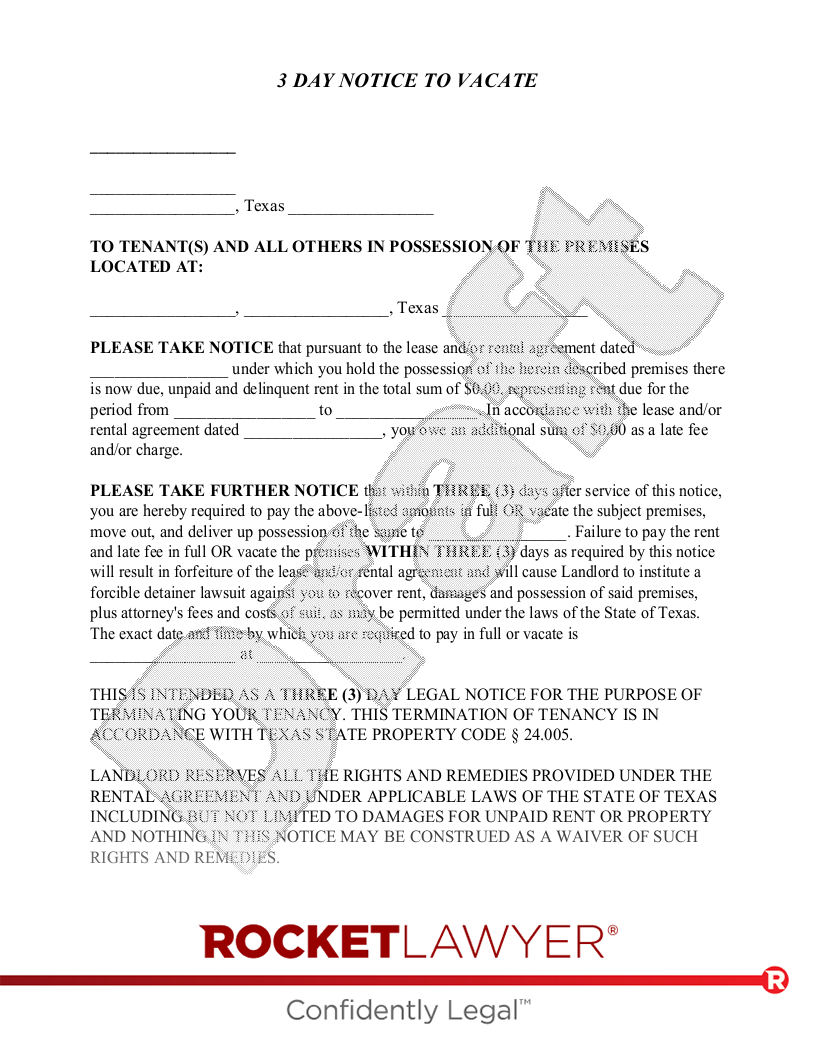
Avoiding Common Pitfalls
Landlords often make mistakes that can derail an eviction. These include:
- Failing to provide proper written notice or serving it incorrectly.
- Accepting rent after filing the eviction lawsuit, which can sometimes waive the landlord’s right to evict.
- Attempting a “self-help” eviction.
- Not properly documenting the condition of the property or lease violations.
By adhering strictly to Texas law and seeking professional guidance when needed, landlords can ensure a lawful and efficient eviction process. This not only protects their property rights but also contributes to a more stable rental market.
LifeOutOfTheBox is a participant in the Amazon Services LLC Associates Program, an affiliate advertising program designed to provide a means for sites to earn advertising fees by advertising and linking to Amazon.com. Amazon, the Amazon logo, AmazonSupply, and the AmazonSupply logo are trademarks of Amazon.com, Inc. or its affiliates. As an Amazon Associate we earn affiliate commissions from qualifying purchases.