
Navigating the complexities of landlord-tenant law in Colorado can be a daunting task, especially when faced with the necessity of evicting a tenant. Whether you’re a seasoned property manager or a first-time landlord, understanding the legal framework and procedural steps is paramount to ensure a lawful and efficient eviction process. This guide aims to demystify the eviction process in Colorado, providing a comprehensive overview of the requirements, timelines, and potential pitfalls to avoid. The focus here is on providing clarity and empowering property owners with the knowledge to proceed with confidence, ensuring that your rights as a landlord are protected while adhering strictly to state and local statutes.

Understanding Landlord-Tenant Laws in Colorado
Colorado‘s landlord-tenant laws are primarily governed by the Colorado Revised Statutes (C.R.S.), specifically within Title 38, Article 12, known as the “Colorado Tenant and Landlord Act.” This act outlines the rights and responsibilities of both parties, including lease agreements, security deposits, maintenance obligations, and the grounds for eviction. It is crucial for landlords to be intimately familiar with these statutes before initiating any eviction proceedings.
Lease Agreements: The Foundation of the Landlord-Tenant Relationship
A well-drafted lease agreement is the cornerstone of a smooth rental experience and provides essential documentation should an eviction become necessary. In Colorado, leases can be written or oral, though written leases are strongly recommended for clarity and legal recourse. A written lease should clearly define:
- Parties Involved: Full legal names and contact information of the landlord and tenant(s).
- Property Description: The address and any specific details of the rented premises.
- Lease Term: The duration of the lease (e.g., month-to-month, fixed term).
- Rent Amount and Due Date: When rent is due, acceptable payment methods, and any late fees.
- Security Deposit: The amount and conditions under which it will be returned.
- Tenant Responsibilities: Rules regarding property maintenance, use of common areas, and prohibited activities.
- Landlord Responsibilities: Obligations for repairs and maintenance.
- Grounds for Termination: Specific conditions under which either party can end the lease, including clauses for lease violations.
Understanding the terms of your lease is the first step in determining if grounds for eviction exist. A breach of the lease agreement by the tenant is typically the most common reason for initiating an eviction.
Grounds for Eviction in Colorado
Colorado law permits landlords to evict tenants for several reasons. These grounds generally fall into two broad categories: non-payment of rent and lease violations.
Non-Payment of Rent
This is the most frequent reason for eviction. If a tenant fails to pay rent by the due date specified in the lease agreement, the landlord has grounds to initiate eviction proceedings. It is important to note that Colorado law dictates specific procedures for handling late rent, including grace periods if stipulated in the lease.
Lease Violations
Beyond non-payment of rent, tenants can be evicted for violating other terms of the lease agreement. Common lease violations include:
- Damage to the Property: Significant damage beyond normal wear and tear caused by the tenant or their guests.
- Illegal Activities: Engaging in or permitting illegal activities on the rental property.
- Disturbing the Peace: Creating excessive noise or disturbances that negatively impact neighbors.
- Unauthorized Occupants: Having individuals residing in the property who are not listed on the lease agreement without the landlord’s permission.
- Failure to Maintain the Property: Neglecting basic upkeep as outlined in the lease or tenant responsibilities.
- Subletting Without Permission: Transferring possession of the property to another party without the landlord’s written consent.
It is essential to have clear, documented evidence of any lease violation before proceeding with an eviction.
The Eviction Process: Step-by-Step in Colorado
The eviction process in Colorado, often referred to as a “Forcible Entry and Detainer” (FED) action, is a legal proceeding that requires strict adherence to procedural rules. Skipping steps or making procedural errors can lead to delays or the dismissal of your case.
Step 1: Serve a Written Notice
Before filing a lawsuit, you must provide the tenant with proper written notice. The type of notice required depends on the reason for the eviction.
Notice to Quit for Non-Payment of Rent
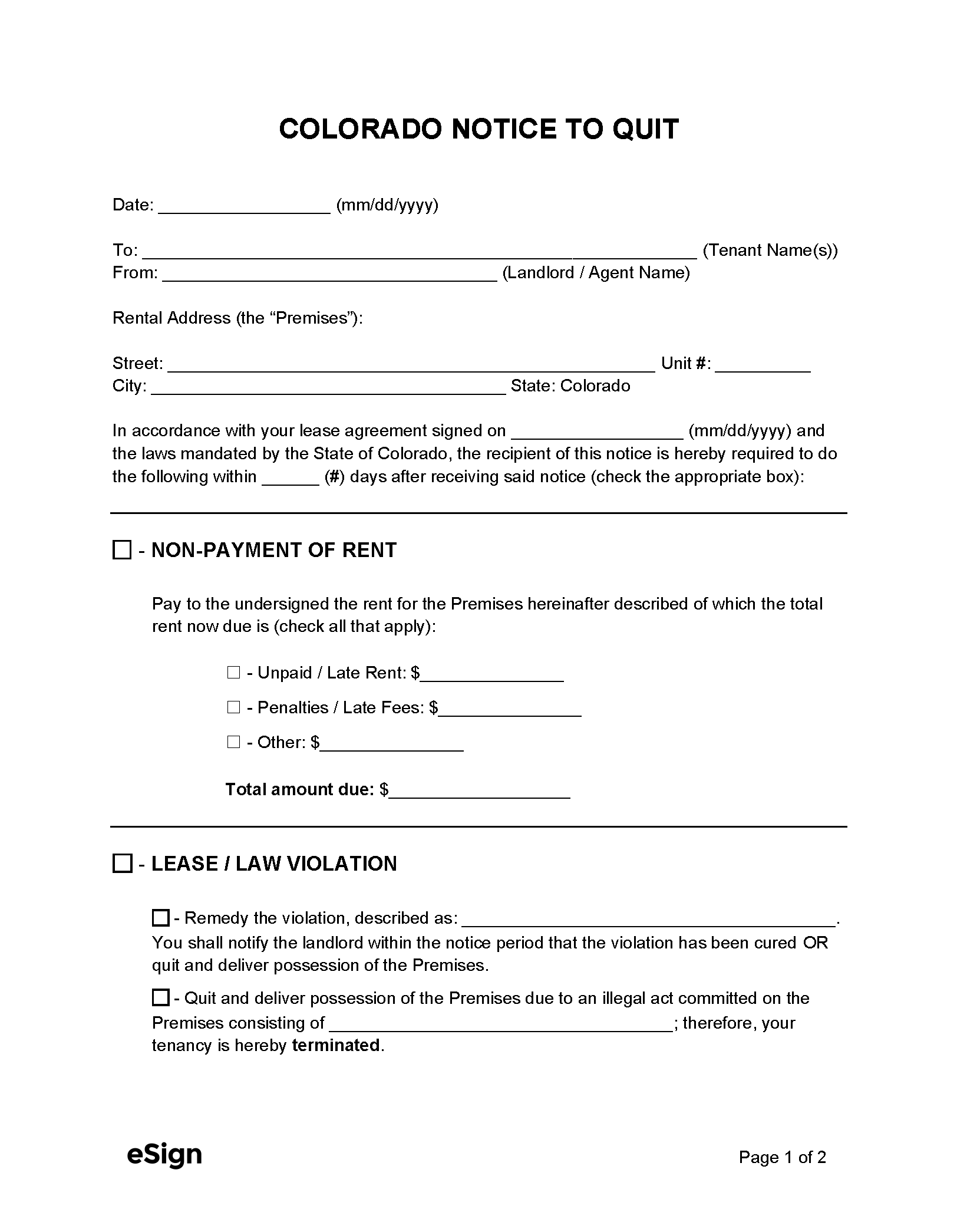
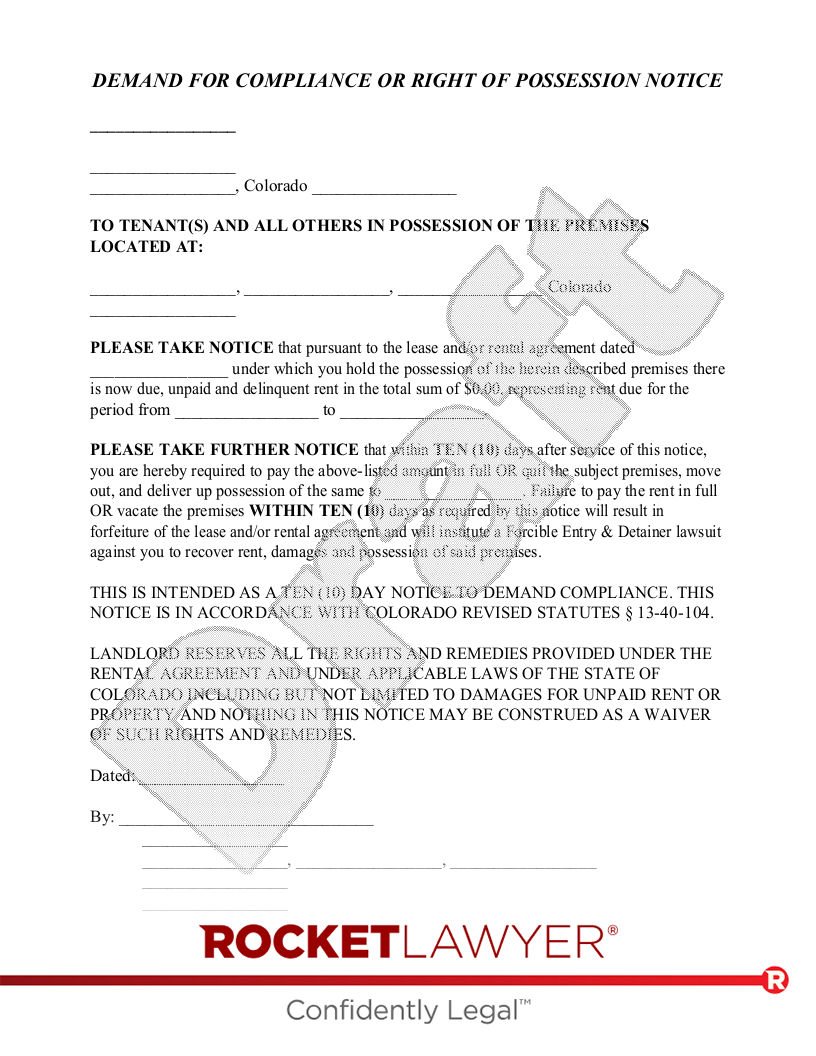
If the eviction is due to non-payment of rent, you must serve the tenant with a “Demand for Compliance or Possession” (also known as a 3-Day Notice). This notice must clearly state:
- The amount of rent owed.
- The date by which the rent must be paid to avoid eviction.
- That failure to pay the rent within the specified timeframe will result in the termination of the lease and the initiation of an eviction lawsuit.
The tenant has three days from the date of service to pay the rent in full or vacate the premises. If they do neither, you can proceed to the next step.
Notice to Quit for Lease Violations
For lease violations other than non-payment of rent, you must serve a “Demand for Compliance or Possession” that specifies the lease violation and provides the tenant with a reasonable period to cure the violation. Generally, this period is 10 days. If the violation is not cured within this timeframe, or if it is a serious violation that cannot be cured (e.g., illegal activity), you may serve a “Notice to Quit,” which requires the tenant to vacate within a specified period, typically 10 days.
Proper Service of Notice
Colorado law dictates how these notices must be served. Acceptable methods include:
- Personal Delivery: Handing the notice directly to the tenant.
- Posting and Mailing: If the tenant is not present, posting a copy of the notice in a conspicuous place on the property (e.g., the front door) and mailing a copy via certified mail to the tenant’s last known address.
Keep meticulous records of when and how the notice was served, as this is crucial evidence if the case goes to court.
Step 2: File a Lawsuit in Court
If the tenant fails to comply with the notice (i.e., pay rent, cure the violation, or vacate the premises) within the specified timeframe, you can file a lawsuit in the county court where the property is located. This lawsuit is formally known as an “Action for Forcible Entry and Detainer.” You will need to file a “Complaint” outlining the reasons for the eviction and providing details of the lease agreement and the notice served.
Step 3: Serve the Tenant with the Summons and Complaint
After filing the complaint, the court will issue a “Summons.” This legal document officially notifies the tenant that they are being sued and informs them of the deadline to respond. The summons and a copy of the complaint must be formally served on the tenant by a sheriff, undersheriff, deputy sheriff, or a private process server. This ensures the tenant is officially notified of the legal action against them.
Step 4: The Tenant’s Response
The tenant has a limited amount of time to file a formal response with the court, typically within 7 to 10 days of being served. They can:
- Appear and Defend: File an “Answer” disputing the landlord’s claims.
- Do Nothing: If the tenant fails to respond within the allotted time, the landlord may be able to seek a default judgment.
Step 5: Court Hearing
If the tenant files an answer, a court hearing will be scheduled. Both the landlord and tenant will have the opportunity to present their case, evidence, and witnesses. Landlords should be prepared to present:
- The lease agreement.
- Proof of rent payments (or non-payments).
- Documentation of lease violations.
- Copies of all notices served and proof of service.
The judge will then make a ruling based on the evidence and Colorado law.
Step 6: Judgment and Writ of Restitution
If the court rules in favor of the landlord, it will issue a “Judgment for Possession.” This judgment legally entitles the landlord to regain possession of the property. If the tenant still refuses to vacate, the landlord must then obtain a “Writ of Restitution” from the court.
The Writ of Restitution is an order from the court directing the sheriff to remove the tenant from the property if they do not leave voluntarily. The sheriff will then schedule a date and time to enforce the writ, physically removing the tenant and their belongings if necessary. It is crucial to understand that landlords cannot physically remove tenants themselves; this must be done by law enforcement.
Important Considerations and Legal Pitfalls
While the eviction process in Colorado is clearly defined, landlords must be aware of common mistakes that can jeopardize their case.
Retaliatory Eviction
Colorado law prohibits retaliatory evictions. If a tenant has recently exercised a legal right (e.g., complained about habitability issues, joined a tenant’s union), a landlord cannot evict them in retaliation. Attempting to do so can result in legal penalties.
Self-Help Eviction
Landlords are strictly prohibited from engaging in “self-help” evictions. This means you cannot:
- Change the locks.
- Turn off utilities.
- Remove the tenant’s belongings.
- Physically force the tenant out.
Any attempt to take matters into your own hands will be considered illegal and can lead to significant legal consequences for the landlord, including monetary damages to the tenant.
Security Deposit Handling
After a tenant vacates, landlords must handle security deposits according to Colorado law. Within 30 days of termination of occupancy, landlords must return the security deposit, along with an itemized statement of any deductions, or provide a written statement explaining why the deposit is being withheld. Deductions can only be for unpaid rent or damages beyond normal wear and tear.
Seeking Legal Counsel
The eviction process can be complex and emotionally charged. It is highly recommended that landlords consult with an attorney experienced in landlord-tenant law in Colorado. An attorney can ensure all legal requirements are met, draft necessary documents correctly, and represent you in court. This is especially important if the tenant contests the eviction or if there are unusual circumstances involved.
By understanding and diligently following the legal procedures outlined in Colorado law, landlords can navigate the eviction process effectively and lawfully, protecting their property rights while upholding their obligations.
LifeOutOfTheBox is a participant in the Amazon Services LLC Associates Program, an affiliate advertising program designed to provide a means for sites to earn advertising fees by advertising and linking to Amazon.com. Amazon, the Amazon logo, AmazonSupply, and the AmazonSupply logo are trademarks of Amazon.com, Inc. or its affiliates. As an Amazon Associate we earn affiliate commissions from qualifying purchases.