
Facing an eviction can be one of the most stressful experiences for anyone engaged in a long-term accommodation agreement. Understanding your rights and the legal process in Alabama is crucial for a successful defense. While the process can seem daunting, tenants have specific protections and avenues to challenge an eviction notice. This guide delves into the essential steps and legal considerations for tenants in Alabama navigating an eviction.
Understanding Eviction Laws in Alabama
The foundation of landlord-tenant relationships and eviction procedures in Alabama is largely governed by the Alabama Uniform Residential Landlord and Tenant Act (AURTA), which applies to many, but not all, rental agreements. Familiarizing yourself with this act is the first step in preparing your defense.

The Alabama Uniform Residential Landlord and Tenant Act (AURTA)
The AURTA provides a comprehensive framework for both landlords and tenants, outlining their respective duties and rights. It covers aspects such as lease agreements, security deposits, maintenance responsibilities, and, importantly, the legal process for evictions. While not universally adopted across all rental units in Alabama—some small landlords or properties outside certain metropolitan areas might fall under common law principles—it still heavily influences most landlord-tenant disputes. Understanding whether your tenancy falls under AURTA is vital, as it dictates specific notice periods and legal remedies. For instance, the act often requires landlords to maintain premises in a fit and habitable condition, and failure to do so can sometimes serve as a defense in an eviction action, though this is a complex area.
Common Grounds for Eviction
Landlords in Alabama must have a legally valid reason to evict a tenant. The most frequent grounds include:
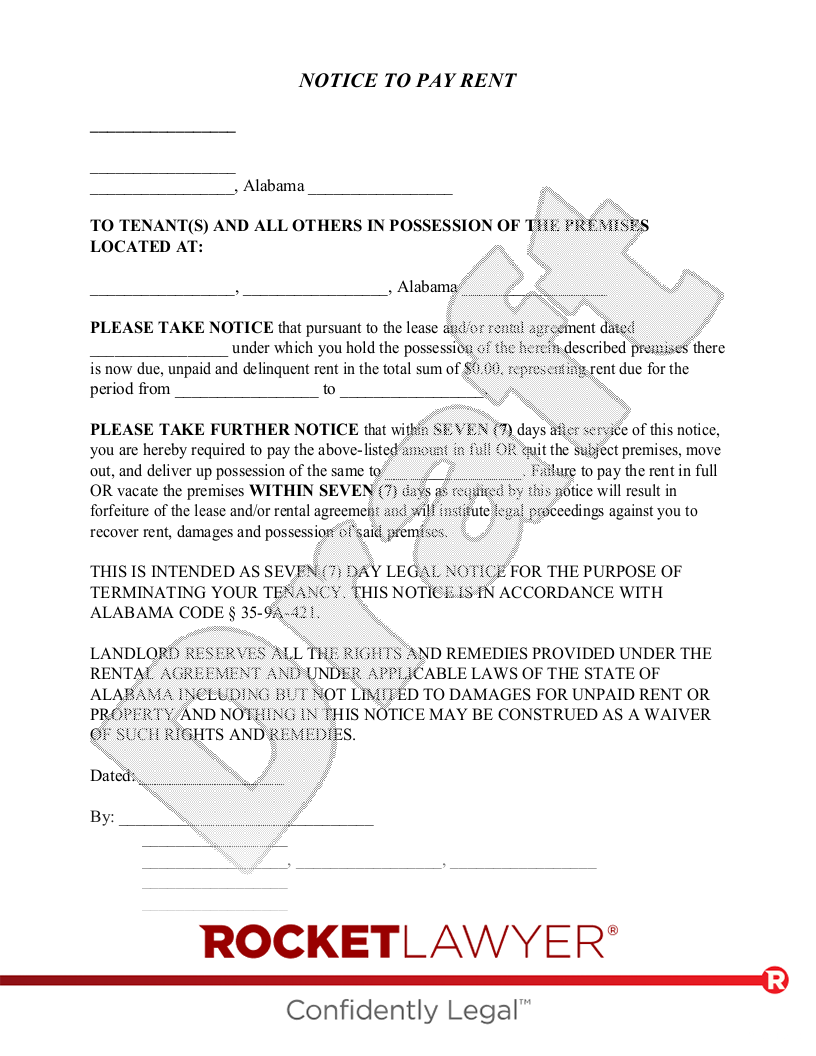
- Non-payment of Rent: This is the most common reason. If a tenant fails to pay rent when due, the landlord typically must provide a 7-day written notice to pay or vacate. If the rent remains unpaid after this period, the landlord can initiate eviction proceedings.
- Lease Violations: Breaching a term of the lease agreement, such as having unauthorized pets, causing significant property damage, or violating specific clauses about noise or property use, can lead to eviction. For material non-compliance, the landlord usually provides a 14-day written notice to cure the breach or vacate the premises. If the breach is not remedied, an eviction case can proceed.
- Holding Over: This occurs when a tenant remains in the property after their lease agreement has expired and has not been renewed, nor has the landlord accepted further rent payments. The landlord can then proceed with an eviction action, as the tenant no longer has a legal right to occupy the property.
- Illegal Activity: Engaging in illegal activities on the premises, such as drug manufacturing or other criminal acts, can lead to immediate termination of the tenancy and an expedited eviction process, often without a right to cure the violation.
The Eviction Notice: Your First Alert
An eviction process officially begins when your landlord serves you with a written eviction notice. This is not a court order but rather a formal demand that you comply with a lease term or vacate the property. The type of notice and the time frame it provides depend on the reason for the eviction:
- 7-Day Notice: Typically used for non-payment of rent, giving you seven days to pay the overdue amount or move out.
- 14-Day Notice: Usually issued for lease violations (other than non-payment), allowing you 14 days to remedy the violation or vacate.
- 30-Day Notice (or specific lease term): May be used for month-to-month tenancies without cause, or when the lease term expires and the landlord does not wish to renew.
It is paramount to understand the specific notice you receive, its stated reason, and the deadline. Ignoring this notice will severely weaken your ability to fight the eviction later.
Navigating Your Tenant Rights in Alabama
Even when facing an eviction notice, tenants in Alabama retain specific legal rights that protect them from unlawful actions by landlords. Understanding these rights is fundamental to mounting an effective defense.
The Right to Proper Legal Process
Perhaps the most critical right tenants have is the right to due process. Landlords cannot engage in “self-help” evictions, which include changing locks, removing a tenant’s belongings, shutting off utilities, or otherwise forcing a tenant out without a court order. Such actions are illegal under Alabama law. A landlord must follow the formal legal eviction process, which involves serving proper notice, filing an “unlawful detainer” complaint in court, and obtaining a judgment from a judge. Any deviation from this process can be grounds for dismissing the eviction case or even lead to a tenant suing the landlord for damages.
Right to Dispute and Defend
Upon receiving an eviction notice and subsequent court summons, you have the absolute right to appear in court and present your defense. This involves arguing why the eviction is not justified, providing evidence, and potentially challenging the landlord’s claims. This is not merely a formality; it is your opportunity to explain your side of the story to a judge. Failure to appear in court will almost certainly result in a default judgment against you, meaning the eviction will proceed without your input.
Protection Against Retaliatory Evictions
Alabama law provides protections against retaliatory evictions. A landlord cannot evict a tenant simply because the tenant has exercised a legal right. For example, if you report unsafe living conditions or code violations to a government agency, join a tenant union, or complain about a landlord’s non-compliance with the lease, the landlord cannot legally evict you in retaliation for these actions. Under AURTA, if a landlord attempts to evict a tenant within one year of a tenant’s legitimate complaint or protected action, it may be presumed to be retaliatory. This provides a strong defense if you can prove the landlord’s motivation was indeed retaliatory.
Right to a Habitable Living Space
Landlords generally have a duty to maintain the rental property in a safe and sanitary condition. While Alabama law does not broadly allow tenants to “repair and deduct” rent in the same way some other states do, a landlord’s failure to provide a habitable living space can sometimes serve as a defense in an eviction case, particularly if the non-payment of rent is directly related to the landlord’s breach of their duty to maintain essential services or rectify serious habitability issues. However, asserting this defense requires careful documentation and often legal guidance, as merely withholding rent without proper notice and justification can still lead to eviction.
Immediate Steps Upon Receiving an Eviction Notice
Receiving an eviction notice can be alarming, but your response in the initial days is critical to building a strong defense and potentially avoiding court altogether.
Do Not Panic, Do Not Ignore

The worst thing you can do is ignore the eviction notice or the subsequent court summons. Each document will contain crucial deadlines. Missing these deadlines can lead to a default judgment against you, stripping you of your right to present a defense. Read every word carefully, understand the stated reason for eviction, and note all dates. If you are unsure about any part of the notice, seek clarification, but do not assume it will go away.
Document Everything Meticulously
Your defense hinges on your ability to prove your claims with evidence. Start gathering and organizing all relevant documents immediately. This includes:
- Your Lease Agreement: This is the foundational document of your tenancy.
- Rent Payment Records: Receipts, bank statements, canceled checks, or money order stubs proving you’ve paid rent on time.
- Communication with Landlord: Copies of emails, text messages, certified letters, or written notes of phone conversations detailing repair requests, complaints, or any agreements made. Dates and times are crucial.
- Photos and Videos: Documentation of the property’s condition, especially any issues you reported to the landlord or any alleged damage they are claiming.
- Court Papers: Keep all copies of the eviction notice, summons, and any other documents served to you by the court or the landlord.
Maintaining a chronological folder of these documents will be invaluable if your case proceeds to court.
Seek Legal Assistance Immediately
Navigating eviction laws and court procedures can be complex, and attempting to do so without legal expertise significantly reduces your chances of a favorable outcome. Contact legal aid societies, tenant rights organizations, or private attorneys specializing in landlord-tenant law as soon as possible. Organizations like Legal Services Alabama often provide free or low-cost assistance to eligible individuals in cities like Birmingham, Montgomery, and Mobile. A lawyer can help you understand your rights, evaluate the validity of the eviction notice, prepare your defense, and represent you in court.
Attempt to Negotiate or Mediate
Sometimes, landlords prefer to avoid the time and expense of court proceedings. If the eviction is due to non-payment of rent, you might be able to negotiate a payment plan with your landlord. If there’s a lease violation, you might agree to remedy the breach. Any agreement reached should be put in writing, signed by both parties, and clearly state that it resolves the eviction issue. This can potentially halt the eviction process before it escalates. Mediation services, if available in your area, can also provide a neutral third party to help facilitate a resolution.
The Court Process: From Complaint to Hearing
If negotiations fail and you decide to fight the eviction, the case will proceed to court. In Alabama, eviction cases are typically heard in District Court.
Understanding the Unlawful Detainer Action
The formal legal term for an eviction lawsuit in Alabama is an “unlawful detainer” action. This is the lawsuit the landlord files to legally regain possession of their property. Once the landlord files this complaint with the District Court, you will be served with a summons. This summons is a court order requiring you to appear in court on a specific date and time. It is crucial to understand that the summons is not the eviction notice; it is the official notification that a lawsuit has been filed against you. The summons will state the date for your initial court hearing, which you absolutely must attend.
Preparing Your Defense for District Court
Thorough preparation is key to a successful defense. Organize all the documentation you gathered: your lease, payment records, communications, and photos. Identify any witnesses who can support your claims. Common defenses include:
- Improper Notice: The landlord failed to provide the correct type of notice or did not give you the legally required time to cure a violation or vacate.
- Payment Made: You have proof that you paid the rent in question or remedied the lease violation within the specified timeframe.
- Retaliatory Eviction: The landlord is evicting you in response to you exercising your legal rights (e.g., reporting code violations).
- Landlord Breach of Lease: The landlord failed to uphold their end of the lease agreement, such as failing to make necessary repairs that rendered the property uninhabitable. Note that this defense is usually only applicable if you properly notified the landlord of the issue and gave them a reasonable time to fix it.
- Discrimination: The eviction is based on discriminatory reasons prohibited by federal or state fair housing laws.
Practice articulating your defense clearly and concisely. If you have legal representation, your attorney will guide you through this process.
What to Expect During the Hearing
On your court date, arrive early, dressed appropriately, and with all your organized documents. The judge will typically hear the landlord’s side first, where they will present their evidence for eviction. You will then have the opportunity to present your defense, offer your evidence, and call any witnesses. The judge will listen to both sides, review the evidence, and then make a ruling. While some hearings might be quick, others can involve detailed arguments. Maintain a respectful demeanor throughout the proceedings.
Possible Outcomes
The court can rule in favor of the landlord, granting them a judgment for possession of the property, or in favor of the tenant, dismissing the eviction case. In some instances, a judge might facilitate a settlement agreement between the parties. If the landlord wins, the judgment will typically specify a date by which you must vacate the premises. If you win, you retain your right to possession of the property under the terms of your lease.
Post-Judgment and What Comes Next
The court’s decision is not necessarily the final word, but it dictates the next steps you must take.
If the Landlord Wins
If the judge rules in favor of the landlord, they will issue an order for possession. After a certain period, if you have not vacated, the landlord can then apply for a Writ of Possession. This is a legal document that authorizes a sheriff or other law enforcement officer to physically remove you and your belongings from the property. In Alabama, the timeframe between the judgment and the issuance of a Writ of Possession can be quite short, often just a few days, making prompt action critical.
Appealing the Decision
If you believe the District Court judge made an error, you typically have the right to appeal the decision to the Circuit Court. The window for appeal is usually very short, often between 7 and 14 days from the date of the judgment. To file an appeal, you will generally need to post a “supersedeas bond,” which is a deposit covering the rent that would accrue during the appeal process, plus potentially other costs. This bond often needs to be paid into an escrow account with the court or directly to the landlord. Appealing without legal counsel is extremely difficult, as there are strict procedural requirements that must be met precisely. An appeal can buy you more time and another chance to present your case, but it also involves additional legal and financial risks.
LifeOutOfTheBox is a participant in the Amazon Services LLC Associates Program, an affiliate advertising program designed to provide a means for sites to earn advertising fees by advertising and linking to Amazon.com. Amazon, the Amazon logo, AmazonSupply, and the AmazonSupply logo are trademarks of Amazon.com, Inc. or its affiliates. As an Amazon Associate we earn affiliate commissions from qualifying purchases.