
Navigating the legal landscape of Texas can seem like a daunting task, particularly when considering the initiation of a lawsuit. Whether you’re an individual seeking redress for a personal injury, a business owner embroiled in a contract dispute, or a consumer facing fraudulent practices, understanding the procedural intricacies of filing a lawsuit in the Lone Star State is paramount. This guide aims to demystify the process, offering a clear, step-by-step approach for those embarking on this legal journey, focusing on the foundational aspects of civil litigation within Texas courts. While this guide provides a general overview, it is crucial to remember that every case is unique, and consulting with a qualified Texas attorney is always recommended for personalized advice and representation.

Understanding the Texas Legal System
The Texas court system is structured into several tiers, each handling different types of cases. For most civil lawsuits, you will likely be dealing with either a Justice Court, a County Court, or a District Court. The choice of court depends primarily on the amount of money in dispute (the “amount in controversy”) and the nature of the legal claim.
Jurisdictional Considerations
Jurisdiction refers to the court’s authority to hear a case. In Texas, several types of jurisdiction are relevant:
- Subject Matter Jurisdiction: This determines whether a particular court has the power to hear the type of case you are filing. For instance, a Justice Court handles claims up to $10,000, while County Courts at Law typically have jurisdiction for claims between $500 and $200,000. For claims exceeding $200,000, or for specific matters like divorce or real property disputes, District Courts generally have jurisdiction.
- Personal Jurisdiction: This refers to the court’s power over the parties involved in the lawsuit. Generally, a court has personal jurisdiction over a defendant if they reside in Texas, have been served with a lawsuit while present in Texas, or have had sufficient minimum contacts with Texas such that exercising jurisdiction is fair and reasonable.
- Venue: Venue dictates the specific county or geographical area within Texas where a lawsuit should be filed. While often related to jurisdiction, venue is more about convenience and fairness. The general rule is that venue is proper in the county where the defendant resides, or where the cause of action arose.
Types of Civil Lawsuits
Civil lawsuits in Texas encompass a broad range of disputes. Some common examples include:
- Personal Injury: Car accidents, slip and falls, premises liability, and medical malpractice.
- Breach of Contract: Disputes arising from a failure to fulfill the terms of an agreement.
- Property Disputes: Issues related to ownership, boundaries, or landlord-tenant disagreements.
- Debt Collection: Lawsuits to recover unpaid debts.
- Consumer Law: Cases involving deceptive trade practices or fraud.
The Pre-Litigation Phase
Before formally filing a lawsuit, there are often crucial steps that can impact the outcome of your case. This pre-litigation phase is vital for gathering evidence, attempting resolution, and ensuring you meet all necessary legal requirements.
Demand Letters and Negotiation
In many instances, sending a formal demand letter to the opposing party is a prudent first step. This letter, typically drafted by an attorney, outlines the factual basis of your claim, the legal grounds for your demand, and the specific relief you are seeking (e.g., monetary compensation, specific performance). It also often sets a deadline for a response or settlement. This can sometimes lead to a resolution without the need for formal court action, saving time, money, and stress.
Gathering Evidence
Thorough evidence collection is indispensable. This may involve:
- Documentary Evidence: Contracts, invoices, receipts, correspondence, photographs, videos, medical records, police reports, and any other relevant written or recorded materials.
- Witness Information: Identifying individuals who have firsthand knowledge of the events giving rise to the dispute. This includes obtaining their contact information and, if possible, initial statements.
- Expert Consultation: For complex cases, especially those involving technical or scientific matters (e.g., medical malpractice, construction defects), consulting with an expert early on can help assess the viability of your claim and gather necessary supporting testimony.
Statute of Limitations
A critical aspect of the pre-litigation phase is adhering to the statute of limitations. This is a law that sets the maximum time after an event within which legal proceedings may be initiated. In Texas, statutes of limitations vary depending on the type of claim. For example, a personal injury lawsuit generally must be filed within two years of the date of the injury, while a breach of contract claim may have a four-year limitation period. Failing to file your lawsuit within the applicable statute of limitations will likely result in the dismissal of your case, regardless of its merits.
Filing the Lawsuit: The Initial Pleadings
Once you have determined that litigation is necessary and have addressed pre-litigation considerations, the formal process of filing a lawsuit begins with the preparation and filing of initial pleadings.
The Petition (Complaint)
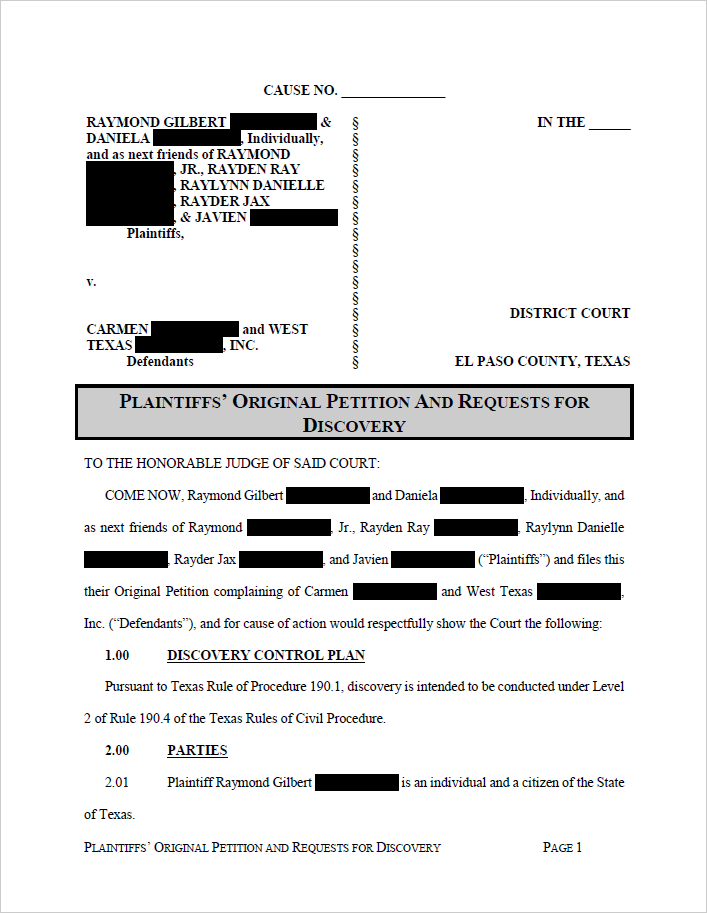
In Texas, the document that initiates a civil lawsuit is called a “Petition.” It is similar to what is known as a “Complaint” in other jurisdictions. The Petition must be filed with the clerk of the appropriate court and must contain specific information, including:
- Plaintiff’s Information: The name and address of the party filing the lawsuit (the plaintiff).
- Defendant’s Information: The name and address of the party being sued (the defendant). If the defendant’s exact name or address is unknown, the Petition should state this and describe the party as best as possible (e.g., “the owner of the property located at…”).
- Jurisdiction and Venue Allegations: A statement explaining why the court has jurisdiction over the case and why the chosen venue is proper.
- Factual Allegations: A clear and concise statement of the facts that form the basis of the plaintiff’s claim. This should explain what happened, when it happened, and how the defendant’s actions or inactions caused harm to the plaintiff.
- Cause of Action: The legal theory under which the plaintiff is suing (e.g., negligence, breach of contract, fraud).
- Relief Sought (Damages): A description of the remedies the plaintiff is seeking from the court. This can include monetary damages (compensatory, punitive), injunctions, or other forms of relief. In cases seeking monetary damages, Texas law often requires a statement specifying whether the damages sought are within a certain monetary range, corresponding to the court’s jurisdictional limits.
- Signature: The Petition must be signed by the plaintiff or their attorney, certifying that the allegations are true to the best of their knowledge and belief.
Filing Fees and Court Costs
When you file your Petition with the court clerk, you will be required to pay a filing fee. The amount of this fee varies depending on the court and the type of case. If you cannot afford the filing fee, you may be able to file a “Statement of Inability to Afford Payment of Court Costs” and request a waiver.
Service of Process
After the Petition is filed, the defendant must be formally notified of the lawsuit. This is accomplished through “service of process,” which involves delivering a copy of the filed Petition and a Summons to the defendant. A Summons is a document issued by the court that officially notifies the defendant that they are being sued and informs them of their obligation to respond within a specific timeframe.
- Who can serve: Service is typically performed by a sheriff, constable, or a private process server.
- Methods of service: The most common method is personal service, where the documents are handed directly to the defendant. Other methods, such as substituted service (leaving documents with a family member or at their residence) or service by publication (when the defendant cannot be located), may be permitted under specific circumstances and court approval.
- Proof of service: Once service is completed, the person who served the documents must file a “Return of Service” with the court, attesting to how and when the defendant was served. This is crucial evidence that the defendant was properly notified.
The Defendant’s Response
Once the defendant has been served with the lawsuit, they have a limited time to respond. In Texas, the deadline to file an answer is typically the Monday following the expiration of 20 days after the date the defendant was served.
The Answer
The defendant’s primary response to the Petition is usually an “Answer.” The Answer must:
- Admit or Deny Allegations: For each factual allegation made in the Petition, the defendant must either admit it, deny it, or state that they lack sufficient knowledge to admit or deny.
- Assert Defenses: The defendant can raise affirmative defenses, which are reasons why the plaintiff should not win, even if the facts in the Petition are true (e.g., statute of limitations, contributory negligence).
- File Counterclaims or Cross-Claims: If the defendant believes the plaintiff owes them something or has a claim against another party to the lawsuit, they can file a counterclaim or cross-claim.
Motions to Transfer Venue or Dismiss
Instead of or in addition to an Answer, a defendant may file a motion to transfer venue if they believe the lawsuit was filed in the wrong county. They may also file a motion to dismiss the lawsuit if they believe it is legally flawed, such as a failure to state a claim upon which relief can be granted, or if service of process was improper.
Moving Forward: Discovery and Litigation Stages
After the initial pleadings are filed and responsive pleadings are submitted, the lawsuit enters the discovery phase, where parties exchange information and evidence.
Discovery
Discovery is a critical part of the litigation process, allowing both sides to gather information about the facts of the case and the evidence that will be presented. Common discovery tools in Texas include:
- Interrogatories: Written questions that must be answered under oath.
- Requests for Production of Documents: Requests for relevant documents, electronic data, and tangible things.
- Depositions: Oral examinations of parties and witnesses under oath, recorded by a court reporter.
- Requests for Admission: Written statements that a party can request the other party to admit or deny.
Motions and Hearings
Throughout the litigation process, parties may file various motions with the court, asking the judge to make specific rulings. These can include motions for summary judgment (asking the court to decide the case without a trial if there are no genuine disputes of material fact), motions to compel discovery, or motions to exclude evidence. These motions often lead to court hearings where attorneys present arguments to the judge.
Settlement Negotiations and Mediation
Many civil lawsuits in Texas are resolved before reaching a trial through settlement negotiations. If parties cannot reach an agreement, they may be required by the court to participate in mediation. Mediation is a process where a neutral third party (the mediator) facilitates discussions between the parties to help them reach a mutually acceptable resolution.
Trial and Judgment
If a settlement cannot be reached, the case will proceed to trial. Trials in Texas can be before a judge or a jury. After hearing evidence and arguments, the judge or jury will render a verdict, and the court will enter a judgment.
Post-Judgment Procedures
Once a judgment is entered, there are further steps that may be necessary, depending on the outcome of the case.
Appeals
If a party believes the court made a legal error that affected the outcome of the case, they may have the right to appeal the decision to a higher court. Appeals have strict deadlines and specific procedural requirements.

Enforcement of Judgment
If you are the prevailing party and the other party does not voluntarily comply with the judgment (e.g., by paying damages), you may need to take steps to enforce the judgment. This can involve various legal mechanisms, such as wage garnishment, bank account garnishment, or placing liens on property.
Filing a lawsuit in Texas is a complex undertaking that requires careful attention to procedural rules, legal standards, and strategic decision-making. From understanding jurisdiction and venue to drafting effective pleadings, conducting thorough discovery, and navigating the complexities of trial and judgment enforcement, each step is critical. While this guide offers a foundational understanding, the nuances of specific cases necessitate expert legal counsel to ensure your rights are protected and your case is pursued effectively.
LifeOutOfTheBox is a participant in the Amazon Services LLC Associates Program, an affiliate advertising program designed to provide a means for sites to earn advertising fees by advertising and linking to Amazon.com. Amazon, the Amazon logo, AmazonSupply, and the AmazonSupply logo are trademarks of Amazon.com, Inc. or its affiliates. As an Amazon Associate we earn affiliate commissions from qualifying purchases.