
Navigating Everyday Disputes: The Role of Small Claims in Your California Lifestyle
Life in the Golden State offers unparalleled opportunities, from vibrant cities like Los Angeles and San Francisco to serene natural landscapes. Yet, even in this idyllic setting, minor disputes can arise, impacting your peace of mind and financial stability. Understanding how to file a small claim in California is not merely a legal technicality; it’s a crucial lifestyle skill that empowers you to resolve disagreements efficiently, protect your interests, and maintain a harmonious existence. This legal avenue offers a straightforward, affordable path to justice without the complexities and high costs typically associated with traditional lawsuits, making it accessible for everyone from long-term residents to those on extended stays.
Empowering Your Daily Life in the Golden State
For individuals, families, and even small businesses operating within California, minor financial disputes are an unfortunate but sometimes unavoidable part of daily life. Whether you’re a digital nomad experiencing issues with a short-term rental in San Diego, a resident of Sacramento dealing with a shoddy home repair, or an entrepreneur in Silicon Valley facing a client who refuses to pay a small invoice, the ability to effectively address these issues is paramount. The small claims court system in California is designed precisely for these scenarios, providing a platform to recover money or property without needing an attorney. This knowledge fosters a sense of security, allowing you to confidently engage in transactions and services across the state, knowing you have a clear path to recourse should things go awry. It’s about taking control of potential disruptions to your lifestyle and ensuring that your consumer rights and contractual agreements are respected.
Common Lifestyle Scenarios for Small Claims
Small claims court in California handles a wide array of disputes that are directly relevant to maintaining a stable and just lifestyle. These often include:
- Consumer Disputes: Problems with goods or services purchased. Perhaps a new appliance bought in Orange County is defective, and the retailer refuses a refund, or a car repair in Fresno was poorly executed and the mechanic won’t rectify it.
- Landlord-Tenant Issues: Disagreements over security deposits for apartments in Oakland, or minor property damage claims. This is particularly pertinent for individuals managing rentals or those who frequently move.
- Breach of Contract: When someone fails to uphold their end of a minor agreement, such as non-payment for a small service rendered or a personal loan not repaid.
- Property Damage: Claims for minor damage to your property caused by another party, for example, a neighbor’s negligence leading to minor damage to your fence in Riverside.
- Unpaid Wages: If an employer fails to pay wages under a certain threshold.
By familiarizing yourself with these common situations, you can better identify when small claims court is the appropriate solution, protecting your financial well-being and lifestyle against everyday setbacks.
Understanding California’s Small Claims Court Thresholds and Types
Before embarking on the process of filing, it’s essential to understand the scope and limitations of the small claims court in California. This clarity ensures you pursue the correct legal avenue for your specific situation, saving time and effort. Knowing the monetary limits and the types of cases accepted is fundamental to managing your expectations and effectively utilizing this judicial resource within your lifestyle management toolkit.
Financial Limits: Is Your Claim ‘Small’ Enough?
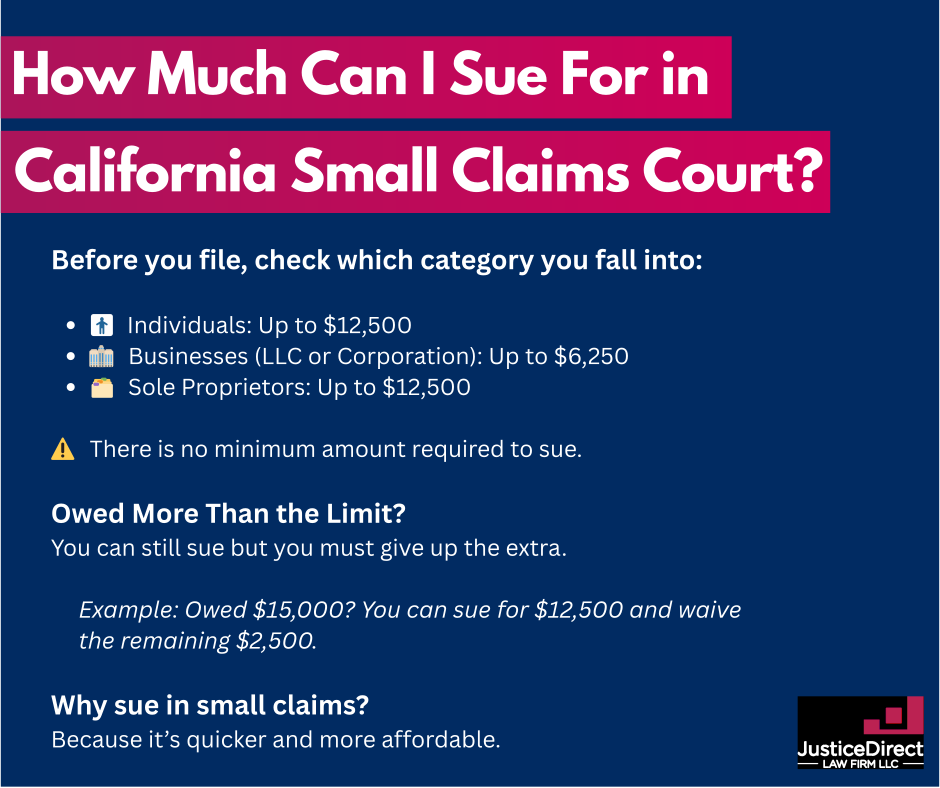
California’s small claims court is specifically designed for disputes involving limited monetary amounts. As of current regulations, the maximum amount an individual can sue for in small claims court is $12,500. Businesses, including sole proprietorships, have a slightly lower limit of $6,250. However, there are exceptions; for example, a natural person can file up to two claims exceeding $2,500 but not more than $12,500 in a calendar year. Claims that involve a written guarantee of residential lease security deposit can also be up to $12,500, regardless of who is filing. If your claim exceeds these amounts, you would need to file in a different division of the California Superior Court, which involves more complex procedures and potentially legal representation. It is crucial to accurately assess the value of your claim, including any actual damages, lost wages, or other directly related expenses, to ensure it falls within these specified limits. Attempting to artificially reduce a larger claim to fit into small claims court is not permissible.
Who Can File and Against Whom
Virtually anyone can file a claim in California small claims court, provided they meet the basic eligibility criteria. Individuals aged 18 or older, corporations, partnerships, associations, and other entities can serve as plaintiffs. Minors can file through a guardian ad litem. You can sue another individual, a business, or even a governmental entity. However, certain types of cases are explicitly excluded from small claims jurisdiction. These include:
- Family Law Matters: Divorce, child custody, and child support cases are handled in family court.
- Probate Matters: Disputes involving wills or estates.
- Eminent Domain: Government taking of private property.
- Class Actions: Cases brought by a large group of people with similar claims.
Furthermore, the general rule is that you must file your claim in the county where the defendant lives or where the business operates, or where the contract was entered into, or where the injury or accident occurred. For instance, if you have a dispute with a business headquartered in San Jose, you would typically file your claim in the Santa Clara County Superior Court. Understanding these jurisdictional requirements is vital for a smooth filing process and ensuring your case is heard in the appropriate venue.
The Step-by-Step Journey: Filing Your Small Claim in California
Filing a small claim in California is designed to be accessible, but it still requires careful attention to detail and adherence to a defined process. Approaching this journey methodically is key to a successful outcome and reflects a proactive approach to managing life’s challenges. Each step, from initial outreach to serving the defendant, plays a crucial role in empowering your claim and ensuring your voice is heard in the judicial system.
Initial Steps: Demand, Forms, and Fees
The journey begins before you even step foot in a courthouse. A responsible and strategic lifestyle involves attempting to resolve disputes amicably first.
- Demand Letter: Before officially filing, it is highly recommended to send a formal demand letter to the person or entity you intend to sue. This letter should clearly state the amount you are owed, the reason for the claim, and a deadline for payment or resolution. This step not only demonstrates your good faith effort to resolve the matter outside of court but can also be presented as evidence in court, showcasing your diligence. Sometimes, a well-crafted demand letter alone can prompt payment and prevent the need for further legal action, saving you time and stress.
- Filling Out Forms (Form SC-100): If the demand letter proves unsuccessful, your next step is to complete the Plaintiff’s Claim and Order to Go to Small Claims Court, known as Form SC-100. This form is the cornerstone of your case. You can typically obtain it from your local California Superior Court clerk’s office or download it from the California Courts self-help website. On this form, you will need to provide:
- Your full legal name and contact information.
- The full legal name and contact information of the defendant(s).
- The precise amount of money you are claiming.
- A brief, clear, and concise explanation of why the defendant owes you money, including dates and relevant details.
- Filing Your Claim: Once Form SC-100 is accurately filled out, you must file it with the clerk of the proper California Superior Court. This is typically the court in the county where the defendant lives, where the business is located, or where the dispute occurred. The clerk will stamp your forms and assign a case number and a hearing date.
- Paying Fees: There is a filing fee associated with small claims cases, which varies depending on the amount of your claim and how many claims you’ve filed in the past 12 months. If you cannot afford the fee, you may apply for a fee waiver by submitting Form FW-001, Request to Waive Court Fees.
Serving the Defendant: Ensuring Proper Notification
After filing your claim, the most critical step is to formally notify the defendant that they are being sued. This process is called “service of process.” Proper service is not merely a formality; it is a legal requirement that ensures the defendant is aware of the lawsuit and has an opportunity to respond. Without proper service, your case cannot proceed.
- Methods of Service: You cannot serve the papers yourself. Service must be carried out by someone 18 years or older who is not a party to the case. Common methods include:
- Personal Service: Handing the defendant a copy of the forms. This is often done by a professional process server or a sheriff/marshal for a fee.
- Certified Mail: Using the court clerk’s certified mail service (not regular certified mail). This is a convenient option in many courts.
- Substituted Service: If personal service is difficult, the papers can be left with someone else at the defendant’s home or business, followed by mailing.
- Proof of Service (Form SC-104): Regardless of the method used, the person who served the defendant must complete and sign a Proof of Service (Form SC-104). This form must then be filed with the court. It certifies that the defendant received proper notice. Make sure service is completed at least 15 days (or 20 days if the defendant lives outside the county) before your court date.
Preparing for Your Day in Court: A Lifestyle of Diligence
Successfully navigating small claims court in California largely hinges on meticulous preparation. This stage is where your proactive lifestyle habits, such as organization and clear communication, truly come into play. Presenting a well-documented and coherent case to the judge significantly increases your chances of a favorable outcome, ensuring that your efforts to secure justice are not in vain.
Gathering Evidence: Your Story, Substantiated
The bedrock of any successful small claims case is compelling evidence that clearly supports your narrative. The judge will make a decision based on the facts presented, so your ability to substantiate your claims is paramount.
- Documentation: Collect all relevant papers and records. This includes:
- Contracts or agreements: Any written document outlining the terms of your dispute.
- Receipts and invoices: Proof of purchases, payments, or services rendered.
- Correspondence: Emails, text messages, letters, or faxes exchanged between you and the defendant.
- Photographs and videos: Visual evidence of damages, defective products, or conditions relevant to your claim. For instance, if your claim is about a damaged rental property in Santa Barbara, photos taken before and after are invaluable.
- Bank statements or cancelled checks: Proof of financial transactions.
- Police reports: If applicable (e.g., for property damage due to an accident).
- Witnesses: If anyone observed the events relevant to your case, consider asking them to testify. Witnesses can provide firsthand accounts that corroborate your statements. Ensure they are willing and able to appear in court, as a written statement is generally less impactful than live testimony. If a witness is unwilling, you may be able to subpoena them to appear.
Organizing Your Case: Presenting Clearly and Concisely
Once you have gathered your evidence, the next step is to organize it logically and prepare your presentation. Small claims court judges often have a limited amount of time for each case, so clarity and brevity are highly valued.
- Practice Your Presentation: Mentally or verbally rehearse what you will say. Start with a brief overview of your case, then present your evidence in a chronological or logical order. Focus on the key facts that support your claim.
- Courtroom Demeanor: Always maintain a professional and respectful demeanor. Address the judge as “Your Honor.” Avoid interrupting, arguing, or expressing strong emotions. Stick to the facts and be prepared to answer questions directly. Your composure reflects your credibility and strengthens your position.
- Mediation Option: Many California small claims courts offer free mediation services, often on the day of your hearing, before you see a judge. This is an excellent opportunity to resolve the dispute amicably with the help of a neutral third party. Successfully mediating a solution can save you the stress of a trial and ensures a resolution that both parties can agree upon, a preferred outcome for a harmonious lifestyle.
After the Judgment: Securing Your Lifestyle’s Peace of Mind
Obtaining a judgment in your favor is a significant step, but it’s not always the final one. The responsible management of your lifestyle includes understanding how to collect what you are owed and what to do if the outcome isn’t what you hoped for. This final stage involves strategic follow-up and, if necessary, enforcement, to truly secure the peace of mind you sought when initiating the claim.
When You Win: Collecting Your Judgment
If the judge rules in your favor, the court issues a “judgment.” This is a legal order stating that the defendant owes you money. However, the court does not collect the money for you. This responsibility falls to you, the judgment creditor.
- Demand Payment: The first step is to politely demand payment from the judgment debtor. Send a letter, often called a “demand for payment letter,” referencing the judgment and asking for payment by a specific date.
- Enforcement Methods: If the debtor fails to pay, California law provides several enforcement mechanisms:
- Wage Garnishment: You can obtain a court order to have a portion of the debtor’s wages withheld by their employer and sent directly to you.
- Bank Levy: You can request a court order to seize funds from the debtor’s bank account.
- Property Lien: For larger judgments, you can place a lien on the debtor’s real estate or personal property. If they sell the property, you get paid from the proceeds.
- Debtor’s Exam: You can ask the court to order the debtor to appear and answer questions about their assets and income, using Form EJ-125. This helps you identify what assets can be used to satisfy the judgment.
- Abstract of Judgment (Form EJ-001): To create a lien on real estate owned by the debtor, you’ll need to obtain an Abstract of Judgment (Form EJ-001) from the court clerk and then record it with the county recorder in any county where the debtor owns property. This is a powerful tool to ensure eventual payment, as the debtor typically cannot sell or refinance the property without first satisfying your judgment.
When You Lose: Options for Recourse
Even with thorough preparation, not every small claims case results in a win for the plaintiff. If the judge rules against you, or if you win but the amount is less than expected, your options are limited.
- Appeal Process (Defendant Only): In California, only the defendant has the right to appeal a small claims judgment. If the defendant appeals, the case goes to a new trial in the California Superior Court, often with a different judge, where both sides can present their case again. Plaintiffs do not have the right to appeal if they lose, nor can they appeal the amount of the judgment if they win but feel it’s too low.
- Learning from the Experience: A loss, while disappointing, can be a valuable learning experience. Review how you presented your case, the evidence you provided, and consider if there were any gaps. This reflective approach is part of a growth-oriented lifestyle, helping you refine your approach to future challenges.
Preventing Future Disputes
The most effective way to manage legal disputes is to prevent them. Incorporating preventative measures into your lifestyle can save you significant time, stress, and money.
- Good Record-Keeping: Maintain meticulous records for all significant transactions, agreements, and communications. This includes contracts, receipts, emails, and notes from phone calls.
- Clear Communication: Always strive for clear, written agreements. Confirm verbal agreements in writing (e.g., via email). This minimizes misunderstandings that often lead to disputes.
- Informed Decision-Making: Before entering into contracts or making significant purchases, conduct due diligence. Research companies or individuals, read reviews, and understand terms and conditions.
- Formalize Agreements: For even minor transactions that involve lending money or providing services, consider a simple written agreement to outline expectations and responsibilities.
By integrating these practices, you can significantly reduce the likelihood of needing to navigate the small claims court system again, fostering a proactive and secure lifestyle in California.
LifeOutOfTheBox is a participant in the Amazon Services LLC Associates Program, an affiliate advertising program designed to provide a means for sites to earn advertising fees by advertising and linking to Amazon.com. Amazon, the Amazon logo, AmazonSupply, and the AmazonSupply logo are trademarks of Amazon.com, Inc. or its affiliates. As an Amazon Associate we earn affiliate commissions from qualifying purchases.