
Navigating the legal landscape can often feel daunting, especially when attempting to resolve disputes outside the traditional court system. For Texans seeking an accessible and efficient avenue to address civil claims under a certain monetary threshold, small claims court offers a practical solution. This guide will walk you through the essential steps of filing a small claims case in Texas, empowering you to pursue your claim with confidence. Whether you’re dealing with a landlord dispute, a faulty product, or an unpaid debt, understanding the process is the first step toward resolution.

Understanding Small Claims Court in Texas
Small claims court, officially known as the Justice Court in Texas, is designed to be a simplified and less formal judicial process. It’s specifically intended for individuals and businesses to resolve monetary disputes without the need for expensive legal representation, although you are certainly welcome to hire an attorney if you choose. The primary advantage of this court is its speed and cost-effectiveness, making justice more accessible to the average citizen.
The Monetary Limit
A critical factor in determining if your case belongs in Justice Court is the monetary value of the claim. In Texas, Justice Courts have jurisdiction over civil cases where the amount in controversy does not exceed $10,000. This limit applies to the total amount you are seeking, including any applicable interest and attorney’s fees (though attorney’s fees are generally not recoverable in Justice Court unless specifically authorized by statute). If your claim exceeds $10,000, you will need to file your case in a different court, such as the County Court or District Court.
Types of Cases Heard
Justice Courts handle a variety of civil matters, including but not limited to:
- Disputes over debts: Unpaid loans, invoices, or service fees.
- Landlord-tenant disputes: Evictions (for non-payment of rent or other lease violations), return of security deposits.
- Property damage claims: Compensation for damage to personal property caused by negligence or breach of contract.
- Consumer protection issues: Disputes involving faulty goods or services.
- Contract disputes: Breaches of contract for goods or services.
It’s important to note that Justice Courts cannot issue injunctions (court orders to do or not do something) or handle cases involving divorce, child custody, or title to real property. For these types of matters, you would need to seek assistance from higher courts.
Preparing Your Small Claims Case
Before you even step foot in the courthouse, thorough preparation is key to a successful outcome. This involves clearly defining your claim, gathering evidence, and understanding the procedural requirements.
Defining Your Claim and Gathering Evidence
The cornerstone of any small claims case is clear and compelling evidence. You need to be able to demonstrate, with supporting documentation, why the other party owes you money or has failed to fulfill an obligation.
What Constitutes Good Evidence?
- Written Agreements: Contracts, leases, promissory notes, or any other documents outlining the terms of your agreement.
- Correspondence: Emails, letters, text messages, or voicemails that document communication related to the dispute. This can include offers, acceptances, demands, or acknowledgments of the issue.
- Financial Records: Receipts, invoices, canceled checks, bank statements, or credit card statements that prove payments made or owed.
- Photographs and Videos: Visual evidence of damage to property, faulty goods, or the condition of a rental unit.
- Witness Testimony: Statements from individuals who have direct knowledge of the facts of your case. It’s often beneficial to have these statements in writing, if possible, and to ensure your witnesses are willing and available to testify in court.
- Expert Opinions: In some cases, an expert opinion may be necessary, such as an appraisal of damaged property or a mechanic’s report on a faulty vehicle.
Organize your evidence systematically. Create copies for yourself and for the opposing party. It’s also a good practice to keep an inventory of all your evidence.
Identifying the Correct Defendant
You must sue the correct legal entity or individual. If you are suing an individual, use their full legal name. If you are suing a business, you may need to determine if it is a sole proprietorship, partnership, or corporation. For corporations, you may need to identify the registered agent for service of process. Information about registered agents can often be found through the Texas Secretary of State’s website. Filing against the wrong party can lead to dismissal of your case.
Understanding Statutes of Limitations
Each type of legal claim has a specific time limit within which you must file a lawsuit, known as the statute of limitations. If you file your case after this deadline has passed, the defendant can ask the court to dismiss your case. The statute of limitations varies depending on the nature of the claim. For example, breach of a written contract typically has a four-year statute of limitations in Texas, while claims for personal injury might have a two-year limit. It is crucial to research the applicable statute of limitations for your specific situation.
Filing Your Small Claims Case
The actual filing process involves completing specific forms and paying a filing fee.
Obtaining and Completing the Petition
The first formal step is to file a document called a “Petition” with the Justice Court clerk in the county where the defendant resides or where the cause of action arose. You can typically download the Petition form from your local Justice Court’s website or obtain a copy from the clerk’s office.
The Petition is a formal complaint that outlines:
- Your name and address (Plaintiff).
- The defendant’s name and address.
- A clear and concise statement of the facts supporting your claim. This should explain what happened, when it happened, and why you believe the defendant is liable.
- The amount of money you are seeking.
- The legal basis for your claim (e.g., breach of contract, negligence).
- A request for relief (e.g., “I request judgment against the defendant for $X, plus court costs”).
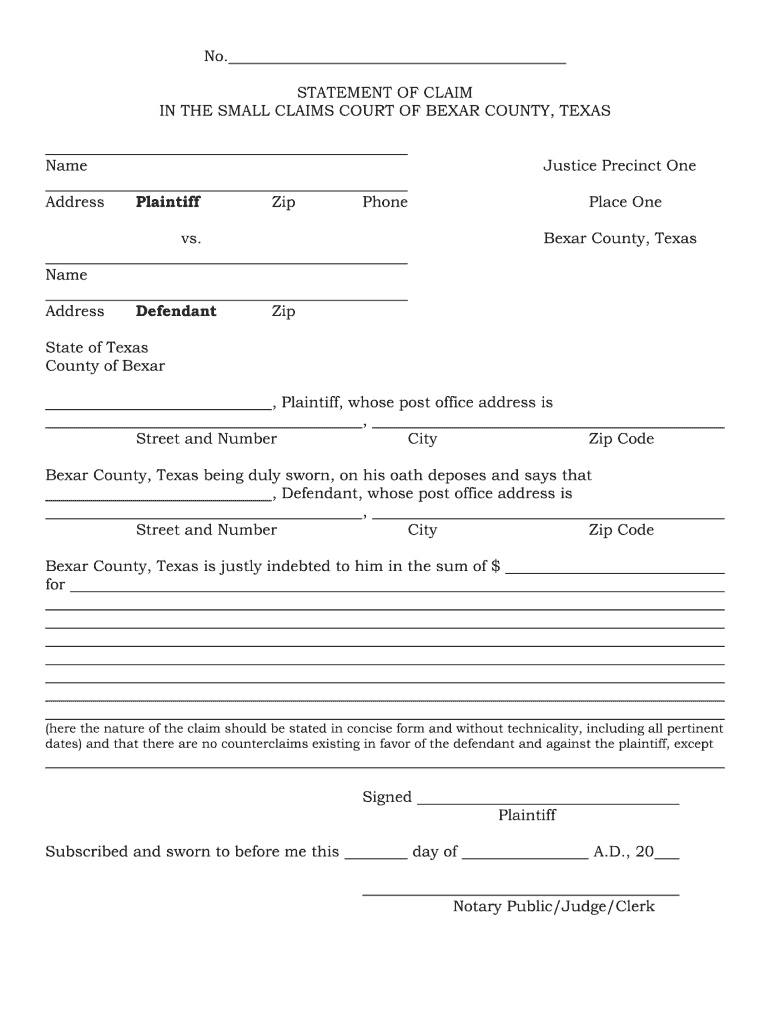
Fill out the Petition completely and accurately. Any errors or omissions can cause delays or lead to your case being dismissed.
Filing Fees and Service of Process
Once the Petition is completed, you will need to file it with the Justice Court clerk. There will be a filing fee associated with this, which varies by county but is generally a modest amount. If you cannot afford the filing fee, you may be able to file a “Statement of Inability to Afford Payment of Court Costs” to request a waiver of the fees.
After filing, the court clerk will issue a “Citation” and a copy of your Petition. These documents must then be formally delivered to the defendant, a process known as “service of process.” This ensures that the defendant is officially notified of the lawsuit and has an opportunity to respond. Service is typically performed by a sheriff, constable, or a private process server. You will be responsible for paying a fee for service. The defendant has a specific period to respond to the lawsuit after being served, typically within a certain number of days.
Navigating Court Procedures and Trial
Once the case is filed and served, the legal proceedings begin. Understanding what to expect can significantly reduce anxiety and improve your preparedness.
The Defendant’s Response
After being served, the defendant has a specific timeframe (usually 14 days in Justice Courts, though this can vary) to file a written answer with the court. If the defendant does not respond within the allotted time, you may be able to request a default judgment, meaning the court could rule in your favor because the defendant failed to appear or defend themselves.
If the defendant files an answer, they will likely deny your allegations and may even file a counterclaim against you. The court will then schedule a hearing or trial date.
Mediation and Settlement
Many Justice Courts encourage or require parties to attempt mediation before a trial. Mediation is a process where a neutral third party (the mediator) helps the disputing parties reach a mutually agreeable settlement. It is a confidential and non-binding process. If a settlement is reached, it is usually put into writing and signed by both parties, and the case is dismissed. Even if mediation is not mandatory, exploring settlement options with the opposing party can save time and money.
The Trial
If a settlement cannot be reached, your case will proceed to trial. Trials in Justice Court are typically informal and conducted by the Justice of the Peace.
Presenting Your Case
On the day of your trial, bring all your evidence, organized and ready. Dress appropriately for court, as you are addressing a judicial officer. Both you and the defendant will have the opportunity to present your case, testify, and present your evidence. You may also call witnesses to testify on your behalf. The defendant will have the same opportunity.
The Justice of the Peace will listen to both sides, review the evidence, and ask questions. They will then make a decision based on the facts and the law.
The Judgment
After hearing all the evidence, the Justice of the Peace will issue a judgment. This judgment will state whether you win or lose your case and, if you win, the amount of damages awarded. If the defendant is ordered to pay you money and fails to do so, you may need to take further steps to collect on the judgment.
Collecting Your Judgment
Winning your case is a significant victory, but it doesn’t automatically mean you will receive the money owed. Collecting on a judgment can sometimes be a separate challenge.
Methods of Collection
If the defendant does not voluntarily pay the judgment, Texas law provides several enforcement mechanisms:
- Writ of Garnishment: This allows you to seize funds from the defendant’s bank account or wages.
- Writ of Execution: This allows a constable or sheriff to seize and sell the defendant’s non-exempt property to satisfy the judgment.
- Abstract of Judgment: Filing an abstract of judgment can create a lien on any real property the defendant owns, which can affect their ability to sell or refinance the property until the judgment is paid.
It’s important to be aware that there are legal limitations and procedures to follow when attempting to collect a judgment, and certain assets are protected from seizure.

Seeking Legal Assistance for Collection
If you are having difficulty collecting a judgment, consulting with an attorney experienced in debt collection or civil enforcement can be beneficial. They can advise you on the most effective legal strategies available in your specific situation.
Filing a small claims case in Texas Justice Court can be an effective way to resolve disputes. By understanding the process, preparing diligently, and presenting your case clearly, you can navigate this legal avenue and work towards a satisfactory resolution.
LifeOutOfTheBox is a participant in the Amazon Services LLC Associates Program, an affiliate advertising program designed to provide a means for sites to earn advertising fees by advertising and linking to Amazon.com. Amazon, the Amazon logo, AmazonSupply, and the AmazonSupply logo are trademarks of Amazon.com, Inc. or its affiliates. As an Amazon Associate we earn affiliate commissions from qualifying purchases.