
Navigating the world of travel often brings delightful experiences, from exploring the vibrant streets of San Francisco to unwinding in a serene resort in Maui. However, sometimes, even the most meticulously planned trips or rental agreements can lead to disputes. Whether it’s a disagreement over a damaged rental car, a promised amenity that was never delivered by a hotel, or a contractual issue with a travel service provider, resolving these conflicts can feel daunting. Fortunately, for monetary disputes below a certain threshold, California offers a streamlined solution through its small claims court system. This guide will walk you through the process of filing a small claims case in California, ensuring you can pursue justice effectively.
Understanding Small Claims Court in California
Small claims court is designed to be an accessible and informal forum for resolving disputes involving relatively small amounts of money. The primary goal is to provide a fair and efficient way for individuals and small businesses to settle their differences without the need for expensive lawyers, although you can choose to be represented by one if you wish. In California, these courts are part of the Superior Court system.
What Kind of Disputes Can Be Handled?
Small claims court is ideal for a wide range of civil disputes, including:
- Breach of Contract: This could involve a dispute over a lease agreement for an apartment, a contract with a tour operator, or even a promise made by a service provider related to your travels. For instance, if you booked a “luxury suite” at a resort in Cancun that didn’t meet the advertised standards, you might have a case.
- Property Damage: If your personal belongings were damaged during a trip due to someone else’s negligence, or if a rental property was damaged by a tenant, small claims court can be used to recover the cost of repairs or replacement. Imagine a scenario where a piece of luggage was damaged by an airline or a rental car was scratched while parked in a hotel’s unsecured lot.
- Personal Injury (with limitations): While severe personal injury cases typically go through higher courts, small claims can handle cases involving minor injuries where damages are within the court’s monetary limits. This might apply to a slip and fall at a poorly maintained tourist attraction.
- Disputes with Businesses: This can encompass issues with service providers, retailers, or service providers that affect your travel or lifestyle. For example, if a travel agency failed to deliver promised tickets to a popular landmark in Paris as per your agreement.
- Landlord-Tenant Disputes: This often includes disputes over security deposits or repairs for apartments or rental villas. If you’re renting a vacation home for an extended stay and there are issues with the property that the owner refuses to address, small claims court could be an option.
It’s crucial to note that small claims court generally cannot handle cases involving divorce, bankruptcy, or cases against the federal government.
Monetary Limits and Jurisdictional Requirements
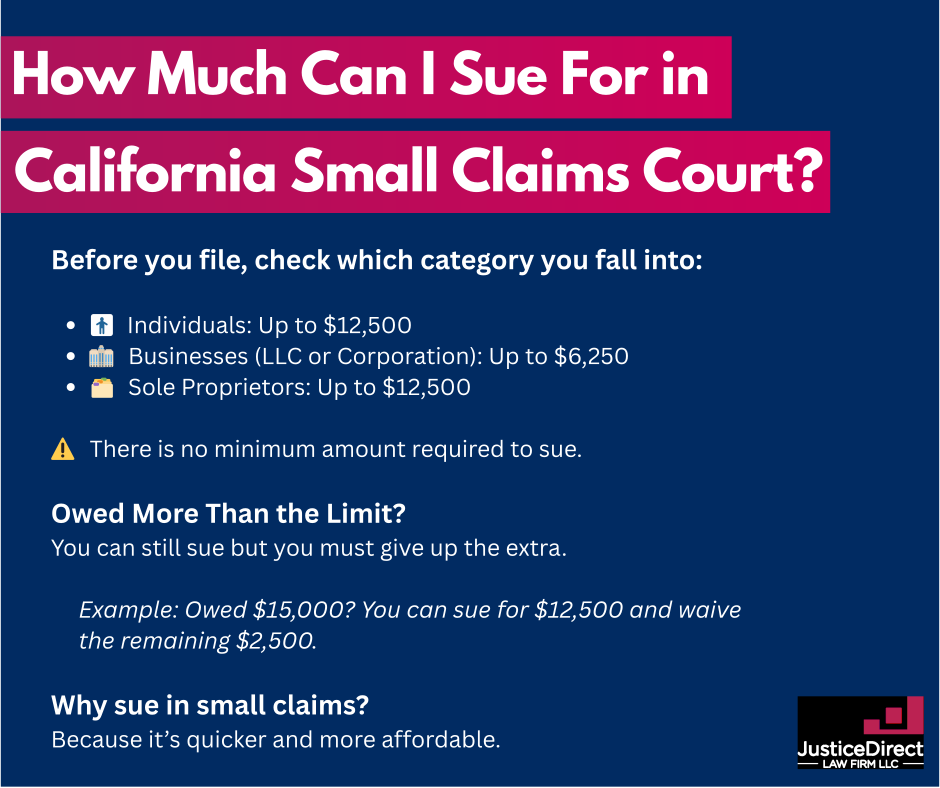
In California, there are specific monetary limits for claims heard in small claims court.
- Individuals: If you are an individual suing, the maximum amount you can claim is $10,000. However, if you have had more than two such judgments against you in the past 12 months, your limit drops to $5,000.
- Businesses: If you are a business entity, or if you are suing a business, the maximum claim amount is $5,000.
- Government Entities: Claims against California government entities are generally limited to $5,000.
Beyond the monetary limits, you must also ensure that the defendant (the person or entity you are suing) resides in California, has a place of business in California, or that the incident giving rise to the dispute occurred in California. This is known as venue. For example, if you rented a car in Los Angeles and had a dispute with the rental company about damages, you could likely file in California. If the dispute arose from a hotel stay in another country, you would need to pursue legal action in that country’s jurisdiction.
Preparing Your Small Claims Case
Before you even step foot in the courthouse, thorough preparation is key to a successful outcome. This involves gathering all necessary documents, identifying the correct defendant, and understanding the legal procedures.
Step 1: Gather All Your Evidence
This is arguably the most critical step. Your case will be built on the evidence you present to the judge. Ensure you have:
- Written Agreements: Any contracts, leases, booking confirmations, receipts, or invoices related to your dispute. If you booked a specific type of room at the Bellagio Las Vegas and it was not as advertised, the booking confirmation is vital.
- Correspondence: Emails, letters, text messages, or any other form of communication between you and the other party that supports your claim. This could include discussions about repairs needed for a rental apartment or agreements made with a tour guide in Machu Picchu.
- Photographs and Videos: Visual evidence is incredibly powerful. If you are claiming property damage, take clear photos or videos of the damaged items or location. If you are claiming that a resort did not provide advertised amenities, photos or videos of the actual conditions can be compelling.
- Witness Information: If anyone witnessed the events that led to your dispute, get their names, addresses, and phone numbers. Their testimony could be crucial. For example, if a fellow traveler witnessed a significant issue with your accommodation.
- Financial Records: Proof of payments made, estimates for repairs, or any documentation showing the financial impact of the dispute.
Step 2: Identify the Correct Defendant
You need to sue the correct party. This means identifying the individual or business that is legally responsible for your claim.
- Individuals: If you are suing an individual, you will need their full legal name and address.
- Businesses: If you are suing a business, you need to identify the correct legal name of the business. This can sometimes be tricky. For a sole proprietorship, you might sue the owner by their full name. For a partnership or corporation, you may need to look up their registered name with the California Secretary of State. If you are unsure, you can often find this information on their website, business cards, or through online business directories. If you are suing a hotel chain, you may need to sue the specific operating entity of the hotel.
Step 3: Determine the Proper Venue
As mentioned earlier, venue is crucial. You must file your case in the small claims court located in the county where:
- The defendant lives or has their principal place of business.
- The contract was entered into or was to be performed.
- The incident or accident occurred.
For example, if you rented a car in San Diego and had a dispute with the rental company that is headquartered in Los Angeles, you could likely file in either San Diego or Los Angeles County. The court clerk can help you determine the correct venue if you are uncertain.
Filing Your Claim and Notifying the Defendant
Once you have gathered your evidence and identified the correct defendant and venue, you can begin the formal filing process.
Step 1: Fill Out the Plaintiff’s Claim Form (Form SC-100)
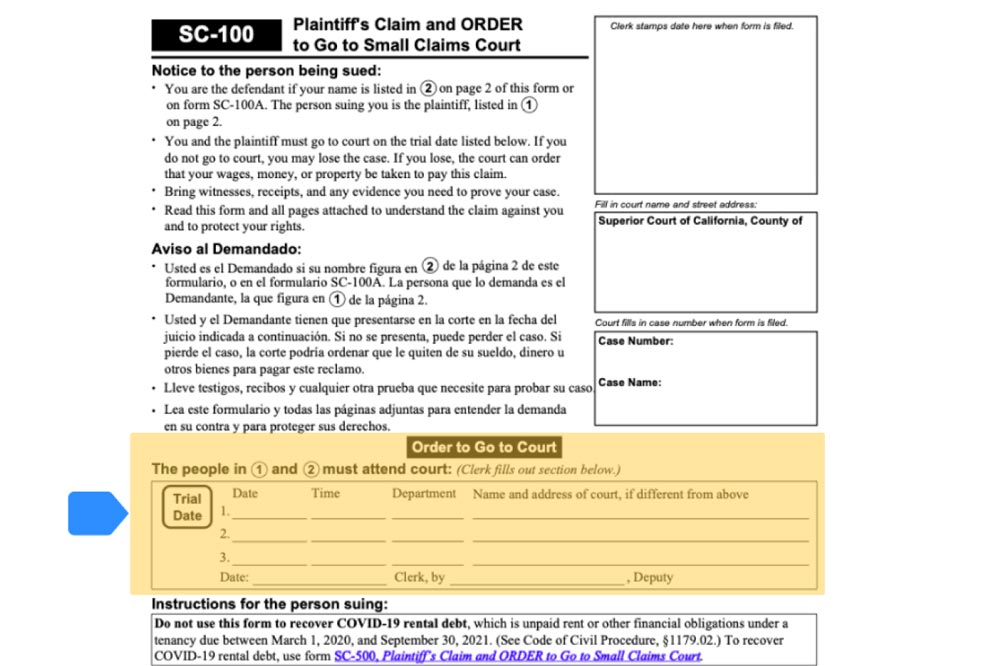
The primary document for initiating a small claims case is the Plaintiff’s Claim form, often referred to as Form SC-100. This form is available online from the California Courts website or at any California Superior Court clerk’s office.
- Completing the Form: You will need to accurately fill in your name and address, the defendant’s name and address, and the total amount of money you are seeking.
- Describing Your Claim: Clearly and concisely explain why you believe the defendant owes you money. Stick to the facts and avoid emotional language. For instance, instead of saying “They ruined my vacation,” state “The advertised ocean view room at the [Hilton Garden Inn] was actually a view of a brick wall, resulting in a breach of contract and a loss of value for my stay.”
- Amount Claimed: Be specific about the amount you are requesting. If you are seeking compensation for repairs, include the repair estimates. If it’s for a lost booking value, explain how you arrived at that figure.
Step 2: File the Claim with the Court
Take the completed Plaintiff’s Claim form (Form SC-100) and the required filing fee to the clerk’s office in the correct small claims court. The filing fee varies depending on the amount of your claim. If you cannot afford the fee, you can apply for a fee waiver.
Step 3: Serve the Defendant
After filing, the defendant must be officially notified of the lawsuit. This is called “service of process.” You cannot serve the defendant yourself; it must be done by someone who is at least 18 years old and not a party to the case. Common methods of service include:
- Personal Service: A sheriff, marshal, registered process server, or anyone over 18 who is not involved in the case can hand-deliver the court documents to the defendant. This is the most reliable method.
- Service by Mail: In some cases, you can arrange for service by certified mail with return receipt requested, but there are specific rules and limitations for this method.
- Substituted Service: If personal service is unsuccessful after diligent attempts, the server may be able to leave the documents with a responsible person at the defendant’s home or business and then mail a copy.
The person who serves the defendant must then complete and sign a “Proof of Service” form, which you will file with the court. The rules for service are strict, so ensure they are followed precisely. Failure to properly serve the defendant can result in your case being dismissed.
Preparing for Your Court Date
Once the defendant has been served, they have a specific amount of time to respond. If they do not respond, you may be able to obtain a default judgment. If they do respond, a court date will be set.
Attending the Hearing
Small claims court hearings are generally informal. You will present your case to a judge, commissioner, or a volunteer mediator (in some jurisdictions). The judge will listen to both sides and review the evidence presented.
- Be Prepared to Speak: Clearly and concisely explain your case. Organize your thoughts and your evidence so you can present it logically.
- Bring All Your Evidence: Ensure you have all your original documents, photos, and any other supporting materials. Make copies for the judge and the defendant.
- Be Respectful: Even if you are upset, maintain a calm and respectful demeanor in court.
- Listen Carefully: Pay attention to what the judge and the other party are saying.
- Be Honest: Present the facts truthfully and accurately.

Potential Outcomes
After hearing both sides and reviewing the evidence, the judge will make a decision. Possible outcomes include:
- Judgment in Your Favor: The judge rules in your favor, ordering the defendant to pay you a certain amount of money.
- Judgment in Favor of the Defendant: The judge rules in favor of the defendant, meaning you will not receive any money.
- Settlement: Sometimes, parties reach an agreement to settle the dispute before or during the hearing.
- Dismissal: The case may be dismissed for various reasons, such as improper service or lack of jurisdiction.
If you win your case, collecting the money can sometimes be another challenge. The court does not automatically collect the judgment for you. You may need to take further legal steps to enforce the judgment if the defendant does not pay voluntarily.
While small claims court is designed to be user-friendly, understanding the process and preparing diligently will significantly increase your chances of a successful resolution. Whether you are seeking reimbursement for a misrepresented suite or resolving a dispute over a rental apartment, navigating the small claims court system in California empowers you to seek justice for your grievances.
LifeOutOfTheBox is a participant in the Amazon Services LLC Associates Program, an affiliate advertising program designed to provide a means for sites to earn advertising fees by advertising and linking to Amazon.com. Amazon, the Amazon logo, AmazonSupply, and the AmazonSupply logo are trademarks of Amazon.com, Inc. or its affiliates. As an Amazon Associate we earn affiliate commissions from qualifying purchases.