The allure of the Grand Canyon State is undeniable, captivating millions each year with its dramatic landscapes, vibrant desert ecosystems, and a unique blend of Native American heritage and modern urban sophistication. For many, Arizona represents the ultimate destination for adventure, relaxation, or even a complete lifestyle transformation. Beyond its iconic landmarks and world-class resorts, Arizona is also emerging as a dynamic hub for entrepreneurs and digital nomads seeking flexibility, a supportive business climate, and an exceptional quality of life. Whether your dream involves launching a boutique travel agency in Sedona, managing a portfolio of stunning short-term rental properties in Scottsdale, developing a local culinary tour in Tucson, or offering specialized guiding services for hiking the Sonoran Desert trails, establishing a formal business structure is a pivotal first step.
The Limited Liability Company (LLC) stands out as an exceptionally popular and versatile choice for new and small businesses in Arizona. It masterfully blends the personal liability protection of a corporation with the simplified, pass-through taxation of a partnership or sole proprietorship, offering a pragmatic solution for individuals looking to formalize their entrepreneurial ventures. This guide delves into the detailed process of filing an LLC in Arizona, specifically tailored for those who are drawn to the state’s unique lifestyle, travel opportunities, and burgeoning tourism economy. We’ll explore why Arizona is an ideal location for your next business endeavor and walk you through each critical step to ensure your Arizona LLC is established smoothly and effectively, allowing you to focus on building your dream business amidst some of the most breathtaking scenery in the United States.

Setting the Stage: Why Arizona Beckons Entrepreneurs and Travelers Alike
Arizona is more than just a destination; it’s a vibrant ecosystem where business opportunities flourish alongside unparalleled natural beauty and a laid-back, yet innovative, lifestyle. Understanding this unique blend is key to appreciating why forming an LLC here is a strategic move for many.
Arizona’s Economic Landscape and Lifestyle Appeal
The Grand Canyon State boasts a robust and diversified economy, characterized by innovation in technology, healthcare, manufacturing, and of course, a thriving tourism sector. Major metropolitan areas like Phoenix and Tucson serve as economic engines, offering access to talent, capital, and a vast consumer base. Scottsdale continues to attract luxury tourism and high-end services, while destinations like Sedona, Flagstaff, and Lake Havasu City capitalize on outdoor recreation, wellness tourism, and unique cultural experiences.
For entrepreneurs, this diverse landscape translates into myriad business possibilities. Imagine starting a guided photography tour company exploring the stunning red rocks of Sedona, establishing a digital marketing agency catering to Arizona’s booming hospitality industry, or even launching an e-commerce platform selling locally sourced artisan crafts inspired by the Sonoran Desert. The state’s pro-business policies, reasonable tax rates, and a growing population — including a significant influx of remote workers and retirees seeking a warmer climate and active lifestyle — create a fertile ground for new ventures.
The lifestyle appeal is equally compelling. For those who prioritize work-life balance, Arizona offers an average of 300 sunny days per year, providing ample opportunity to enjoy outdoor activities such as hiking in Saguaro National Park, exploring the vastness of the Grand Canyon, kayaking the Colorado River, or simply enjoying a sunset over the McDowell Mountains. This blend of economic opportunity and lifestyle enrichment makes Arizona an attractive place not just to visit, but to live and build a successful business, fostering a community of driven individuals who value both professional achievement and personal well-being.
The Benefits of an LLC for Your Arizona Venture
Choosing the right business structure is paramount, and for most small businesses and startups in Arizona, the Limited Liability Company (LLC) is often the optimal choice. Here’s why:
- Personal Liability Protection: This is arguably the most significant advantage. An LLC creates a legal separation between your personal assets and your business liabilities. If your business faces a lawsuit or accrues debt, your personal belongings – like your home, car, or personal savings – are generally protected. This peace of mind is invaluable, especially for businesses in the travel or hospitality sectors where unforeseen circumstances can sometimes arise.
- Pass-Through Taxation: Unlike corporations that can be subject to “double taxation” (where profits are taxed at the corporate level and again when distributed to shareholders), an LLC’s profits and losses “pass through” directly to the owners’ personal tax returns. This avoids corporate income tax, simplifying tax preparation and potentially reducing your overall tax burden. This is particularly beneficial for single-member LLCs, which are taxed as sole proprietorships by default.
- Flexibility in Management: LLCs offer considerable flexibility in how they are managed. You can choose to be member-managed (where all owners participate in daily operations) or manager-managed (where one or more designated managers handle the day-to-day, allowing other members to be passive investors). This adaptability is perfect for entrepreneurs who might travel frequently, or for those setting up joint ventures in tourism where roles might be distinct.
- Enhanced Credibility: Operating as an LLC can lend your business a greater sense of professionalism and legitimacy in the eyes of clients, partners, and potential investors. This is crucial for businesses seeking to partner with hotels, tour operators, or secure commercial leases in competitive markets like Old Town Scottsdale.
- Minimal Formalities: Compared to corporations, LLCs have fewer ongoing administrative requirements, such as mandatory annual meetings or extensive record-keeping, allowing you to spend more time focusing on your core business and less on bureaucratic tasks – a major plus for busy entrepreneurs or those who prefer a more agile operational style.
By understanding these advantages, entrepreneurs can clearly see why the LLC structure is not just a legal formality but a strategic asset for establishing and growing a thriving business within Arizona’s dynamic environment.
Navigating the Core Steps to Register Your Arizona LLC
Embarking on the journey to establish your Arizona Limited Liability Company is a structured process, each step designed to ensure your business is legally recognized and positioned for success. While the process is straightforward, attention to detail is crucial.
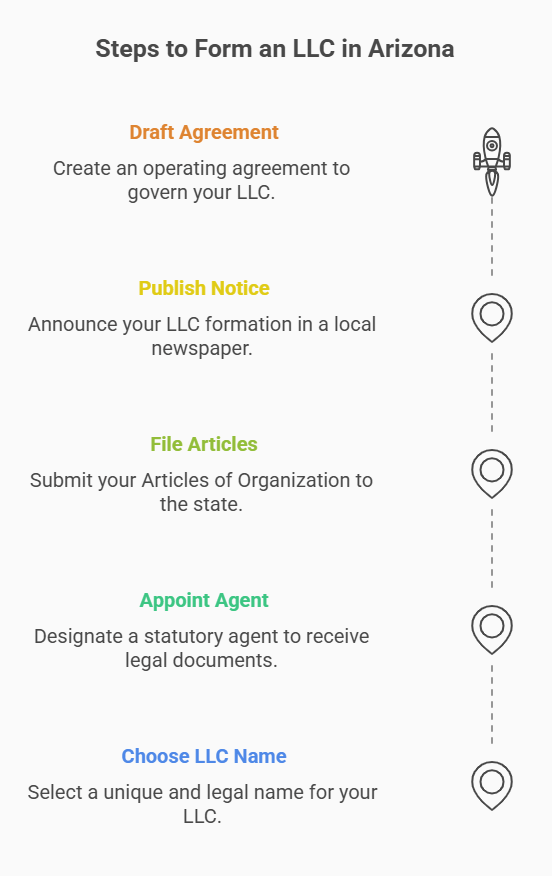
Step 1: Choosing and Securing Your LLC Name
The first and often most exciting step is selecting a name for your Arizona LLC. Your business name is your brand’s identity, a critical component of your marketing strategy, especially if you’re targeting the vibrant travel and tourism market.
- Uniqueness Requirement: Arizona law mandates that your LLC name must be distinguishable from other registered business entities in the state. This means it cannot be too similar to an existing name on file with the Arizona Corporation Commission (ACC).
- Required Designation: Your LLC name must include “Limited Liability Company,” “L.L.C.,” or “LLC” at the end.
- Name Availability Search: Before you commit, perform a name availability search through the Arizona Corporation Commission’s online database. This crucial step helps avoid potential conflicts and ensures your chosen name is available. If your preferred name is taken, you’ll need to brainstorm alternatives.
- Reserving Your Name: If you find a suitable name but aren’t ready to file your Articles of Organization immediately, you can reserve it for 120 days by filing a Name Reservation Application with the ACC and paying a small fee. This is a smart move if you need time for branding, website development, or market research, especially when crafting a name that resonates with the travel or lifestyle niche.
- Branding Considerations: For travel-related businesses, consider names that evoke a sense of adventure, relaxation, local charm, or luxury, depending on your target audience. A memorable and relevant name will make your business stand out among the myriad of attractions and accommodations in Arizona.
Step 2: Appointing a Statutory Agent (Registered Agent)
Every Arizona LLC must designate a Statutory Agent (often called a Registered Agent in other states). This individual or entity serves as your LLC’s official point of contact for legal and tax correspondence from the state.
- Requirements: An Arizona Statutory Agent must have a physical street address in Arizona (not a P.O. Box) and be available during normal business hours to receive official documents. The agent must also formally consent to serve in this role.
- Why It’s Crucial: The Statutory Agent ensures that your business receives important legal notices, such as service of process if your LLC is sued, or annual report reminders (though Arizona doesn’t have a general annual report, it does have other compliance notices). Missing these crucial documents can lead to legal issues or loss of good standing with the state.
- For Traveling Entrepreneurs: If you plan to travel frequently, operate your business remotely, or don’t have a physical presence in Arizona yourself, hiring a professional Statutory Agent service is highly recommended. These services typically offer a physical address, ensure prompt receipt and forwarding of documents, and help maintain your privacy by keeping your personal address off public records. This allows digital nomads and lifestyle entrepreneurs the freedom to explore Arizona’s wonders or even operate from abroad, knowing their legal obligations are being handled.
Step 3: Filing Your Articles of Organization with the ACC
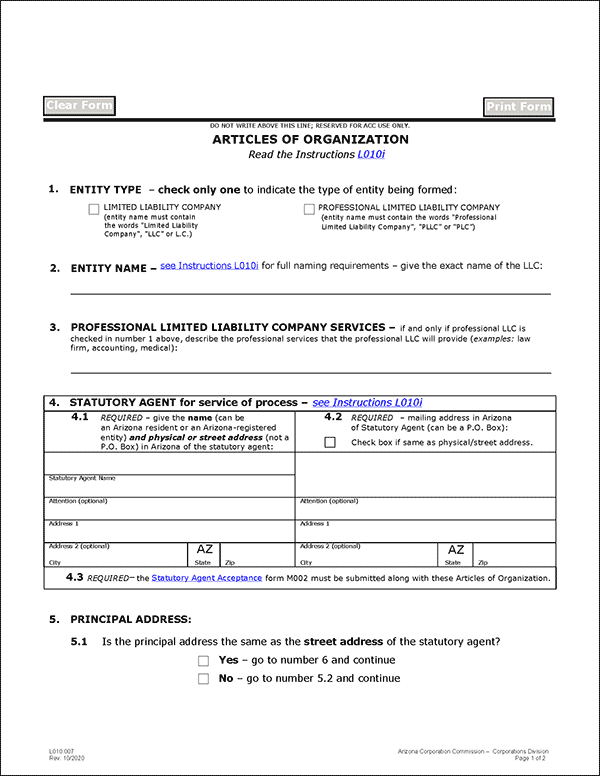
The Articles of Organization is the foundational legal document that formally creates your Arizona LLC. Filing this document with the Arizona Corporation Commission (ACC) officially establishes your business entity.
- Information Required: The Articles of Organization typically require the following information:
- Your LLC’s name.
- The name and street address of your Statutory Agent.
- The mailing address of the LLC.
- Whether the LLC will be member-managed or manager-managed.
- The names and addresses of the members or managers.
- The LLC’s known place of business (physical address).
- An organizer’s signature (the person filing the document).
- Publication Requirement: A unique aspect of forming an LLC in Arizona is the publication requirement. For LLCs formed in Maricopa or Pima Counties, you must publish a notice of the LLC’s formation in an approved newspaper for three consecutive publications. For LLCs formed outside these counties, no publication is generally required, but check local specific regulations. Proof of publication must then be filed with the ACC. This step can sometimes catch new business owners off guard, so it’s essential to plan for it.
- Filing Process: You can file your Articles of Organization online through the ACC’s eCorp portal or by mail. Online filing is generally faster, with processing times often taking 2-3 weeks, though expedited options are usually available for an additional fee.
- Filing Fees: There is a filing fee associated with submitting your Articles of Organization. Check the current fee schedule on the ACC website, as it can change.
Successfully filing these articles transforms your business idea into a legally recognized entity, paving the way for further development and operation, whether you’re building a network of hospitality ventures or a personal brand that enables your travel ambitions.
Step 4: Crafting Your Operating Agreement
While the Articles of Organization establish your LLC, the Operating Agreement dictates how it will run. This internal document is paramount for clarity, consistency, and conflict resolution, even if you are a single-member LLC.
- Purpose and Importance: The Operating Agreement outlines the ownership structure, member roles and responsibilities, profit and loss distribution, voting rights, procedures for admitting new members, and protocols for dissolving the LLC. It acts as the “bylaws” for your Limited Liability Company.
- Not Filed with the State: Unlike the Articles of Organization, the Operating Agreement is an internal document and is not filed with the Arizona Corporation Commission. It should be kept securely with your business records.
- Single-Member LLCs: Even if you’re the sole owner, an Operating Agreement is vital. It helps reinforce the legal separation between you and your LLC, strengthening your personal liability protection in court. It also provides a clear framework for decision-making and ensures business continuity if you become incapacitated or if the business passes to an heir. For the digital nomad, this means a structured business that can run smoothly even when you’re exploring Monument Valley or Antelope Canyon.
- Multi-Member LLCs: For LLCs with multiple members, the Operating Agreement is indispensable. It sets clear expectations and prevents future disputes by defining everything from initial capital contributions to exit strategies. This is especially crucial for joint ventures in the tourism industry, where partnerships for hotels, resorts, or specialized tours need clear guidelines for operation and profit-sharing.
- Key Provisions to Include:
- Member Contributions: How much capital, assets, or services each member contributes.
- Profit and Loss Distribution: How profits and losses are allocated among members.
- Management Structure: Whether it’s member-managed or manager-managed, and the specific roles and powers of each.
- Voting Rights: How major decisions are made and the voting power of each member.
- Transfer of Interest: Rules for selling or transferring ownership interests.
- Dissolution: Procedures for winding up the LLC’s affairs.
Developing a comprehensive Operating Agreement tailored to your specific business needs is a prudent investment that can save significant time and resources in the long run.
Essential Post-Formation Steps for Your Arizona LLC
Establishing your Arizona LLC doesn’t end with filing the Articles of Organization and drafting an Operating Agreement. Several crucial steps follow to ensure your business is fully operational, compliant, and ready to thrive, whether you’re launching a unique travel experience or providing local services.
Step 5: Obtaining an Employer Identification Number (EIN)
An Employer Identification Number (EIN), also known as a Federal Tax Identification Number, is like a Social Security number for your business. It’s a nine-digit number assigned by the Internal Revenue Service (IRS).
- When You Need an EIN:
- If your LLC has more than one member.
- If your LLC plans to hire employees.
- If your LLC is taxed as a corporation instead of a pass-through entity.
- If you need to open a business bank account.
- If you’re required to file excise tax returns or certain other federal tax forms.
- Even single-member LLCs, if they don’t have employees, often choose to get an EIN for banking purposes and to enhance business credibility, separating personal and business finances more distinctly.
- How to Obtain an EIN: Getting an EIN is simple and free. You can apply online directly through the IRS website. The process is usually quick, and you’ll receive your EIN immediately after completing the application. For the digital nomad establishing a business, this can be done from anywhere with an internet connection, allowing for seamless setup even while traveling the iconic Route 66 or enjoying the natural splendor of Havasu Falls.
- Importance: Your EIN is essential for various business activities, including filing federal and state tax returns, opening a business bank account, applying for business licenses and permits, and applying for business loans. It’s a fundamental identifier that legitimizes your business in the eyes of financial institutions and government agencies.
Step 6: Complying with State and Local Licenses and Permits
Depending on the nature of your business and its location within Arizona, you may need to obtain various state and local licenses and permits before you can legally operate. This is particularly relevant for businesses in the travel, tourism, and accommodation sectors.
- General Business License: Many cities and counties in Arizona require all businesses to obtain a general business license. For example, if your LLC is based in Phoenix, you’ll likely need a city business license. The requirements and fees vary significantly by municipality, so it’s crucial to check with the city or county clerk’s office where your business is located.
- Transaction Privilege Tax (TPT) License: If your LLC sells products or engages in certain services subject to sales tax (known as Transaction Privilege Tax in Arizona), you’ll need to register with the Arizona Department of Revenue to obtain a TPT license. This is critical for businesses in retail, hospitality (hotels, short-term rentals), and many service-based industries that cater to tourists or local consumers.
- Industry-Specific Licenses: Certain industries have their own unique licensing requirements. Examples include:
- Short-Term Rentals: Operating an Airbnb or other short-term rental property in popular tourist areas like Sedona or Scottsdale often requires specific permits, registrations, and adherence to local zoning laws.
- Food Service: If your LLC involves selling food or beverages (e.g., a food truck, catering service, or restaurant), you’ll need health permits from the county health department.
- Professional Services: Licensed professionals like real estate agents, architects, or tour guides may require state-issued professional licenses.
- Environmental Permits: Businesses impacting natural resources, such as those near the Gila River, may need environmental permits.
- Due Diligence: It’s essential to thoroughly research the specific licensing and permit requirements for your industry and location. Websites for the Arizona Department of Revenue, the Arizona Corporation Commission, and your local city/county government websites are excellent starting points. Consulting with a local attorney or business advisor can also help navigate these complex regulations.
Ensuring compliance with all applicable licenses and permits safeguards your business from penalties and establishes its legitimacy within Arizona’s regulatory framework.
Step 7: Understanding Ongoing Compliance Requirements
While Arizona is known for its relatively streamlined business regulations, maintaining your LLC’s good standing requires ongoing attention to certain compliance obligations. Unlike many states that require annual reports, Arizona does not have a general annual report filing requirement for LLCs. However, there are other crucial aspects to consider:
- Statutory Agent Maintenance: You must continuously maintain an active Statutory Agent with a physical street address in Arizona. If your agent’s information changes, you must promptly update the Arizona Corporation Commission by filing a Statement of Change of Statutory Agent form. Failure to do so can lead to your LLC losing its good standing.
- Annual Minutes (for internal records): While not required by the state, it’s good practice for multi-member LLCs to hold annual meetings and record minutes. This reinforces the distinction between the owners and the business entity, further strengthening liability protection.
- Tax Obligations: Your LLC will have federal, and potentially state and local tax obligations.
- Federal Taxes: Depending on how your LLC is taxed (sole proprietorship, partnership, or corporation), you’ll need to file appropriate federal tax forms with the IRS.
- State Income Tax: Arizona imposes a state income tax. LLCs taxed as pass-through entities will have their income reported on the owner’s personal state income tax returns.
- Transaction Privilege Tax (TPT): If your business sells goods or services subject to TPT, you must regularly file TPT returns and remit collected taxes to the Arizona Department of Revenue. Filing frequencies can be monthly, quarterly, or annually, depending on your sales volume.
- Employer Taxes: If your LLC has employees, you’ll be responsible for withholding and remitting federal and state payroll taxes, including unemployment insurance.
- Record-Keeping: Maintain meticulous records of all business transactions, financial statements, contracts, meeting minutes, and legal documents. Good record-keeping is essential for tax purposes, financial management, and demonstrating compliance if ever audited.
- Business Bank Account: Keep your business finances strictly separate from your personal finances by opening a dedicated business bank account. This is not only crucial for maintaining liability protection but also simplifies accounting and tax preparation.
- Amendments to Articles of Organization: If there are significant changes to your LLC’s name, purpose, or other critical information initially provided in your Articles of Organization, you must file an Amendment to the Articles of Organization with the ACC.
- License Renewals: Remember to renew any state or local business licenses and permits before they expire. Setting reminders for these deadlines is crucial to avoid lapses in compliance.
By proactively managing these ongoing compliance requirements, your Arizona LLC will remain in good standing, allowing you to confidently pursue your entrepreneurial goals and perhaps even enjoy the freedom of working remotely from a scenic Arizona resort.
Establishing an Limited Liability Company in Arizona is a robust step towards formalizing your entrepreneurial dreams, whether they involve harnessing the state’s thriving tourism industry, supporting the local lifestyle economy, or simply providing the structure for a location-independent venture. The process, while requiring careful attention to detail, is designed to be accessible and provides significant benefits in terms of liability protection, tax flexibility, and professional credibility.
From selecting a distinctive name that resonates with the adventurous spirit of Arizona, to meticulously filing your Articles of Organization with the Arizona Corporation Commission, and ensuring all post-formation compliance, each step is an investment in your business’s future. The state’s dynamic economy, coupled with its unparalleled natural beauty and a lifestyle that champions exploration and well-being, creates an ideal backdrop for entrepreneurs.
As you embark on this exciting journey, remember that while this guide provides a comprehensive overview, seeking professional advice from legal and financial experts familiar with Arizona business law can offer invaluable tailored guidance. With your Arizona LLC established, you’re not just starting a business; you’re building a foundation that supports your lifestyle aspirations and allows you to contribute to the vibrant tapestry of the Grand Canyon State. Now, go forth and turn your Arizona dream into a flourishing reality.