
For many aspiring entrepreneurs, the dream of launching a new venture is intertwined with a desire for a lifestyle that offers freedom, flexibility, and the chance to explore. Colorado, the “Centennial State,” presents a unique confluence of these aspirations. Renowned globally for its breathtaking Rocky Mountains, vibrant cities like Denver and Boulder, and unparalleled outdoor activities, Colorado has become a magnet for both tourists and innovators alike. If you’re contemplating starting a business, particularly one geared towards the booming travel, tourism, or hospitality sectors, or simply seeking a flexible structure that supports a nomadic or adventure-driven lifestyle, forming a Limited Liability Company (LLC) in Colorado is an astute move. This guide will walk you through the essential steps, weaving in the distinct advantages and considerations for those looking to harness Colorado’s magnetic appeal.
An LLC offers a blend of corporate protection and partnership flexibility, making it an ideal choice for a vast array of businesses, from a boutique hotel in Aspen to a guided hiking tour company in Estes Park, or even a digital marketing agency serving the state’s many attractions. It provides a legal framework that separates your personal assets from your business liabilities, a critical safeguard in any enterprise, but especially so in customer-facing roles within the hospitality and travel industries. Furthermore, the ease of formation and management, coupled with potential tax advantages, makes the Colorado LLC an attractive option for both seasoned business owners and first-time founders eager to make their mark in this dynamic state.
Why Choose Colorado for Your LLC, Especially in Travel & Tourism?
Colorado isn’t just a picturesque destination; it’s a thriving economic hub with a distinctive entrepreneurial spirit that blends innovation with an appreciation for quality of life. For anyone considering where to establish their business, particularly one focused on travel, tourism, or accommodating a flexible lifestyle, Colorado offers a compelling proposition.
Colorado’s Business Climate and Natural Appeal
The state of Colorado boasts a robust economy, consistently ranking high for business friendliness and growth. Its pro-business policies, educated workforce, and access to capital make it an fertile ground for startups and established companies alike. However, for those with a passion for travel and the great outdoors, Colorado’s allure extends far beyond economic indicators.
The tourism sector here is not just an industry; it’s a cornerstone of the state’s identity. From the world-class ski resorts of Vail and Breckenridge to the serene beauty of Rocky Mountain National Park, Colorado attracts millions of visitors annually. This creates immense opportunities for businesses across the spectrum:
- Accommodation: Think unique vacation rentals, luxury glamping experiences, charming bed and breakfasts in mountain towns like Telluride, or eco-lodges catering to adventurers.
- Experiences & Guides: Companies offering guided hikes, rafting trips on the Colorado River, ski lessons at Aspen Snowmass, or photography tours.
- Food & Beverage: Restaurants showcasing local produce, craft breweries in Fort Collins, or specialty cafes serving hikers and remote workers.
- Retail: Outdoor gear shops, souvenir stores, or artisans selling local crafts.
Beyond traditional tourism, Colorado’s emphasis on a healthy, active lifestyle attracts a demographic that values experiences over possessions. This resonates strongly with digital nomads, remote entrepreneurs, and individuals who prioritize work-life balance. Establishing an LLC here allows you to tap into this vibrant market while enjoying direct access to an inspiring natural environment, fostering a unique business culture where outdoor adventure and professional success go hand in hand.
Advantages of an LLC for Your Colorado Venture
Choosing an LLC structure in Colorado provides several significant benefits, especially pertinent to businesses operating in the travel and tourism space or those seeking flexibility for their lifestyle.
- Limited Liability Protection: This is perhaps the most crucial advantage. An LLC shields your personal assets (your home, savings, personal investments) from your business’s debts and liabilities. In the context of a tour operation, a hotel, or a vacation rental, where unforeseen accidents or disputes with guests could arise, this protection is invaluable. It allows you to take calculated risks in your business without putting your personal financial security at stake.
- Pass-Through Taxation: Unless you elect otherwise, an LLC is typically treated as a “pass-through” entity for tax purposes. This means profits and losses are passed through directly to the owners’ personal income tax returns, avoiding the “double taxation” that corporations can experience (where both the company’s profits and the shareholders’ dividends are taxed). This simplifies tax preparation and can lead to significant savings, particularly for small businesses and solo entrepreneurs.
- Flexibility in Management: Colorado LLCs offer remarkable flexibility in how they are managed. You can choose to be member-managed (where all owners participate in daily operations) or manager-managed (where designated managers, who may or may not be owners, oversee the business). This adaptability is perfect for varying business models, from a single owner-operator running a travel blog to a multi-partner venture managing several vacation properties.
- Credibility: Establishing a formal legal entity like an LLC lends credibility to your business. This can be vital when seeking financing, forming partnerships with other tourism operators, or building trust with customers. An LLC signifies professionalism and a commitment to your enterprise, which can be a significant advantage in the competitive hospitality and travel markets.
- Simpler Compliance: Compared to corporations, LLCs generally have fewer ongoing compliance requirements, such as fewer mandatory meetings and less extensive record-keeping. This simplicity allows entrepreneurs to focus more on their core business activities—like curating unique travel experiences or managing guest bookings—rather than getting bogged down in administrative tasks.
The Step-by-Step Guide to Forming Your Colorado LLC
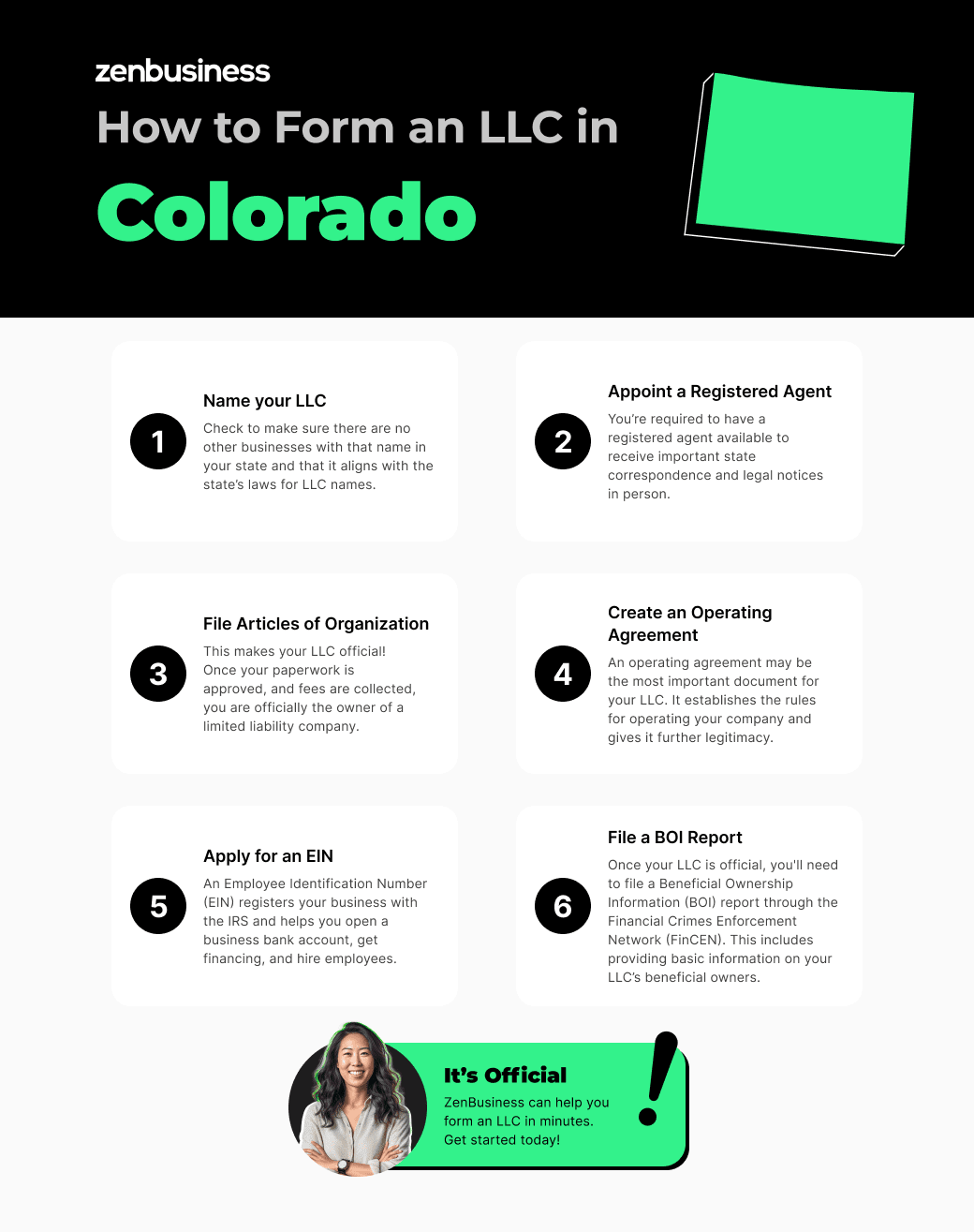
Forming an LLC in Colorado is a straightforward process, largely thanks to the state’s efficient online filing system. Here’s a detailed breakdown of each step, designed to help you navigate the journey from concept to legally recognized entity.
Step 1: Choose a Memorable Name for Your Business
Your LLC’s name is its identity, especially important in the experience-driven world of travel and tourism. It should be memorable, reflect your brand, and most importantly, be available.
- State Requirements: Your chosen name must include “Limited Liability Company,” “LLC,” or “L.L.C.” It must also be distinguishable from the names of other entities already on file with the Colorado Secretary of State.
- Availability Search: Before you commit, perform a name availability search on the Colorado Secretary of State’s website. This will confirm if your desired name is unique and not already taken by another business.
- Branding for Tourism: Think strategically about a name that evokes the spirit of Colorado or the specific services you offer. For example, “Rocky Mountain Trails LLC” or “Colorado Springs Adventure Guides LLC” immediately convey location and purpose. Consider securing a corresponding domain name and social media handles at this stage, as a strong online presence is crucial for travel businesses.
Step 2: Appoint a Registered Agent
Every Colorado LLC is legally required to have a registered agent. This individual or entity serves as the official point of contact for your business, responsible for receiving important legal documents, service of process, and official government correspondence on behalf of your LLC.
- Who Can Be a Registered Agent? The registered agent must be an individual residing in Colorado or a business entity authorized to transact business in the state. They must also have a physical street address (not just a P.O. Box) in Colorado, where they are available during normal business hours.
- Importance for Mobile Entrepreneurs: For entrepreneurs who plan to travel extensively, or those managing vacation rentals remotely from outside Grand Junction or Durango, appointing a professional registered agent service is highly recommended. These services ensure that your important legal mail is always received and forwarded to you promptly, regardless of your physical location, allowing you to maintain compliance while embracing a flexible lifestyle.

Step 3: File Your Articles of Organization
This is the foundational step that officially creates your LLC. You file your Articles of Organization with the Colorado Secretary of State.
- Required Information: The Articles of Organization are relatively simple and typically require:
- Your LLC’s name.
- The name and address of your registered agent.
- The principal office address of your LLC (this can be different from the registered agent’s address).
- A statement that the LLC will be managed by members or managers.
- Online Filing: Colorado makes this process easy through its online filing system. You can complete and submit your Articles of Organization electronically, and typically receive confirmation of your LLC’s formation within a few business days, often even faster. There is a filing fee associated with this step.
Step 4: Create an Operating Agreement
While not legally required to be filed with the state, an Operating Agreement is a crucial internal document for any Colorado LLC, particularly if you have multiple members (partners).
- Purpose: This agreement outlines the ownership structure, management responsibilities, voting rights, profit and loss distribution, and procedures for adding or removing members. It also details what happens in the event of a dispute or if a member wishes to leave the LLC.
- Protecting Your Business: For a multi-member LLC running a hotel or a tour company, a well-drafted Operating Agreement prevents future misunderstandings and provides a clear framework for decision-making. It serves as an internal “rule book” that guides the operations and relationships among the LLC members. Even for a single-member LLC, an Operating Agreement can add legitimacy and help maintain the corporate veil, reinforcing the separation between personal and business assets.
Step 5: Obtain an EIN (Employer Identification Number)
An Employer Identification Number (EIN), also known as a Federal Tax Identification Number, is like a Social Security number for your business. It is issued by the IRS (Internal Revenue Service).
- When is an EIN Required? You will need an EIN if your LLC has more than one member, if you plan to hire employees (e.g., hotel staff, tour guides, administrative support), or if you elect for your LLC to be taxed as a corporation instead of a pass-through entity.
- Applying for an EIN: You can apply for an EIN for free directly through the IRS website. The application is quick and typically you’ll receive your EIN instantly. You’ll need this number to open a business bank account and to file your federal tax returns.
Step 6: Fulfill State and Local Compliance
After forming your LLC and securing an EIN, your next step is to ensure compliance with all state and local regulations. This often involves obtaining specific licenses and permits relevant to your industry and location within Colorado.
- Business Licenses and Permits: The requirements can vary significantly. For instance, a short-term rental business in Colorado Springs will need specific permits and may be subject to local zoning laws not applicable to a digital marketing agency in Denver. A restaurant or bar will require a liquor license, while an adventure tourism company might need specific safety certifications or permits to operate in certain recreational areas. Research the specific requirements for your municipality and industry through local government websites or the Colorado Department of Regulatory Agencies (DORA).
- State Sales Tax Permit: If your business sells products or certain services, collects sales tax, or rents out accommodation, you will likely need to register with the Colorado Department of Revenue to obtain a sales tax license.
- Annual Reports: Colorado requires LLCs to file an annual report with the Secretary of State, usually due by the anniversary month of your LLC’s formation. This keeps your business information current on public record.
Beyond Formation: Nurturing Your Colorado Travel & Tourism LLC
Once your LLC is officially formed, the real work of building a successful business begins. For those operating in Colorado’s vibrant travel and tourism sector, there are ongoing considerations and strategic steps to ensure sustained growth and impact.
Essential Considerations for Tourism Businesses
The unique nature of the hospitality and tourism industry demands particular attention to several operational and strategic areas.
- Insurance: This is paramount. Beyond general liability insurance, consider specialized policies for your specific niche. A tour operator will need robust liability insurance for participants, while a property owner offering vacation rentals will require comprehensive property and landlord insurance. Discussing your specific activities with a knowledgeable insurance broker in Colorado is crucial to protect your assets and mitigate risks inherent in guest interactions and adventurous activities.
- Marketing & Branding: In a state as iconic as Colorado, effective marketing is key. Leverage the natural beauty and unique experiences your location offers. Utilize high-quality photography and videography to showcase your offerings. Develop a strong online presence through a professional website, social media, and by partnering with online travel agencies (OTAs) if applicable. Highlight what makes your business unique, whether it’s a focus on sustainable tourism, luxury experiences, or budget-friendly adventures.
- Technology Integration: Efficient operations in travel and tourism often rely heavily on technology. Invest in reliable booking systems, property management software, customer relationship management (CRM) tools, and secure payment processing platforms. These tools streamline operations, enhance guest experience, and free up your time to focus on growth and innovation.
- Exceptional Customer Service: The reputation of a tourism business is built on customer experience. Consistently deliver outstanding service, go the extra mile for your guests, and actively solicit and respond to feedback. Positive reviews on platforms like TripAdvisor, Google, and Yelp are invaluable for attracting new customers in a competitive market.
- Seasonal Fluctuations: Many Colorado tourism businesses experience significant seasonal peaks and troughs. Plan your staffing, marketing efforts, and financial projections with these cycles in mind. For example, a ski rental shop in Aspen will thrive in winter, while a rafting company will see its busiest months in summer. Diversifying services or targeting shoulder seasons can help stabilize revenue throughout the year.

Connecting with Colorado’s Vibrant Travel Ecosystem
Becoming an integral part of Colorado’s wider tourism community can unlock opportunities for collaboration, learning, and growth.
- Networking with Local Tourism Boards: Engage with organizations like the Colorado Tourism Office and local visitor bureaus in your specific region. These entities often provide valuable resources, market insights, and promotional opportunities that can elevate your business’s profile. Attending industry events and workshops can also connect you with peers and potential partners.
- Partnering with Other Local Businesses: Cross-promotional partnerships can be mutually beneficial. A hotel might partner with a local restaurant to offer dining packages, or a tour company could collaborate with an outdoor gear shop for special discounts for their clients. Building these local relationships strengthens the overall tourism ecosystem and provides enhanced value to visitors.
- Understanding Local Demographics and Visitor Trends: Stay informed about who is visiting Colorado, where they are coming from, and what they are looking for. Are they seeking luxury experiences, budget-friendly adventures, family-friendly activities, or sustainable travel options? Tailoring your offerings to these trends ensures your business remains relevant and attractive to your target audience.
- Embracing Sustainable Tourism Practices: Given Colorado’s pristine natural environment, sustainable tourism is not just a buzzword but a responsibility and a growing expectation from travelers. Implement eco-friendly practices in your operations, support local conservation efforts, and promote responsible travel among your guests. This not only benefits the environment but also enhances your brand’s appeal to environmentally conscious travelers.
In conclusion, forming an LLC in Colorado is a foundational step towards building a legitimate and protected business, particularly for those drawn to the state’s incredible travel and tourism landscape. By carefully following the formation steps and strategically nurturing your venture within Colorado’s dynamic ecosystem, you can successfully blend your entrepreneurial ambitions with a lifestyle rich in adventure and exploration, establishing a thriving enterprise in one of the most beautiful and sought-after states in the United States.
LifeOutOfTheBox is a participant in the Amazon Services LLC Associates Program, an affiliate advertising program designed to provide a means for sites to earn advertising fees by advertising and linking to Amazon.com. Amazon, the Amazon logo, AmazonSupply, and the AmazonSupply logo are trademarks of Amazon.com, Inc. or its affiliates. As an Amazon Associate we earn affiliate commissions from qualifying purchases.