
Navigating the process of establishing a Limited Liability Company (LLC) in Texas can seem daunting, but with a clear understanding of the steps involved, it becomes a manageable and rewarding endeavor. This guide aims to demystify the procedure, offering a comprehensive roadmap for entrepreneurs looking to formalize their business operations and protect their personal assets. From understanding the core benefits of an LLC to the final filing requirements with the Texas Secretary of State, we will cover every crucial aspect.
Understanding the Advantages of an LLC in Texas
Before diving into the procedural aspects, it’s essential to grasp why an LLC is a popular choice for businesses in Texas. The primary allure lies in its hybrid nature, blending the pass-through taxation of a partnership or sole proprietorship with the limited liability protection of a corporation.
Limited Liability Protection
One of the most significant benefits of forming an LLC is the shield it provides for the personal assets of its owners, known as members. In the event of business debts or lawsuits, the personal finances of the members – such as their homes, cars, and personal bank accounts – are generally protected from seizure. This distinction between business and personal liabilities is crucial for mitigating personal financial risk. This protection is maintained as long as the LLC adheres to corporate formalities and doesn’t engage in fraudulent activities.
Pass-Through Taxation
Unlike traditional corporations, LLCs are not subject to double taxation. Profits and losses are “passed through” to the members and reported on their individual income tax returns. This means the LLC itself does not pay corporate income tax. Members are taxed at their individual income tax rates, simplifying the tax process and potentially leading to lower tax burdens compared to C-corporations.
Flexibility in Management and Operations
LLCs offer considerable flexibility in their management structure. They can be member-managed, where all members participate in the day-to-day operations, or manager-managed, where designated managers (who may or may not be members) oversee the business. This adaptability allows businesses to tailor their operational framework to their specific needs and the expertise of their members. Furthermore, Texas does not impose restrictions on the number or type of members an LLC can have, accommodating a wide range of business structures.
Step-by-Step Guide to Filing Your Texas LLC
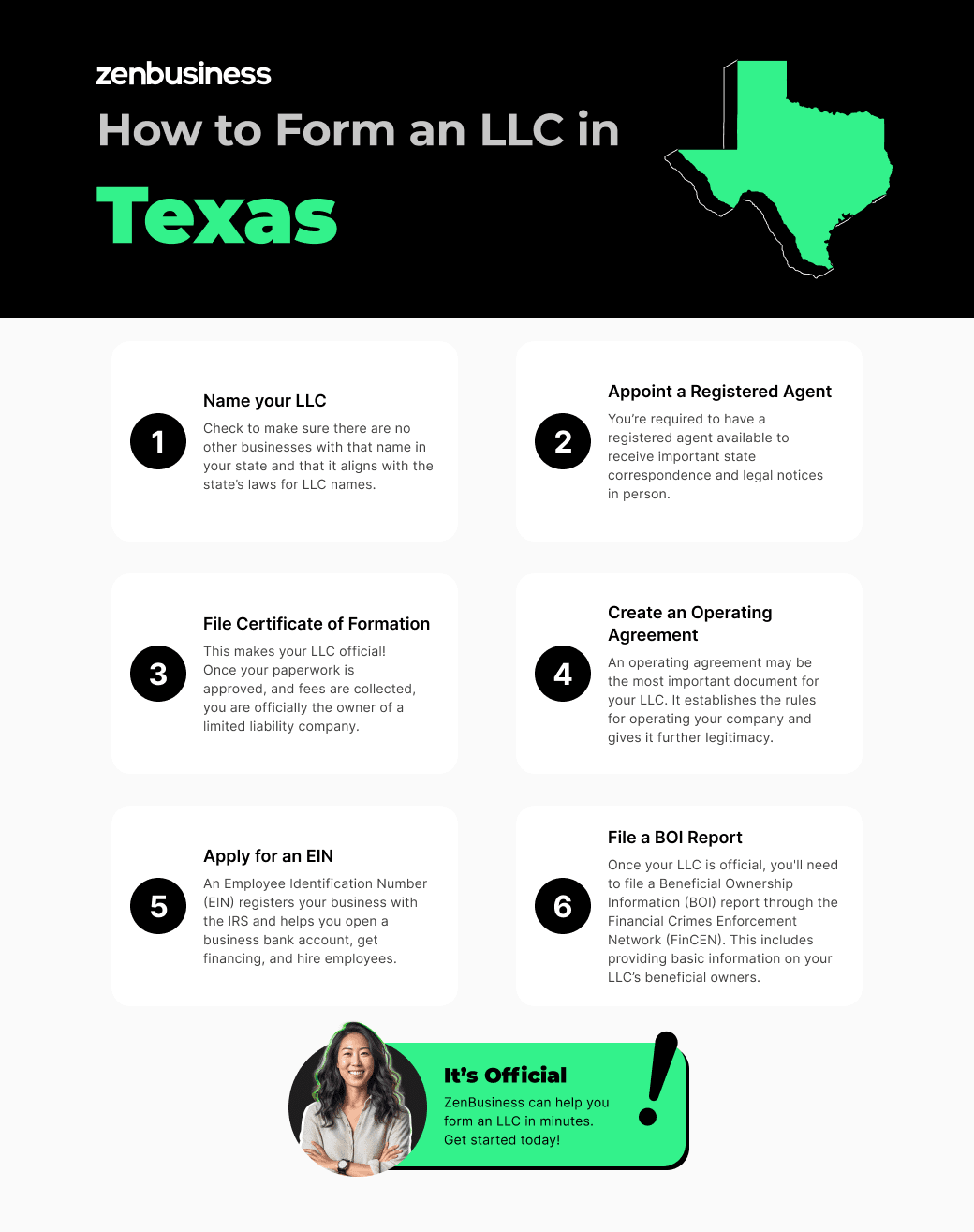
The process of filing an LLC in Texas involves several distinct steps, each requiring careful attention to detail.
Step 1: Choose a Business Name
The first critical step is selecting a unique and compliant business name for your LLC. The name must be distinguishable from other registered business entities in Texas. It must also include a designator indicating that it is a limited liability company, such as “LLC,” “L.L.C.,” or “Limited Liability Company.” You can check for name availability on the Texas Secretary of State website’s Business Entity Search. It’s also advisable to check for the availability of a corresponding domain name and social media handles.
Step 2: Appoint a Registered Agent
Every LLC in Texas must designate a registered agent. This individual or company is responsible for receiving official legal and tax documents on behalf of the LLC, including service of process (lawsuit notifications). The registered agent must have a physical street address within Texas (a P.O. Box is not sufficient) and be available during normal business hours. You can appoint yourself as the registered agent, another member of the LLC, or a professional registered agent service.
Step 3: File the Certificate of Formation

The foundational document for creating an LLC in Texas is the Certificate of Formation (Form 205). This document must be filed with the Texas Secretary of State. The Certificate of Formation typically requires the following information:
- LLC Name: The chosen and verified business name.
- Registered Agent Name and Address: The name and physical street address of the appointed registered agent.
- Management Structure: Whether the LLC will be member-managed or manager-managed.
- Purpose: A brief statement of the business’s purpose. While Texas allows for a general statement, being more specific can be beneficial.
- Organizer Information: The name and address of the person filing the Certificate of Formation.
The filing fee for the Certificate of Formation is currently $300, payable to the Texas Secretary of State. This can be submitted online, by mail, or in person. Online filing is generally the fastest and most efficient method.
Step 4: Create an LLC Operating Agreement
While not a mandatory filing requirement with the state, an Operating Agreement is a crucial internal document for any LLC in Texas. This agreement outlines the ownership structure, management responsibilities, profit and loss distribution, and procedures for admitting new members or dissolving the company. A well-drafted Operating Agreement can prevent future disputes among members and clarify operational procedures. It is particularly important for multi-member LLCs but is also recommended for single-member LLCs to establish clear operational guidelines and reinforce the separation between personal and business affairs.
Step 5: Obtain an Employer Identification Number (EIN)
If your LLC will have employees, or if it plans to operate as a partnership or corporation for tax purposes, you will need to obtain an Employer Identification Number (EIN) from the Internal Revenue Service (IRS). An EIN is like a Social Security number for your business and is used for tax filing and reporting purposes. You can apply for an EIN online through the IRS website, and it is a free service. Even if not strictly required, obtaining an EIN can be beneficial for opening business bank accounts and establishing business credit.
Ongoing Compliance for Texas LLCs
Forming an LLC is just the beginning; ongoing compliance is essential to maintain its legal standing and the protection it offers.
Annual Franchise Tax
In Texas, LLCs are generally subject to the Texas Franchise Tax, administered by the Texas Comptroller of Public Accounts. However, there is a “no tax due” threshold. If your LLC’s total revenue is below a certain amount (which can change annually), you may not owe any franchise tax but will still be required to file a “No Tax Due Report.” If your revenue exceeds this threshold, you will need to calculate and pay the franchise tax. The filing deadline is typically May 15th each year.
Business Licenses and Permits
Depending on the nature of your business and its location within Texas, you may need to obtain various federal, state, and local licenses and permits. Researching and securing these is crucial for legal operation. This can range from general business licenses to industry-specific permits required by regulatory bodies.
Maintaining Business Records
It is vital to maintain thorough and organized business records. This includes financial records, meeting minutes (if applicable), and copies of all filed documents. Keeping these records separate from personal documents reinforces the distinction between the LLC and its members, which is essential for maintaining limited liability protection.

Conclusion: Launching Your Texas LLC with Confidence
Establishing an LLC in Texas is a strategic move that can provide significant legal and financial benefits. By following these straightforward steps – from selecting a name and appointing a registered agent to filing the Certificate of Formation and understanding ongoing compliance obligations – entrepreneurs can confidently launch and grow their businesses with a solid legal foundation. The investment in understanding and completing this process pays dividends in terms of asset protection and operational clarity.
LifeOutOfTheBox is a participant in the Amazon Services LLC Associates Program, an affiliate advertising program designed to provide a means for sites to earn advertising fees by advertising and linking to Amazon.com. Amazon, the Amazon logo, AmazonSupply, and the AmazonSupply logo are trademarks of Amazon.com, Inc. or its affiliates. As an Amazon Associate we earn affiliate commissions from qualifying purchases.