
Embarking on the journey of divorce can feel like navigating uncharted territory, especially when choosing to proceed without legal representation. In California, the legal landscape is designed to be accessible, allowing individuals to file for divorce by themselves, a process often referred to as “pro se” or self-representation. While it presents a unique set of challenges, understanding each step, from initial paperwork to final judgment, can empower you to manage this significant life transition effectively. This comprehensive guide aims to demystify the process, offering clarity and practical advice for those undertaking this personal and legal endeavor on their own.
Divorce, or the dissolution of marriage, is a profound lifestyle change, marking the end of one chapter and the beginning of another. For many, the decision to file independently stems from a desire for cost savings, greater personal control over the process, or a belief that their case is straightforward. However, it’s crucial to acknowledge the complexities involved, particularly concerning property division, child custody, and spousal support. This guide will walk you through the necessary stages, forms, and procedures, ensuring you are well-prepared to handle your own divorce in the Golden State.
Navigating the Solo Journey: Understanding Divorce in California
Filing for divorce on your own in California requires a methodical approach and a commitment to understanding the legal requirements. It’s not merely about filling out forms; it’s about comprehending the implications of each decision and ensuring compliance with the state’s family law statutes. This initial phase is about self-assessment and foundational knowledge.
Is Self-Representation Right for You?
Before delving into the specifics, it’s vital to honestly assess whether handling your divorce independently is the best path forward. Self-representation is generally more feasible in uncontested divorces, where both parties agree on all major issues, including:
- Child Custody and Visitation: A shared understanding of who the children will live with and a visitation schedule.
- Child Support: Agreement on the amount and duration of financial support for children.
- Spousal Support (Alimony): A consensus on whether one spouse will provide financial support to the other and, if so, the amount and duration.
- Property and Debt Division: A clear agreement on how all assets (real estate, bank accounts, investments, retirement funds, businesses) and debts (mortgages, credit card debt, loans) acquired during the marriage will be divided.
If your divorce involves complex financial portfolios, high-conflict child custody disputes, or a history of domestic violence, seeking legal counsel, even for limited scope representation, is highly advisable. While this guide focuses on the “do it yourself” approach, recognizing when professional help is indispensable is a hallmark of good judgment. The California Courts website provides extensive resources and self-help centers, which can be invaluable for individuals representing themselves. These resources often include workshops and free legal clinics that can offer guidance, especially in larger metropolitan areas like Los Angeles or San Francisco.
Residency Requirements and Jurisdiction
To file for divorce in California, you must meet specific residency requirements. This ensures that the Superior Court has the jurisdiction to hear your case. The requirements are:
- Six-Month State Residency: At least one spouse must have lived in California for a minimum of six months immediately preceding the filing of the divorce petition.
- Three-Month County Residency: At least one spouse must have lived in the county where the divorce is being filed for a minimum of three months immediately preceding the filing.
For example, if you wish to file for divorce in Orange County, either you or your spouse must have lived in California for six months and in Orange County for three months. These requirements are non-negotiable and must be accurately stated in your initial court documents.
The Initial Steps: Preparing and Filing Your Petition
The formal beginning of the divorce process involves preparing and filing a series of legal documents with the appropriate Superior Court. This stage sets the foundation for your entire case and requires meticulous attention to detail.
Essential Forms to Get Started
The primary forms you’ll need to initiate a divorce in California are:
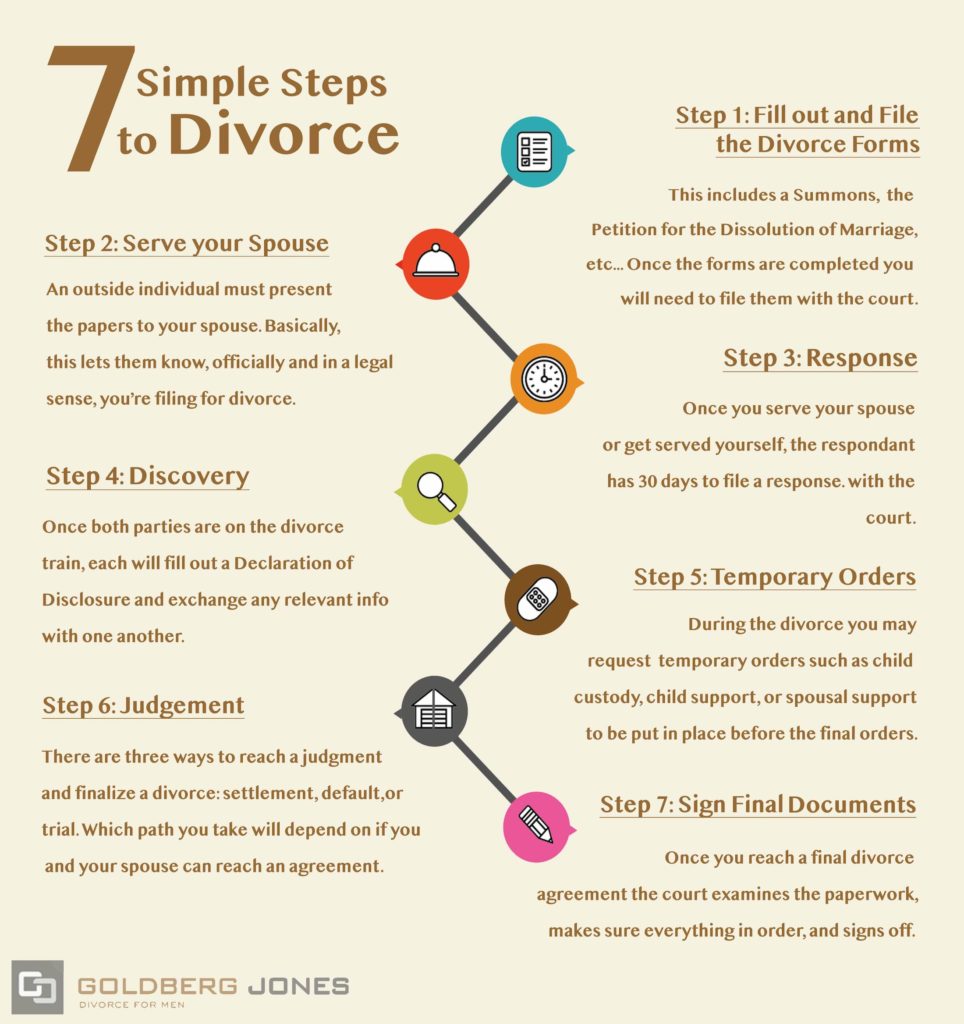
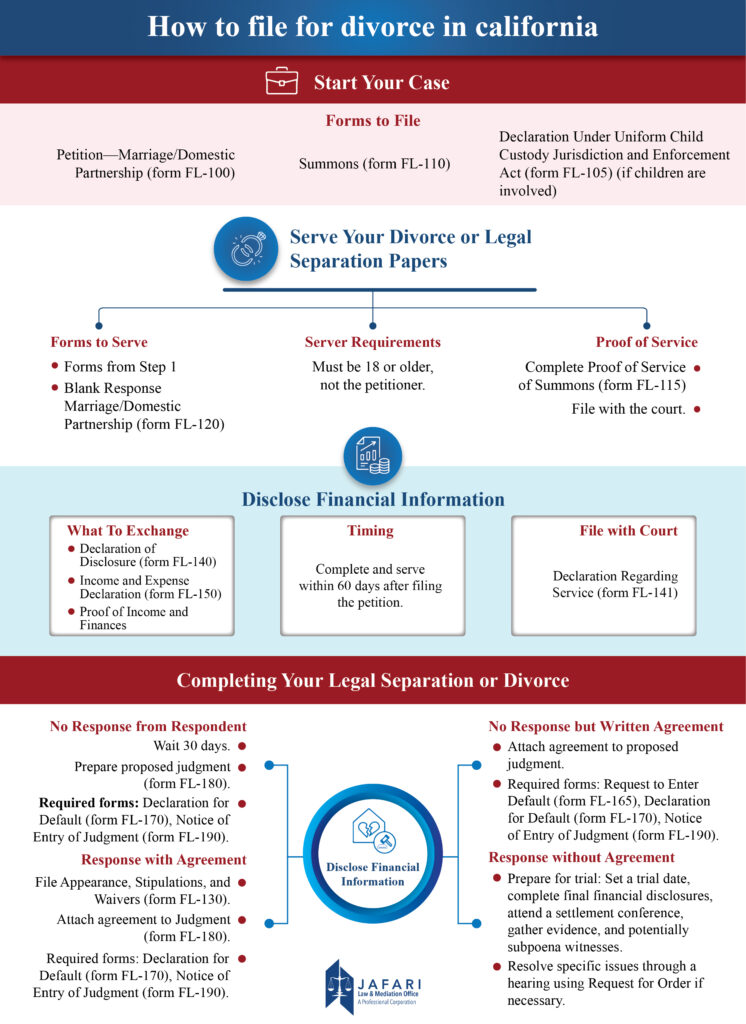
- Petition – Marriage/Domestic Partnership (Form FL-100): This is the foundational document that formally asks the court to dissolve your marriage. You’ll specify the type of case (divorce), list your names, the date of marriage, and any children. You’ll also indicate what you are asking the court to order regarding property, custody, and support. California is a “no-fault” state, meaning you do not need to prove marital misconduct. The only ground for divorce is “irreconcilable differences” that have led to the irremediable breakdown of the marriage.
- Summons (Form FL-110): This document notifies your spouse that a divorce action has been filed against them and informs them of their rights and responsibilities, including the deadline to respond to the petition (typically 30 days). It also includes “Standard Family Law Restraining Orders” which automatically prevent both parties from, among other things, taking children out of state, transferring property, or cancelling insurance policies without mutual consent or a court order.
- Declaration Under Uniform Child Custody Jurisdiction and Enforcement Act (UCCJEA) (Form FL-105/GC-120): If you have minor children, this form is essential. It provides the court with necessary information about your children’s residence history to determine if California has jurisdiction over custody matters.
- Cover Sheet (Local Form, if applicable): Some counties, such as San Diego County or Santa Clara County, may require an additional local cover sheet. It’s crucial to check your specific county’s Superior Court website for any local forms.
All these forms, along with detailed instructions, can be found on the California Courts self-help website. It’s highly recommended to download and print the most current versions. Completing these forms accurately is paramount; errors can lead to delays or rejection by the court clerk. Take your time, read all instructions, and fill in every applicable box.
Filing Your Documents at the Superior Court
Once your forms are meticulously completed, the next step is to file them with the Superior Court in the county where you or your spouse meet the residency requirements.
- Make Copies: You’ll need at least three copies of each form: one for the court, one for your spouse, and one for your records. Some suggest making an extra copy for the “file-stamped” original to avoid needing to request certified copies later.
- File at the Clerk’s Office: Locate the Family Law division of the Superior Court in your county. Present your original documents and all copies to the court clerk. The clerk will “file-stamp” all copies, keeping the original for the court and returning the copies to you. This stamp officially marks the date your case began.
- Pay Filing Fees: There is a fee to file for divorce in California. As of recent updates, this fee is typically over $400. If you cannot afford the fee, you can apply for a “Fee Waiver” by submitting forms FW-001 (Request to Waive Court Fees) and FW-003 (Order on Court Fee Waiver). If approved, you won’t have to pay court fees. Be sure to file the fee waiver request concurrently with your initial petition.
Once your documents are filed and fee issues are resolved, your divorce case officially begins, and a case number will be assigned. This number will be used on all subsequent documents filed in your case.
Serving Your Spouse: Ensuring Proper Notification
After filing your petition, the next crucial step is to legally notify your spouse that you have initiated divorce proceedings. This is known as “service of process.” Proper service is not merely a formality; it is a fundamental aspect of due process, ensuring your spouse is fully aware of the action against them and has an opportunity to respond. Without proper service, your case cannot move forward.
Understanding Service of Process
The goal of service of process is to provide your spouse with copies of the filed documents (Petition and Summons, and any other initial forms like the UCCJEA) in a legally compliant manner. In California, you generally cannot serve the papers yourself. The person who serves the papers must be:
- At least 18 years old.
- Not a party to the case (meaning not you).
- Must give your spouse the court forms and fill out a “Proof of Service” form (usually Form FL-115, Proof of Service of Summons).
The person serving the papers is often called a “process server.” This can be a professional process server (for a fee), a sheriff or marshal (for a fee), or simply a trusted adult friend or family member who meets the criteria.
Methods of Service
There are several acceptable methods for serving your spouse in California:
- Personal Service: This is the most common and preferred method. The server personally hands a copy of the Summons and Petition to your spouse. Once served, your spouse has 30 calendar days to file a response with the court.
- Service by Mail with Notice and Acknowledgment of Receipt: If your spouse is cooperative, you can mail them the documents along with a “Notice and Acknowledgment of Receipt” (Form FL-117). Your spouse signs and dates Form FL-117 and mails it back to the server. This method saves the cost of a process server, but it only works if your spouse agrees to sign and return the form. If they don’t, you’ll need to use another method.
- Substituted Service: If personal service attempts fail after several diligent attempts, you may be able to use substituted service. This involves leaving the documents with a competent adult (at least 18 years old) at your spouse’s home or work and then mailing another copy to that location. This method requires a court order or careful adherence to specific legal rules, and it’s generally best to consult with a legal aid clinic or limited scope attorney if you are considering this.
- Service by Publication or Posting: This is a last resort, used only when you cannot locate your spouse after exhaustive efforts. It requires a court order and involves publishing notice in a newspaper or posting it in a public place designated by the court. This is a complex process and almost always requires legal assistance.
Once your spouse has been properly served, and the “Proof of Service” (Form FL-115) is completed, it must be filed with the court. This document officially informs the court that your spouse has received legal notice, allowing your case to proceed.
Disclosure and Discovery: Exchanging Financial Information
A cornerstone of California divorce law is the requirement for both parties to fully and accurately disclose all assets, debts, income, and expenses. This process, known as “disclosure and discovery,” ensures transparency and fairness in dividing community property and determining support orders. Even in an uncontested divorce, these declarations are mandatory.
Preliminary Declarations of Disclosure
Within 60 days of filing the petition (or the response), both you and your spouse are required to exchange “Preliminary Declarations of Disclosure.” This involves:
- Schedule of Assets and Debts (Form FL-142): This form provides a comprehensive list of all community and separate property assets (e.g., real estate, bank accounts, vehicles, retirement plans, business interests) and debts (e.g., mortgages, credit cards, loans). It includes estimated values and confirms whether each item is community property, separate property, or a mix.
- Income and Expense Declaration (Form FL-150): This form details your current income from all sources and your monthly expenses. It’s critical for calculating child and spousal support. You’ll need to attach recent pay stubs and tax returns.
- Declaration Regarding Service of Declaration of Disclosure (Form FL-141): This form simply confirms to the court that you have served your Preliminary Declaration of Disclosure to your spouse. It is filed with the court, but the actual disclosure forms (FL-142 and FL-150) are not filed with the court; they are only exchanged between the parties.
The detailed nature of these forms necessitates gathering extensive financial documentation, including bank statements, investment portfolios, deeds, vehicle titles, loan documents, and tax returns. Accuracy is paramount; any misrepresentation or omission can have severe consequences, including sanctions from the court.
The Importance of Full Transparency
California family law operates under the principle of fiduciary duty between spouses until the final judgment of divorce is entered. This means each spouse owes the other a duty of good faith and fair dealing, including the obligation to fully disclose all material facts and information regarding community assets and debts.
For self-represented individuals, mastering these disclosure requirements is especially critical. Without an attorney to guide you, you must meticulously ensure that:
- All assets and debts are identified and valued.
- All sources of income and expenses are accurately reported.
- All required attachments (pay stubs, tax returns) are included.
- The declarations are properly served on your spouse.
If there are discrepancies or if one party suspects the other is not being fully transparent, “discovery” tools can be utilized, such as interrogatories (written questions), requests for production of documents, or depositions (oral testimony under oath). However, these are complex legal procedures that often necessitate legal counsel. In a solo journey, aiming for a cooperative and transparent exchange of information is always the most straightforward path.
Reaching Resolution: Agreements and Final Judgment
After disclosures are complete, the focus shifts to resolving the substantive issues of your divorce: property division, child custody and visitation, child support, and spousal support. This is where the initial agreement (or disagreement) between you and your spouse becomes crucial.
Negotiating Your Settlement (Property, Custody, Support)
If you are filing for divorce by yourself, it is presumed that you and your spouse are generally in agreement or are capable of reaching an agreement through direct negotiation.
- Property and Debt Division: In California, community property and debt acquired during the marriage are typically divided equally (50/50). Separate property (owned before marriage, inherited, or received as a gift) is generally retained by the original owner. Your settlement agreement will outline how specific assets (e.g., the family home in Sacramento, retirement accounts, vehicles) and debts will be allocated.
- Child Custody and Visitation: The court’s primary concern is the “best interest of the child.” Parents can agree on legal custody (who makes decisions about health, education, and welfare) and physical custody (where the children live). A detailed parenting plan outlining visitation schedules, holiday arrangements, and communication protocols is vital.
- Child Support: California uses a statewide guideline formula to calculate child support, primarily based on parents’ incomes and the amount of time each parent spends with the children. Even if you agree on a different amount, the court will usually require justification for deviating from the guideline. The Department of Child Support Services in places like Fresno or Riverside can assist with establishing and enforcing support orders.
- Spousal Support: This is less formulaic than child support and depends on various factors, including the length of the marriage, the earning capacity of each spouse, the marital standard of living, and the health and age of the parties.
If you and your spouse can agree on all these terms, you will document them in a Stipulated Judgment or a Marital Settlement Agreement (MSA). This comprehensive document essentially serves as the blueprint for your post-divorce life.
Uncontested vs. Contested Divorce
The path you take largely depends on whether your divorce is truly uncontested:
- Uncontested Divorce: Both spouses agree on all terms and sign the settlement agreement. This is the fastest and least expensive way to finalize a divorce, especially when self-represented. You file the signed agreement with the court.
- Contested Divorce: Spouses cannot agree on one or more key issues. This typically requires court intervention, mediation, or even a trial. Self-representation in a contested divorce is significantly more challenging and often leads to delays, increased stress, and potentially unfavorable outcomes. If your spouse files a “Response” (Form FL-120) and disagrees with your petition, your case is contested.
For a solo filer, maintaining open communication and a willingness to compromise with your spouse is paramount to keeping the divorce uncontested.
Preparing the Judgment and Finalizing Your Case
Once all issues are resolved and documented in a Marital Settlement Agreement or Stipulated Judgment, the final step is to prepare the “Judgment” (Form FL-180) and submit it to the court for approval.
- Proposed Judgment: You will typically fill out the Judgment form, attaching your Marital Settlement Agreement as an exhibit. The judgment incorporates all the terms you and your spouse have agreed upon.
- Notice of Entry of Judgment (Form FL-190): This form notifies both parties that the judgment has been entered by the court.
- Submit for Court Review: You’ll submit the proposed Judgment, the Notice of Entry of Judgment, and any other necessary attachments (like the Child Custody and Visitation Order, Form FL-341, if applicable) to the court for the judge’s signature.
- The Six-Month Rule: In California, there is a mandatory waiting period of at least six months and one day from the date the Summons was served (or the date the respondent made a general appearance in the case, whichever is earlier) before your marital status can be legally terminated. The judge will sign the Judgment after this period has passed and all other requirements are met. The judgment will specify the exact date your marital status ends.
Receiving the file-stamped copy of your Judgment of Dissolution marks the official end of your marriage. This document is incredibly important; keep it in a safe place, along with certified copies. It outlines all orders regarding property, debt, custody, and support.
Filing for divorce in California by yourself is a demanding but achievable process. It requires diligence, patience, and a commitment to detail. While the legal journey can be complex, especially with significant assets or children, many individuals find empowerment in navigating this pivotal life transition independently. Remember to utilize the extensive resources offered by the California Courts website and local court self-help centers, which are designed to support self-represented litigants on their path to a new chapter.