
Navigating the complexities of divorce can feel overwhelming, especially when you’re attempting to manage the process without legal counsel. Fortunately, California law offers a pathway for individuals to pursue divorce online, often referred to as a “do-it-yourself” divorce. This approach, while requiring meticulous attention to detail, can be a more accessible and cost-effective option for many. This guide aims to demystify the online divorce filing process in California, offering insights into the steps involved, the essential forms, and key considerations to ensure a smoother experience.
Understanding California’s Online Divorce Process
California law recognizes the need for accessible legal procedures, and divorce is no exception. While no court system allows for a completely automated “click-and-file” divorce, the state provides a framework where individuals can electronically file most of the necessary legal documents. This online facilitation is primarily managed through the California Courts Self-Help Guide and various county superior court websites, which offer downloadable forms, instructions, and in some cases, online filing portals.

Eligibility and Key Considerations
Before embarking on the online divorce journey, it’s crucial to determine your eligibility and understand the scope of what “online filing” truly means.
Residency Requirements
To file for divorce in California, at least one spouse must have resided in the state for a minimum of six months immediately preceding the filing of the Petition. Additionally, the petitioner must have lived in the specific county where the divorce is filed for at least three months. These residency requirements are non-negotiable and must be met before initiating proceedings.
Grounds for Divorce
California is a “no-fault” divorce state. This means you do not need to prove that your spouse did anything wrong to obtain a divorce. The two grounds for dissolution of marriage are:
- Irreconcilable Differences: This is the most common ground and simply means that the marriage has broken down to the point where there is no reasonable chance of reconciliation.
- Incurable Insanity: This ground is rarely used and requires a medical professional to certify that one spouse is incurably insane.
Types of Divorce
The online filing process can accommodate different divorce scenarios:
- Uncontested Divorce: This is the ideal scenario for a DIY online divorce. It occurs when both spouses agree on all terms of the divorce, including child custody, child support, spousal support (alimony), division of property, and debts.
- Contested Divorce: If you and your spouse disagree on any of the significant issues, your divorce will be contested. While you can initiate the process online, reaching a resolution will likely involve court hearings, mediation, or even a trial, which may necessitate legal representation.
The Role of Online Filing
“Filing by yourself online” generally refers to the ability to download, complete, and submit court forms electronically through a county’s e-filing system or by mailing them in. It does not mean that a judge will instantly grant your divorce without any manual steps or court review. The process still requires adherence to legal procedures and timelines.
Essential Forms and Procedures for Filing
Successfully filing for divorce online in California requires familiarity with the standard court forms and the correct sequence in which they must be submitted. The California Courts Self-Help Guide is an invaluable resource for obtaining the most up-to-date versions of these forms.
Initiating the Divorce Process: The Petition
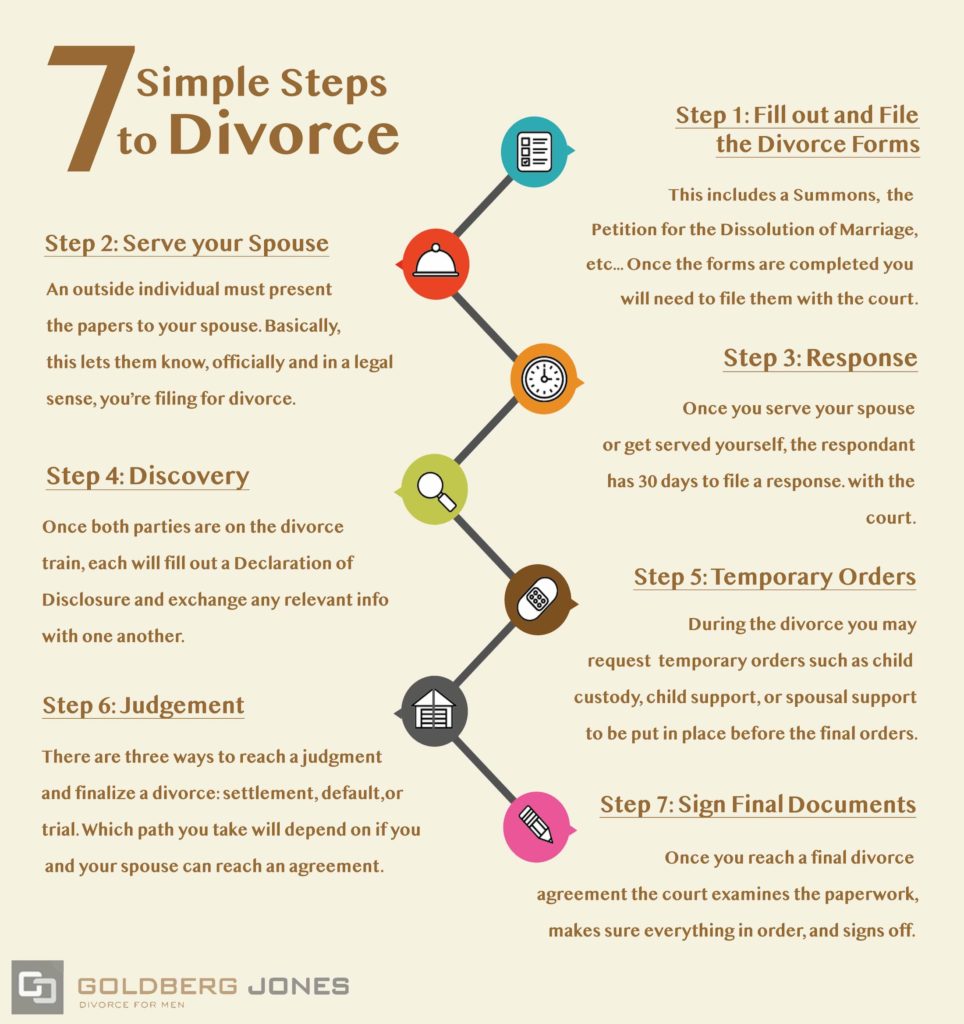
The first formal step in filing for divorce is to complete and file a Petition and a Summons.
- Petition — Marriage/Domestic Partnership (Form FL-100): This document officially starts the divorce case. It informs the court and your spouse about the basic details of your marriage, your residency, the grounds for divorce, and what you are asking the court to order regarding property, support, and children.
- Summons (Form FL-110): The Summons is a notice to your spouse (the respondent) that a divorce case has been filed against them. It also includes standard restraining orders that apply to both parties automatically upon filing, preventing them from taking actions like moving children out of state or disposing of community property without consent or court order.
Once these forms are completed, you will need to file them with the superior court in the county where you meet the residency requirements. Many California counties now offer e-filing services, allowing you to upload and submit these documents electronically, often for a fee. Alternatively, you can print and mail the forms or file them in person at the courthouse.
Serving Your Spouse: The Notice of Petition
After filing the Petition and Summons, you must legally notify your spouse that they have been sued for divorce. This is called “service of process.”
- Service of Summons and Petition: The Summons and a copy of the Petition must be formally served on your spouse. You cannot serve the documents yourself. Service must be performed by someone who is at least 18 years old and not a party to the case. This can be a friend, relative, professional process server, or the county sheriff.
- Proof of Service: Once served, the person who served the documents must complete a Proof of Service of Summons (Form FL-115). This form is crucial and must be filed with the court to prove that your spouse was properly notified.
For online filing, you can typically download the Proof of Service form and have it completed after your spouse receives the documents. This completed form is then filed with the court, either electronically or in person.
The Respondent’s Role: The Response
Once your spouse is served, they have a limited time (usually 30 days) to file a Response — Marriage/Domestic Partnership (Form FL-120) with the court.
- If the Respondent Files a Response: This indicates they are participating in the divorce proceedings and may have their own requests or disagreements.
- If the Respondent Does Not File a Response (Default): If your spouse fails to file a Response within the allotted time, you may be able to proceed with a “default” divorce. This means the court can grant your requests as outlined in your Petition without their formal participation. Filing for default requires submitting additional forms, such as a Request to Enter Default (Form FL-165).
Financial Disclosures: Transparency is Key
A critical component of any divorce, whether contested or uncontested, is the exchange of financial information. This ensures that the division of assets and debts is fair and equitable.
- Preliminary Declaration of Disclosure (Form FL-140): Both parties are required to serve the other with preliminary financial disclosures. This involves completing and exchanging detailed financial statements and attaching supporting documents.
- Final Declaration of Disclosure (Form FL-141): If the divorce is finalized, a final declaration is also required, reflecting the current financial situation.
These disclosures are essential for reaching an agreement on property division and support. While you can prepare and exchange these documents yourself, understanding the implications of the financial information and ensuring accuracy is paramount.
Reaching an Agreement and Finalizing the Divorce
The ultimate goal of filing for divorce, even online, is to reach a final resolution that is approved by the court. In an uncontested divorce, this is achieved through a Marital Settlement Agreement.
The Marital Settlement Agreement (MSA)
The Marital Settlement Agreement (MSA) is a legally binding contract that outlines all the terms of your divorce. It’s the culmination of agreements reached on issues such as:
- Child Custody and Visitation: This includes legal custody (decision-making) and physical custody (where the children live), as well as a visitation schedule.
- Child Support: Calculation and payment terms based on California guidelines.
- Spousal Support (Alimony): Duration and amount of payments.
- Division of Property: How community property (assets acquired during the marriage) and separate property will be divided.
- Division of Debts: How community debts will be allocated.
For an uncontested divorce, you and your spouse will work together to draft and sign this agreement. Many resources offer templates for MSAs, but it’s crucial to ensure the agreement complies with California law.
Judgment of Dissolution
Once the MSA is signed by both parties and all required forms are filed with the court, you will submit a Judgment of Dissolution of Marriage (Form FL-180). This is the final court order that legally ends your marriage.
- Submission to the Court: The Judgment incorporates the terms of your MSA. You will submit this document, along with other necessary forms like the Notice of Entry of Judgment (Form FL-190), to the court for the judge’s review and signature.
- Court Review and Approval: The judge will review the Judgment to ensure it meets all legal requirements. If everything is in order, the judge will sign it, and your divorce will be finalized. The effective date of the divorce is typically six months and one day after the Respondent was served, or the date the Judgment is entered, whichever is later.
Considerations for Online Divorce Platforms
While the California Courts Self-Help Guide provides official forms and instructions, several online platforms and services specialize in guiding individuals through the DIY divorce process. These services can offer:
- User-Friendly Form Preparation: Interactive questionnaires that help you fill out the necessary legal forms accurately.
- Guided Workflows: Step-by-step instructions tailored to your specific situation.
- E-filing Integration: Some platforms can directly submit your forms to the court electronically.
- Document Review: Some services offer a basic review of your documents before filing.
However, it’s important to remember that these platforms are typically not a substitute for legal advice. They streamline the paperwork but do not provide legal counsel. If your situation is complex, involves significant assets, or contentious issues, consulting with a family law attorney is highly recommended.
Common Pitfalls to Avoid in Online Divorce Filing
Even with a straightforward divorce, missteps in the online filing process can lead to delays, rejections, or unintended legal consequences. Being aware of common pitfalls can help you navigate the process more smoothly.
Incomplete or Incorrect Forms
- Missing Information: Ensure all required fields on every form are completed accurately. Even a small oversight can cause rejection.
- Incorrect Form Versions: Laws and court rules change. Always use the most current versions of forms available from the official California Courts Self-Help Guide or your local superior court’s website.
- Inconsistent Information: Details like names, dates, and addresses must be consistent across all documents.
Improper Service of Process
- Self-Service: Remember, you cannot serve the legal documents yourself.
- Incorrect Service Method: Ensure the chosen method of service complies with California law.
- Failure to File Proof of Service: The court needs official proof that your spouse was served. Failing to file this form will halt your proceedings.
Ignoring Financial Disclosure Requirements
- Omission of Assets or Debts: Failing to fully disclose all assets and debts can lead to legal challenges and invalidation of your settlement later.
- Inaccurate Valuations: Be as accurate as possible when valuing assets.
Unrealistic Expectations
- “Instant” Divorce: Online filing refers to the electronic submission of documents, not an expedited court decision. Divorce requires adherence to legal timelines, including waiting periods.
- Guaranteed Outcome: The court has the final say on your Judgment. While they generally approve well-drafted agreements, they can reject terms that are not in the best interest of children or do not comply with the law.

Not Seeking Legal Advice When Necessary
- Complex Asset Division: If you have significant assets, business interests, or complex financial arrangements, a DIY approach can be risky.
- Child Custody Disputes: Matters involving children are often emotionally charged and legally nuanced.
- Spousal Support Issues: Determining appropriate spousal support requires understanding various legal factors.
While filing for divorce online yourself in California is achievable for many, it demands diligence, accuracy, and a thorough understanding of the legal requirements. By utilizing the available resources, meticulously completing forms, and adhering to procedures, you can successfully navigate this process and move towards a new chapter.
LifeOutOfTheBox is a participant in the Amazon Services LLC Associates Program, an affiliate advertising program designed to provide a means for sites to earn advertising fees by advertising and linking to Amazon.com. Amazon, the Amazon logo, AmazonSupply, and the AmazonSupply logo are trademarks of Amazon.com, Inc. or its affiliates. As an Amazon Associate we earn affiliate commissions from qualifying purchases.