
Navigating the legal dissolution of a marriage is a complex process, particularly when it occurs within the unique jurisdictional framework of Hawaii. Whether you are a long-term resident of Honolulu or have recently settled on Maui, the state’s requirements for divorce—referred to legally as a “divorce decree”—demand careful adherence to specific procedural steps. While the beauty of the Pacific Ocean provides a serene backdrop, the court system requires a focused and organized approach to ensure your filings are accepted and processed efficiently.
Understanding Residency and Jurisdictional Requirements
Before you can initiate a divorce filing in Hawaii, you must establish that the court has the authority to hear your case. Unlike some jurisdictions that allow for immediate filing, this state mandates a period of physical presence and intent to remain.

The Six-Month Rule
To file for a divorce in the state, either you or your spouse must have been a resident of Hawaii for at least six months immediately preceding the filing of the complaint. Furthermore, you must have been physically present in the state for at least three months. These requirements are strictly enforced to prevent jurisdictional disputes and ensure that the court presiding over your assets, debts, and potential custody arrangements has proper authority.
Where to File
Once residency is established, the filing must occur in the Family Court of the circuit where at least one of the spouses resides. For those living on Oahu, this involves the First Circuit Court. Residents of the Big Island would coordinate with the Third Circuit Court, while those on Kauai utilize the Fifth Circuit Court.
Initiating the Legal Process: Filing the Complaint
The divorce process begins with the filing of a formal legal document, typically titled a “Complaint for Divorce.” This document serves as the foundation for your case and outlines the basic facts, including the date of marriage, the date of separation, and the specific grounds for the divorce.
Understanding “No-Fault” Divorce
Hawaii is a “no-fault” divorce state. This means that you do not need to prove marital misconduct, such as adultery or abandonment, to be granted a divorce. Instead, you simply need to state that the marriage is “irretrievably broken.” This legal standard simplifies the filing process significantly, as it removes the burden of proving blame, allowing the court to focus on the equitable distribution of assets and the welfare of any children involved.
Mandatory Filing Documents
In addition to the Complaint for Divorce, you will need to complete several other standardized forms, which are available through the Hawaii State Judiciary website. Essential documentation includes:
- Summons to Appear: This document formally notifies your spouse that a divorce action has been initiated.
- Automatic Temporary Restraining Order (ATRO): Once served, this order prevents both parties from disposing of assets, changing insurance policies, or harassing the other spouse during the pendency of the case.
- Income and Expense Statement: This disclosure is vital for determining child support or alimony obligations.
Service of Process and Responding to the Complaint
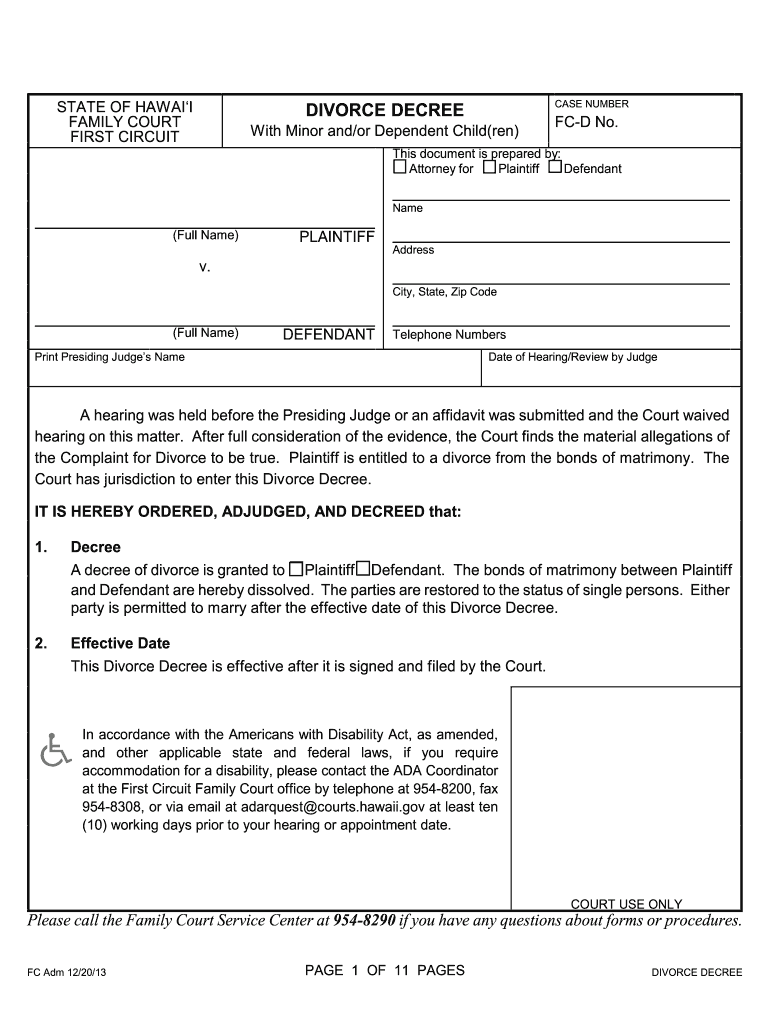
Once your documents are filed with the court clerk, the “service of process” begins. You are legally required to provide your spouse with official notice of the divorce petition. This is not a task you can simply handle via email or text; it must be done in accordance with the Hawaii Rules of Civil Procedure.
Proper Service Methods
The most common method of service is through a professional process server or the Sheriff’s Office. If your spouse is cooperative, they may sign an “Acknowledgment of Service,” which avoids the need for formal delivery. However, if your spouse is unreachable or avoids service, you may need to petition the court for “service by publication,” where a notice is posted in a designated newspaper within the state.
The Response Window
After your spouse is served, they typically have 20 days to file a formal response with the court. If they fail to respond within this timeframe, you may be eligible to request a default judgment. If they do respond, the case shifts into the discovery and negotiation phase, where both parties must exchange financial documents and discuss the division of the marital estate.
Dividing Assets and Addressing Custody
One of the most emotionally and financially demanding aspects of a divorce in Hawaii is the division of property and the establishment of parenting plans. Because the state follows the principle of “equitable distribution,” the court aims to divide assets in a way that is fair, though not necessarily equal.
Marital vs. Separate Property
The court will first distinguish between marital property—assets acquired during the marriage—and separate property, which includes inheritances or assets held prior to the union. It is crucial to gather comprehensive documentation, including real estate deeds for homes in areas like Waikiki or Kailua-Kona, bank statements, and retirement account valuations.
Custody and Support
If children are involved, the court’s primary focus is the “best interests of the child.” Judges often encourage parents to draft a parenting plan that outlines physical custody and visitation schedules. In Hawaii, the court prefers joint legal custody unless there is evidence that such an arrangement would be detrimental to the child. Child support, meanwhile, is calculated using standardized state guidelines that consider both parents’ incomes and the amount of time the child spends with each parent.
Finalizing the Decree and Moving Forward
The final stage of the process is the entry of the Decree of Divorce. If you and your spouse have reached an agreement on all issues—such as property division, spousal support, and child custody—the court will likely approve a “Settlement Agreement.”
The Divorce Hearing
Even if you and your spouse are in total agreement, you will likely still be required to attend a brief court hearing. During this hearing, a judge will review your paperwork to ensure that it meets all legal requirements and that both parties have entered into the agreement voluntarily. Once the judge signs the Decree of Divorce, the marriage is legally dissolved.

Post-Divorce Considerations
After the decree is entered, it is essential to update your personal records. This includes changing your name if desired, updating beneficiaries on life insurance policies, revising your will, and retitling property. Whether you are starting a new chapter in Haleakala or continuing your professional life in Downtown Honolulu, taking these final administrative steps ensures a clean break and allows you to move forward with peace of mind.
Legal matters in Hawaii can be nuanced, and while the state provides excellent resources for self-represented litigants, consulting with a qualified attorney is often recommended to protect your long-term interests. By remaining organized and following the court’s mandated procedures, you can navigate this transition with clarity and confidence.
LifeOutOfTheBox is a participant in the Amazon Services LLC Associates Program, an affiliate advertising program designed to provide a means for sites to earn advertising fees by advertising and linking to Amazon.com. Amazon, the Amazon logo, AmazonSupply, and the AmazonSupply logo are trademarks of Amazon.com, Inc. or its affiliates. As an Amazon Associate we earn affiliate commissions from qualifying purchases.