
Navigating the legal landscape of divorce in New York State can feel daunting, but understanding the process is the first crucial step towards a smoother resolution. This comprehensive guide will demystify the procedures, requirements, and key considerations for filing for divorce in the Empire State, empowering you with the knowledge to move forward. Whether you are seeking an uncontested or contested divorce, familiarizing yourself with these steps will provide clarity and confidence.
Understanding the Grounds for Divorce in New York
New York State has specific legal grounds upon which a divorce can be granted. Understanding these grounds is essential as it forms the basis of your divorce petition. The state has moved towards a no-fault divorce system, significantly simplifying the process for many couples.
No-Fault Divorce: The Irretrievable Breakdown of the Marriage
Since the introduction of the no-fault divorce law in 2010, the most common ground for divorce in New York State is the “irretrievable breakdown of the marriage.” This means that one spouse can claim the marriage has broken down beyond repair, without needing to assign blame or prove specific wrongdoing by the other spouse.
- The Process: To file for a no-fault divorce, one party must attest under oath that the marital relationship has broken down irretrievably for a period of at least six months. The other party can either agree to this statement or dispute it. If they dispute it, the court may grant a divorce upon proof of the breakdown.
- Benefits: The no-fault option avoids the emotional and often acrimonious process of proving fault, such as adultery or cruelty, which were previously required. This can lead to a more amicable and less costly divorce process.
Other Fault-Based Grounds
While no-fault is the most prevalent, New York State still recognizes several fault-based grounds for divorce. These are less commonly used due to the complexities and evidentiary burdens involved but remain an option in certain circumstances.
- Cruel and Inhuman Treatment: This ground requires proving that your spouse has treated you in a way that makes it unsafe or improper to continue living together. This is a high standard to meet and often involves documented evidence of abuse or mistreatment.
- Abandonment: This refers to a spouse who has voluntarily left the marital home for a continuous period of one year or more, with no intention of returning. There are specific legal definitions for abandonment, and simply living separately does not automatically constitute abandonment.
- Imprisonment: If your spouse has been imprisoned for three or more consecutive years after your marriage, this can serve as grounds for divorce.
- Adultery: This ground requires proving that your spouse has committed an act of sexual intercourse with a person other than their spouse. Proving adultery can be difficult and often involves significant investigation and evidence.
- Divorce Due to Conversion of a Separation Agreement or Decree: If you and your spouse have lived separate and apart under a written separation agreement or a judgment of separation for one or more years, this can serve as grounds for divorce.
Key Takeaway: For most couples in New York State, the no-fault ground of irretrievable breakdown is the most straightforward and recommended path to divorce. However, understanding the other grounds is important as they may apply to specific situations.
The Divorce Filing Process in New York
Filing for divorce in New York State involves several distinct legal steps. The precise order and requirements can vary slightly depending on the county, but the core process remains consistent.
Initiating the Divorce: The Summons and Complaint
The divorce action officially begins when one spouse (the plaintiff) files a Summons and a Complaint with the court and serves these documents on the other spouse (the defendant).
- The Summons: This is a legal document that informs the defendant that a lawsuit has been filed against them and that they have a limited time to respond. The Summons must be properly served on the defendant.
- The Complaint: This document outlines the plaintiff’s claims, including the grounds for divorce, and the relief they are seeking from the court. This relief can include equitable distribution of marital property, spousal maintenance (alimony), child custody and support, and other pertinent matters.
- Service of Process: Proper legal service is critical. The Summons and Complaint must be delivered to the defendant in accordance with New York State Civil Practice Law and Rules (CPLR) to ensure the court has jurisdiction over the case. This typically involves personal delivery by a third party or, in some cases, alternative methods authorized by the court.
The Defendant’s Response: The Answer
Once served, the defendant has a specific timeframe (usually 20 days) to file an Answer with the court and serve it on the plaintiff.
- The Answer: This document is the defendant’s formal response to the allegations in the Complaint. They can admit, deny, or state they lack sufficient knowledge to respond to each allegation.
- Counterclaims: The defendant may also file a Counterclaim, which is essentially their own complaint against the plaintiff, outlining their grounds for divorce and the relief they are seeking.
- Failure to Respond: If the defendant fails to file an Answer within the allotted time, the plaintiff may be able to seek a “default judgment,” which means the court may grant the relief requested in the Complaint without the defendant’s participation.
Financial Disclosures and Discovery
After the initial pleadings are filed, both parties are typically required to exchange financial information. This process is known as financial disclosure.
- Statement of Net Worth: This is a crucial document that details each party’s assets, liabilities, income, and expenses. Both parties must provide a sworn statement of their net worth to the court and to each other.
- Discovery: Beyond the Statement of Net Worth, parties may engage in further discovery to gather information relevant to the divorce. This can include:
- Interrogatories: Written questions that must be answered under oath.
- Requests for Production of Documents: Demands for specific financial records, bank statements, tax returns, property deeds, etc.
- Depositions: Out-of-court oral testimony given under oath, typically conducted by attorneys.
This exchange of financial information is vital for negotiating a fair settlement regarding property division, spousal maintenance, and child support.
Reaching a Divorce Settlement or Proceeding to Trial
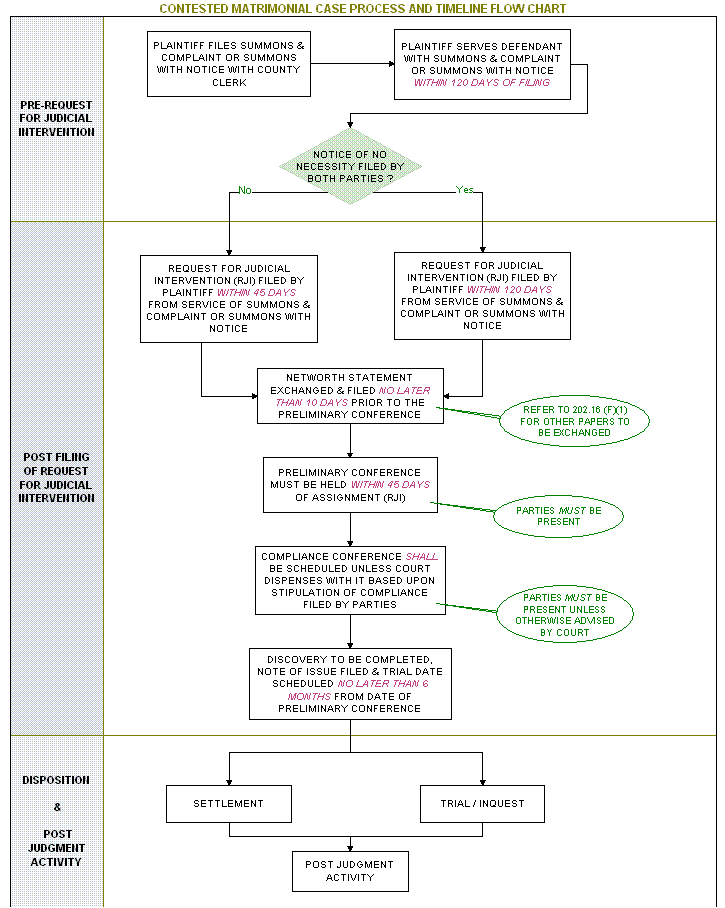
Once the initial filing and discovery phases are complete, the parties have two primary paths to finalize their divorce: settlement or trial.
The Separation Agreement: Negotiating a Settlement
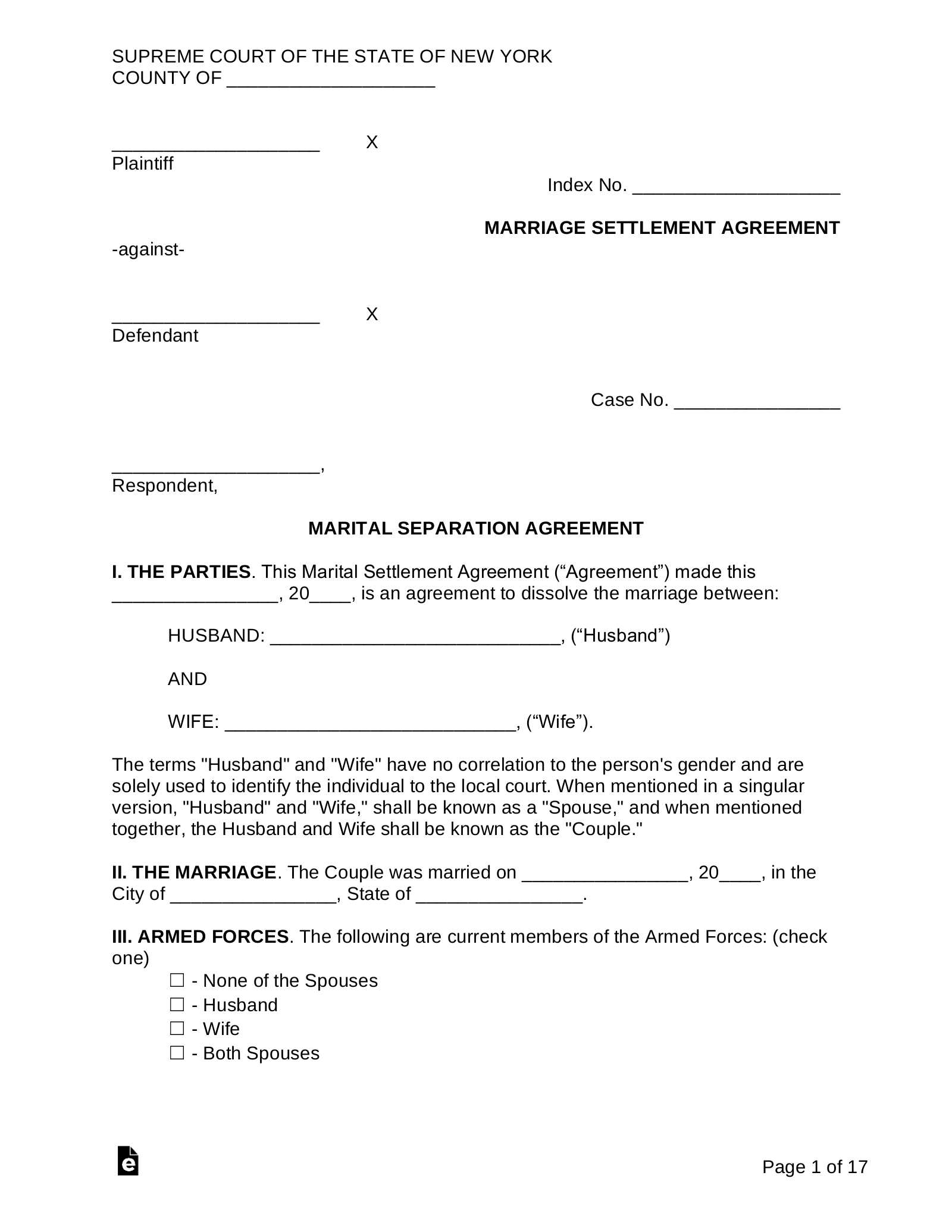
The vast majority of divorces in New York State are resolved through a negotiated settlement rather than a trial. This often culminates in a comprehensive Separation Agreement.
- What is a Separation Agreement? This is a legally binding contract between divorcing spouses that outlines the terms of their divorce. It addresses all critical issues, including:
- Equitable Distribution of Marital Property: How assets and debts acquired during the marriage will be divided.
- Spousal Maintenance (Alimony): Whether one spouse will pay financial support to the other, and for how long.
- Child Custody and Visitation: Legal and physical custody arrangements for any minor children.
- Child Support: Financial support for the children, calculated based on state guidelines.
- Other Matters: Such as life insurance, health insurance, and tax implications.
- Negotiation Process: The negotiation can occur directly between the parties, with the assistance of their attorneys, or through alternative dispute resolution methods like mediation.
- Drafting and Signing: Once an agreement is reached, it is drafted into a formal Separation Agreement. Both parties, ideally with independent legal counsel, review and sign the document.
The Divorce Decree: Finalizing the Divorce
After a Separation Agreement is signed, or if a divorce proceeds to trial and a judge makes decisions, the final step is obtaining a Judgment of Divorce.
- Submitting the Agreement: The signed Separation Agreement, along with other required legal documents (such as affidavits), is submitted to the court for approval.
- The Judgment of Divorce: If the court approves the agreement or the judge’s decision from a trial, it will issue a Judgment of Divorce. This is the official court order that legally terminates the marriage. The terms of the Separation Agreement or the court’s decision are incorporated into the Judgment.
- Enforcement: The Judgment of Divorce is legally binding and can be enforced by the court if either party fails to comply with its terms.
Contested Divorce and Trial
If parties cannot reach an agreement on one or more issues, the case becomes a contested divorce and will proceed to trial.
- Pre-Trial Motions: During this phase, attorneys may file various motions with the court to resolve specific disputes or compel action from the opposing party.
- Trial: A trial is a formal court proceeding where both sides present evidence, call witnesses, and make arguments before a judge. The judge will then make legally binding decisions on all outstanding issues.
- Judge’s Decision: The judge’s decisions are documented in the Judgment of Divorce. Trials are generally more time-consuming, expensive, and emotionally taxing than settled divorces.
Key Takeaway: While a trial is a possibility, most couples in New York State are encouraged to pursue settlement through a Separation Agreement, as it offers greater control over the outcome and is typically more efficient and cost-effective.
Important Considerations and Next Steps
Filing for divorce is a significant life event, and being prepared with a clear understanding of the process and potential challenges can make a substantial difference.
The Role of Attorneys
While it is possible to represent yourself in a divorce proceeding (pro se), it is highly recommended to hire an experienced divorce attorney.
- Legal Expertise: Attorneys understand the intricacies of New York State divorce law, including property division, custody, and support calculations.
- Guidance and Advocacy: They can guide you through each step of the process, explain your rights and obligations, and advocate for your best interests.
- Negotiation and Litigation: An attorney can negotiate effectively on your behalf and represent you in court if a settlement cannot be reached.
- Emotional Buffer: Having an attorney can provide a professional buffer, helping to depersonalize the legal process and reduce emotional stress.
Mediation as an Alternative
Mediation is a voluntary process where a neutral third-party mediator helps divorcing couples communicate and reach agreements.
- Collaborative Approach: Unlike litigation, mediation focuses on collaboration and finding solutions that work for both parties.
- Cost-Effective: Mediation is often less expensive and faster than going to court.
- Preserving Relationships: It can be particularly beneficial for couples with children, as it can help foster a more cooperative co-parenting relationship post-divorce.
Navigating Complex Issues
Divorce can involve complex issues that require careful consideration.
- Child Custody and Visitation: New York State courts prioritize the best interests of the child. Decisions about custody and visitation are made with this principle in mind.
- Spousal Maintenance (Alimony): The determination of spousal maintenance in New York State is based on a variety of factors, including the length of the marriage, the income and assets of each party, and the needs of the recipient spouse.
- Equitable Distribution: New York State is an equitable distribution state, meaning marital property is divided fairly, but not necessarily equally. The court considers numerous factors when determining equitable distribution.
Post-Divorce Life
Finalizing your divorce is a significant milestone, but it is also the beginning of a new chapter. It’s important to understand that the Judgment of Divorce is a binding legal document that will govern many aspects of your life. Be prepared to adapt to new financial arrangements, co-parenting schedules, and personal circumstances. Seeking support from friends, family, or mental health professionals can be invaluable during this transition.
LifeOutOfTheBox is a participant in the Amazon Services LLC Associates Program, an affiliate advertising program designed to provide a means for sites to earn advertising fees by advertising and linking to Amazon.com. Amazon, the Amazon logo, AmazonSupply, and the AmazonSupply logo are trademarks of Amazon.com, Inc. or its affiliates. As an Amazon Associate we earn affiliate commissions from qualifying purchases.