
Navigating the complexities of divorce can be an overwhelming prospect, particularly when considering the financial and emotional implications of legal representation. For many individuals in Texas, the idea of managing the divorce process independently, often referred to as a “pro se” divorce, presents a compelling alternative. While certainly demanding, understanding the requisite steps and available resources can empower individuals to successfully finalize their divorce without the need for an attorney. This guide aims to demystify the process, offering a clear roadmap for those seeking to file for divorce themselves in the Lone Star State.
Understanding the Texas Divorce Landscape
Divorce in Texas is governed by specific statutes and procedures designed to ensure a fair and orderly dissolution of marriage. The state follows a “no-fault” divorce system, meaning neither party needs to prove wrongdoing by the other. Instead, one can seek a divorce on the grounds of “insupportability,” which essentially means the marriage has become insupportable due to discord or conflict of personalities that destroys the legitimate ends of the marital relationship and prevents any reasonable expectation of reconciliation.
Key Prerequisites for a Texas Divorce
Before embarking on the self-filing journey, it’s crucial to ensure you meet the jurisdictional requirements.
Residency Requirements
To file for divorce in Texas, at least one spouse must have been a resident of the state for at least six months and a resident of the specific county in which the divorce is filed for at least 90 days. If these conditions are not met, you will need to establish residency before initiating the divorce proceedings.
Grounds for Divorce
As mentioned, Texas is a no-fault state. The most common ground is “insupportability.” However, fault grounds such as adultery, cruelty, or abandonment are also available, though they are rarely necessary for a straightforward, uncontested divorce and can complicate the process if not handled carefully. For individuals seeking to file pro se, focusing on the no-fault ground is generally advisable.
The Step-by-Step Guide to Filing Pro Se
The process of filing for divorce oneself involves several distinct stages, each requiring careful attention to detail.
Initiating the Divorce Petition
The initial step is to file an Original Petition for Divorce with the appropriate district court in the county where you meet the residency requirements. This document formally begins the divorce action.
Drafting the Original Petition for Divorce
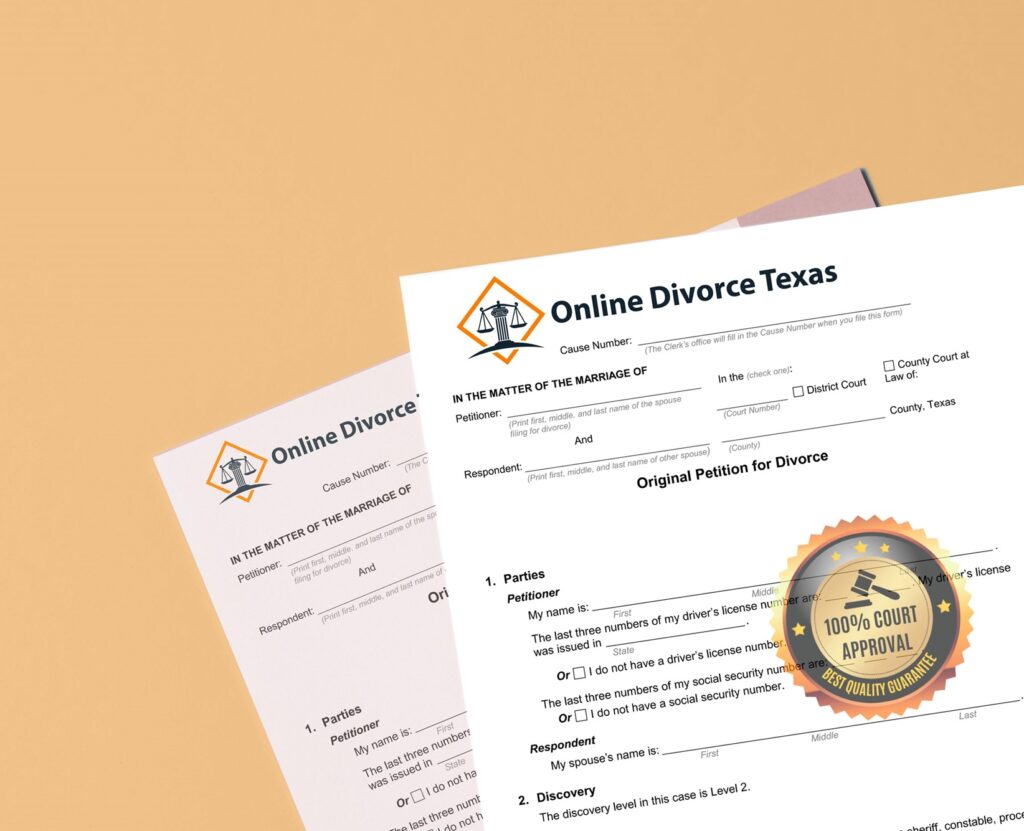
This is a critical document that outlines basic information about the marriage, the parties involved, and the relief sought. Key information to include:
- Petitioner and Respondent Information: Full names, dates of birth, and addresses of both spouses.
- Date and Place of Marriage: The date and location where the marriage took place.
- Children of the Marriage: If applicable, details about any minor children, including their names and dates of birth. This will trigger additional requirements regarding custody, visitation, and child support.
- Jurisdictional Allegations: Statements confirming that the residency requirements have been met.
- Grounds for Divorce: Stating the legal reason for seeking the divorce (e.g., insupportability).
- Relief Sought: What you are asking the court to order regarding property division, child custody, support, etc.
While Texas courts provide standardized forms for many legal processes, the Original Petition for Divorce can be complex. You can find official forms and instructions on the website of the Texas Judicial Branch or through county law libraries. It is highly recommended to review these resources thoroughly.
Filing the Petition and Paying Fees
Once drafted, the Original Petition for Divorce, along with any other required initial pleadings, must be filed with the District Clerk in the county where you are filing. There will be a filing fee associated with this, which varies by county. If you cannot afford the fee, you may be able to file a Statement of Inability to Afford Payment of Court Costs to request a waiver.
Notifying Your Spouse: Service of Process
After filing the petition, your spouse, the Respondent, must be officially notified of the divorce action. This is known as service of process.
Methods of Service
- Formal Service by Constable or Private Process Server: The most common method is for a constable or a licensed private process server to personally deliver a copy of the filed Original Petition for Divorce and a citation (a legal document commanding the Respondent to respond) to your spouse. This ensures that your spouse is formally aware of the proceedings.
- Waiver of Service: If your spouse is cooperative, they can voluntarily sign a Waiver of Service form. This document, once notarized and filed with the court, waives their right to formal service. This is often the simplest and quickest method if both parties are amicable.
- Substituted Service: In situations where the Respondent cannot be located, a judge may allow for alternative methods of service, such as leaving the documents with someone else at their residence or workplace, or even by publication in a newspaper. This is a more complex process and usually requires a court hearing.
The Respondent’s Answer
Once served, the Respondent has a specific period (typically 20 days after being served in Texas, plus an additional three days in some circumstances) to file an Answer with the court.
Responding to the Petition
The Answer is the Respondent’s formal response to the allegations in the Original Petition for Divorce. It can admit, deny, or state a lack of knowledge regarding the claims made. If the Respondent fails to file an Answer within the prescribed timeframe, the Petitioner may be able to proceed with a default judgment, where the court grants the relief requested in the petition without the Respondent’s participation. This is a powerful tool but should be used with caution, as courts prefer that both parties have an opportunity to be heard.
Discovery and Information Gathering

Even in an uncontested divorce, some level of information exchange between the parties is usually necessary to reach an agreement.
Exchanging Financial Information
If the divorce involves children or significant marital property (assets and debts acquired during the marriage), it is crucial to gather and exchange financial information. This includes details about income, assets (like bank accounts, real estate, vehicles, investments), and debts (mortgages, loans, credit card balances). In a pro se divorce, parties often voluntarily exchange this information. Forms such as the “Inventory and Appraisement” can be helpful in organizing this data.
Reaching a Settlement Agreement
The most efficient and amicable way to finalize a divorce is through a negotiated settlement agreement.
The Final Decree of Divorce
A Final Decree of Divorce is the court order that legally dissolves the marriage and outlines all terms agreed upon by the parties or ordered by the court. For a pro se divorce, reaching an agreement is paramount to avoid court battles and significant legal fees.
Key elements to be addressed in the Final Decree of Divorce include:
- Division of Marital Property: How assets and debts will be divided. Texas is a community property state, meaning most property acquired during the marriage is owned equally by both spouses and must be divided in a “just and fair” manner.
- Child Custody (Conservatorship) and Visitation: If there are minor children, this section will detail legal and physical custody arrangements, as well as a detailed visitation schedule.
- Child Support: Calculation and payment of child support, health insurance, and uninsured medical expenses for children.
- Spousal Support (Alimony): Whether one spouse will provide financial support to the other.
- Name Change: If the wife wishes to resume her maiden name.
Mediation as a Tool
Even if parties initially disagree, attending a mediation session with a neutral third-party mediator can be incredibly beneficial. Mediators are trained to help couples find common ground and reach mutually agreeable solutions. Many courts require mediation before a final hearing, especially when children are involved.
Finalizing the Divorce
Once a Final Decree of Divorce is drafted and agreed upon by both parties (or if a default judgment is pursued), it must be submitted to the court for approval.
Court Approval and Final Hearing
In many uncontested divorces, especially those without minor children, the judge may approve the Final Decree of Divorce based on the submitted paperwork. In other cases, a brief final hearing may be required. This hearing is typically short and formal, where the judge reviews the decree and ensures all legal requirements have been met before signing it. The divorce is not final until the judge signs the decree.
Resources for Self-Represented Litigants
Navigating the legal system without an attorney can be challenging, but numerous resources are available to assist pro se litigants in Texas.
Texas Courts and Legal Aid
- Texas Judicial Branch Website: Offers access to court forms, rules of civil procedure, and helpful guides for self-represented individuals.
- County Law Libraries: Most counties have law libraries that provide access to legal texts, statutes, and often have staff who can guide you to relevant resources (though they cannot provide legal advice).
- Legal Aid Organizations: For individuals with limited income, legal aid societies may offer low-cost or free legal assistance for certain family law matters.
Online Resources and Self-Help Centers
Many websites and organizations provide free or low-cost legal information and form preparation services. While these can be valuable, always ensure the information is up-to-date and specific to Texas law. Be wary of generic forms that may not comply with state-specific requirements.
Considerations and Potential Pitfalls
While filing for divorce yourself can save considerable expense, it’s essential to be aware of the potential challenges and pitfalls.
Complexity of Marital Property
Dividing complex assets, such as businesses, pensions, or significant investment portfolios, can be extremely difficult without legal expertise. Misunderstandings of community property laws can lead to an unfair distribution or future legal disputes.
Child Custody Disputes
Cases involving disputes over child custody, visitation, or support can become highly emotional and legally intricate. Understanding parental rights, child best interests standards, and complex visitation schedules requires careful attention to legal nuances.
The Importance of Legal Advice
Even if you intend to file pro se, consulting with a family law attorney for an initial consultation can be invaluable. An attorney can review your situation, explain your rights and obligations, help you understand the potential outcomes, and ensure you are pursuing a path that best protects your interests, particularly regarding your children and financial future. They can also review your drafted settlement agreement before you present it to the court.
Filing for divorce yourself in Texas is a significant undertaking that requires diligence, patience, and a thorough understanding of the legal process. By familiarizing yourself with the steps, utilizing available resources, and being mindful of potential complexities, you can successfully navigate this journey.
LifeOutOfTheBox is a participant in the Amazon Services LLC Associates Program, an affiliate advertising program designed to provide a means for sites to earn advertising fees by advertising and linking to Amazon.com. Amazon, the Amazon logo, AmazonSupply, and the AmazonSupply logo are trademarks of Amazon.com, Inc. or its affiliates. As an Amazon Associate we earn affiliate commissions from qualifying purchases.