
Navigating the complexities of business taxation is a crucial aspect of operating any successful enterprise. For businesses operating in the Lone Star State, understanding and fulfilling their franchise tax obligations is paramount. The Texas franchise tax, often referred to as a margin tax, is a privilege tax imposed on entities doing business in Texas. This article will provide a comprehensive guide to filing franchise tax in Texas, ensuring compliance and offering insights into the process.
Understanding the Texas Franchise Tax
The Texas franchise tax is not an income tax; rather, it is a tax on a business’s “margin,” which is derived from its total revenue minus allowable deductions. This unique structure distinguishes it from many other state business taxes. The tax applies to a wide range of entities, including corporations, limited liability companies (LLCs), partnerships, professional corporations, professional limited liability companies, and business trusts.
Who is Subject to the Texas Franchise Tax?
Generally, any entity that does business in Texas or is organized under Texas law is subject to the franchise tax. This includes entities that have a physical presence in the state, such as offices or employees, or those that derive revenue from Texas sources.
However, there are exemptions. For instance, entities with total revenue below a certain threshold are exempt from filing a franchise tax report. This threshold is adjusted annually. Additionally, certain types of businesses, such as sole proprietorships and general partnerships composed entirely of natural persons, are generally exempt. It is essential to consult the Texas Comptroller of Public Accounts for the most current exemption thresholds and criteria.
Key Definitions: Margin and Revenue
To accurately calculate the franchise tax, understanding the terms “revenue” and “margin” is vital.
- Total Revenue: This encompasses all income generated from business activities, including sales of goods, services, and other sources. It is generally calculated based on federal tax return figures, with certain adjustments.
- Margin: This is calculated by subtracting allowable deductions from total revenue. The most common deductions include costs of goods sold (COGS), compensation paid to employees, and amounts paid to subcontractors. The specific deductions allowed can be complex and depend on the entity’s business structure and activities.
Tax Rates and Computation
The Texas franchise tax rate is applied to the calculated margin. There are different rates depending on the entity’s industry and whether it is a retail or wholesale trade business. The Comptroller’s office provides specific worksheets and instructions to help businesses determine their applicable rate.
The tax liability is calculated by multiplying the taxable margin by the applicable tax rate. For many smaller businesses that qualify, a “no tax due” threshold exists, meaning they do not owe any tax if their revenue falls below a specified amount.
The Filing Process: Step-by-Step
Filing the Texas franchise tax involves several key steps. Timeliness and accuracy are crucial to avoid penalties and interest.
Step 1: Determine if Filing is Required
The first and most critical step is to determine if your entity is required to file a franchise tax report. This involves checking your entity type and your total revenue for the preceding fiscal year. Even if you believe you qualify for an exemption, it is often prudent to file a “No Tax Due” report to formally establish your exemption status with the Texas Comptroller.
Step 2: Obtain a Taxpayer Identification Number
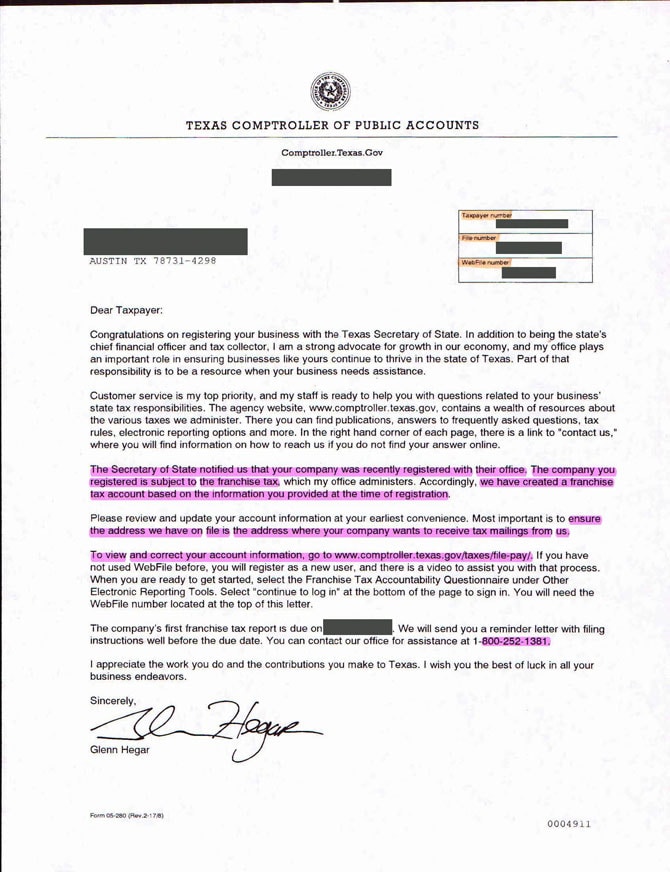
If your entity is new or has not previously filed Texas franchise tax, you will need to obtain a Texas Taxpayer ID number. This can typically be done through the Texas Comptroller of Public Accounts website.
Step 3: Gather Necessary Information
Before you begin the filing process, collect all relevant financial data for the reporting period. This includes:
- Federal tax returns (Form 1120, 1120-S, 1065, etc.)
- Detailed financial statements
- Information on compensation paid to employees
- Cost of goods sold documentation
- Records of payments to subcontractors
- Information on any ownership changes or significant business transactions during the period.
Step 4: Choose Your Filing Method
The Texas Comptroller of Public Accounts offers several methods for filing franchise tax reports. The primary method is through the Webfile system, an online portal designed for electronic filing and payment. This is generally the most efficient and recommended method. Paper forms are available but may be subject to longer processing times and are not encouraged for most filers.
Step 5: Complete the Franchise Tax Report (Form 05-102, 05-167, or 05-167E)
The specific form you will use depends on your entity type and whether you are claiming exemptions.
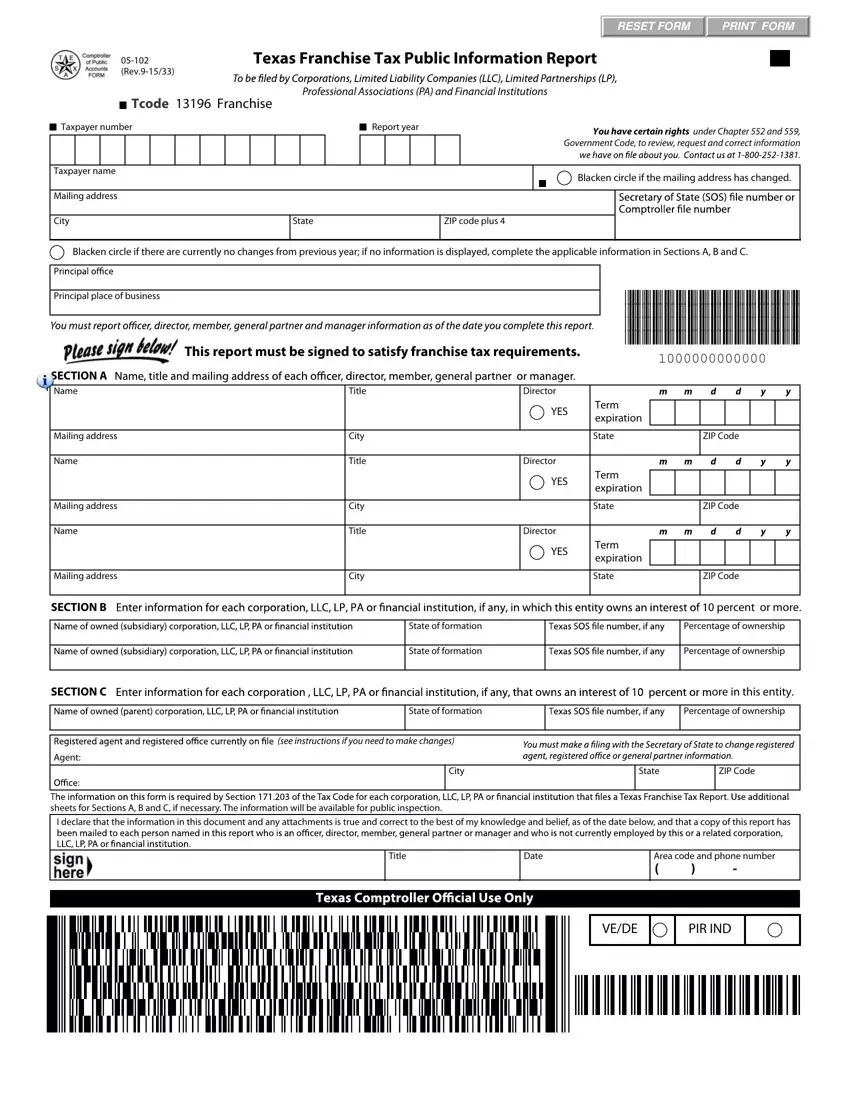
- Form 05-102, Franchise Tax Report: This is the primary form for most business entities, including corporations, LLCs, and partnerships that do not qualify for the “No Tax Due” threshold or other specific exemptions.
- Form 05-167, Franchise Tax Report for Passive Entities: This form is for entities that derive less than 50% of their gross receipts from active business operations.
- Form 05-167E, Franchise Tax Report for Certain Entities Claiming Exemption: This form is used by eligible entities to claim specific exemptions, such as those for certain homeowners’ associations or entities solely engaged in specific types of investment activities.
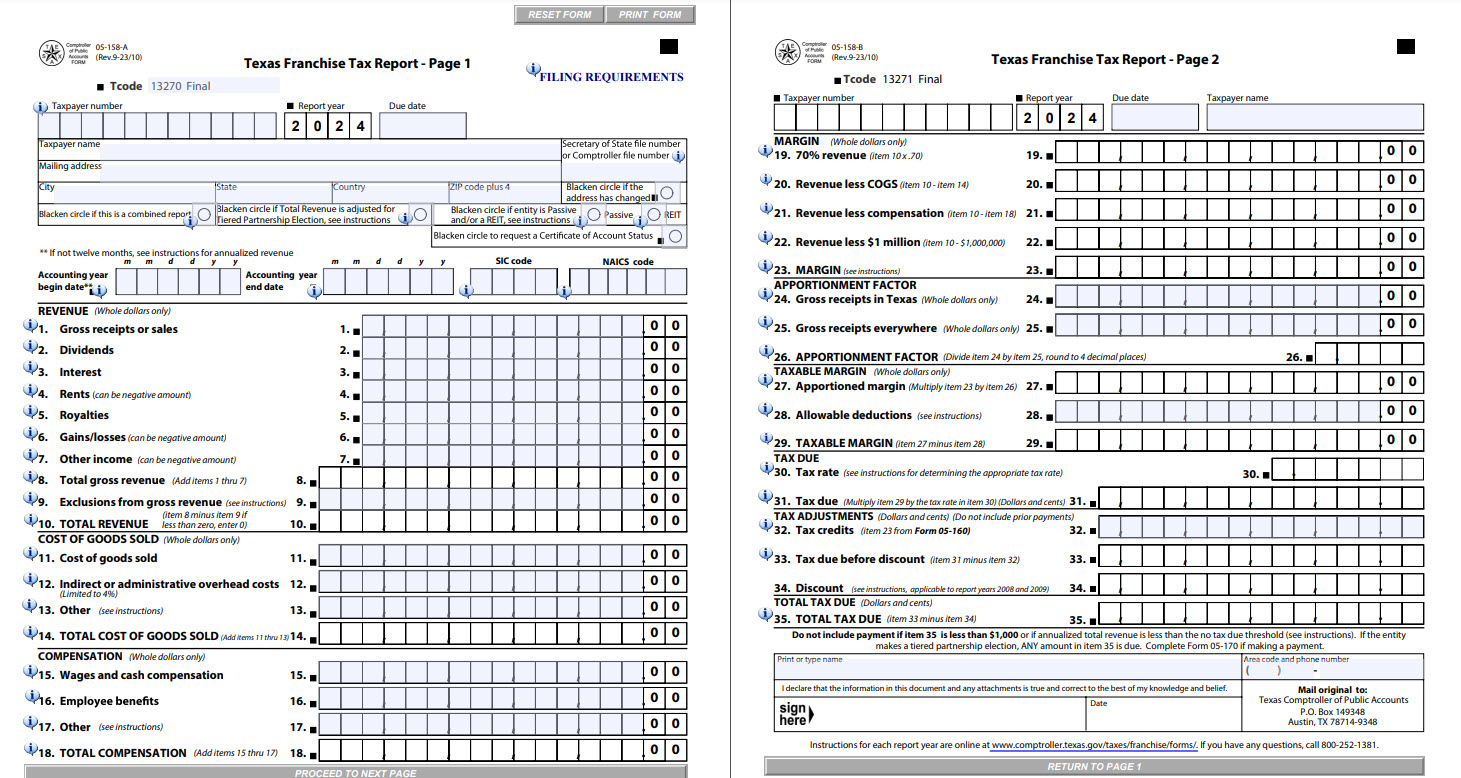
The report requires detailed financial information, including revenue, COGS, compensation, and other allowable deductions. The Texas Comptroller provides extensive instructions for each form, which are essential for accurate completion.
Key Sections of the Report:
- Entity Information: Basic details about your business, including name, address, Texas Taxpayer ID, and entity type.
- Revenue and Margin Calculation: This is the core of the report, where you detail your total revenue and calculate your margin by subtracting eligible deductions.
- Compensation Deduction: Details on wages, salaries, and benefits paid to employees.
- Cost of Goods Sold (COGS) Deduction: If applicable, this section outlines the direct costs attributable to the goods sold by your business.
- Other Allowable Deductions: This can include various business expenses, such as payments to subcontractors and amortization.
- Ownership Information: Details on individuals or entities that own a significant portion of your business.
Step 6: File the Report Electronically
As mentioned, electronic filing via Webfile is the preferred method. The system guides you through the process, offers validation checks, and provides immediate confirmation of filing. Ensure you submit the report by the deadline to avoid penalties.
Step 7: Make Payment (if applicable)
If your calculated tax liability is greater than zero, you will need to make a payment. Payments can also be made electronically through Webfile or via mail. Payment methods typically include electronic funds withdrawal, credit card, or check.
Important Deadlines and Considerations
Adhering to deadlines is critical for Texas franchise tax compliance.
Filing Deadlines
Franchise tax reports are typically due on May 15th each year. However, for entities with fiscal years ending on December 31st, the deadline is May 15th. For entities with fiscal years ending on other dates, the deadline is the 15th day of the fifth month after the close of their fiscal year.
Extensions are not automatically granted. An entity may request an extension of time to file by submitting a request to the Texas Comptroller of Public Accounts. However, this extension is for filing the report only; any tax due is still expected by the original due date.
Penalties and Interest
Failure to file on time, filing an inaccurate report, or failing to pay the tax due can result in significant penalties and interest charges. The Texas Comptroller’s office has the authority to assess these charges, which can add substantially to the original tax liability. It is always best to file accurately and on time.
Record Keeping
Maintaining accurate and complete financial records is essential not only for filing the franchise tax but also for supporting your filing in the event of an audit. The Texas Comptroller may audit businesses to verify the accuracy of their franchise tax reports. It is recommended to retain records for at least four years from the date the report was filed.
Seeking Professional Assistance
The Texas franchise tax system can be intricate, especially for businesses with complex financial structures or multiple revenue streams. While the Comptroller’s office provides resources and guidance, many businesses find it beneficial to seek professional assistance.
When to Consult a Professional
- New Businesses: If you are just starting out in Texas, understanding your franchise tax obligations from the outset can prevent future issues.
- Complex Financial Structures: Businesses with significant intercompany transactions, foreign operations, or diverse revenue sources may benefit from expert advice.
- Uncertainty about Deductions: Determining eligible deductions is a common area of confusion. A tax professional can help ensure you are taking all legitimate deductions.
- Exemption Qualification: If you believe your business may qualify for an exemption, a professional can help confirm eligibility and properly document it.
- Audits: If your business is selected for an audit, having a tax professional represent you can be invaluable.
Who Can Help?
- Certified Public Accountants (CPAs): CPAs are highly qualified professionals who specialize in tax preparation, planning, and compliance. Many have extensive experience with Texas franchise tax.
- Enrolled Agents (EAs): EAs are federally licensed tax practitioners who specialize in taxation.
- Tax Attorneys: For complex legal issues related to franchise tax or potential disputes, a tax attorney can provide crucial guidance.
Engaging with a qualified tax professional can provide peace of mind, ensure accuracy, and potentially save your business money by identifying all eligible deductions and credits.
Conclusion
Filing the Texas franchise tax is a mandatory requirement for many businesses operating in the state. By understanding the nature of the tax, the filing process, and adhering to deadlines, businesses can ensure compliance and avoid costly penalties. Thorough preparation, accurate record-keeping, and, when necessary, professional guidance are key to successfully navigating the Texas franchise tax system. The Texas Comptroller of Public Accounts website serves as an invaluable resource for forms, instructions, and updates, ensuring that businesses have the information they need to fulfill their tax obligations.
LifeOutOfTheBox is a participant in the Amazon Services LLC Associates Program, an affiliate advertising program designed to provide a means for sites to earn advertising fees by advertising and linking to Amazon.com. Amazon, the Amazon logo, AmazonSupply, and the AmazonSupply logo are trademarks of Amazon.com, Inc. or its affiliates. As an Amazon Associate we earn affiliate commissions from qualifying purchases.