
Navigating the legal system can often feel daunting, especially when dealing with disputes that fall below the threshold for traditional litigation. For residents of Texas, the small claims court system offers an accessible and relatively straightforward avenue for resolving these matters. This guide delves into the process of filing a small claims case in the Lone Star State, empowering individuals to seek justice for monetary disputes without the need for costly legal representation.
Understanding Small Claims Court in Texas
Small claims court in Texas is designed to be user-friendly, allowing individuals to represent themselves. These courts handle civil cases where the amount of money in dispute is limited. The primary goal is to provide a fair and efficient resolution to common grievances that might otherwise go unaddressed due to the expense and complexity of higher courts.

What is the Jurisdictional Limit?
In Texas, the jurisdictional limit for small claims is established by the Justice Court. Currently, the maximum amount you can sue for in a Justice Court is $20,000. This limit is crucial; if your claim exceeds this amount, you will need to file in a different court, such as the County Court or District Court, which typically involves more formal procedures and legal representation. It is imperative to accurately assess the value of your claim to ensure you are filing in the correct venue.
What Types of Cases Can Be Filed?
Small claims courts are ideal for a variety of common disputes. These often include:
- Unpaid debts: This could be a personal loan that wasn’t repaid, an outstanding invoice from a service provider, or rent owed by a former tenant.
- Property damage: Disputes arising from damage to your personal property, such as a car accident where the other party is at fault, or damage caused by a landlord to your belongings.
- Breach of contract: Situations where one party fails to fulfill their obligations under a verbal or written agreement, such as a contractor not completing a job or a service not being rendered as agreed.
- Disputes with landlords or tenants: Issues related to security deposits, repairs, or eviction proceedings can often be handled in small claims.
- Disputes over goods or services: When you pay for a product or service and it is defective, not delivered, or not as described.
It is important to note that small claims courts generally do not handle matters such as divorce, bankruptcy, or cases involving title to real estate.
Preparing Your Case for Small Claims Court
Success in small claims court hinges on thorough preparation. Gathering evidence and clearly articulating your case are paramount.
Gathering Essential Documentation
The cornerstone of any small claims case is evidence. Without it, your claim is likely to be dismissed. You will need to collect and organize all documents that support your argument. This may include:
- Contracts and agreements: Any written or signed agreements relevant to the dispute.
- Receipts and invoices: Proof of payment or charges incurred.
- Correspondence: Emails, letters, text messages, or any other written communication between you and the other party that pertains to the issue.
- Photographs and videos: Visual evidence of damage, defective products, or the condition of property.
- Witness statements: Written affidavits from individuals who witnessed the events in question.
- Bank statements: To show financial transactions or lack thereof.
Organizing these documents in a clear and logical manner will not only help you present your case effectively but also assist the judge in understanding the facts. Consider creating a binder or folder with labeled sections.
Identifying the Correct Defendant
You must sue the correct party. This means identifying the individual or business that is legally responsible for your loss. If you are suing an individual, ensure you have their correct legal name and address. If you are suing a business, you may need to determine if you are suing the business entity itself or a specific owner, depending on the circumstances. This information is typically available through the Texas Secretary of State’s website for registered businesses. Filing against the wrong party can lead to your case being dismissed, forcing you to start the process over.
Understanding the Statute of Limitations
Every type of legal claim has a statute of limitations, which is a deadline for filing a lawsuit. If you miss this deadline, you will generally lose your right to sue. The statute of limitations varies depending on the nature of the claim. For example, breach of contract claims often have a different time limit than claims for property damage. It is critical to research the specific statute of limitations applicable to your situation in Texas to ensure you file your case within the legal timeframe.
The Filing Process in Texas Small Claims Court
The mechanics of filing a small claims case in Texas are relatively straightforward, but attention to detail is key. The process typically begins at the Justice Court.
Where to File

Small claims cases in Texas are filed in the Justice Court in the precinct where the defendant resides or where the incident occurred. You can find information about your local Justice Court by contacting your county clerk’s office or by searching online. It’s advisable to visit or call the clerk’s office of the relevant court to confirm their specific procedures and to obtain the necessary forms.
Initiating the Lawsuit: Filing the Petition
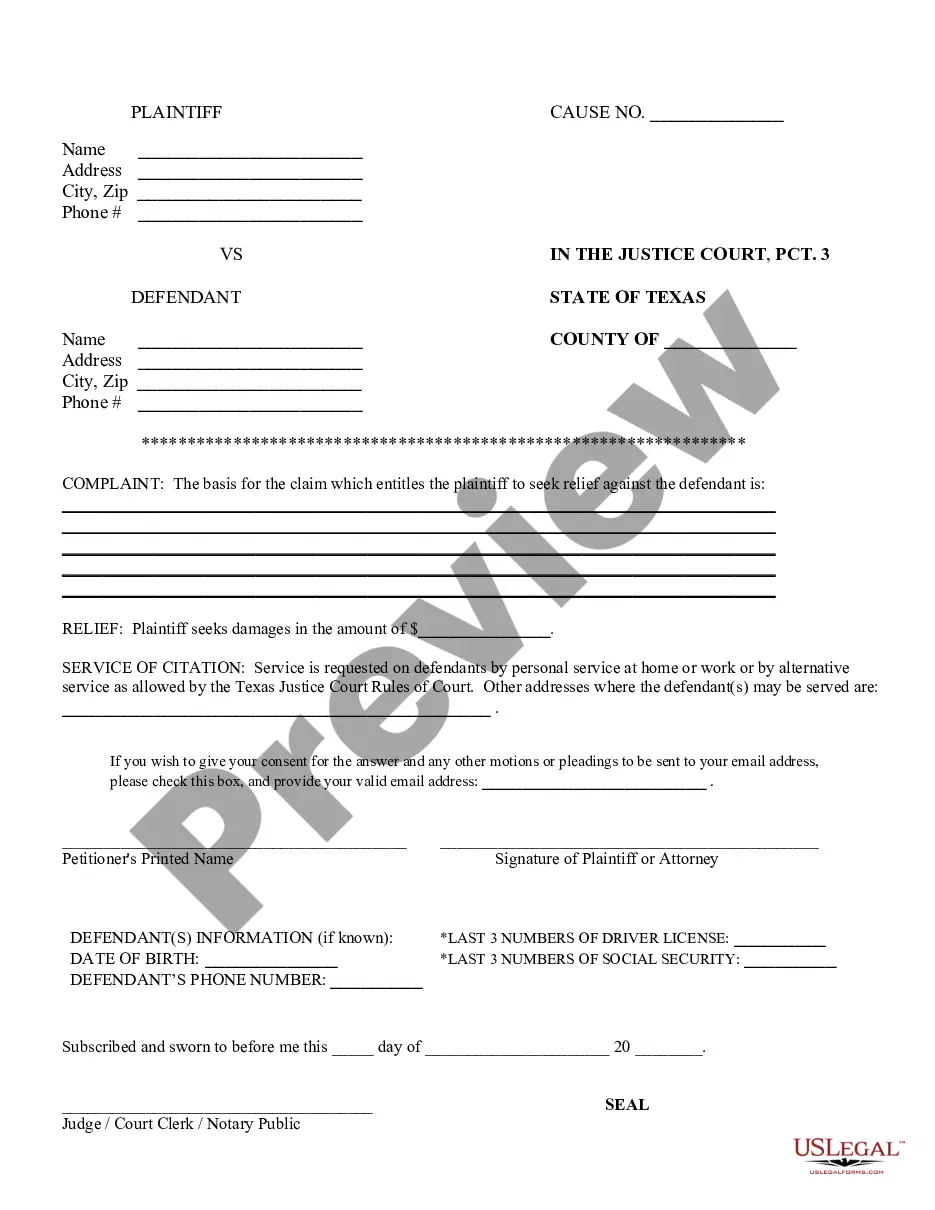
To initiate a lawsuit, you will need to file a document called a “Petition” or “Complaint” with the Justice Court clerk. This document outlines:
- Your name and contact information.
- The defendant’s name and contact information.
- A clear and concise description of the facts of your case. Explain what happened, when it happened, and why you believe the defendant is responsible.
- The amount of money you are seeking. This should correspond to the damages you have suffered.
- The legal basis for your claim (e.g., breach of contract, negligence).
The clerk will assist you in filling out the forms, but it is your responsibility to ensure the information is accurate and complete. There will be a filing fee associated with this process, the amount of which can vary by county. If you cannot afford the fee, you may be eligible to file a “Statement of Inability to Afford Payment of Court Costs” to request a waiver.
Serving the Defendant
Once you have filed your Petition, the defendant must be formally notified of the lawsuit. This is called “service of process.” The most common method of service in Texas Justice Courts is by a constable or sheriff. You will typically pay a fee for this service. The process server will deliver a copy of the Petition and a Summons (which informs the defendant of the lawsuit and their obligation to respond) to the defendant. Proper service is critical for the case to proceed; if the defendant is not properly served, the case can be dismissed. Alternative methods of service may be available in certain circumstances, but these usually require court permission.
The Defendant’s Response
After being served, the defendant has a specific period to file a written answer with the court. If the defendant fails to respond, you may be able to request a default judgment, where the court rules in your favor because the defendant did not appear or defend themselves. If the defendant does respond, they may deny your claims, present a defense, or even file a counterclaim against you.
Preparing for Trial and Potential Outcomes
If the case proceeds to trial, being well-prepared will significantly increase your chances of a favorable outcome.
The Court Hearing or Trial
Small claims trials in Texas are generally less formal than in higher courts. You will have the opportunity to present your evidence and explain your case to the judge. The defendant will also have the chance to present their side. You should be ready to:
- Clearly and concisely explain your side of the story. Stick to the facts and avoid emotional outbursts.
- Present your evidence. Show the judge your documents, photographs, and any other supporting materials.
- Call your witnesses. If you have witnesses, they will testify on your behalf.
- Respond to the defendant’s claims. Address any points the defendant makes.
- Cross-examine the defendant’s witnesses (if applicable).
It is advisable to practice what you will say to ensure you are articulate and confident. Dress professionally, arrive on time, and show respect to the judge and all parties involved.
Possible Outcomes
After hearing both sides and reviewing the evidence, the judge will make a decision. The possible outcomes include:
- Judgment for the Plaintiff: If the judge finds in your favor, they will issue a judgment ordering the defendant to pay you the amount you are owed, or to take other specified action.
- Judgment for the Defendant: If the judge finds in favor of the defendant, your case will be dismissed, and you will not recover any money or damages.
- Settlement: In some cases, the parties may reach a settlement agreement before or during the hearing. This is a voluntary agreement where both parties agree on a resolution.
- Dismissal: The case may be dismissed for various reasons, such as improper filing, lack of jurisdiction, or failure to properly serve the defendant.
Collecting Your Judgment
Winning a judgment is only half the battle; collecting the money owed can sometimes be challenging. If the defendant does not voluntarily pay, you may need to take further legal steps to enforce the judgment. These can include:
- Writ of Garnishment: This allows you to seize money from the defendant’s bank account or wages.
- Writ of Execution: This authorizes the sheriff or constable to seize and sell the defendant’s property to satisfy the debt.
- Abstract of Judgment: This creates a lien on any real property the defendant owns.
The specific methods available for judgment collection will depend on the defendant’s assets and circumstances, and may involve additional court procedures and fees.
Filing a small claims case in Texas is a viable option for resolving many everyday disputes. By understanding the procedures, thoroughly preparing your evidence, and presenting your case clearly, you can effectively advocate for yourself and achieve a just resolution.
LifeOutOfTheBox is a participant in the Amazon Services LLC Associates Program, an affiliate advertising program designed to provide a means for sites to earn advertising fees by advertising and linking to Amazon.com. Amazon, the Amazon logo, AmazonSupply, and the AmazonSupply logo are trademarks of Amazon.com, Inc. or its affiliates. As an Amazon Associate we earn affiliate commissions from qualifying purchases.