
Checking into a hotel room in New York, Paris, or any global destination should be an experience marked by relaxation and comfort. However, one unwelcome guest can instantly ruin a vacation or business trip: the bed bug. These elusive pests do not discriminate based on the price point or star rating of a property. From budget motels to five-star luxury suites at the Ritz-Carlton, any accommodation can occasionally fall victim to an infestation. Knowing how to systematically inspect your room before unpacking is the single most effective way to protect your belongings and ensure a peaceful stay.

Understanding the Enemy: What Are Bed Bugs and Where Do They Hide?
To successfully hunt for bed bugs, you must first understand their biology and behavior. Adult bed bugs are roughly the size of an apple seed—about four to five millimeters long—with flat, oval-shaped, reddish-brown bodies. Nymphs are smaller and translucent, making them even harder to spot. Because they are nocturnal, they spend daylight hours hiding in tight, dark crevices near where humans sleep.
They do not fly or jump; instead, they crawl. This means they rely heavily on hitchhiking in luggage, clothing, and personal items brought in by previous guests. When they are not feeding on blood, they retreat to secure hiding spots. These include mattress seams, box springs, headboards, wooden bed frames, and even nearby furniture like armchairs, nightstands, and electrical outlets. Understanding these preferred habitats allows you to focus your inspection on the areas where these pests are most likely to leave evidence.
The Systematic Room Inspection Protocol
When you first enter your hotel room, the golden rule of pest prevention is simple: keep your luggage outside the room or place it inside the bathtub immediately. Bathrooms typically feature tile floors and porcelain fixtures that offer virtually no hiding places for bed bugs. Leaving your suitcases elevated on a luggage rack or locked in the bathroom prevents any wandering pests from infiltrating your bags while you conduct your search.
Step 1: Strip the Bed
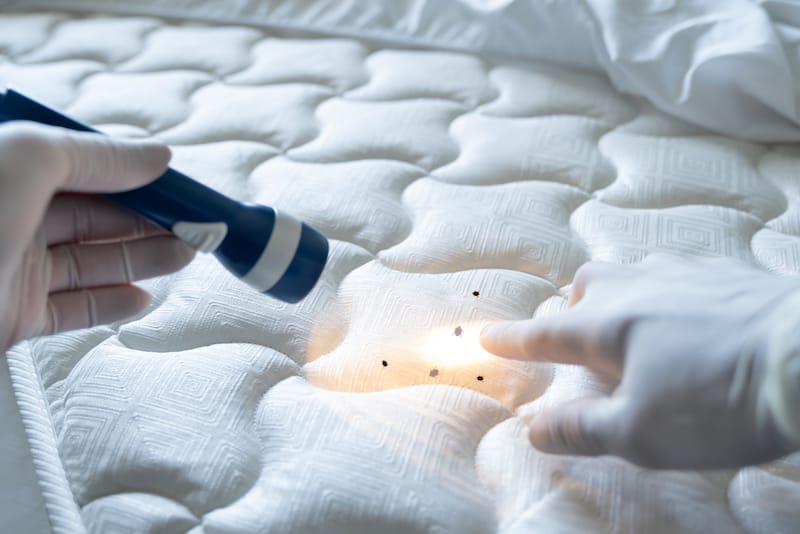
Start your inspection at the most critical zone: the bed itself. Pull back the comforter, sheets, and blankets. Do not be afraid to completely strip the mattress down to its bare surface. Carefully examine the piping and seams around the edges of the mattress and box spring. Pay close attention to any tags, tufts, and buttons, as bed bugs frequently use these stitched areas as sheltered pathways.
Step 2: Scrutinize the Headboard and Frame
Once the mattress has been checked, turn your attention to the structure supporting it. Wooden and upholstered headboards are prime real estate for bed bugs. If the headboard is mounted to the wall, shine a flashlight behind it. Use a credit card or a piece of stiff paper to run along the crevices and joints of wooden bed frames. If bugs or their remnants are present, this mechanical disturbance will often flush them out or reveal their presence.
Step 3: Expand the Search to Surrounding Furniture
Bed bugs do not exclusively live in beds. If the room has a fabric sofa, an upholstered armchair, or heavy drapes near the bed, these items require scrutiny as well. Check the folds of upholstered furniture, underneath cushions, and along the seams. Nightstands and desks—especially those with drawers—should also be briefly inspected, particularly along the interior joints and backing boards.
Identifying the Telltale Signs of an Infestation
Spotting an actual live bed bug is the most definitive proof of an infestation, but these pests are masters of camouflage. Fortunately, they leave behind distinct biological markers that make detection possible even when the bugs themselves are hiding.
What to Look For:
- Live Bugs: Look for small, reddish-brown, oval insects crawling along seams or wood joints.
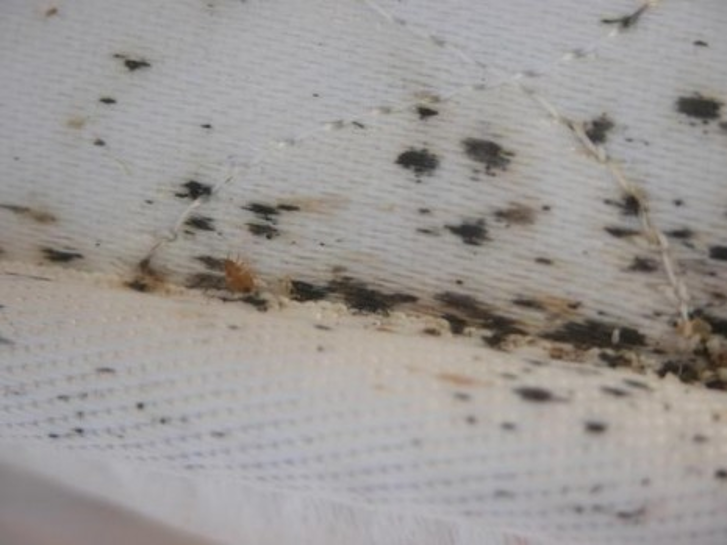
- Dark Fecal Spots: Bed bug excrement appears as small, dark dots resembling ink stains from a marker. These spots often bleed slightly into the fabric.
- Shed Skins: As nymphs grow through multiple life stages, they shed their exoskeletons. Finding yellowish-brown, translucent skins is a clear indicator of recent activity.
- Tiny Blood Stains: Unexplained rust-colored or red smears on sheets and pillowcases often occur when a feeding bug is accidentally crushed during the night.
- Eggs and Casings: Female bed bugs lay microscopic, pearly-white eggs in hidden clusters. While difficult to see without magnification, large clusters resemble whitish dust in crevices.
What to Do If You Find Evidence of Bed Bugs
Discovering signs of bed bugs requires immediate and decisive action. Do not panic, but do not brush it off, either.
First, gather your belongings from the bathtub or wherever you safely stored them. Take clear photographs or video evidence of the bugs, fecal spots, or shed skins you discovered. Next, immediately leave the room and head directly to the front desk. Remain calm, polite, but firm when speaking with management. Inform them of your findings and request a room change.
If you are moved to a new room, ensure it is not directly adjacent to, above, or below the infested room, as bed bugs can easily travel through wall voids or utility conduits. Ideally, ask for a room located on a completely different floor. Should the hotel be fully booked or unable to provide a clean, verified alternative, it is often best to cancel your reservation, secure a full refund, and relocate to a completely different property nearby.
Preventive Measures for Travelers
Even with rigorous checks, prevention extends beyond the initial room inspection. Incorporating smart packing habits into your routine minimizes the risk of bringing unwanted souvenirs home from your travels.
Consider purchasing a hard-shell suitcase rather than a soft fabric one, as hard surfaces offer fewer exterior textures for bugs to cling to. Keep your clothing inside sealed packing cubes or plastic zip bags within your luggage to create an extra physical barrier. When you return home, unpack your suitcase on a hard surface—such as a tiled kitchen floor or laundry room—rather than on your bed or carpeted bedroom floor. Immediately wash all clothing in hot water and dry them on high heat, as high temperatures are fatal to bed bugs and their eggs at all life stages.
By combining a vigilant pre-check routine with smart post-trip habits, you can travel with confidence, protect your personal space, and ensure that your next hotel stay remains thoroughly comfortable and stress-free.
LifeOutOfTheBox is a participant in the Amazon Services LLC Associates Program, an affiliate advertising program designed to provide a means for sites to earn advertising fees by advertising and linking to Amazon.com. Amazon, the Amazon logo, AmazonSupply, and the AmazonSupply logo are trademarks of Amazon.com, Inc. or its affiliates. As an Amazon Associate we earn affiliate commissions from qualifying purchases.