
For many, Florida represents a dream destination — a place of sun-drenched beaches, vibrant cities, and endless opportunities for leisure and adventure. Whether you’re planning a vacation to the Sunshine State, considering a move to one of its many welcoming communities, or even delving into family history that traces back to this unique peninsula, you might encounter a need for official documentation. Among the less glamorous, yet often crucial, pieces of information one might seek are divorce records.
While the idea of sifting through legal documents may seem far removed from the idyllic images of Florida tourism, understanding how to access these records for free can be an invaluable skill for various life scenarios. From navigating a new chapter after relocation to establishing legal standing for property acquisition or remarriage, these records play a vital role. This comprehensive guide will illuminate the pathways to finding divorce records in Florida without incurring costs, ensuring your journey, whether it’s a short trip or a lifelong stay, is as smooth and informed as possible.
Understanding Florida Divorce Records: A Key to Your Florida Lifestyle
The appeal of Florida is undeniable, drawing individuals and families seeking new beginnings, retirement havens, or simply a change of pace. When embracing a new lifestyle in this dynamic state, or even when visiting for significant life events, the need for certain legal documentation can arise. Divorce records, while not a typical tourist attraction, are fundamental legal documents that impact a wide array of personal and financial matters.
Why Accessing Records Matters for Your Florida Journey
Imagine you’re planning a destination wedding in Miami or Orlando, and you need to confirm the legal dissolution of a prior marriage. Or perhaps you’re looking to purchase a beautiful beachfront property in Sarasota or Naples, and verifying marital status is part of the legal due diligence. For those considering relocating to Florida, establishing residency, applying for certain licenses, or even connecting with long-lost family members, divorce records can be a critical piece of the puzzle. They offer official proof of marital status, provide details on asset division, child custody, and support arrangements, and can be essential for genealogical research.
Furthermore, for individuals moving from other states or countries, understanding the local legal landscape, including how to access public records, is a foundational step in integrating into the Florida lifestyle. It’s about empowering yourself with information, whether for personal peace of mind, legal compliance, or significant life transitions within this vibrant state.
The Basics of Florida’s Public Records Law
The ability to find divorce records for free in Florida is largely due to the state’s robust public records laws, often referred to as the Florida Public Records Act. This act is a cornerstone of transparency, ensuring that most government records, including those from the courts, are accessible to the public. It reflects the fundamental principle that government information belongs to the people, who have a right to access it.
Specifically, judicial records, which include divorce decrees, are generally considered public information. This means that, barring specific exceptions (such as cases involving minors, trade secrets, or national security, which are rare in divorce proceedings), you typically have the right to view or obtain copies of these documents. The challenge, then, isn’t whether you can access them, but how to do so efficiently and without cost. This public access is a great advantage for anyone, from a casual visitor to a permanent resident, needing to verify marital history within the state.
Navigating the System: Free Methods for Obtaining Records
While the existence of public records laws makes divorce records accessible, knowing exactly where to look and how to navigate the bureaucratic landscape is key to a successful, free search. Florida offers several avenues, primarily through county and state-level government entities, each with its own procedures.
Your First Stop: The Clerk of Court
For the most comprehensive and direct access to divorce records, your primary point of contact will be the Clerk of Court in the county where the divorce was filed. In Florida, divorce cases are handled by the Circuit Court within each county. Therefore, the Clerk of Court for that specific county maintains the official records of all dissolution of marriage cases.
How to Utilize This Resource for Free:
- Identify the County: The most crucial piece of information you need is the county where the divorce was finalized. If you don’t know the exact county, you might need to make an educated guess based on where the individuals resided or spent significant time in Florida.
- Visit the County Courthouse: The most direct way to view records for free is to visit the Clerk of Court’s office in person. Most clerks provide public access terminals where you can search court indexes. You can look up cases by name, case number, or filing date.
- What to Expect During a Visit: When you arrive, ask for directions to the public records or court records department. You’ll likely find computers with search interfaces. Enter the names of the parties involved, and if the divorce was filed in that county, you should be able to locate the case. Once found, you can often view the docket, which lists all filings and proceedings, and sometimes even the final judgment of dissolution.
- Cost Implications: Viewing the records on public terminals is free. If you require certified copies for legal purposes, there will typically be a fee per page or per document. However, for informational purposes or personal review, in-person viewing is entirely free.
- Online County Portals: Many Florida Clerks of Court have sophisticated online portals that allow for public access to court records. These portals vary significantly in their functionality from county to county.
- Examples:
- Miami-Dade County Clerk of Courts
- Orange County Clerk of Courts
- Broward County Clerk of Courts
- Hillsborough County Clerk of Courts
- Palm Beach County Clerk of Courts
- Lee County Clerk of Courts
- Collier County Clerk of Courts
- Duval County Clerk of Courts
- Pinellas County Clerk of Courts
- Volusia County Clerk of Courts
- Sarasota County Clerk of Courts
- Manatee County Clerk of Courts
- Escambia County Clerk of Courts
- Osceola County Clerk of Courts
- Pasco County Clerk of Courts
- St. Johns County Clerk of Courts
- Indian River County Clerk of Courts
- Brevard County Clerk of Courts
- Polk County Clerk of Courts
- Seminole County Clerk of Courts
- Lake County Clerk of Courts
- Marion County Clerk of Courts
- Charlotte County Clerk of Courts
- Bay County Clerk of Courts
- Okaloosa County Clerk of Courts
- Monroe County Clerk of Courts (which includes Key West)
- Alachua County Clerk of Courts
- Leon County Clerk of Courts (home to Tallahassee, the state capital)
- Many of these portals allow you to search for case information, view dockets, and sometimes even access images of court documents for free. Always check the specific county’s website for their online public records search functionality. This is an excellent option for those who cannot travel to Florida or to a specific county courthouse in person.
- Examples:
State-Level Resources: The Florida Department of Health
While the Clerk of Court holds the actual divorce decrees, the Florida Department of Health, specifically its Bureau of Vital Statistics, also plays a role in tracking marriage dissolutions. However, it’s crucial to understand the distinction:
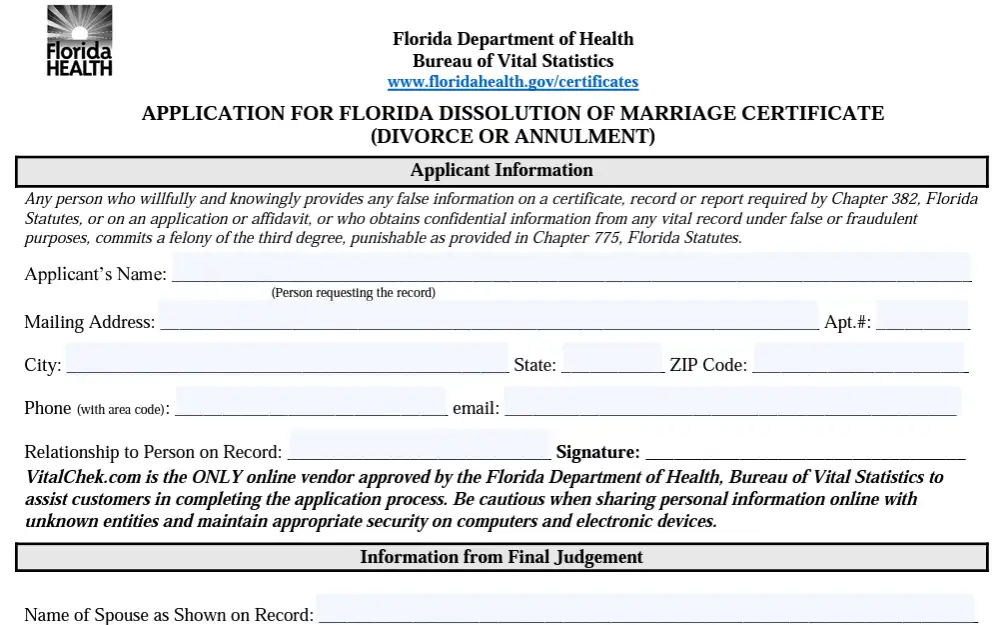
- The Bureau of Vital Statistics issues “Certificates of Dissolution of Marriage,” which are abstracts of information reported by the courts. These certificates contain basic details like the names of the parties, date of dissolution, and county of filing. They are not the full divorce decree.
- Accessing these records for free is generally not an option through the Florida Department of Health. They charge a fee for obtaining certified copies of these certificates. Their primary role is to provide official, certified records for legal use, not free public access to detailed information.
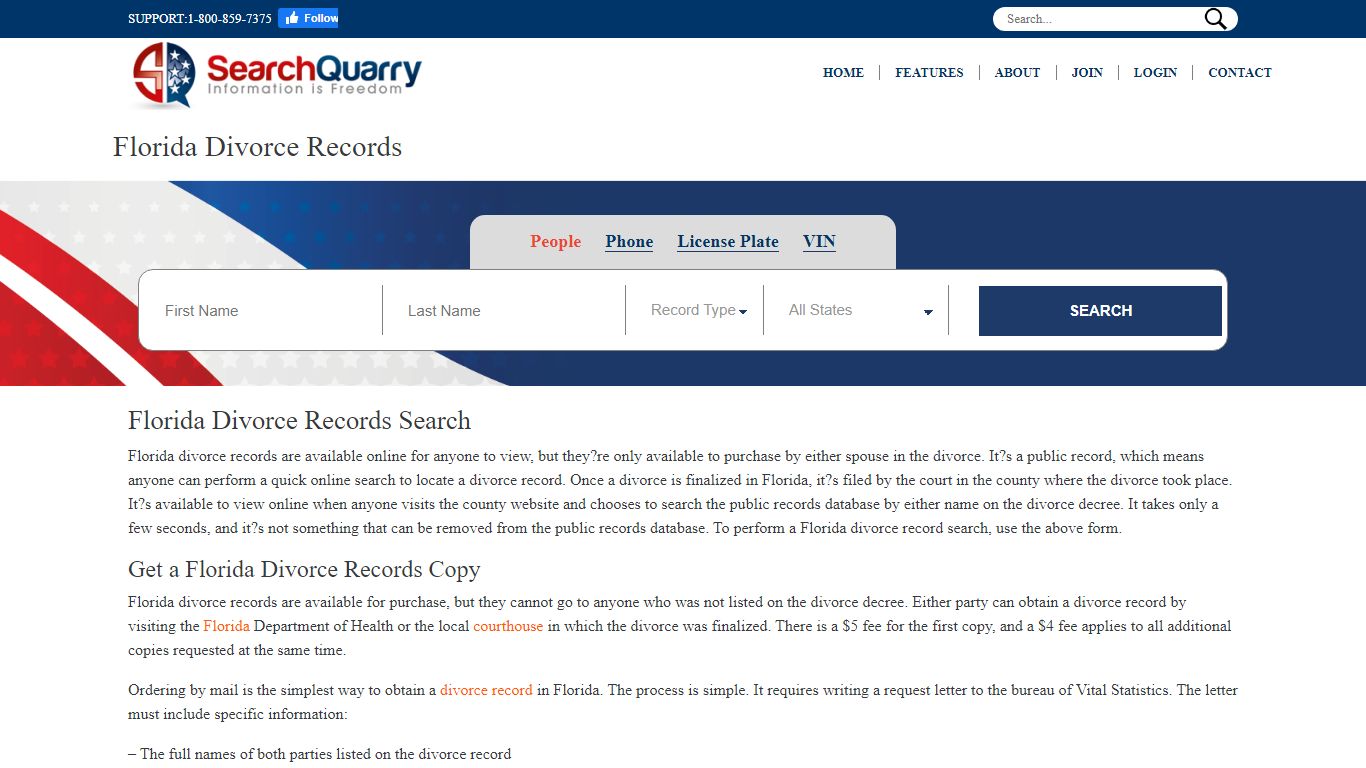
Therefore, for a free and comprehensive search, the county Clerk of Court remains your best resource. The Department of Health is only relevant if you specifically need a “Certificate of Dissolution of Marriage” for official purposes and are prepared to pay a fee.
Leveraging Online Public Databases
Beyond individual county websites, there are broader online resources that can assist in your free search, especially if you’re unsure of the exact county.
- Florida Courts E-Filing Portal: While primarily used by legal professionals, the Florida Courts E-Filing Portal can sometimes offer search capabilities or provide links to individual county e-filing systems where public records might be accessible. Its utility for free divorce record searches varies, but it’s worth exploring as a centralized starting point for state court information.
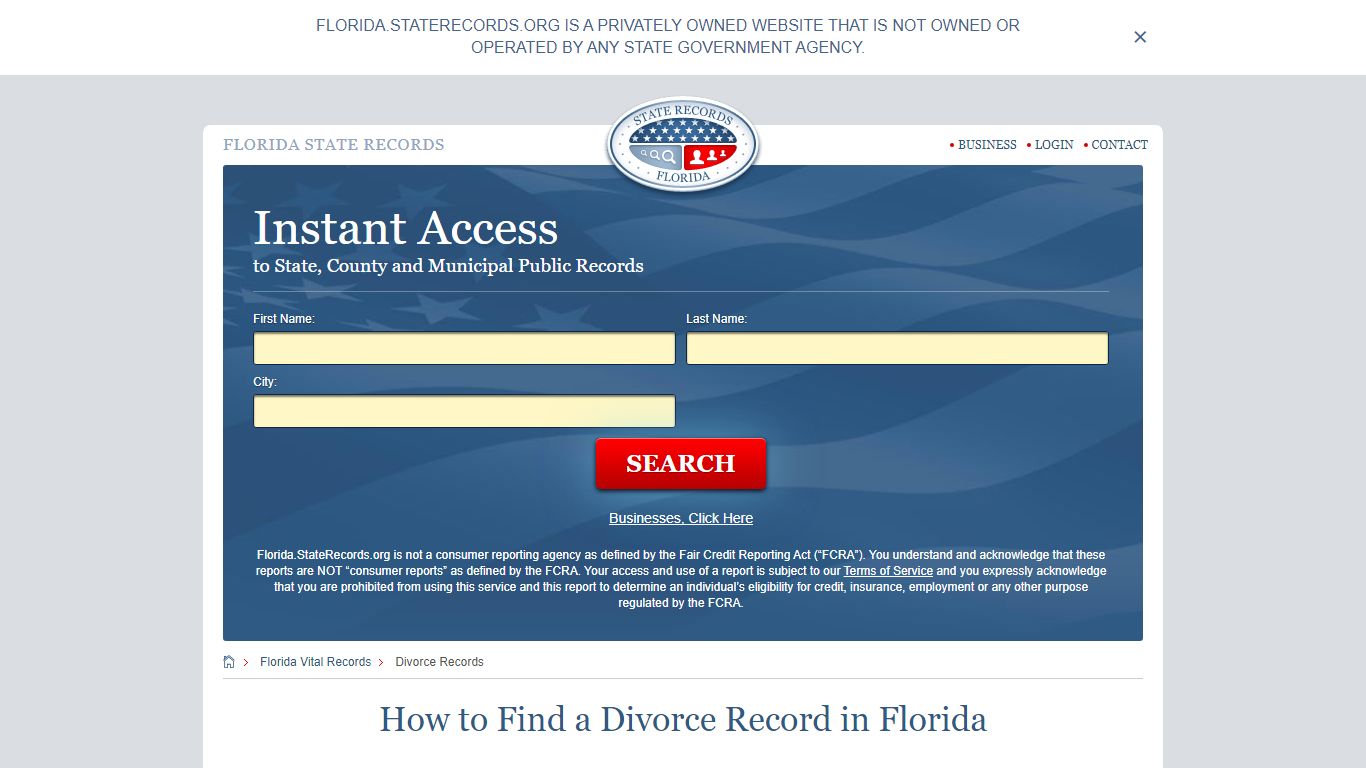
- Third-Party Public Records Websites: A word of caution here: many websites claim to offer “free public records searches,” but often they only provide a preliminary search and then demand a fee for detailed reports. While some might offer basic information (like the county of filing or a case number) for free, always be wary of sites asking for payment or excessive personal information. Stick to official government websites for genuinely free and reliable access. If a third-party site gives you enough information to narrow down your search to a specific county, you can then proceed to that county’s official Clerk of Court website for free viewing.
Practical Tips for a Successful Search (Even When You’re On The Go)
Whether you’re a digital nomad searching from afar, a tourist visiting Florida for a specific purpose, or a new resident settling in, efficiency and preparation are key to a successful, free divorce record search.
Essential Information for Your Inquiry
To maximize your chances of finding the records quickly and freely, gather as much of the following information as possible before you begin:
- Full Names of Both Parties: Including maiden names and any previous aliases. This is the most crucial piece of information.
- Approximate Date of Divorce: Even a year range (e.g., 2005-2010) is incredibly helpful.
- County of Divorce: As discussed, knowing the specific county is paramount for utilizing the Clerk of Court resources.
- Case Number: If you happen to know it, this will lead you directly to the record.
- Date of Birth for Parties: While not always required for initial searches, it can help differentiate between individuals with similar names.
The more details you have, the easier it will be for the court’s search systems to locate the specific record, especially when dealing with common names.
Understanding the Limitations of Free Searches
While free access to divorce records is a valuable public service, it comes with certain limitations you should be aware of:
- No Certified Copies: Free methods primarily allow for viewing or printing unofficial copies. If you need a legally recognized, certified copy for a bank, another court, or official government purposes, you will almost certainly have to pay a fee to the Clerk of Court or the Florida Department of Health. These fees are typically nominal, but they are not free.
- Information Availability: The level of detail available for free online can vary. Some county portals might only show the docket and basic case information, while others might provide downloadable PDF versions of some public documents. Highly sensitive information may be redacted or sealed.
- Older Records: Older records, especially pre-computerization (generally before the 1980s), might not be digitized and may require an in-person visit or a manual search by court staff, which could incur research fees.
- Privacy Concerns: While divorce records are generally public, some specific details might be sealed by court order, particularly those involving minors, financial privacy, or sensitive medical information. The U.S. Constitution and Florida law provide certain protections.
Planning Your Visit to Florida Courthouses
If your search requires an in-person visit, perhaps as part of a longer trip to Florida, consider these practical planning tips:
- Check Operating Hours: Always verify the courthouse’s operating hours and any specific public records office hours before you travel. Many courthouses have limited hours for public access.
- Call Ahead: A quick phone call to the Clerk of Court’s office in the relevant county can save you time. Ask about their public records search procedures, what information you’ll need, and if they have any specific requirements for visitors.
- Bring Identification: While often not strictly necessary for simply viewing public records, it’s always wise to carry valid photo identification.
- Be Prepared for Parking and Security: Courthouses are government buildings and typically have security checkpoints. Factor in time for parking and security screening, especially in larger metropolitan areas like Jacksonville or Fort Lauderdale.
- Combine with Local Attractions: If you’re making a special trip, consider incorporating your courthouse visit into a broader exploration of the county. For instance, after your visit to the St. Augustine courthouse, you can explore the historic downtown. Or after visiting the Key West courthouse, you can enjoy the unique charm of Duval Street. This turns a necessary task into part of your Florida experience.
Beyond the Basics: When Professional Assistance Might Be Needed
While the focus of this guide is on free methods, it’s important to acknowledge that there are scenarios where professional assistance, though it comes at a cost, might be the most efficient or necessary route.
If your free searches repeatedly yield no results, or if you require certified copies for a crucial legal matter (such as immigration, a new marriage license, or complex property transactions), engaging a legal professional or a public records research service might be worth the investment. They often have access to more extensive databases, experience in navigating specific county systems, and the ability to expedite requests. This might be particularly relevant if you are overseas or unable to travel to Florida yourself.
Ultimately, whether you’re planning a vacation to a Florida resort, contemplating a lifestyle change in a bustling city like Tampa, or simply researching your family’s ties to the Sunshine State, knowing how to access divorce records for free is a practical skill. By leveraging the public access provided by Florida’s Clerks of Court and their online resources, you can equip yourself with vital information, making your journey through life in or to Florida a more informed and empowered one.
LifeOutOfTheBox is a participant in the Amazon Services LLC Associates Program, an affiliate advertising program designed to provide a means for sites to earn advertising fees by advertising and linking to Amazon.com. Amazon, the Amazon logo, AmazonSupply, and the AmazonSupply logo are trademarks of Amazon.com, Inc. or its affiliates. As an Amazon Associate we earn affiliate commissions from qualifying purchases.