
Navigating the complexities of business formation can feel like charting an unknown territory, especially when establishing a legal entity like a Limited Liability Company (LLC). For entrepreneurs and business owners looking to establish their operations within the Cornhusker State, understanding the process of forming an LLC in Nebraska is a crucial first step. This guide aims to demystify the procedures, requirements, and considerations involved in creating a successful LLC in Nebraska, empowering you to build a solid foundation for your venture.
Understanding the Benefits of an LLC in Nebraska
Before diving into the formation process, it’s essential to grasp why an LLC is a popular choice for businesses. An LLC offers a hybrid structure, combining the pass-through taxation of a partnership or sole proprietorship with the limited liability protection of a corporation. This means that the personal assets of the owners (members) are generally protected from business debts and lawsuits.
Limited Liability Protection
One of the most significant advantages of forming an LLC is the shield it provides to your personal assets. If the business incurs debts or faces legal action, your personal property – such as your home, car, or savings – is typically not at risk. This protection is fundamental for fostering confidence and encouraging entrepreneurial endeavors.
Pass-Through Taxation
Unlike traditional corporations, LLCs are generally not taxed as separate entities. Instead, the profits and losses of the LLC “pass through” to the individual members, who then report this income on their personal tax returns. This avoids the potential for “double taxation” that can occur with C-corporations, where the company is taxed on its profits, and then shareholders are taxed again on dividends received.
Flexibility in Management and Operations
LLCs offer a high degree of flexibility. They can be managed by their members or by appointed managers, providing a structure that can adapt to the specific needs of the business. This can range from a single-member LLC to a multi-member structure, with varying levels of operational control and decision-making processes.
Enhanced Credibility
Operating as a formal business entity like an LLC can lend an air of professionalism and credibility to your venture. It signals to customers, suppliers, and potential investors that you are serious about your business and have taken the necessary steps to establish a legitimate operation.
The Essential Steps to Forming an LLC in Nebraska
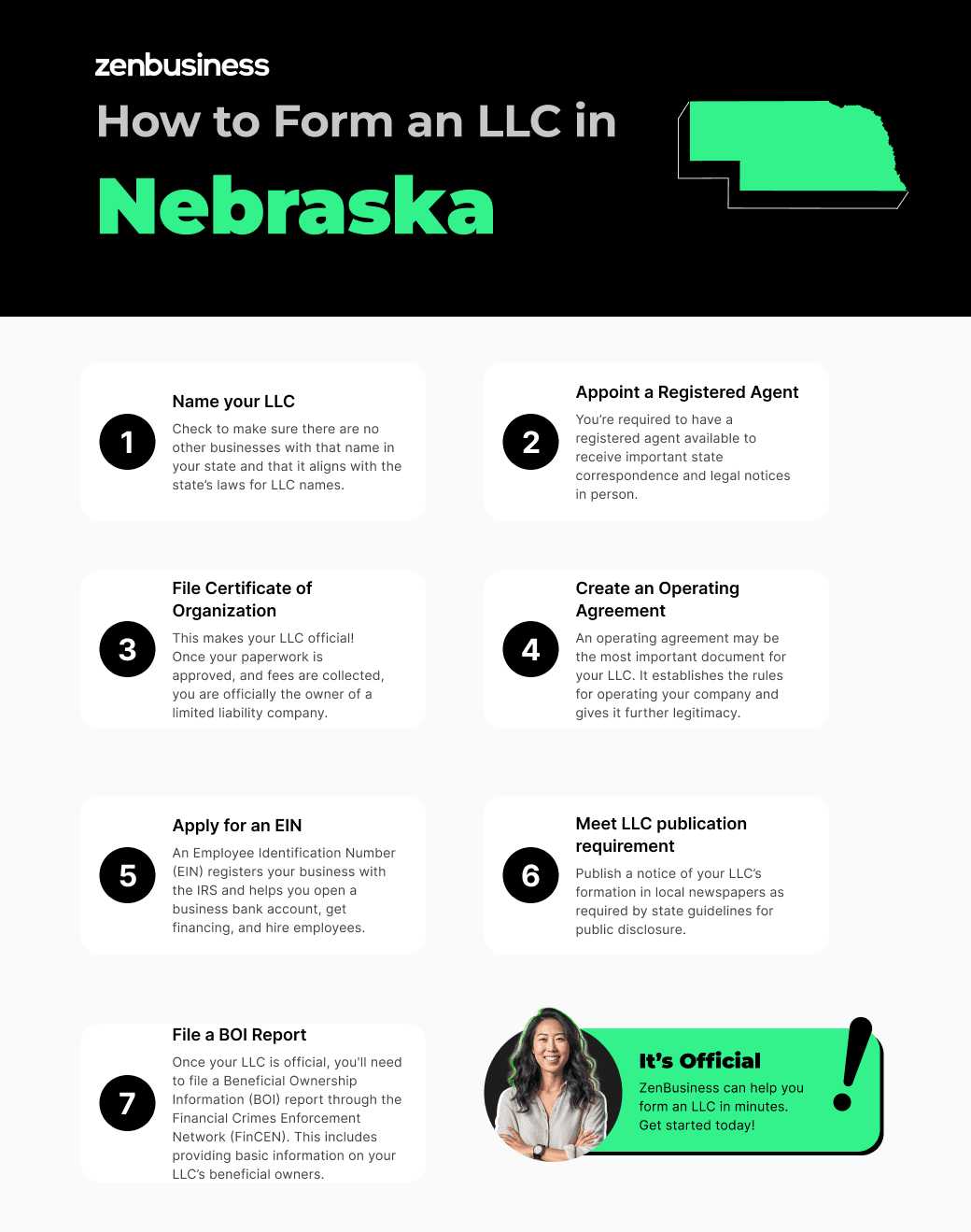
Forming an LLC in Nebraska involves several key steps, each requiring careful attention to detail. While the process is designed to be straightforward, understanding each component is vital for a smooth and successful registration.
Step 1: Choose a Unique Business Name
Your LLC’s name is its identity and must be distinguishable from other registered business names in Nebraska. This is a crucial step to avoid confusion and potential legal issues.
Name Availability Search
Before settling on a name, it’s imperative to conduct a thorough name availability search. The Nebraska Secretary of State website provides a Business Entity Search tool that allows you to check if your desired name is already in use. You can search by name to see if any existing entities have a similar name.
Naming Requirements
Nebraska has specific requirements for LLC names. The name must typically contain the words “Limited Liability Company” or an abbreviation such as “LLC” or “L.L.C.” It also cannot contain words that suggest the company is organized for a purpose other than what is stated in its formation documents or that it is a governmental agency.
Reserve Your Name (Optional)
If you’ve found a suitable name but aren’t ready to file your formation documents, you can consider reserving the name. This prevents other businesses from using your chosen name for a specified period. However, this step is often skipped if you are ready to proceed with filing immediately.
Step 2: Appoint a Registered Agent
A registered agent is an individual or a business entity responsible for receiving official legal and tax documents on behalf of your LLC. This agent must have a physical street address in Nebraska and be available during normal business hours to accept service of process.
Qualifications of a Registered Agent
The registered agent must be a resident of Nebraska or a company authorized to do business in the state. They must have a physical street address within Nebraska, not just a P.O. Box. Their role is to ensure that your LLC receives important legal notices, such as lawsuits or state correspondence, in a timely manner.
Choosing Your Registered Agent
You can appoint yourself as the registered agent if you meet the requirements and have a suitable physical address in Nebraska. Alternatively, you can hire a professional registered agent service. Many business formation services offer this as part of their packages, which can be particularly useful for businesses with owners who do not reside in Nebraska or who travel frequently.
Step 3: File the Articles of Organization
The Articles of Organization, also known as the Certificate of Organization, is the primary document filed with the Nebraska Secretary of State to officially create your LLC. This document contains essential information about your business.
Key Information Required
The Articles of Organization typically require the following information:
- The name of the LLC.
- The name and address of the registered agent.
- The principal office address of the LLC.
- The name and address of each organizer (the person filing the document).
- A statement of the purpose of the LLC (though this can often be a general statement).
- The duration of the LLC (most are perpetual).
Filing the Document
The Articles of Organization can usually be filed online through the Nebraska Secretary of State website, by mail, or in person. There is a filing fee associated with this document, which can be found on the Secretary of State’s website. It’s important to ensure all information is accurate and complete before submission.
Step 4: Create an Operating Agreement
While not legally required by the state of Nebraska for all LLCs, an Operating Agreement is a critical internal document that outlines the ownership structure, operating procedures, and member responsibilities of your LLC. It’s highly recommended for all LLCs, regardless of size or number of members.
Purpose and Importance of an Operating Agreement
An Operating Agreement serves as a roadmap for your business. It details:
- Member ownership percentages.
- How profits and losses will be distributed.
- The roles and responsibilities of members and managers.
- Procedures for admitting new members or withdrawing existing ones.
- How the LLC will be dissolved, if necessary.
- Decision-making processes.
Customizing Your Operating Agreement
This document provides a framework for managing your LLC internally and can help prevent disputes among members. It can be customized to reflect the unique circumstances and goals of your business. While you can draft one yourself, seeking legal counsel to ensure it is comprehensive and compliant with Nebraska law is advisable.
Step 5: Obtain an Employer Identification Number (EIN)
If your LLC plans to hire employees or operate as a multi-member entity, you will need to obtain an Employer Identification Number (EIN) from the Internal Revenue Service (IRS). This is also known as a Federal Tax Identification Number.
When an EIN is Necessary
An EIN is essential for several reasons:
- Opening a business bank account.
- Filing federal taxes.
- Hiring employees.
- Operating as a multi-member LLC.
- If your LLC is taxed as a corporation or partnership.
Applying for an EIN
You can apply for an EIN online directly from the IRS website. The application is free, and you will receive your EIN almost immediately after submission, provided all information is accurate. It’s a straightforward process but requires accurate business information.
Ongoing Compliance and Best Practices for Nebraska LLCs
Forming your LLC is just the beginning. To maintain its legal standing and ensure continued success, ongoing compliance and adherence to best practices are essential.
Annual Reports and Fees
Nebraska requires LLCs to file an annual report with the Nebraska Secretary of State to remain in good standing. This report helps keep the state’s records up-to-date regarding your business’s contact information and registered agent.
Filing Requirements
The annual report is typically due on a specific date each year, often based on the anniversary of your LLC’s formation or a set date for all businesses. There is usually a fee associated with filing the annual report. Failure to file on time can result in penalties or even the administrative dissolution of your LLC.
Staying Informed
It’s crucial to stay informed about the deadlines and requirements for annual reports. The Nebraska Secretary of State website is the definitive source for this information. Setting reminders and maintaining organized records will help ensure you meet these obligations.
Maintaining Business Records and Separating Finances
To uphold the limited liability protection of your LLC, it’s vital to maintain meticulous business records and keep your business and personal finances strictly separate. This practice is often referred to as maintaining the corporate veil.
Separate Bank Accounts
One of the most critical steps is to open a dedicated business bank account for your LLC. All business income should be deposited into this account, and all business expenses should be paid from it. Commingling personal and business funds can jeopardize your liability protection.
Record Keeping
Maintain organized records of all financial transactions, contracts, and important business decisions. This includes invoices, receipts, bank statements, and meeting minutes. These records are essential for tax purposes, for resolving any potential disputes, and for demonstrating that your LLC is a distinct legal entity.
Understanding Tax Obligations
As mentioned earlier, LLCs typically benefit from pass-through taxation. However, this does not exempt them from tax obligations.
Federal, State, and Local Taxes
Depending on your business activities and structure, your LLC will be subject to various federal, state, and local taxes. This can include income tax, self-employment tax, sales tax, and potentially others. It’s important to understand which taxes apply to your business and to comply with all filing and payment requirements. Consulting with a tax professional can be invaluable in navigating these complexities.
Estimated Tax Payments
For members who are taxed on the LLC’s profits, it’s often necessary to make estimated tax payments throughout the year to avoid penalties. This ensures that you are paying taxes as you earn income.
By diligently following these steps and adhering to ongoing compliance requirements, entrepreneurs can successfully form and operate an LLC in Nebraska, laying a strong and protected foundation for their business endeavors.
LifeOutOfTheBox is a participant in the Amazon Services LLC Associates Program, an affiliate advertising program designed to provide a means for sites to earn advertising fees by advertising and linking to Amazon.com. Amazon, the Amazon logo, AmazonSupply, and the AmazonSupply logo are trademarks of Amazon.com, Inc. or its affiliates. As an Amazon Associate we earn affiliate commissions from qualifying purchases.