
The allure of Texas is undeniable. From its sprawling ranches and vibrant metropolises to its rich history and distinct cultural tapestry, the Lone Star State offers a unique blend of opportunity and a certain untamed spirit that captivates many. For those looking to make Texas their permanent home, understanding the pathways to residency is crucial. This guide delves into the primary avenues for establishing legal residency in this dynamic state.
Understanding Residency Requirements in Texas
Establishing residency in Texas is more than just having a mailing address; it involves demonstrating a clear intent to make the state your primary domicile. Texas, unlike some other states, does not have a specific waiting period to claim residency for general purposes such as voting or obtaining a driver’s license. However, for certain benefits or legal statuses, specific criteria must be met, often revolving around demonstrating physical presence and intent.

Intent to Remain: The Cornerstone of Residency
The most critical element in proving residency is demonstrating your “intent to remain.” This is not merely about being physically present but about showing that you consider Texas your permanent home and do not intend to reside elsewhere. Several factors contribute to this demonstration:
- Establishing a Home: This involves securing a permanent place of abode. This could be purchasing a home, signing a long-term lease for an apartment, or even making substantial arrangements for long-term stays that suggest stability. For instance, securing a long-term rental in a desirable neighborhood in Dallas or Houston would be a strong indicator.
- Financial Ties: Opening bank accounts in Texas, securing employment within the state, or registering a business are significant indicators of your commitment. Paying Texas state income tax (though Texas has no state income tax, this can be demonstrated through federal tax filings showing Texas as your residence) and obtaining a Texas driver’s license or state ID are also crucial.
- Civic Engagement: Registering to vote in Texas, serving on a jury, or enrolling children in Texas public schools all point towards a settled presence.
- Personal Belongings: Moving your personal belongings, such as furniture and vehicles, to Texas further solidifies your intent.
Physical Presence: More Than Just a Visit
While intent is paramount, a demonstrable physical presence is also required. This means spending a significant amount of time within the state. While there isn’t a hard-and-fast rule on the exact number of days for general residency, for specific purposes like establishing in-state tuition rates at universities, stricter physical presence requirements may apply. Generally, a sustained period of living and working in Texas is necessary.
Pathways to Residency for Various Groups
The process of establishing residency can vary depending on your current situation and the reason you are seeking to become a resident of Texas.
For U.S. Citizens and Lawful Permanent Residents
For U.S. citizens and individuals holding lawful permanent resident status, establishing residency in Texas is typically straightforward, provided they meet the intent and physical presence requirements. The key is to actively transition your life to Texas. This includes:
- Obtaining a Texas Driver’s License or ID: This is a fundamental step. You’ll need to provide proof of identity, Social Security number, U.S. citizenship or lawful presence, and Texas residency.
- Registering to Vote: Once you have established your domicile in Texas, registering to vote is a strong indicator of your intent.
- Transferring Vehicle Registration: If you bring vehicles to Texas, you must register them with the state and obtain Texas license plates.
- Securing Employment: Finding a job in Texas or transferring employment to a Texas-based company is a significant commitment.
- Opening Bank Accounts: Establishing financial ties within the state is crucial.
For International Individuals (Non-Immigrants and Immigrants)
For individuals who are not U.S. citizens, the path to residency in Texas is intricately tied to their immigration status. Texas itself does not grant immigration status; this is the purview of the federal government. However, once an individual has a legal right to reside in the U.S., they can then establish residency in Texas.
Non-Immigrant Visa Holders
Individuals in Texas on non-immigrant visas (such as H-1B, L-1, F-1, B-1/B-2) can establish residency in Texas for the duration of their authorized stay, provided they demonstrate intent to reside in the state. This means that if you are on a valid work visa or a student visa and intend to live in Texas for the duration of your visa, you can establish local residency for practical purposes like obtaining a driver’s license (often tied to the visa expiration date) and accessing state services.
- Driver’s License: Non-immigrant visa holders can obtain a Texas driver’s license, though it will typically be valid only until their visa expires.
- Employment: For work visa holders, employment within Texas is often a prerequisite for their visa status and a strong indicator of residency.
- Education: For F-1 visa holders, enrolling in and attending a Texas educational institution is the primary reason for their presence and demonstrates their residency while studying.
Immigrants and Asylees
Individuals who have obtained permanent resident status (green card holders), have been granted asylum, or have other forms of lawful immigration status that allow for long-term or permanent residence in the U.S. can establish residency in Texas much like U.S. citizens. The primary considerations remain the demonstration of intent and physical presence.
- Relocation Assistance: Many immigrant and refugee support organizations in Texas can assist with the practical aspects of settling in, such as finding housing and employment, which aids in establishing residency.
- Social Security Benefits: Once legally authorized to work, individuals can apply for a Social Security number, which is essential for employment and many other aspects of establishing residency.
- Citizenship: For those who eventually seek U.S. citizenship, establishing residency in Texas for the required period before applying for naturalization is a critical step.
Specific Residency Considerations: Education and Benefits
Beyond general residency, Texas has specific rules for individuals seeking in-state tuition rates at public colleges and universities, and for accessing certain state benefits.
In-State Tuition
To qualify for in-state tuition rates at Texas public universities, stricter residency rules apply. These rules are primarily governed by the Texas Higher Education Coordinating Board. Generally, an individual must establish domicile in Texas and maintain it for at least 12 consecutive months prior to enrolling in an institution. This involves demonstrating that:
- The individual has been physically present in Texas for the 12 months preceding enrollment.
- The individual intends to remain in Texas indefinitely.
- The individual has a source of financial support in Texas or has been financially independent.
- They have taken steps to sever ties with their previous state of residence, such as canceling voter registration, relinquishing a driver’s license, and moving all personal belongings.
Students whose parents are Texas residents may also qualify based on their parents’ domicile. International students on certain visas may also be eligible under specific provisions.
State Benefits
Access to various Texas state benefits, such as social services or unemployment assistance, often requires proof of residency. The specific requirements will depend on the benefit program, but typically involve demonstrating physical presence and intent to reside in the state. This might include providing utility bills, lease agreements, or employment verification within Texas.

Practical Steps to Solidify Your Texas Residency
Regardless of your background, actively taking the following steps will help solidify your claim to Texas residency:
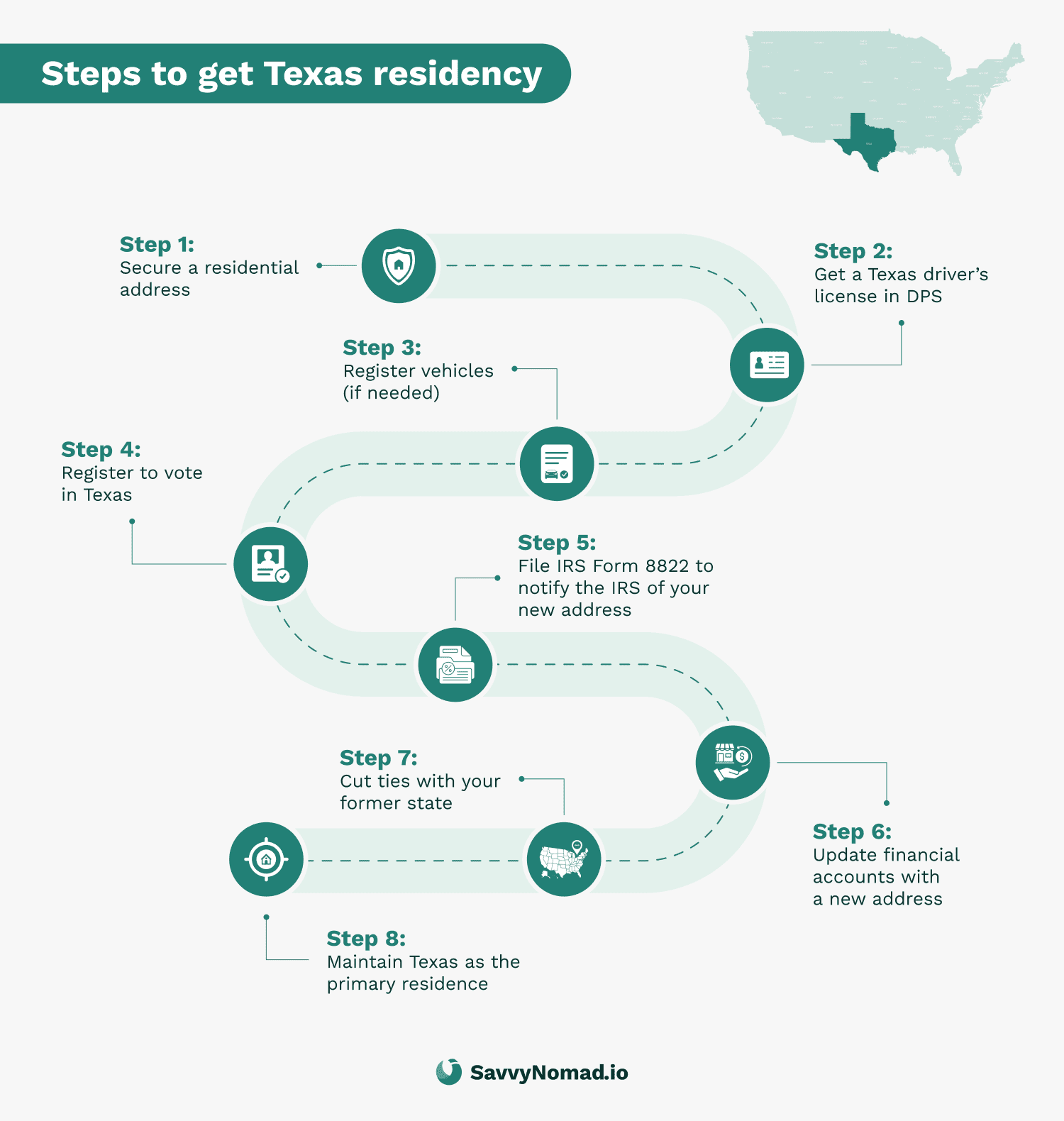
- Secure Housing: Whether renting or buying, having a permanent address is fundamental. Consider neighborhoods that align with your lifestyle, from the bustling urban centers of Austin and San Antonio to more rural or suburban communities.
- Obtain a Texas Driver’s License or State ID: This is a key piece of identification that proves your address and presence in the state.
- Establish Financial Ties: Open a bank account with a local Texas bank and begin conducting your financial affairs there.
- Seek Employment or Pursue Education: Securing a job or enrolling in a school demonstrates a clear reason for being in Texas and an intention to stay.
- Register to Vote: If you are a U.S. citizen, this is a powerful statement of your intent to be a resident.
- Update Personal Information: Ensure that all important documents, such as insurance policies, professional licenses, and subscriptions, reflect your new Texas address.
- Transfer Vehicle Registration: If you own vehicles, ensure they are registered in Texas.
- Be Visible: Engage in community activities, join local organizations, and build a network within Texas.
Making Texas your home is a significant undertaking, but with careful planning and a clear demonstration of your intent to remain, the process of gaining residency can be successfully navigated. The vast opportunities and unique lifestyle of the Lone Star State await those who commit to making it their permanent abode.
LifeOutOfTheBox is a participant in the Amazon Services LLC Associates Program, an affiliate advertising program designed to provide a means for sites to earn advertising fees by advertising and linking to Amazon.com. Amazon, the Amazon logo, AmazonSupply, and the AmazonSupply logo are trademarks of Amazon.com, Inc. or its affiliates. As an Amazon Associate we earn affiliate commissions from qualifying purchases.