
Imagine embarking on the ultimate Texas road trip, a journey filled with sprawling landscapes, vibrant cities, and hidden gems. Perhaps you’ve just discovered the perfect vintage pickup truck in a quaint roadside town, envisioning it as your loyal companion for future adventures across the Lone Star State. Or maybe you’re settling into a new life in Austin, eager to register your beloved RV, only to realize that the critical piece of paper – the vehicle title – is missing, lost, or never properly transferred. This is where the concept of a bonded title in Texas becomes not just a bureaucratic hurdle, but a crucial step in ensuring your travel dreams and lifestyle choices remain on track.
For anyone who loves the freedom of the open road, the joy of discovering new destinations, or the comfort of having their own vehicle to explore, understanding how to secure legitimate ownership is paramount. Whether you’re a seasoned traveler, a digital nomad making Texas your new base, or simply an enthusiast who’s stumbled upon a unique vehicle without proper paperwork, navigating the process of obtaining a bonded title is essential. It’s about more than just paperwork; it’s about peace of mind, legality, and the freedom to fully embrace your automotive adventures, wherever they may lead you within the vast expanse of Texas and beyond. This comprehensive guide aims to demystify the bonded title process, offering a clear roadmap for travelers and new residents alike, ensuring your journey in Texas is as smooth and unobstructed as the highways themselves.
Understanding Bonded Titles: A Traveler’s Perspective
The world of vehicle ownership can sometimes present unexpected twists and turns, especially when dealing with vehicles that have a less-than-perfect paper trail. For travelers, adventurers, or those transitioning their lifestyle to a new locale like Texas, encountering a situation where a vehicle lacks a clear, transferable title can be a significant roadblock. This is precisely where the bonded title steps in, acting as a crucial bridge to legitimate ownership and allowing you to continue your exploration or establish your roots without unnecessary delays. It’s a system designed to protect both the buyer and the state, ensuring that even in unusual circumstances, a rightful owner can be established.
What Exactly is a Bonded Title?
At its core, a bonded title is a legal document that serves as proof of ownership for a vehicle when the original, conventional title is unavailable, lost, damaged, or defective. In essence, it’s a title backed by a surety bond, which is a three-party agreement where the surety company guarantees to pay damages or losses to the state or a third party if the bonded title holder turns out not to be the rightful owner. Think of it as a temporary safeguard, a legal assurance that if a previous owner suddenly appears with a legitimate claim to the vehicle, they can be compensated, typically up to the bond amount.
For someone integrating into the Texas scene, perhaps having acquired a vintage motorcycle or a unique camper van during their travels, a bonded title ensures that their new prized possession can be legally registered, insured, and driven. It removes the ambiguity that often surrounds vehicles without clear documentation, allowing for seamless integration into the state’s vehicle registration system. This is especially important in a state as vast as Texas, where vehicles are often essential for both daily living and long-distance exploration. Without a valid title, even the most beautiful classic car or adventurous RV becomes little more than an ornament, unable to fulfill its purpose as a mode of travel and discovery. The bonded title, therefore, isn’t just a piece of paper; it’s the key to unlocking your vehicle’s full potential for adventure and convenience in Texas.

When Does a Traveler (or New Resident) Need One?
For the adventurous soul or the new resident setting up a home in Texas, understanding when a bonded title becomes necessary is crucial for smooth travels and hassle-free vehicle ownership. These situations often arise from unique circumstances that are common among those with a dynamic lifestyle or a penchant for discovery.
One common scenario is acquiring a vehicle without a title. Imagine you’re on a deep dive into Texas’s automotive history, perhaps scouting out unique vehicles in rural areas or attending a local auction. You stumble upon the perfect classic car in a small town outside Houston, a genuine gem that perfectly embodies your vision for future road trips. The seller, perhaps an elderly individual or someone dealing with an inherited estate, simply doesn’t have the original title. Without a title, transferring ownership in the conventional way is impossible, and you’re left with a prized possession you can’t legally drive. This is a prime candidate for a bonded title.

Another situation involves lost or stolen titles, particularly pertinent for those making a big move. You’ve just relocated from California to Dallas, eager to start exploring the vibrant city and its surroundings. In the chaos of moving, your original vehicle title, meticulously stored, somehow disappears. Perhaps it was lost in transit or misplaced during unpacking. To register your vehicle in Texas and avoid any disruptions to your newfound lifestyle, a bonded title provides the necessary documentation to prove your ownership and get your vehicle on the road.
Furthermore, vehicles inherited without proper documentation can also necessitate a bonded title. A relative living in San Antonio might pass away, leaving you a beloved family car that you plan to restore and use for nostalgic drives through the Hill Country. If the original title cannot be located among their belongings, or if the transfer process was never formally completed, a bonded title becomes the path to legal ownership.
Even abandoned vehicles that you might legally acquire, perhaps through a mechanic’s lien or a public sale, typically require a bonded title if no prior title exists or can be found. For those with a knack for restoration or an eye for repurposing, turning an abandoned vehicle into a travel-ready machine is an exciting prospect, but the title process is the first step.
In all these instances, the bonded title acts as a safeguard, allowing individuals to establish legal ownership and registration when traditional routes are blocked. It ensures that whether you’re acquiring a piece of Texas history, relocating your existing vehicle, or restoring a family heirloom, your journey toward legitimate vehicle use is clear and legally sound, preventing any unexpected detours from your travel or relocation plans.
Navigating the Texas Bonded Title Application Process
The thought of navigating bureaucratic processes in a new state, or while on an extended travel adventure, can feel daunting. However, obtaining a bonded title in Texas is a structured process that, when approached systematically, is entirely manageable. For those with a dynamic lifestyle or a passion for exploration, understanding each step ensures that your vehicle – whether a newly acquired vintage gem or a trusted travel companion – becomes legally yours with minimal fuss. The key is preparation and attention to detail, transforming what might seem like a complex administrative task into a straightforward checklist for continued adventures.
Step-by-Step Guide for Securing Your Bonded Title
Securing a bonded title in Texas involves a series of sequential steps, each designed to verify ownership and ensure legal compliance. Here’s a breakdown to guide you through the process:
-
Determine Eligibility: Before anything else, you must ascertain if your vehicle is eligible for a bonded title. Generally, a bonded title is required when the seller does not possess the title, the title is defective, or the vehicle was purchased without a title. The vehicle must be located in Texas and primarily operated within the state. For travelers who’ve acquired a vehicle out-of-state but intend to register it in Texas, this is a critical initial check.
-
Complete the Vehicle Information Request (Form VTR-271): Your first official step is to fill out a “Request for Information” form, VTR-271, with the Texas Department of Motor Vehicles (TxDMV). This form requires detailed information about the vehicle, including the Vehicle Identification Number (VIN), make, model, and year. The TxDMV will then conduct a search to determine if there’s any existing record of the vehicle or any liens against it. This is crucial for uncovering potential issues early on.
-
Obtain a Law Enforcement Inspection: Once the TxDMV confirms no existing title or liens, you’ll need to arrange for a vehicle inspection by a law enforcement official. This inspection verifies the VIN and ensures it hasn’t been tampered with. For travelers who might be temporarily residing in a hotel or accommodation in a city like Dallas or Houston, coordinating this inspection can be done through local police departments or sheriff’s offices. Ensure the vehicle is accessible and ready for inspection.
-
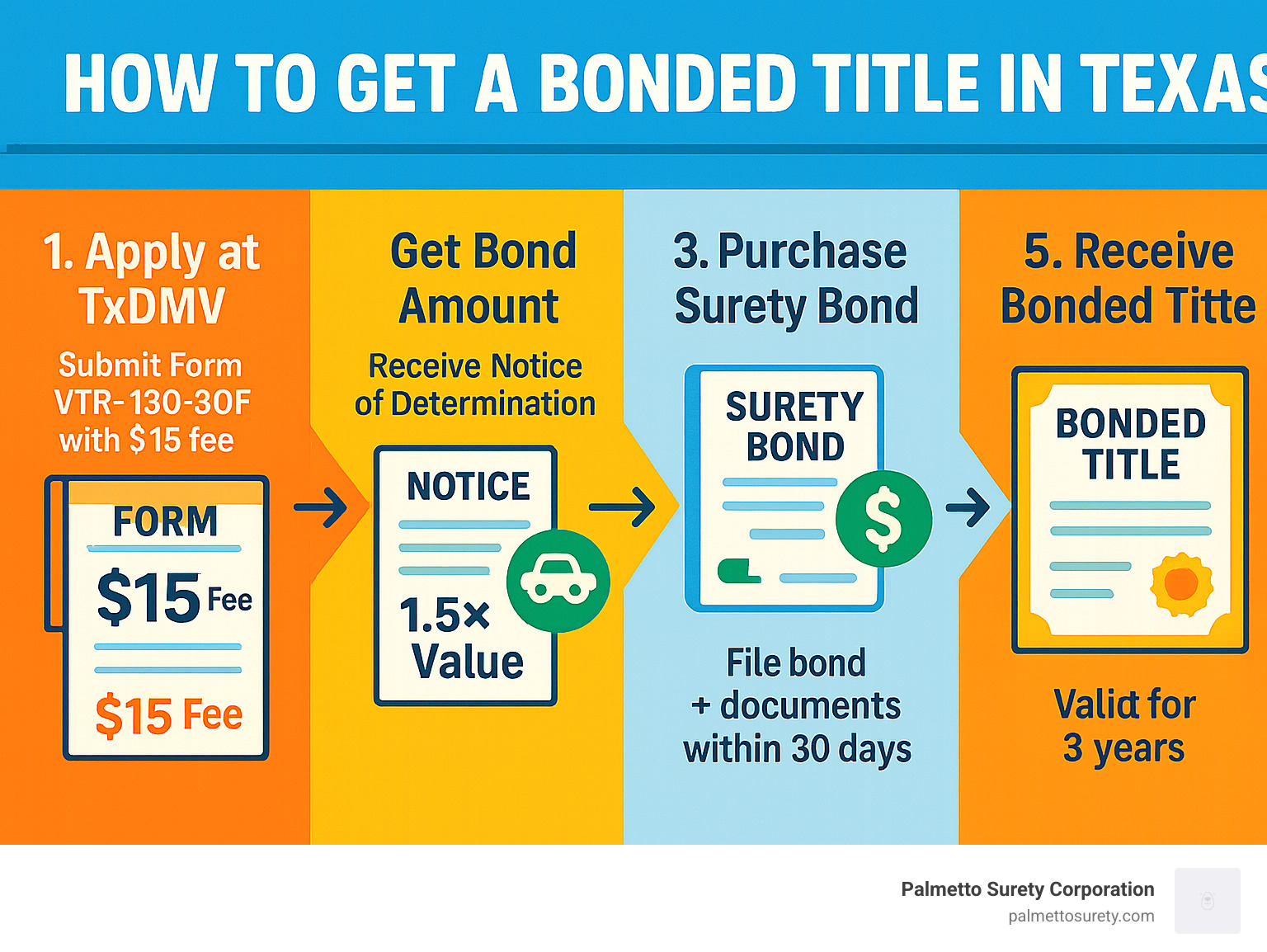
Determine the Vehicle’s Value: The value of the vehicle is critical because it dictates the amount of the surety bond you’ll need to purchase. The TxDMV typically uses a recognized appraisal guide, such as the National Automobile Dealers Association (NADA) guide, to determine the standard presumptive value. For unique or classic vehicles, special appraisals might be required. The bond amount will generally be 1.5 times the vehicle’s determined value.
-
Purchase a Surety Bond: This is arguably the most distinct part of the bonded title process. You’ll need to contact a surety bond company, often available through insurance agencies, to purchase a bond for the amount determined in the previous step. This bond is essentially a promise that if someone else proves legitimate ownership of the vehicle within a certain period (typically three years), the surety company will cover damages up to the bond amount. Keep in mind that while the bond amount might seem high, the premium you pay to the surety company is usually a small percentage of that amount (e.g., 1-5%).
-
Complete the Application for Texas Certificate of Title (Form VTR-130-SOF): With the bond in hand, you’ll fill out the “Application for Texas Certificate of Title – Bonded Title” form. This form consolidates all your information, the vehicle’s details, the bond information, and details of how you acquired the vehicle. Accuracy here is paramount to avoid delays.
-
Submit Your Application to the County Tax Assessor-Collector: Finally, gather all your documents: the completed VTR-130-SOF, proof of the surety bond, the law enforcement inspection report, any available purchase receipts or bills of sale, and identification. Submit these to your local County Tax Assessor-Collector’s office. This is where you’ll also pay any applicable registration fees, sales tax, and title application fees. Once processed and approved, your bonded title will be issued, granting you full legal ownership and the freedom to explore all the wonderful landmarks and destinations Texas has to offer.
Each step is designed to safeguard all parties involved and ensure clarity in vehicle ownership. While it may seem like a detailed process, it’s a worthwhile investment for the peace of mind and legal security it provides, enabling you to fully enjoy your vehicle in Texas.
Essential Documents and Information You’ll Need
Successfully navigating the bonded title process in Texas hinges significantly on meticulous documentation. For the seasoned traveler or new resident, preparing these essential items in advance can mean the difference between a swift approval and frustrating delays, ensuring your travel plans or relocation schedule remain undisturbed. This foresight is part of smart lifestyle management, especially when dealing with important assets like vehicles.
Here’s a detailed list of the documents and information you should compile:
-
Vehicle Identification Number (VIN): This is the bedrock of your application. Ensure you have the full, accurate 17-digit VIN. It’s often found on the dashboard (visible through the windshield) and on the driver’s side door jamb. For older or unique vehicles, it might be located elsewhere, so a thorough check is important. This number will be used across all forms for consistency.
-
Vehicle Description: Details such as the make, model, year, body style, and color are all essential. These help confirm the identity of the vehicle throughout the process.
-
Proof of Ownership (if any): While you don’t have a conventional title, any existing evidence of your purchase or acquisition is critical. This could include:
- Bill of Sale: Even a handwritten one is better than none. It should ideally include the seller’s name and signature, the purchase date, the purchase price, and the vehicle’s VIN.
- Receipts: Any payment receipts, bank statements, or other financial records indicating you paid for the vehicle.
- Affidavit of Fact: If you acquired the vehicle through non-traditional means (e.g., inherited without a will, found an abandoned vehicle and legally claimed it), an affidavit explaining the circumstances in detail can be helpful.
- Chain of Custody: If you have any documents showing the history of ownership, even if incomplete, gather them.
-
Personal Identification: A valid government-issued photo ID, such as a driver’s license or passport, is required to prove your identity. If you’re a new resident to Texas, ensure your ID is up-to-date.
-
Texas Vehicle Information Request (Form VTR-271): As mentioned, this is the initial form filed with the TxDMV to check the vehicle’s records.
-
Law Enforcement Inspection Report: The official report from a peace officer verifying the VIN and possibly other vehicle details. Make sure this document is properly filled out and signed by the inspecting officer.
-
Surety Bond: The original surety bond document, obtained from an authorized surety company. This document will specify the bond amount (1.5 times the vehicle’s value) and the terms of the bond.
-
Application for Texas Certificate of Title – Bonded Title (Form VTR-130-SOF): This is the comprehensive application form for the bonded title itself. Fill it out completely and accurately, ensuring all sections are addressed.
-
Vehicle Value Documentation: While the TxDMV often uses NADA values, having your own printouts or even an independent appraisal (especially for classic, custom, or unique vehicles) can sometimes support your case or clarify valuation.
-
Proof of Residency in Texas (for new residents): If you’ve recently moved to Texas, you’ll need documents proving your Texas residency, such as a utility bill, lease agreement, or Texas driver’s license.
-
Funds for Fees and Taxes: Be prepared to pay the title application fee, registration fees, and sales tax (if applicable) at the County Tax Assessor-Collector’s office.
Having these documents meticulously organized and readily accessible will significantly streamline your application process. For those embracing a transient lifestyle or on an extended stay, consider digitizing copies of all documents for backup, storing them securely online or in a cloud service. This ensures that even if physical documents are misplaced during your travels, you have an immediate reference point, crucial for maintaining momentum on your administrative tasks while enjoying the vibrant tourism and attractions Texas has to offer.
Costs, Considerations, and Common Pitfalls on Your Journey
Embarking on the bonded title journey in Texas involves more than just paperwork; it also encompasses financial planning and an awareness of potential hurdles. For the intrepid traveler or the new resident eager to make Texas their home, understanding these aspects can prevent unexpected delays and ensure a smooth transition into full vehicle ownership. Just as you’d budget for hotels and experiences on a grand adventure, allocating resources and foreseeing challenges for administrative processes is a hallmark of a well-planned lifestyle.
Financial Aspects: What to Expect
The financial outlay for obtaining a bonded title in Texas primarily consists of three components: the surety bond premium, various state fees, and potentially sales tax. Being aware of these costs upfront allows for better budgeting, especially if you’ve just invested in a unique vehicle that will accompany you on future tourism excursions or simply facilitate your daily life in Texas.
-
Surety Bond Premium: This is often the most significant and unique cost associated with a bonded title. The bond amount itself is determined by the vehicle’s value, typically 1.5 times the standard presumptive value as determined by the TxDMV (often using NADA guides). However, you don’t pay the full bond amount. Instead, you pay a premium to the surety company, which is a small percentage of the total bond amount. This premium usually ranges from 1% to 5% of the bond amount, depending on the vehicle’s value, your credit history, and the surety company. For instance, if your vehicle is valued at $10,000, the bond amount might be $15,000, and your premium could be anywhere from $150 to $750. It’s a one-time payment for the three-year bond period.
-
TxDMV and County Fees:
- Title Application Fee: There is a standard fee for applying for a new title, which is generally quite modest (e.g., around $33).
- Registration Fees: Once your title is approved, you’ll also need to register your vehicle in Texas. These fees vary slightly by county and vehicle type but are generally consistent with standard vehicle registration costs in the state.
- Vehicle Information Request Fee: A small fee may be associated with filing the initial VTR-271 form.
-
Sales Tax: If you purchased the vehicle in Texas or brought it into the state within a certain timeframe (usually 30 days) and have not paid sales tax elsewhere, you will be liable for Texas motor vehicle sales tax. This is currently 6.25% of the vehicle’s purchase price or standard presumptive value, whichever is greater. This can be a substantial cost, so factor it into your budget.
-
Inspection Fee: There might be a small fee associated with the law enforcement VIN inspection, though this can sometimes be waived depending on the agency.
When planning your budget for acquiring a vehicle, especially one that requires a bonded title, it’s wise to consider these costs in addition to the purchase price, insurance, and any necessary repairs or upgrades. For those embarking on a new lifestyle in Texas or extending their travels, having a clear financial picture ensures that your vehicle adventures remain joyful and free from unexpected monetary stress.
Avoiding Delays: Tips for a Smooth Application
The road to a bonded title can have its bumps if not navigated carefully. For anyone eager to explore Texas in their newly acquired vehicle, minimizing delays in the application process is key to enjoying a seamless lifestyle and uninterrupted travels. Here are crucial tips to ensure your application proceeds as smoothly as possible:
-
Accuracy is Paramount: Double-check every single piece of information on all forms. A simple typo in a VIN, a misspelled name, or an incorrect date can lead to your application being rejected, requiring resubmission and significant delays. This attention to detail is as important as planning your route to a remote destination.
-
Gather All Documentation Before Starting: Do not begin the application process until you have collected every required document, including the bill of sale, personal ID, inspection report, and importantly, your surety bond. Submitting an incomplete application is a guaranteed way to hit a roadblock. Use the checklist provided earlier to organize everything.
-
Understand Vehicle Valuation: Be prepared for how the TxDMV will value your vehicle. If you believe their NADA guide value doesn’t accurately reflect your unique or modified vehicle, be ready to provide supporting documentation (e.g., professional appraisals, receipts for significant upgrades) to justify an alternative valuation, especially if it impacts the bond amount.
-
Promptly Purchase Your Surety Bond: Once the vehicle value is determined, secure your surety bond quickly. Shop around for quotes if necessary, but don’t delay this step, as the bond itself is a prerequisite for the title application.
-
Be Transparent About Vehicle History: Provide as much detail as possible about how you acquired the vehicle, even if the information seems fragmented. Any existing paperwork, even if incomplete, can help establish a chain of custody. Honesty and transparency are always the best policy.
-
Communicate Clearly with Officials: If you have questions, reach out to your County Tax Assessor-Collector’s office or the TxDMV directly. Their staff can provide specific guidance tailored to your situation. Clear communication can prevent misunderstandings and errors.
-
Follow Up (But Be Patient): Once you’ve submitted your application, keep a record of the submission date and any reference numbers. While you should allow a reasonable processing time, a polite follow-up if you haven’t heard back within the expected window is acceptable. However, avoid constant calls, as this can sometimes inadvertently slow things down.
-
Prepare for a VIN Inspection: Ensure your vehicle is accessible and its VIN clearly visible for the law enforcement inspection. If the VIN plate is corroded or obscured, address this before the inspection to avoid delays.
By adhering to these tips, you can significantly streamline the bonded title application process in Texas. This proactive approach ensures that the administrative side of vehicle ownership becomes a minor detail in your grand scheme of travel, allowing you to focus on enjoying the beauty, culture, and adventure that the Lone Star State so richly offers. A smooth title process means less time at a government office and more time exploring the vibrant destinations and unique attractions Texas has to offer, from the bustling streets of Houston to the serene landscapes of the Hill Country.
Securing a bonded title in Texas might seem like an intricate dance with bureaucracy, but for the discerning traveler, the eager new resident, or anyone acquiring a vehicle with an unconventional paper trail, it is a truly invaluable process. It’s the key that unlocks legitimate ownership, allowing you to register, insure, and most importantly, truly enjoy your vehicle across the vast and varied landscapes of the Lone Star State. Whether your lifestyle involves cross-country road trips in a newly restored classic or simply the convenience of a reliable car for exploring your new home city like Austin or San Antonio, a clear title provides undeniable peace of mind. By understanding the steps, preparing your documents meticulously, and being aware of the financial implications, you can navigate this process efficiently and effectively. Ultimately, obtaining a bonded title isn’t just about adhering to regulations; it’s about ensuring your vehicle adventures in Texas are legally sound, worry-free, and ready for whatever exciting destinations lie ahead. So, get your paperwork in order, secure your bond, and prepare to hit the open road with confidence, knowing your Texas vehicle is officially and legally yours.
LifeOutOfTheBox is a participant in the Amazon Services LLC Associates Program, an affiliate advertising program designed to provide a means for sites to earn advertising fees by advertising and linking to Amazon.com. Amazon, the Amazon logo, AmazonSupply, and the AmazonSupply logo are trademarks of Amazon.com, Inc. or its affiliates. As an Amazon Associate we earn affiliate commissions from qualifying purchases.