
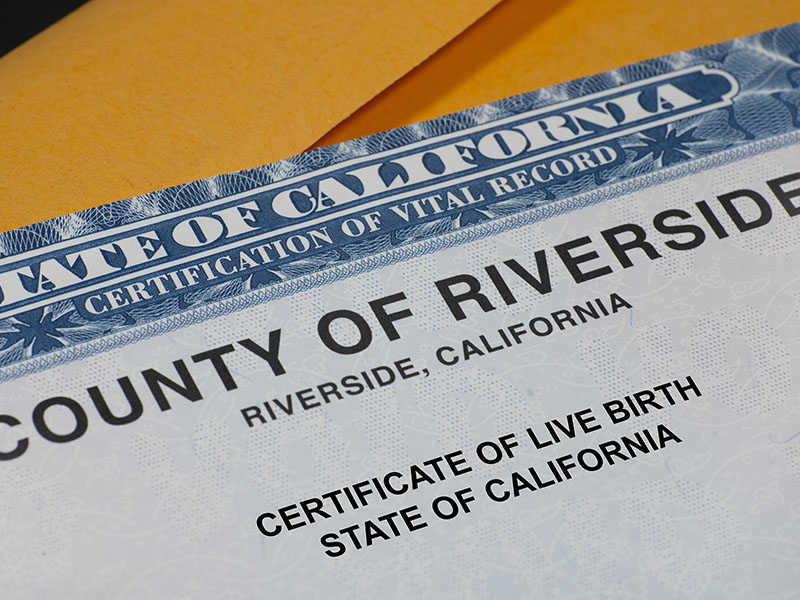
The California birth certificate is more than just a historical record; it is a foundational document underpinning numerous essential life activities, from establishing identity to facilitating international travel. For residents, those born within the state, or individuals navigating various administrative processes, understanding how to obtain this vital record is crucial. Whether you’re applying for a passport for that dream family trip, enrolling a child in school, securing social security benefits, or simply needing proof of age and parentage, a certified copy of a California birth certificate is frequently required. This comprehensive guide aims to demystify the process, providing clear, step-by-step instructions and insights to ensure a smooth and efficient experience, aligning with the practical needs that define modern lifestyle management.

Understanding the California Birth Certificate System
Before embarking on the application process, it’s beneficial to grasp the fundamental structure of birth recordkeeping in California. Birth records are maintained at both the state and county levels, offering multiple avenues for individuals to request certified copies. The primary state agency responsible for vital records is the California Department of Public Health – Vital Records (CDPH-VR). Additionally, each California County Recorder/Clerk holds records for births that occurred within their specific jurisdiction. Knowing which office to approach can sometimes expedite the process, especially for more recent births.
Who Can Request a Certified Copy?
Access to certified birth certificates is restricted to protect privacy and prevent identity theft. Generally, only authorized individuals can obtain a certified copy that is valid for legal purposes. An authorized individual typically includes:
- The registrant (the person named on the birth certificate).
- A parent or legal guardian of the registrant.
- A child, grandchild, grandparent, sibling, spouse, or domestic partner of the registrant.
- A party entitled to the record by court order.
- An attorney representing the registrant or the registrant’s estate, or any person or agency authorized by law to act on behalf of the registrant or the registrant’s estate.
- A member of a law enforcement agency or a representative of a governmental agency, as provided by law, who is conducting official business.
If you do not meet the criteria for an authorized individual, you may still be able to obtain an informational copy. An informational copy bears an inscription stating, “INFORMATIONAL, NOT A VALID DOCUMENT TO ESTABLISH IDENTITY.” While it contains the same information as an authorized copy, it cannot be used for legal identification purposes. This distinction is crucial, especially when applying for passports or other official documents that impact your lifestyle choices, such as relocation or international assignments.
Types of Certified Copies
There are two main types of certified birth certificate copies available in California:
- Authorized Certified Copy: This is the full legal document, printed on special security paper, that can be used to establish identity, obtain a passport, enroll in school, or for any other legal purpose requiring proof of birth. It is only issued to authorized individuals.
- Informational Certified Copy: This copy contains all the same information as an authorized copy but is not valid for establishing identity. It is primarily for genealogical research or personal record-keeping. It is available to anyone who applies and pays the required fee.
When applying, it is critical to specify which type of copy you need. For most legal and identification purposes, including travel and family-related administrative tasks, an authorized certified copy is necessary.
The Application Process: Step-by-Step
Obtaining a California birth certificate involves several key steps, regardless of whether you apply through the state office or a County Recorder/Clerk. Adhering to these steps will streamline your application.
Gathering Required Documentation
Before submitting your application, prepare the following:
- Application Form: This is the most critical document. You can usually download the specific form from the CDPH-VR website or your local County Recorder/Clerk’s website. The form will ask for details such as the registrant’s name at birth, date of birth, place of birth (city/county), parents’ names (including mother’s maiden name), and your relationship to the registrant.
- Sworn Statement: If you are requesting an authorized certified copy, the application form typically includes a “Sworn Statement” section that you must complete. This statement affirms, under penalty of perjury, that you are an authorized individual.
- Notarized Signature (for mailed applications): For authorized certified copies requested via mail, your signature on the sworn statement must be notarized. This is a crucial step to verify your identity and prevent fraud. Notary services are widely available at banks, credit unions, and UPS stores.
- Valid Photo Identification: You will need to provide a copy of a valid government-issued photo ID (e.g., driver’s license, state ID card, passport) if applying by mail or online. If applying in person, you will present the original ID. The ID helps verify your identity as the authorized requester.
- Payment: Be prepared to pay the applicable fee.
Choosing Your Application Method
California offers several convenient ways to apply for a birth certificate, each with its own advantages regarding speed and convenience:
- Online: Many County Recorder/Clerk offices, and authorized third-party services linked through the CDPH-VR website, allow online applications. This is often the fastest method for processing and delivery, though it may involve a slightly higher service fee if using a third-party vendor. You will typically upload scanned copies of your notarized sworn statement and ID.
- By Mail: This is a common method, particularly if you are not near a County Recorder/Clerk office or prefer not to use online services. You will need to print, complete, and sign the application form (with notarization if applicable), include a copy of your ID, and mail it with a check or money order for the fee. Processing times for mail applications are generally longer.
- In Person: For the quickest turnaround, applying in person at the relevant County Recorder/Clerk office where the birth occurred is often the best option. Many offices offer same-day service for in-person requests. You will need to bring your completed application, valid photo ID, and payment. Note that the CDPH-VR office in Sacramento does not offer in-person services for birth certificate requests directly; they process mail and online requests.

Fees and Processing Times
The fee for a certified copy of a birth certificate in California is standardized across most county and state offices. However, check the specific office’s website for the most current fee schedule, as it can occasionally change. Payment methods typically include credit card (for online/in-person), check, or money order (for mail/in-person). Cash is usually accepted for in-person applications.
Processing times vary significantly based on the application method and the volume of requests:
- In-Person: Often same-day or within a few business days.
- Online/Third-Party: Typically 5-10 business days, plus shipping.
- Mail: Can range from 2 weeks to 6-8 weeks, depending on the volume at the specific office.
Always factor in these processing times, especially if you need the document for an urgent matter like an upcoming international trip or a deadline for a business stay.
Specific Scenarios and Considerations
While the general process is straightforward, certain situations might require additional steps or considerations.
Amending a Birth Record
Life circumstances sometimes necessitate changes to a birth record, such as correcting errors, adding a father’s name, or updating information following an adoption or gender change. The process for amending a birth record is more complex than simply obtaining a copy and typically requires submitting specific forms, supporting legal documentation (e.g., court orders), and often a sworn affidavit. These requests are usually processed directly through the CDPH-VR and can take considerably longer than standard copy requests. It’s advisable to consult the CDPH-VR website or contact them directly for detailed instructions on birth record amendments.
For International Travel and Foreign Use
If your California birth certificate is needed for use in a foreign country, such as for a visa application, establishing dual citizenship, or other official purposes, it may require an “apostille” or “authentication.” An apostille is a certification issued by the California Secretary of State that verifies the authenticity of the signature on a public document for use in countries that are part of the Hague Apostille Convention. For countries not part of this convention, a more involved “authentication” process may be required through the United States Department of State. This step is entirely separate from obtaining the birth certificate itself and must be done after you have received your certified copy. It’s an essential consideration for those planning extended international travel or relocating abroad, impacting their global lifestyle.
Dealing with Delays or Issues
Occasionally, applications may encounter delays or issues. Common reasons include incomplete forms, missing notarization, illegible identification, or incorrect payment. If you experience a significant delay beyond the published processing times, or if your application is rejected, immediately contact the office where you submitted your request. Have your application details ready, including the date of submission and any reference numbers provided. Persistent follow-up can often resolve issues more quickly.
Ensuring a Smooth Experience
Proactive measures can significantly ease the process of obtaining your California birth certificate, aligning with a prepared and organized lifestyle.
Tips for a Successful Application
- Double-Check All Information: Ensure all names, dates, and locations on your application form exactly match the information on the original birth record. Even minor discrepancies can cause delays.
- Read Instructions Carefully: Each county or the state office may have slight variations in their specific requirements. Always read the instructions provided on their respective websites or forms.
- Verify Notarization: If your application requires a notarized signature, ensure the notary completes all parts of the notarization correctly, including their stamp and signature. An incomplete notarization is a common reason for rejection.
- Keep Copies: Make copies of your completed application, ID, and payment receipt before mailing or submitting in person. This provides a record if there are any issues.
- Allow Ample Time: Do not wait until the last minute, especially if you need the certificate for an urgent matter like a passport application for a family trip or establishing new residency. Build in extra time for potential delays.
Important Contact Information
For general inquiries and state-level processes, the California Department of Public Health – Vital Records (CDPH-VR) website (www.cdph.ca.gov/Programs/CRB/Pages/CRB-BirthCertificates.aspx) is an invaluable resource. For county-specific requests, locate the official website of the County Recorder/Clerk in the county where the birth occurred. These sites will provide the most accurate forms, fee schedules, and localized instructions.
In conclusion, obtaining a California birth certificate is a straightforward administrative task when approached with diligence and awareness of the requirements. By understanding who can request a copy, the types of copies available, and the various application methods, individuals can efficiently secure this crucial document. This preparedness not only simplifies bureaucratic processes but also empowers you to confidently manage your personal identity and seamlessly pursue various lifestyle opportunities, from local enrollments to global adventures.
LifeOutOfTheBox is a participant in the Amazon Services LLC Associates Program, an affiliate advertising program designed to provide a means for sites to earn advertising fees by advertising and linking to Amazon.com. Amazon, the Amazon logo, AmazonSupply, and the AmazonSupply logo are trademarks of Amazon.com, Inc. or its affiliates. As an Amazon Associate we earn affiliate commissions from qualifying purchases.