
California, a state renowned for its diverse landscapes, from the sun-drenched beaches of Southern California to the majestic redwood forests of the north, also presents a unique and complex regulatory environment for firearm ownership. For residents and prospective gun owners in the Golden State, understanding the intricacies of obtaining a firearm license is a crucial first step. This process is governed by a comprehensive set of laws designed to ensure public safety while upholding constitutional rights. Navigating these regulations requires careful attention to detail and a commitment to fulfilling all legal prerequisites.
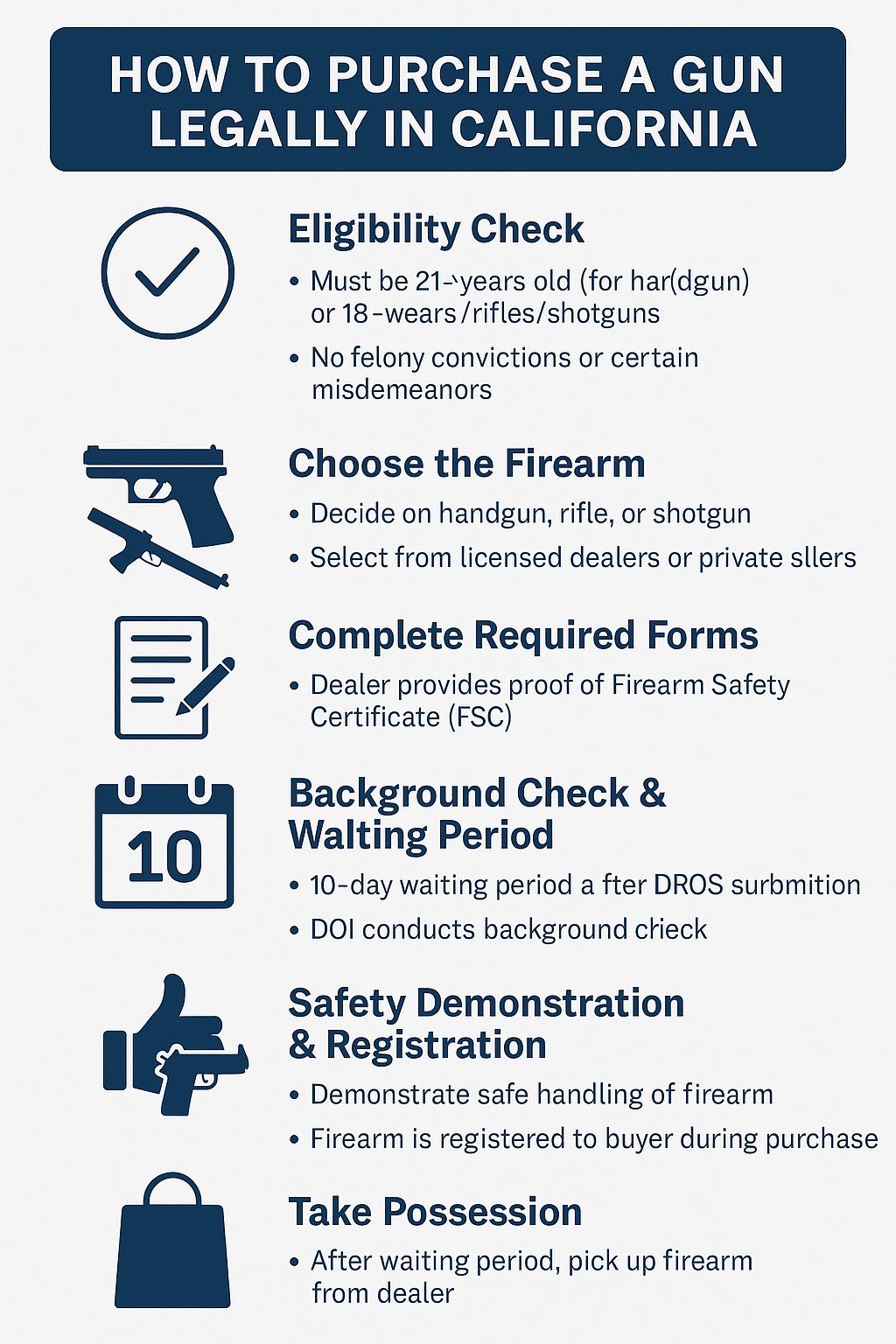
The journey to legally possessing a firearm in California is not a single event but rather a multi-faceted process involving background checks, safety training, and specific waiting periods. It is essential to approach this with a clear understanding of the legal framework, as non-compliance can lead to severe penalties. This guide aims to demystify the procedures, offering a structured approach to acquiring the necessary authorizations to own firearms within the state.
Understanding the Legal Landscape of Firearm Ownership in California
California’s approach to firearm regulation is among the most stringent in the United States. This robust legal framework is designed to address concerns about gun violence while aiming to balance public safety with the rights of responsible gun owners. It is imperative for anyone seeking to own a firearm in California to familiarize themselves with the key legislative pillars that govern this domain.
The Role of the Firearm Safety Certificate (FSC)
One of the foundational requirements for acquiring most firearms in California is obtaining a Firearm Safety Certificate (FSC). This certificate is proof that an individual has passed a written test demonstrating knowledge of firearm safety, laws, and responsible gun handling. The FSC is not a license to carry a concealed weapon but rather a prerequisite for purchasing or otherwise acquiring a firearm.
The FSC examination covers a broad range of topics, including safe firearm storage, the prohibition of certain types of firearms, firearm handling and safety, and California firearm laws. To obtain an FSC, individuals must attend a firearms safety demonstration conducted by a certified FSC instructor and then pass a written test. The certificate is valid for five years from the date of issuance. This requirement ensures that all prospective firearm owners possess a baseline understanding of safe practices before they can legally take possession of a firearm.
Background Checks: The Cornerstone of Firearm Acquisition
In California, every firearm purchase or transfer, whether through a licensed dealer or a private party, must undergo a background check. This process is managed by the California Department of Justice (DOJ). The primary tool used for this check is the DROS (Dealer’s Record of Sale) system.
When you purchase a firearm from a licensed dealer, the dealer will collect your personal information and submit it to the DOJ through the DROS system. This initiates a background check that reviews various databases for any disqualifying factors, such as felony convictions, certain misdemeanor convictions, restraining orders, or documented history of dangerousness. The DOJ then has a statutory period to review the information.
Waiting Periods: Ensuring Deliberation and Safety
California enforces a mandatory 10-day waiting period between the DROS submission and the actual release of a firearm to the purchaser. This waiting period is designed to provide a “cooling-off” period for individuals who might be acting impulsively and to allow law enforcement additional time to complete thorough background checks. This means that even after a successful background check, you cannot immediately take possession of your firearm. The clock starts from the moment the DROS is submitted by the dealer.
Types of Firearm Licenses and Permits in California
While the FSC is a prerequisite for purchasing firearms, California offers other types of permits and licenses related to firearm possession and carry, each with distinct purposes and requirements. It is vital to understand which type of authorization, if any, aligns with your intended use of a firearm.
Handgun Eligibility Certificate (HEC)
For those interested in purchasing handguns, an additional layer of scrutiny applies. In addition to the FSC and background check, California law requires individuals to obtain a Handgun Eligibility Certificate (HEC) for each handgun they wish to purchase. This certificate is issued by the California Department of Justice and is valid for one year.
To obtain an HEC, an applicant must:
- Possess a valid FSC.
- Pass a background check, which is more extensive than the standard DROS check.
- Complete a handgun safety course, which includes live-fire training.
- Demonstrate proficiency with the specific handgun model they intend to purchase.
The HEC system aims to ensure that individuals purchasing handguns have demonstrated a higher level of proficiency and understanding of safe handgun operation.
Carry Concealed Weapon (CCW) Permits
For individuals who wish to carry a concealed firearm in public, a Carry Concealed Weapon (CCW) permit is required. This is a much more involved process than obtaining an FSC or HEC and is handled at the county level by the sheriff’s department or the police chief of a city.
The application process for a CCW permit typically includes:
- Application Submission: A detailed application form requiring personal information, firearm details, and a statement of “good cause” for needing to carry a concealed weapon. The interpretation of “good cause” has evolved significantly with legal challenges, and many counties now have more permissive standards.
- Background Investigation: An extensive background check, including fingerprinting, a review of criminal history, mental health records, and personal references.
- Firearm Proficiency Training: Successful completion of a rigorous firearms training course, which often includes both written and live-fire components. The specific requirements for this training can vary by county.
- Interview: An interview with a law enforcement official to discuss the application and “good cause” justification.
- Issuance: If approved, the permit is issued for a specified period (usually one to two years) and outlines specific restrictions on where the permit holder can carry a concealed firearm.
It is crucial to note that CCW permits are issued at the discretion of the issuing agency, and approval is not guaranteed. The requirements and standards can differ significantly from one county to another, making it important to research the specific procedures in your county of residence.
The Step-by-Step Process for Acquiring a Firearm
Understanding the individual components is essential, but a consolidated step-by-step approach can provide a clearer roadmap for those looking to legally acquire a firearm in California.
Step 1: Obtain Your Firearm Safety Certificate (FSC)
As mentioned earlier, this is the foundational requirement.
- Find a Certified Instructor: Locate a California DOJ-certified FSC instructor in your area. Many gun shops and shooting ranges offer these courses.
- Attend the Safety Demonstration: Participate in the mandatory safety demonstration.
- Pass the Written Test: Demonstrate your knowledge by achieving a passing score on the written examination.
- Receive Your FSC: Once you pass, you will be issued your FSC. Ensure you keep this document safe, as it is required for the purchase.
Step 2: Select Your Firearm and Initiate the DROS Process
Once you have your FSC, you can visit a licensed firearms dealer (often referred to as an FFL – Federal Firearms Licensee).
- Choose Your Firearm: Select the firearm you wish to purchase. Remember that California has specific regulations regarding the types of firearms that can be sold, including bans on certain assault weapons.
- Complete the DROS Application: The dealer will provide you with the Dealer’s Record of Sale (DROS) form. You will need to fill this out accurately and completely, providing your personal information, driver’s license details, and information about the firearm.
- Undergo the Background Check: The dealer submits the DROS information to the California Department of Justice.
Step 3: The Waiting Period and Firearm Pickup
After the DROS is submitted:
- Observe the 10-Day Waiting Period: You must wait a minimum of 10 days from the date the DROS was submitted before you can legally take possession of the firearm. This period allows for the background check to be completed and for the “cooling-off” period.
- Pass the Background Check: If there are no disqualifying factors, the DOJ will clear the DROS.
- Pick Up Your Firearm: On or after the 10th day, you can return to the dealer to pick up your firearm. You will need to present your FSC and a valid form of identification. If you are purchasing a handgun, you may also need to present your HEC. The dealer will then complete the final transfer.
Step 4: Safe Storage Requirements
California law mandates specific safe storage practices for firearms to prevent unauthorized access, especially by children. When you take possession of your firearm, you are legally obligated to store it securely. This typically means storing it unloaded and locked with a gun lock or in a locked container, separate from ammunition.
It is crucial to stay informed about any changes or updates to California’s firearm laws, as they are subject to legislative action and court rulings. Consulting with a qualified legal professional or a reputable firearms dealer can provide further clarity and ensure compliance with all regulations. The process of acquiring a firearm in California requires diligence and a thorough understanding of the legal framework, ultimately promoting responsible gun ownership and public safety.
LifeOutOfTheBox is a participant in the Amazon Services LLC Associates Program, an affiliate advertising program designed to provide a means for sites to earn advertising fees by advertising and linking to Amazon.com. Amazon, the Amazon logo, AmazonSupply, and the AmazonSupply logo are trademarks of Amazon.com, Inc. or its affiliates. As an Amazon Associate we earn affiliate commissions from qualifying purchases.