
Embarking on the journey to obtain a learner’s permit in California is more than just a bureaucratic step; it’s the very first stride towards unlocking unparalleled freedom and independence. For many, a driver’s license isn’t merely a document; it’s a passport to adventure, an enabler of spontaneous road trips, and a fundamental tool for exploring the vast and varied landscapes that make California a world-renowned destination. From the sun-kissed beaches of San Diego to the majestic peaks of the Sierra Nevada, and from the vibrant urban centers of Los Angeles and San Francisco to the serene vineyards of Napa Valley, the Golden State beckons with endless possibilities for exploration.
On a website dedicated to travel, hotels, tourism, accommodation, landmarks, and lifestyle, discussing how to get a learner’s permit might seem unconventional at first glance. However, it’s intrinsically linked to the very essence of what we celebrate: the freedom to discover. Whether you dream of navigating the iconic Pacific Coast Highway, venturing into Yosemite National Park for a weekend camping trip, or simply enjoying the flexibility of driving to new restaurants and local attractions, a learner’s permit is your foundational key. It represents the ability to craft your own travel narratives, choose your own pace, and experience California’s diverse offerings firsthand. This guide will walk you through the process, framing it not just as an administrative task, but as the initial chapter in your personal Californian adventure.
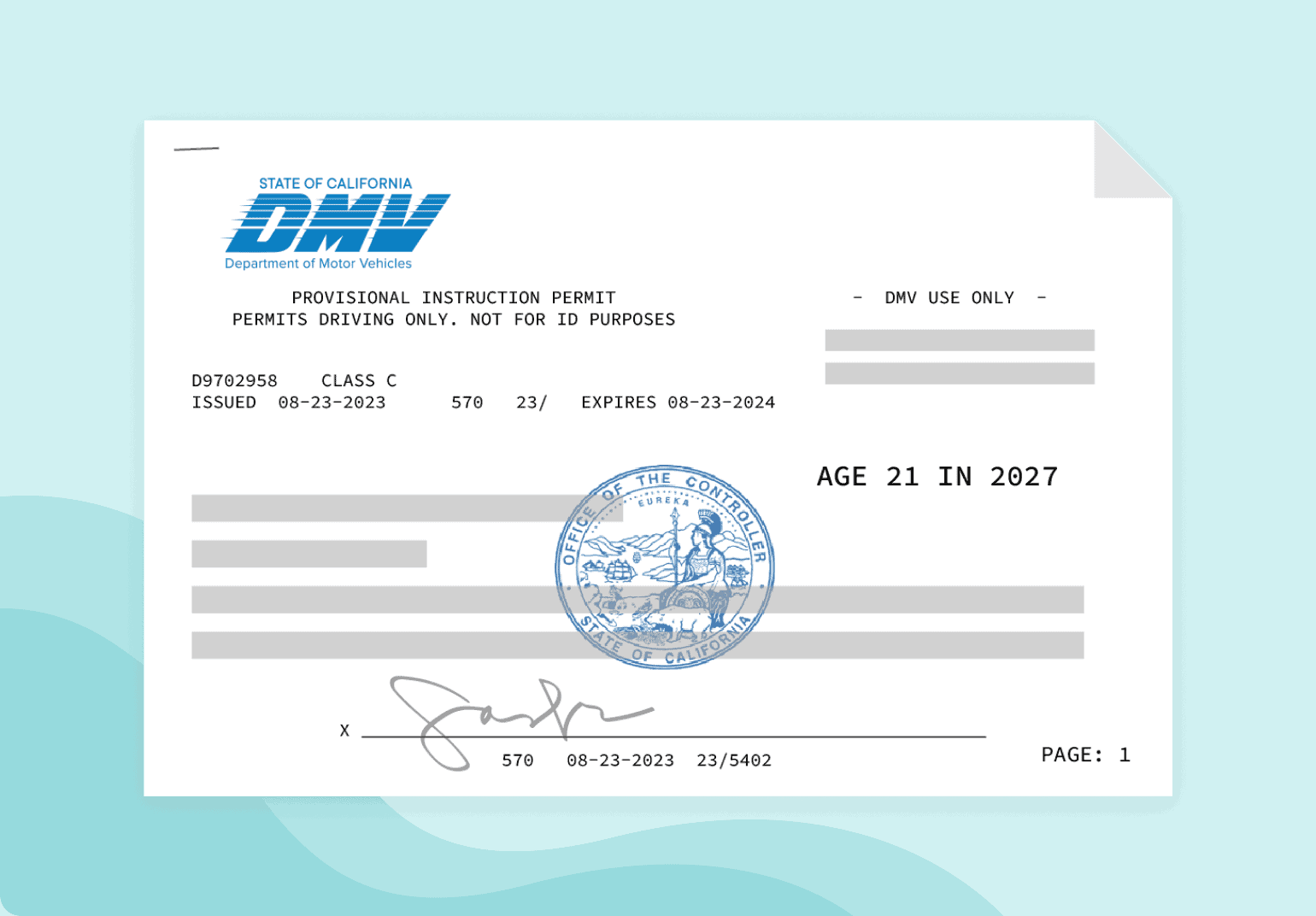
The Road to Independence: Understanding the Learner’s Permit in California
Grasping the fundamentals of the California learner’s permit, officially known as an instruction permit, is crucial. This permit allows individuals to drive a vehicle when accompanied by a licensed driver who meets specific requirements. It’s designed to provide supervised driving experience, ensuring new drivers develop essential skills and confidence before hitting the road solo. The journey begins with understanding who is eligible and what this permit truly entails for your future lifestyle in or around California.
Who Can Apply? Age Requirements and Eligibility
In California, aspiring drivers can apply for a learner’s permit as early as 15 and a half years old. This age requirement is critical, as it dictates when you can begin the formal process. For those under 18, there’s an additional prerequisite: completion of a driver education course. This course, typically 30 hours in length, provides vital theoretical knowledge about road rules, safety, and responsible driving practices. Many young people find these courses invaluable, not only for fulfilling state requirements but also for gaining a solid understanding of the nuances of driving in diverse Californian environments, from bustling city streets to scenic rural routes. Think of this initial educational step as preparing for an extensive travel itinerary, where understanding the ‘map’ (road rules) is paramount to a successful and safe journey.
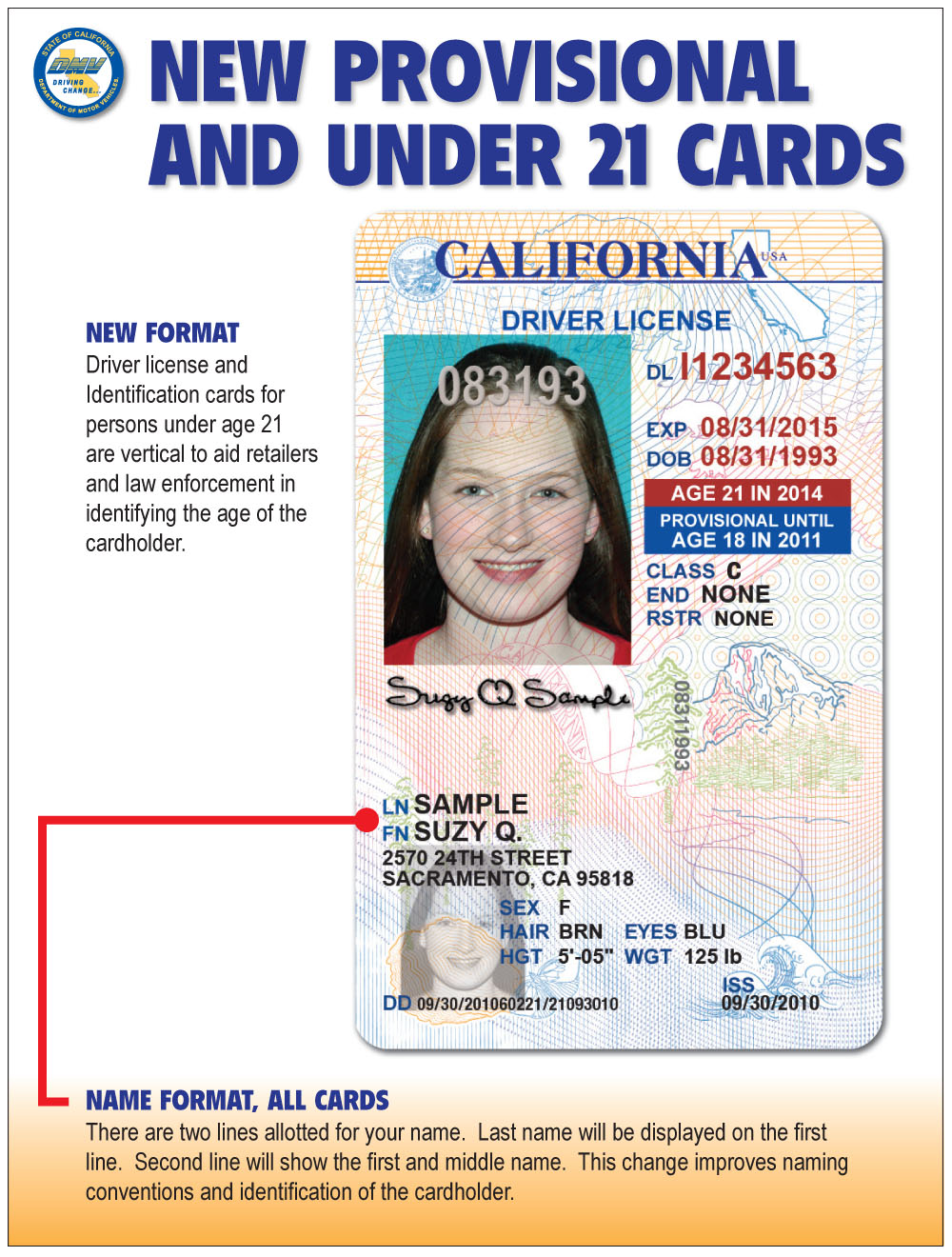
The learner’s permit is more than just a piece of paper; it’s an authorization to practice. It’s a temporary license that mandates supervision, instilling good habits from the outset. For young travelers and those looking to integrate seamlessly into the Californian lifestyle, obtaining this permit signifies the beginning of true mobility. Imagine the possibilities: driving with your family to a new destination, exploring local landmarks in Sacramento or Fresno, or even planning a future trip to a distant resort once you gain full licensure. The permit sets the stage for a lifetime of independent travel and discovery within the Golden State.
Restrictions and Rules of the Road
While the learner’s permit grants newfound freedom, it comes with specific, non-negotiable restrictions designed to ensure safety during the learning phase. For individuals under 18, you must always be accompanied by a licensed driver who is at least 25 years old. This supervising driver must also hold a valid California driver’s license and be seated in the front passenger seat, ready to take control if necessary. For those 18 and older, the accompanying driver must be at least 18 years old. This rule underscores the importance of mentorship during initial driving experiences.
Furthermore, permit holders under 18 are not permitted to drive between 11 PM and 5 AM, nor are they allowed to transport passengers under 20 years old for the first 12 months. These limitations aim to reduce high-risk driving situations, allowing new drivers to focus purely on skill development without added distractions or challenging conditions. Adhering to these rules isn’t just about compliance; it’s about building a foundation of safe driving practices that will serve you well as you navigate California’s diverse terrains, from the winding roads of Big Sur to the bustling freeways of Orange County. Understanding these initial boundaries is key to a smooth transition to full driving privileges and the expansive travel opportunities that await.
Navigating the DMV: Your Step-by-Step Guide
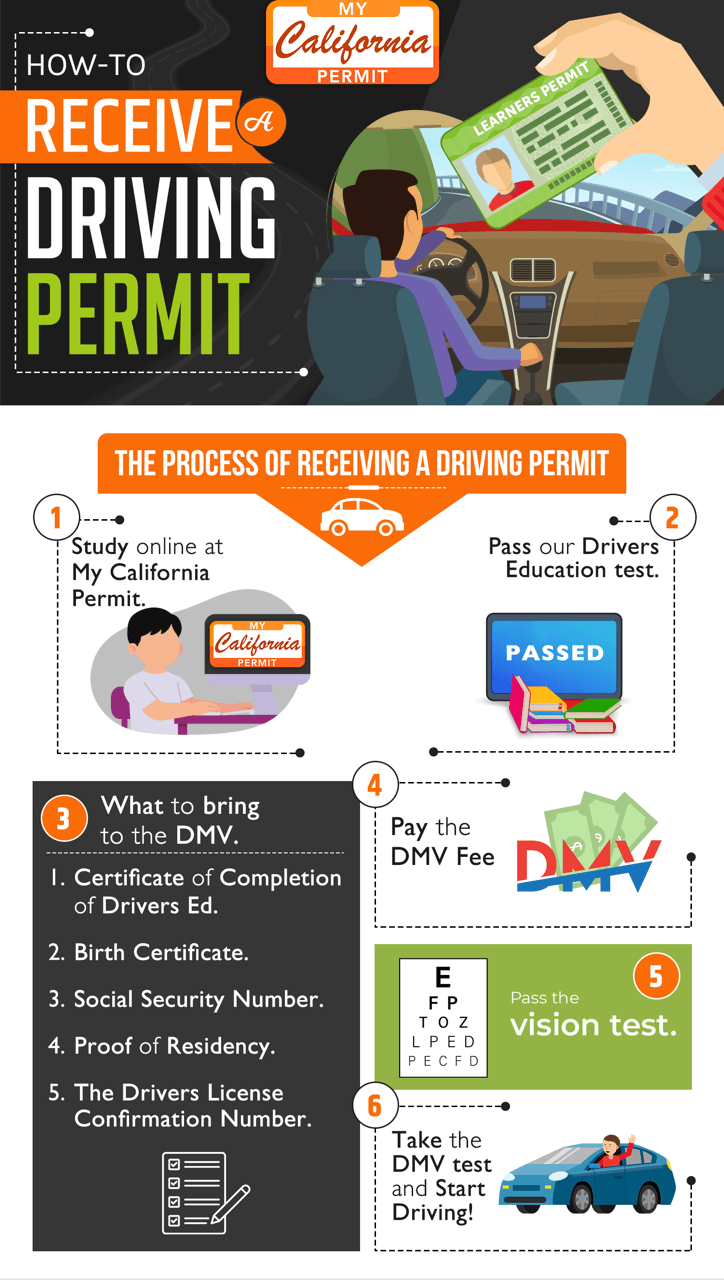
The process of obtaining a learner’s permit in California primarily involves interacting with the California Department of Motor Vehicles (DMV). While it can sometimes be perceived as a daunting task, approaching it systematically, much like planning a complex trip, can make it much smoother. Here’s a detailed guide to help you prepare for and succeed at your DMV visit.
Step 1: Gather Your Essential Documents
Before you even set foot in a DMV office, thorough preparation of your documents is paramount. This step is akin to packing your passport and itinerary before an international flight; missing even one item can derail your plans. You will need:
- Proof of Identity: This typically includes your birth certificate, U.S. passport, or a permanent resident card. The document must be original or a certified copy. This verifies who you are, a crucial step for official government identification.
- Proof of Residency: Two different documents proving your California residency are required. Examples include utility bills (gas, electric, water), a rental agreement, school documents, or an insurance policy. For minors, parental residency documents along with a statement may suffice. This ensures you are a legitimate resident of the state.
- Social Security Number (SSN): You will need to provide your SSN. While you don’t always need to present the physical card, knowing the number is essential.
- Application for Driver License or Identification Card (DL 44 form): This form can be completed online and printed, or obtained at the DMV office. Filling it out beforehand saves significant time. Ensure all information is accurate to avoid delays.
- Proof of Driver Education (for minors): If you are under 18, you must present a certificate of completion for your driver education course. This is a non-negotiable requirement.
- Medical Information (if applicable): If you have any medical conditions that might affect your driving, it’s wise to bring supporting documentation from a physician.
Having all these documents organized and easily accessible will significantly expedite your DMV visit, freeing up more time to perhaps plan your first practice drive to a scenic overlook or a charming Californian town.
Step 2: Scheduling Your DMV Appointment and What to Expect
While walk-ins are sometimes accepted, scheduling an appointment with the DMV is highly recommended. This can be done conveniently through the official California DMV website, often weeks in advance. An appointment will drastically reduce your waiting time, which means more time to enjoy your day, perhaps at a local attraction in Santa Monica or Oakland rather than in a waiting room.
Upon arrival at your scheduled time at a DMV location like the bustling Hollywood DMV or the more relaxed Santa Barbara DMV, you will typically:
- Check-in: Present your appointment confirmation and be directed to the appropriate counter.
- Application Submission: Submit your completed DL 44 form and all supporting documents. The DMV representative will review them for completeness and accuracy.
- Thumbprint and Photo: You will be required to provide a thumbprint (for identification purposes) and have your photo taken. This photo will appear on your learner’s permit and eventually your driver’s license, so smile genuinely!
- Vision Test: A simple vision screening will be conducted to ensure you meet the minimum vision requirements for safe driving. If you wear glasses or contact lenses, be sure to have them with you.
This structured process ensures that all necessary personal identifiers are accurately captured, preparing you for the next critical phase: the knowledge test.
Step 3: Conquering the Knowledge Test
The knowledge test is where your understanding of California’s traffic laws, road signs, and safe driving practices is evaluated. This is not a test to be taken lightly; preparation is key. The primary resource for this test is the official California Driver Handbook. This comprehensive guide covers everything from basic rules of the road to specific laws regarding DUI and vehicle registration.
Tips for Success:
- Read the Handbook Thoroughly: Don’t just skim. Pay attention to details, especially sections on right-of-way, speed limits, parking rules, and traffic signs. Many questions on the test are directly drawn from this manual.
- Take Practice Tests: Numerous online resources offer free practice tests that mimic the format and content of the actual DMV exam. Utilizing these can significantly boost your confidence and help identify areas where you need further study.
- Understand the “Why”: Rather than simply memorizing answers, try to understand the reasoning behind each rule. This holistic understanding will not only help you pass the test but also make you a safer, more responsible driver on California’s diverse roads.
For applicants under 18, the test consists of 46 questions, and you must answer at least 38 correctly (an 82% pass rate). For those 18 and older, there are 36 questions, with a requirement of 30 correct answers (83% pass rate). If you fail the test, don’t despair! You are allowed a few attempts, though you might need to wait a short period before retesting. Successfully passing this test is a huge milestone, signifying you’ve absorbed the foundational knowledge required for safe and responsible driving, a skill that will serve you well whether you’re commuting in San Jose or exploring the wilderness near Joshua Tree National Park.
Step 4: Finalizing Your Application and Paying the Fee
Once you’ve passed the knowledge test and completed all other requirements (vision test, photo, thumbprint), the final step at the DMV office is to pay the application fee. The fee amount is subject to change, so it’s always best to check the official DMV website for the most current information. Typically, this fee covers multiple attempts at the knowledge test within a 12-month period, should you need them, and the issuance of your permit.
After payment, you will typically receive a temporary learner’s permit immediately. The official, physical permit card will then be mailed to your address within a few weeks. Keep your temporary permit safe, as it is your legal authorization to begin supervised driving practice. This moment marks your official entry into the world of driving, initiating the practical phase of your journey toward full driving independence and the ability to travel freely throughout California.
Beyond the Permit: Embracing Your Californian Journey
With your learner’s permit in hand, the real adventure begins. This document isn’t just a license to learn; it’s a key that unlocks countless future travel and lifestyle experiences across the vast and beautiful state of California.
Driving with a Learner’s Permit: Practice Makes Perfect
The learner’s permit phase is designed for supervised practice, allowing you to develop critical driving skills and confidence. Remember the rules: always have a licensed driver (25+ for minors, 18+ for adults) in the passenger seat, adhere to curfews if under 18, and avoid driving with unauthorized passengers. This period is your opportunity to:
- Master Basic Maneuvers: Practice parking, three-point turns, lane changes, and navigating intersections in various environments. Start in quiet residential areas like those in Pasadena or Anaheim, gradually moving to busier streets as your confidence grows.
- Experience Diverse Driving Conditions: California offers everything from urban freeways in Los Angeles to winding mountain roads near Lake Tahoe. With supervision, explore different road types, weather conditions, and traffic patterns to gain comprehensive experience. This varied exposure will make you a more adaptable and safer driver, ready for any adventure.
- Build Confidence: The more you drive, the more comfortable and intuitive the act of driving becomes. Use this time to ask your supervising driver questions, learn from their experience, and build a strong foundation for independent driving.
This practice phase is an investment in your future travel plans. The skills you hone now will directly translate into the freedom to explore scenic routes, historic landmarks, and hidden gems across California later on.
Planning Your First Road Trips (with Supervision)
Even with a learner’s permit, you can start dreaming about and even undertaking supervised road trips. These early excursions are perfect for learning defensive driving, navigating unfamiliar roads, and experiencing the joy of discovery that driving provides. Consider these types of early adventures:
- Coastal Drives: With an experienced driver, take a scenic route along a portion of the Pacific Coast Highway. Imagine the stunning views near Laguna Beach or Monterey. This allows you to practice driving while soaking in the natural beauty of California.
- City Exploration: Navigate a new city like San Francisco. Drive over the Golden Gate Bridge, explore the vibrant neighborhoods, or visit Fisherman’s Wharf. This helps you practice urban driving and parking skills while experiencing local culture and attractions.
- National Park Visits: Plan a trip to Sequoia National Park or Death Valley National Park with your supervisor. These longer drives offer opportunities to practice highway driving, understand route planning, and appreciate California’s incredible natural landmarks. For such trips, you can explore various accommodation options, from cozy boutique hotels to family-friendly resorts, making the journey as much a part of the experience as the destination itself. This ties directly into our lifestyle discussions, whether it’s budget travel camping under the stars or a more luxury travel stay at a cabin.
The learner’s permit is not just a stepping stone; it’s the very beginning of your personal map to California’s wonders. It empowers you to not only explore the state but also to immerse yourself in its diverse local cultures, vibrant food scenes, and a myriad of activities that define the Californian lifestyle. From visiting world-famous theme parks like Disneyland Park or Universal Studios Hollywood to discovering charming coastal towns and historic missions, the ability to drive opens up a world of possibilities for creating unforgettable memories.
In conclusion, obtaining your learner’s permit in California is an exciting and empowering step. It’s the moment you gain the foundational knowledge and the legal authorization to begin your supervised driving journey, leading to full licensure and the ultimate freedom to explore. From the meticulous preparation of documents and the strategic scheduling of your DMV appointment to the focused study for your knowledge test and the diligent practice behind the wheel, each step brings you closer to independently navigating California’s highways and byways. This permit isn’t merely a piece of plastic; it’s your personal invitation to experience the vastness and beauty of the Golden State, to craft your own adventures, and to truly live out of the box. So, gather your documents, study up, and get ready to drive into a world of endless Californian possibilities!
LifeOutOfTheBox is a participant in the Amazon Services LLC Associates Program, an affiliate advertising program designed to provide a means for sites to earn advertising fees by advertising and linking to Amazon.com. Amazon, the Amazon logo, AmazonSupply, and the AmazonSupply logo are trademarks of Amazon.com, Inc. or its affiliates. As an Amazon Associate we earn affiliate commissions from qualifying purchases.