
Florida’s vibrant tourism industry, characterized by its sun-drenched beaches, world-class theme parks, and thriving culinary scene, relies heavily on a well-regulated system for the sale of alcoholic beverages. Whether you’re envisioning a charming beachfront cafe in Key West, a sophisticated downtown bar in Miami, or a bustling restaurant within a resort in Orlando, securing the appropriate liquor license is a critical step. This process, while seemingly straightforward, involves navigating a specific set of regulations and requirements set forth by the Florida Department of Business and Professional Regulation (DBPR), specifically the Division of Alcoholic Beverages and Tobacco (ABT). Understanding these requirements is paramount for any aspiring entrepreneur looking to enter or expand within Florida’s hospitality sector.
The allure of owning a business that can serve alcohol in the Sunshine State is undeniable. From the lively nightlife of South Beach to the family-friendly dining experiences throughout Central Florida, the demand for establishments offering alcoholic beverages remains consistently high. This demand fuels a robust market for those who can successfully obtain and maintain a liquor license. However, the path to this often involves more than just filling out a few forms. It requires a thorough understanding of the different license types, the eligibility criteria, the application process, and the ongoing compliance obligations.
This guide aims to demystify the process of obtaining a liquor license in Florida. We will delve into the essential steps, the various license categories available, and the crucial considerations that will pave your way to successfully serving your patrons a delightful beverage alongside their meals or experiences. Whether you are an established restaurateur looking to expand your offerings or a new entrepreneur with a dream, this comprehensive overview will equip you with the knowledge to navigate the licensing landscape effectively.
Understanding Florida’s Liquor License Framework
The foundation of obtaining a liquor license in Florida lies in understanding the tiered system and the various categories of licenses available. The Division of Alcoholic Beverages and Tobacco (ABT) meticulously categorizes licenses based on the type of establishment, the nature of the business, and the specific alcoholic beverages that can be sold. This categorization ensures that the public interest is served and that the sale of alcohol is conducted responsibly and legally across the state.
Types of Liquor Licenses and Their Applications
The ABT offers a wide array of license classifications, each with its own set of requirements and privileges. It is crucial to identify the license type that precisely matches your business model to avoid costly mistakes and delays.
-
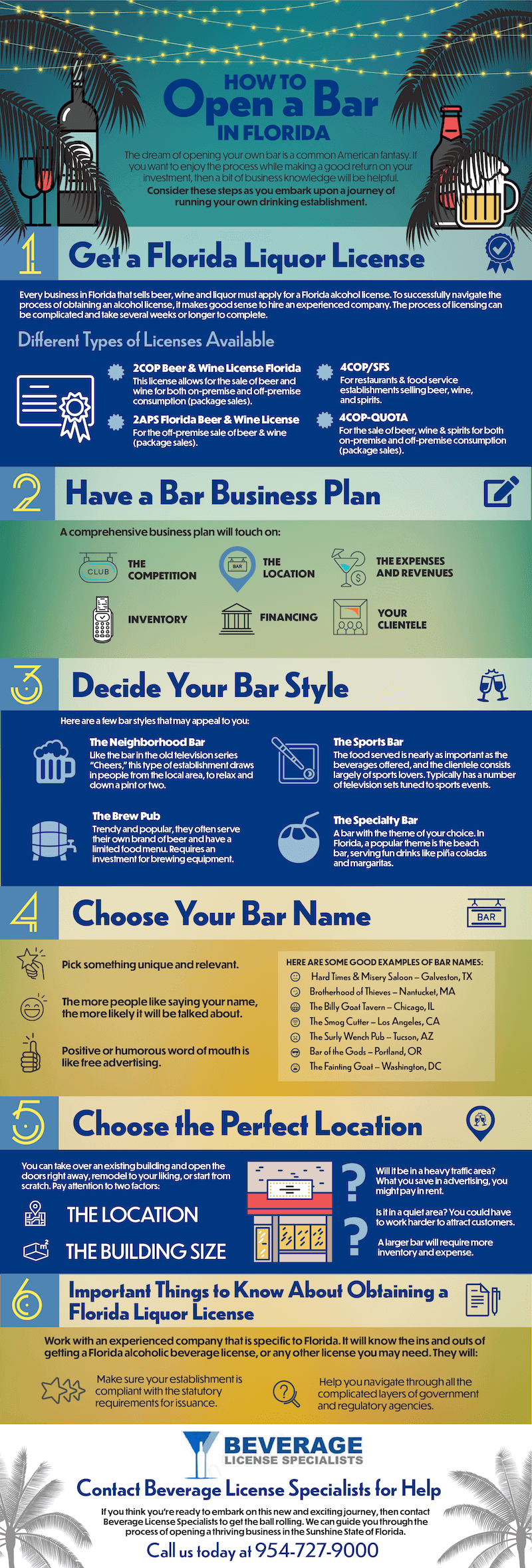
Full Liquor Licenses (e.g., 1APS, 1COP, 4COP): These are the most sought-after licenses for businesses intending to sell all types of alcoholic beverages, including beer, wine, and spirits.
- 1APS (Beer and Wine – Package Only): This license is suitable for establishments that wish to sell beer and wine for off-premise consumption, such as convenience stores or specialty wine shops.
- 1COP (Beer Only – Package Only): This license permits the sale of beer for off-premise consumption, often found in dedicated beer retailers.
- 4COP (Full Liquor – Quota License): This is the most comprehensive license, allowing for the sale of beer, wine, and spirits for both on-premise and off-premise consumption. These licenses are subject to a quota system, meaning the number of available 4COP licenses in each county is limited. Obtaining a 4COP license often involves purchasing one from an existing license holder through a lottery system or private sale. This can be a significant investment.
-
Beer and Wine Licenses (e.g., 2COP, 3PS): These licenses restrict the sale of alcoholic beverages to beer and wine only.
- 2COP (Beer and Wine – Package Only): Similar to 1APS, this license allows for the sale of beer and wine for off-premise consumption but is often associated with different types of retail outlets.
- 3PS (Beer and Wine – On-Premise Only): This license is ideal for restaurants, cafes, or bars that wish to serve beer and wine to be consumed on the premises. This is a common choice for many dining establishments that do not intend to serve spirits.
-
Specialty Licenses: Beyond the primary categories, the ABT also offers special licenses for specific purposes, such as:
- Caterer’s Licenses: For businesses that provide alcoholic beverages at off-site events.
- Manufacturer Licenses: For breweries, wineries, and distilleries.
- Wholesaler Licenses: For distributors of alcoholic beverages.
- Temporary Event Licenses: For special events like festivals or private parties.
The specific requirements for each license type vary, but generally include aspects such as the square footage of the establishment, whether food service is provided, and the intended method of sale (on-premise or off-premise consumption). For instance, a 4COP license in Florida often requires that at least 51% of the gross revenue comes from the sale of food if the establishment primarily serves alcoholic beverages on-premise. This regulation aims to encourage businesses to operate as restaurants rather than solely as bars.
Eligibility and Requirements for Applicants
Before embarking on the application process, potential licensees must ensure they meet the fundamental eligibility criteria. These are designed to uphold the integrity of the licensing system and protect public safety.
- Age and Citizenship: Applicants must be at least 21 years of age. While U.S. citizenship is not always a strict requirement, applicants must possess the legal right to work and conduct business in the United States.
- Criminal Record: A criminal background check is a standard part of the application process. Certain felony convictions, particularly those related to alcohol offenses, moral turpitude, or fraud, can disqualify an applicant. The ABT reviews these on a case-by-case basis, considering the nature of the offense, the time elapsed since conviction, and evidence of rehabilitation.
- Financial Responsibility: Applicants may be required to demonstrate financial stability and the ability to operate the business responsibly. This could involve providing financial statements or other proof of solvency.
- Business Entity: The applicant must operate as a legitimate business entity, whether it’s a sole proprietorship, partnership, Limited Liability Company (LLC), or corporation. The chosen entity must be properly registered with the Florida Department of State.
- Location Requirements: The proposed location of the business must comply with zoning regulations and local ordinances. There are often restrictions on the proximity of establishments selling alcohol to churches, schools, and other public institutions. The ABT will verify that the chosen location is suitable for a licensed liquor sales establishment.
Understanding these prerequisites is the first step towards a successful application. Failing to meet any of these core requirements can lead to the rejection of the application, making it essential to address them proactively.
The Application Process: A Step-by-Step Guide
Navigating the application process for a liquor license in Florida requires diligence and attention to detail. The ABT has established a clear, albeit sometimes complex, procedure to ensure all applicants are thoroughly vetted.
Initial Steps and Documentation Gathering

The journey begins with gathering the necessary documentation and understanding the specific forms required for your chosen license type.
- Determine Your License Type: As discussed previously, the first and most crucial step is to accurately identify the license that best suits your business. Consult the ABT’s official website or contact their office for clarification if you are unsure.
- Business Registration: Ensure your business is legally registered with the Florida Department of State. This includes obtaining an Employer Identification Number (EIN) from the Internal Revenue Service (IRS) if you are operating as a corporation, partnership, or LLC.
- Gather Personal Information: You will need to collect personal information for all individuals who will have a significant ownership stake or management role in the business. This includes full names, addresses, dates of birth, social security numbers, and potentially fingerprints for background checks.
- Lease or Property Ownership Documentation: You will need proof of your right to occupy the business premises. This typically involves a copy of your lease agreement or evidence of property ownership.
- Floor Plan and Zoning Verification: A detailed floor plan of your establishment may be required, along with confirmation that your chosen location is zoned appropriately for an alcohol-serving establishment. You may need to obtain a zoning permit from your local municipality.
- Food Service Documentation (if applicable): If your license type requires a certain percentage of food sales, you will need to present documentation such as a menu, kitchen equipment lists, and potentially health department permits.
- Federal Employer Identification Number (FEIN): This is essential for most business entities.
Submitting the Application and Fees
Once all the preliminary documentation is in order, you can proceed with submitting your formal application to the ABT.
- Complete the Application Form: Download the appropriate application form from the ABT website. Fill it out accurately and completely, ensuring no information is omitted. Errors or inconsistencies can lead to significant delays.
- Pay Application Fees: Each license type has associated application and license fees. These fees vary depending on the classification of the license and must be paid at the time of submission. It is advisable to check the current fee schedule on the ABT website, as these can be subject to change.
- Submit to the Correct ABT District Office: Florida is divided into several districts for the ABT. You must submit your application and supporting documents to the correct district office that serves your business location.
- Background Checks and Investigations: Upon submission, the ABT will initiate background checks on all principals of the business. They may also conduct an on-site inspection of the proposed business location to verify compliance with all regulations. This investigation phase can take several weeks to months, depending on the complexity of the application and the current workload of the ABT.
Approval, Issuance, and Ongoing Compliance
The final stages involve receiving your license and understanding your ongoing responsibilities as a licensee.
- Conditional Approval and Final Inspection: If your application meets all initial requirements, you may receive conditional approval. This is often followed by a final inspection of your premises to ensure everything is in order before the license is officially issued.
- License Issuance: Once all conditions are met and all investigations are successfully completed, the ABT will issue your liquor license. This document should be prominently displayed at your business location.
- Annual Renewal: Liquor licenses in Florida are not permanent and must be renewed annually. The ABT will send renewal notices, but it is the licensee’s responsibility to ensure timely renewal to avoid lapses in licensure. Failure to renew on time can result in penalties or the loss of the license.
- Ongoing Compliance: Holding a liquor license comes with ongoing responsibilities. This includes adhering to all state and local laws regarding the sale and service of alcohol, such as prohibiting sales to minors and intoxicated persons, maintaining proper records, and complying with any reporting requirements. Regular inspections by ABT agents are common to ensure ongoing compliance. Any violations can lead to fines, suspension, or revocation of the license.
Key Considerations for Aspiring License Holders
Beyond the procedural aspects, several strategic and practical considerations are vital for anyone seeking to obtain and maintain a liquor license in Florida. These factors can significantly impact the success and longevity of your business.
Financial Investment and Budgeting
Obtaining a liquor license in Florida is not merely about completing paperwork; it represents a significant financial commitment. The cost can vary dramatically depending on the type of license.
- License Fees: As mentioned, application and initial license fees are a direct cost. These are typically paid to the ABT.
- Quota License Costs (4COP): For a 4COP license, the primary expenditure is often the purchase of the license itself from an existing holder. These can run into tens or even hundreds of thousands of dollars, fluctuating based on county and market demand. Understanding the economics of acquiring a quota license is crucial for proper financial planning.
- Renovation and Equipment: The physical premises must meet specific standards. This may require substantial investment in renovations, kitchen equipment, bar setup, furniture, and décor to comply with regulations and create an appealing customer experience.
- Inventory and Staffing: Once licensed, you’ll need to invest in initial inventory of alcoholic beverages and hire and train qualified staff.
A comprehensive business plan that meticulously outlines these costs is essential. It is also advisable to consult with financial advisors or accountants specializing in the hospitality industry to ensure accurate budgeting and secure appropriate funding.
Choosing the Right Location and Business Model
The success of your licensed establishment is inextricably linked to its location and the business model you adopt.
- Market Research: Thorough market research is paramount. Understand the demographics of your target area, the existing competition, and the demand for the type of establishment you plan to open. A vibrant tourist destination like St. Augustine or a bustling urban center like Tampa will have different dynamics than a quieter suburban area.
- Zoning and Proximity Laws: As previously noted, local zoning laws and state regulations regarding proximity to schools and churches are critical. Failure to comply can render a seemingly perfect location unusable. Engage with local planning departments early in the process.
- Business Concept Alignment: Ensure your business concept aligns with the license you obtain. For example, a restaurant focusing on fine dining may require different considerations regarding ambiance and service than a casual sports bar or a nightclub. Consider how the sale of alcohol will complement your primary offering, whether it’s food, entertainment, or accommodation within a resort.
- Potential for Growth: Think about the long-term potential of your location and business model. Can you expand your offerings later? Can the business adapt to changing market trends? For instance, a hotel with a restaurant might later consider adding a poolside bar or room service alcohol delivery, all of which would require appropriate licensing.
Working with Professionals and Staying Informed
The complexity of the liquor licensing process often necessitates the assistance of experienced professionals.
- Legal Counsel: Engaging an attorney specializing in Florida liquor law is highly recommended. They can guide you through the application, advise on legal compliance, and assist with the purchase of quota licenses.
- Licensing Consultants: Many specialized consultants can assist with the application process, ensuring all forms are correctly filled out and all requirements are met. They can be invaluable in streamlining the process and avoiding common pitfalls.
- Accountants: As mentioned, accountants can help with financial planning, budgeting, and understanding tax implications related to alcohol sales.
- Staying Updated: The ABT website is the definitive source for all regulations, forms, and updates. Regularly checking this resource, attending industry seminars, and staying abreast of any legislative changes affecting liquor licensing in Florida is crucial for maintaining compliance and ensuring the continued operation of your business. The hospitality landscape in Florida, from the luxury of a Four Seasons Resort to the charm of a boutique hotel, is dynamic, and staying informed is key to navigating its intricacies.