
Colorado is renowned for its breathtaking landscapes, vibrant cities, and adventurous spirit, making it an increasingly popular destination for couples looking to tie the knot. Beyond the allure of its majestic mountains and picturesque valleys, the state offers a refreshingly straightforward process for obtaining a marriage license, including the unique option of self-solemnization. For those planning a destination wedding or simply seeking to formalize their union amidst stunning scenery, understanding the ins and outs of securing a marriage license in Colorado is the first essential step. This comprehensive guide will navigate you through every requirement and procedure, ensuring your journey to marital bliss begins smoothly and legally in the Centennial State.
Why Choose Colorado for Your Nuptials?
The decision to marry is deeply personal, and the choice of location often reflects the couple’s shared values and dreams. Colorado presents a compelling case, not only for its natural beauty but also for its progressive approach to marriage laws.
Scenic Backdrops and Diverse Settings
From the towering peaks of the Rocky Mountains to the serene plains, Colorado offers an unparalleled variety of wedding venues. Imagine exchanging vows against the backdrop of snow-capped mountains in Aspen or Vail, amidst the red rock formations near Colorado Springs, or in a charming historic setting in Denver or Boulder. The state’s natural beauty provides an effortlessly romantic and dramatic setting for any wedding style, from intimate elopements to grand celebrations. This diverse landscape ensures that every couple can find a spot that resonates with their vision, making the marriage itself part of a larger, unforgettable travel experience.
Unique Marriage License Laws (Self-Solemnization)
One of the most distinctive features of Colorado marriage law is the option for self-solemnization. This means that couples can legally marry themselves without the presence of an officiant (such as a minister, judge, or notary public). This unique allowance grants couples the freedom to craft a ceremony that is truly their own, in any location they desire, without the logistical constraints of scheduling an officiant. It’s an attractive option for those seeking a highly personal, intimate, or unconventional wedding ceremony, further enhancing Colorado’s appeal as a destination for adventurous and independent couples.
The Essential Steps to Obtaining Your Colorado Marriage License
Securing your marriage license in Colorado is a straightforward process, designed to be accessible to both residents and out-of-state visitors. Understanding the requirements and procedures beforehand will ensure a smooth experience.
Eligibility Requirements
Before you even step foot in a county clerk’s office, it’s crucial to confirm you meet Colorado’s basic eligibility criteria:
- Age: Both applicants must be at least 18 years old. Minors aged 16 or 17 can apply with parental consent or a court order.
- Relationship: Applicants cannot be currently married to another person, nor can they be closely related (e.g., siblings, parent and child).
- Identification: Valid government-issued photo identification (such as a driver’s license, passport, or state ID) is required for both parties.
- Social Security Number: Each applicant must provide their Social Security Number if they have one. If an applicant does not have a Social Security Number, they may state “none” or “do not have” on the application.
Where to Apply (County Clerk and Recorder)
Marriage licenses in Colorado are issued by any County Clerk and Recorder’s office. Unlike some states, you do not need to apply in the county where you intend to marry or reside. You can apply in Denver, Boulder, Colorado Springs, Grand Junction, or any other county. This flexibility is particularly beneficial for destination wedding couples who might be staying in one area but wish to complete their paperwork in another. It’s advisable to check the specific office hours and any appointment requirements for the County Clerk’s office you plan to visit, as these can vary. For example, Larimer County might have different procedures than El Paso County or Arapahoe County.
Necessary Documents and Information
When applying, both parties must be present in person unless one party is absent for good cause (e.g., military deployment, incarceration) and provides a notarized affidavit. Here’s what you’ll typically need:
- Proof of Identity and Age: As mentioned, valid government-issued photo ID.
- Social Security Number: If applicable.
- Divorce/Annulment Information (if previously married): If either applicant was previously married, they must provide the date and place of the divorce or annulment. You generally do not need to present the actual divorce decree, but knowing the exact date is crucial.
- Application Form: The County Clerk’s office will provide an application form to complete. Many counties also allow you to start the application online, which can save time during your in-person visit.
Understanding Fees and Payment
The fee for a marriage license in Colorado is standard across all counties, typically around $30. It’s important to confirm the exact amount and accepted payment methods (cash, credit card, debit card) with the specific County Clerk’s office you plan to visit. While some offices may accept all forms of payment, others might have limitations. This fee is non-refundable, regardless of whether the license is ultimately used.
What Happens After You Get Your License?
Once you’ve successfully obtained your marriage license, the next exciting phase begins: solemnizing your marriage. Colorado’s laws offer flexibility here, catering to different preferences.
The Self-Solemnization Option
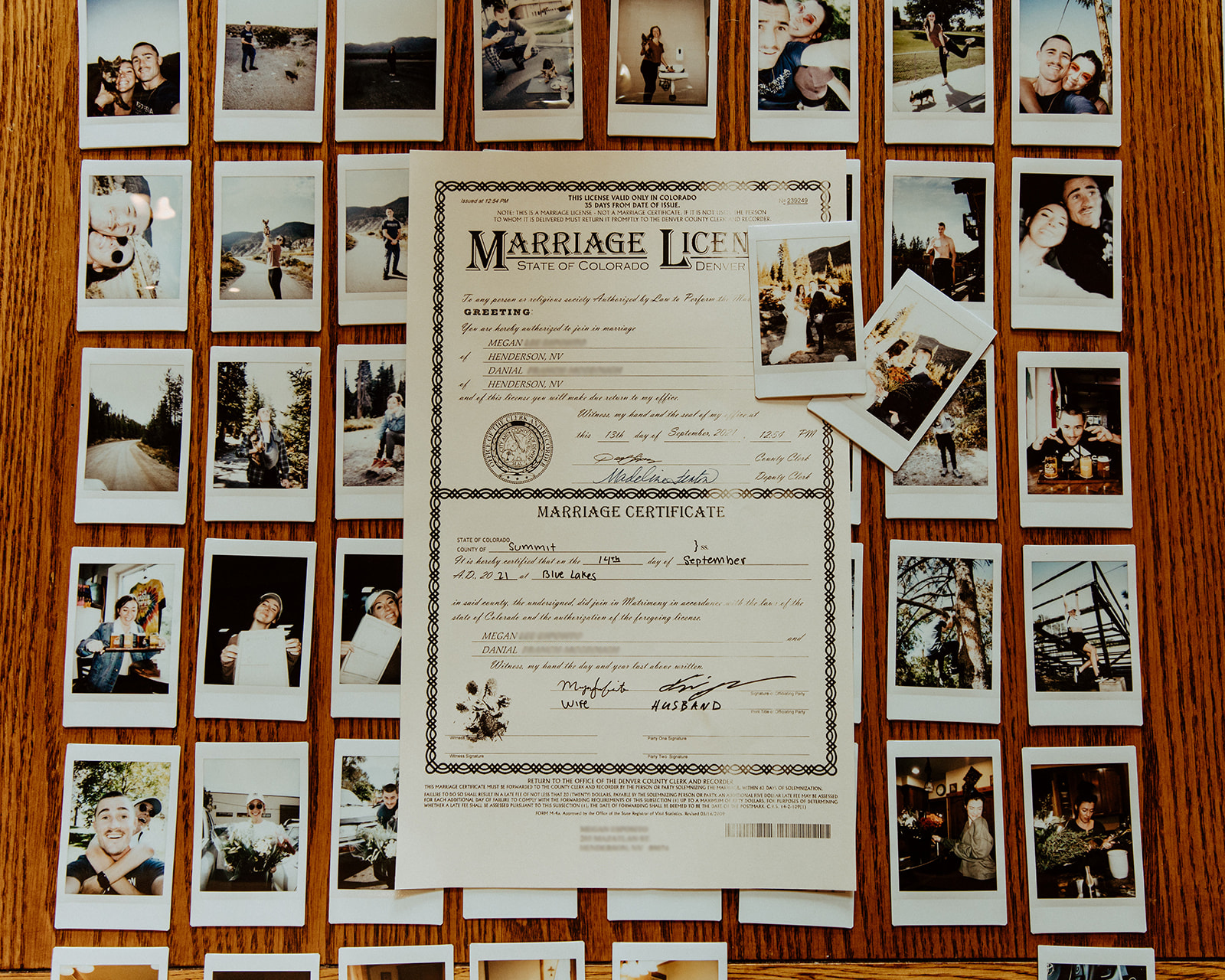
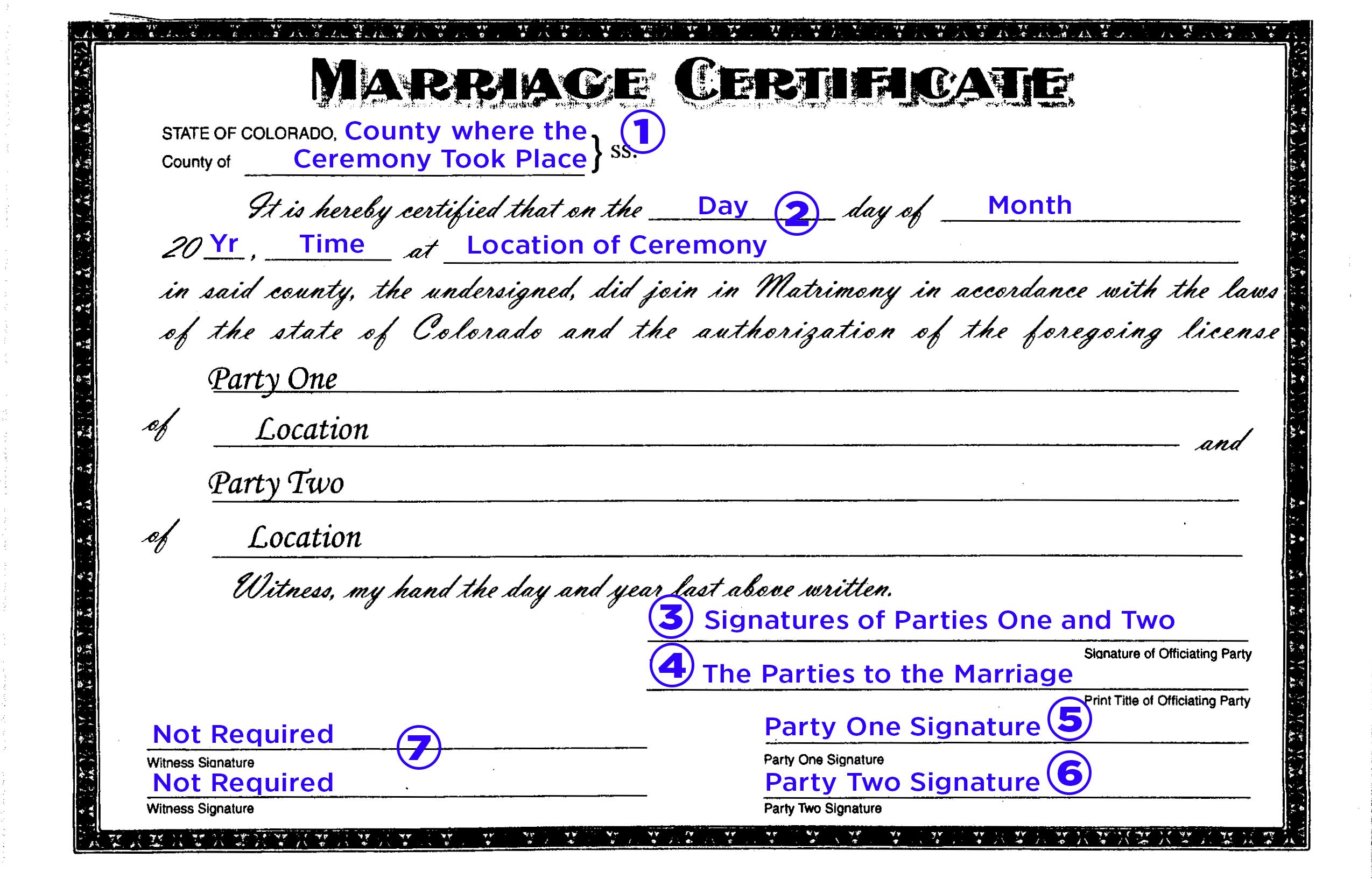
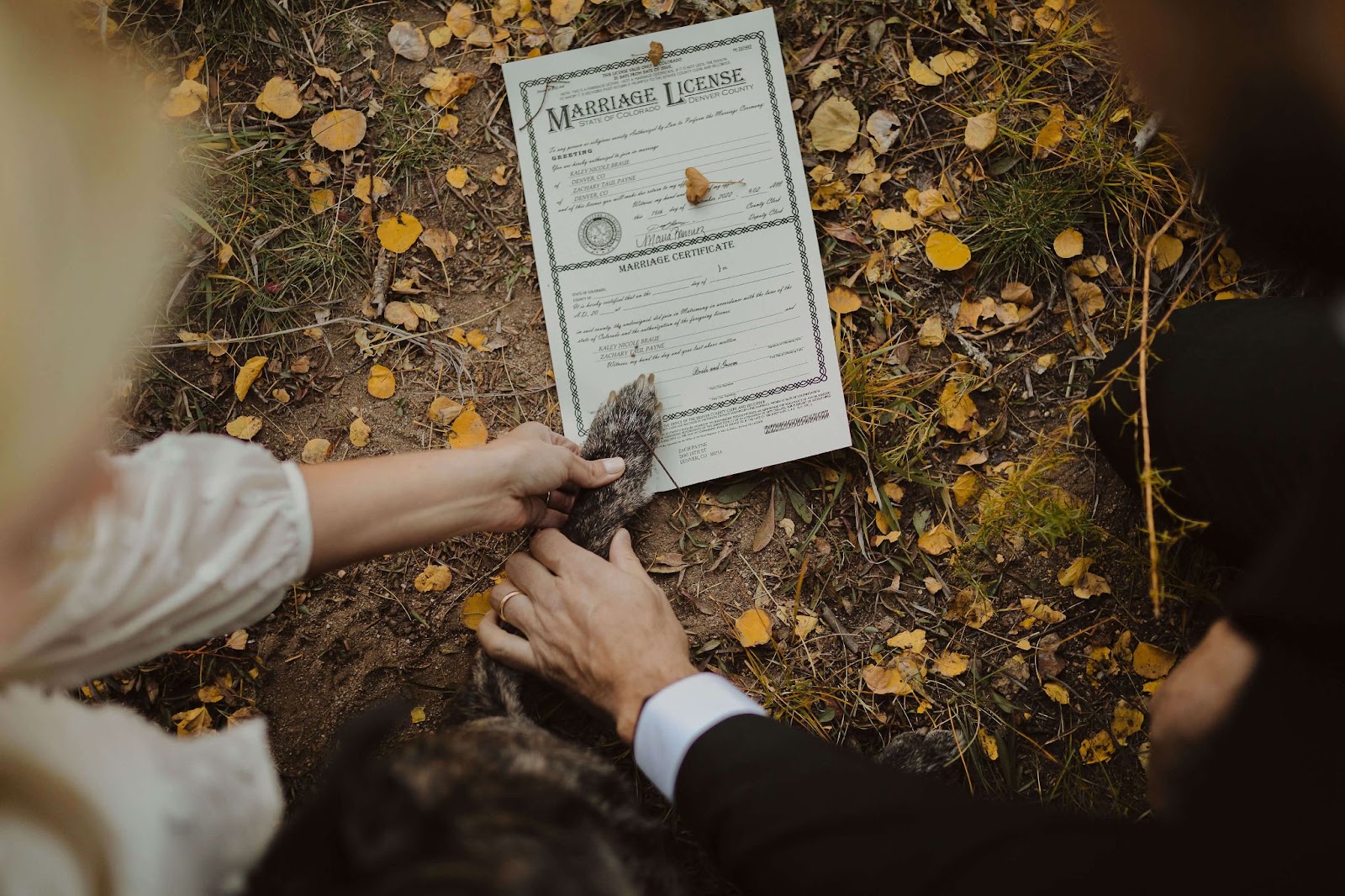
For couples who opt for self-solemnization, the process is beautifully simple. You and your partner will sign the marriage license yourselves, indicating that you have officiated your own marriage. No additional signatures from officiants or witnesses are required for the license itself. This allows for incredibly personal ceremonies, from a private moment atop a mountain trail in Breckenridge to a quiet exchange of vows by a lake. The signed license is then returned to any County Clerk and Recorder’s office in Colorado for recording.
Using an Officiant
If you prefer a traditional ceremony with an officiant, Colorado law recognizes a wide range of individuals authorized to solemnize marriages. These include:
- Judges of courts of record or retired judges.
- Court magistrates.
- Indian Tribe or Nation officials.
- Ministers, priests, or rabbis of any religious denomination.
- Any other person authorized by the rules or discipline of a religious society.
The chosen officiant will sign the marriage license after the ceremony, attesting to the solemnization of your marriage. While witnesses are not required by law for the marriage license itself, many couples choose to have them present for their ceremony for personal reasons.
Recording Your License
Regardless of whether you choose self-solemnization or an officiant, the completed marriage license must be returned to any Colorado County Clerk and Recorder’s office within 63 days of its issue date for recording. Failure to return the license within this timeframe will result in its expiration, rendering the marriage invalid. Most counties allow you to mail the completed license back, but confirming this with your chosen county is always a good idea. Once recorded, the original license is kept by the county, and certified copies can be ordered for a small fee, which are often needed for name changes and other legal processes.
Important Considerations and Tips for Colorado Weddings
Navigating the legal aspects of getting married can sometimes be daunting, especially when planning a wedding from afar. Here are some key tips and considerations specific to Colorado that can make your experience even smoother.
Residency Requirements (None!)
One of the most appealing aspects for destination wedding couples is that Colorado has no residency requirements for obtaining a marriage license. You do not need to be a resident of Colorado to get married there, making it an ideal choice for couples traveling from other states or even internationally. This simplifies the planning process considerably, as you won’t need to establish temporary residency or jump through extra hoops.
Waiting Period and Expiration
There is no waiting period between the issuance of a marriage license and the ability to solemnize the marriage in Colorado. You can obtain your license and get married on the very same day. However, once issued, the license is valid for 35 days. This means you must have your ceremony and solemnize your marriage within this 35-day window. As mentioned earlier, the completed license then needs to be returned to the County Clerk’s office for recording within 63 days of its issuance.
Planning from Out of State
If you’re traveling to Colorado for your wedding, it’s wise to plan your visit to the County Clerk’s office in advance. Check their website for current hours, holiday closures, and any online pre-application options. While both parties must typically be present to apply, this step is often quick. Consider applying a few days before your ceremony to ensure everything is in order, allowing ample time to address any unforeseen issues without added stress. Many couples combine the trip to the County Clerk with other wedding-related errands or sightseeing in cities like Durango or Telluride.
Common Mistakes to Avoid
- Forgetting IDs: Ensure both parties bring valid, government-issued photo identification.
- Incorrect Divorce Dates: Double-check the exact date and location of any previous divorces or annulments.
- Missing the Return Deadline: The 63-day window for returning the solemnized license is strict. Set reminders!
- Assuming Online Solemnization: While Colorado allows self-solemnization, the application for the license generally requires an in-person visit (though some counties allow online initiation). The actual wedding itself must take place in Colorado.
Making Your Colorado Wedding Unforgettable (Beyond the License)
While securing your marriage license is a critical logistical step, your Colorado wedding journey extends far beyond paperwork. This state offers countless opportunities to integrate your legal union into a truly memorable travel experience.
Popular Wedding Destinations within Colorado
Beyond the legalities, consider the rich tapestry of experiences Colorado offers for your wedding or honeymoon. Popular wedding destinations include:
- Mountain Towns: Aspen, Vail, Breckenridge, and Telluride offer luxurious resorts, stunning ski slopes, and charming village atmospheres perfect for an elegant or adventurous wedding.
- Front Range Cities: Denver, Boulder, and Colorado Springs provide a mix of urban sophistication, vibrant cultural scenes, and easy access to natural beauty, with numerous venues ranging from historic estates to modern event spaces.
- National Parks and Forests: For the truly adventurous, marrying within or near the Rocky Mountains National Park (with proper permits) or other protected lands offers an unparalleled natural backdrop.
Integrating Your License Process into Your Trip
Think of the trip to the County Clerk’s office not as a chore, but as part of your overall Colorado adventure. If you’re staying in Denver, combine your license application with exploring the city’s vibrant neighborhoods, breweries, or museums. If you’re heading to the mountains, perhaps apply in a county office along your scenic drive. Many County Clerk offices, such as those in Adams County or Jefferson County, are conveniently located, making it easy to weave this essential task into your itinerary without sacrificing precious travel time. By viewing the marriage license process as an integral part of your destination wedding experience, you can ensure a smooth, stress-free, and ultimately joyful start to your married life in beautiful Colorado.
LifeOutOfTheBox is a participant in the Amazon Services LLC Associates Program, an affiliate advertising program designed to provide a means for sites to earn advertising fees by advertising and linking to Amazon.com. Amazon, the Amazon logo, AmazonSupply, and the AmazonSupply logo are trademarks of Amazon.com, Inc. or its affiliates. As an Amazon Associate we earn affiliate commissions from qualifying purchases.