
Embarking on a new career path is always an exhilarating journey, and choosing the dynamic field of property sales in the state of Kansas offers boundless opportunities. Whether you envision yourself closing deals on sprawling suburban family homes, bustling commercial spaces, or charming rural estates, obtaining your official authorization to practice is your first crucial step. The path to becoming a licensed agent in the Sunflower State requires dedication, adherence to specific educational milestones, and successfully navigating state examinations. By understanding the process from start to finish, you can transition smoothly into a rewarding profession that blends entrepreneurship, market analysis, and interpersonal relationship building.
Meeting the Basic Eligibility Requirements
Before you dive into textbooks and online lectures, you must ensure that you meet the baseline criteria established by the Kansas Real Estate Commission. These foundational prerequisites ensure that all practitioners hold the necessary personal integrity and maturity to manage significant financial transactions on behalf of clients.
Age and Background Qualifications
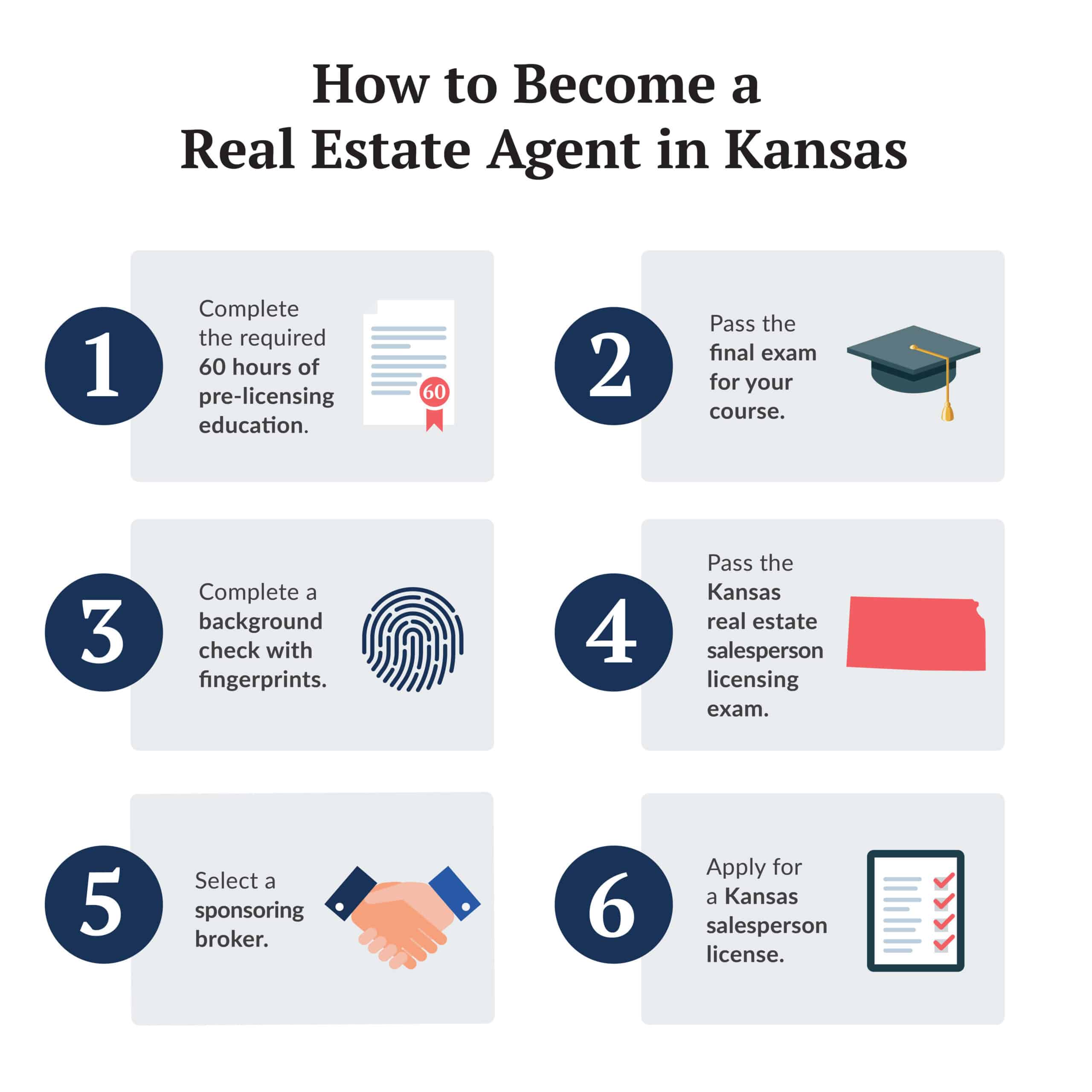
First and foremost, applicants must be at least 18 years of age. Additionally, you must hold a high school diploma or its equivalent. Beyond these basic demographic milestones, the regulatory board places a heavy emphasis on personal accountability and trustworthiness. Aspiring professionals are required to submit to a comprehensive background check, which includes fingerprinting. Because agents handle sensitive financial documents and often guide clients through some of the largest monetary investments of their lives, any history of felony convictions or certain misdemeanor offenses will be scrutinized closely by the commission to determine overall suitability for licensure.
Completing the Required Pre-License Education
Once you have confirmed your eligibility, the next phase involves immersing yourself in the foundational knowledge of the industry. Educational requirements are designed to provide a comprehensive understanding of property laws, contract writing, valuation principles, and ethical standards.
Coursework Breakdown
In Kansas, candidates must successfully complete a total of 60 hours of pre-license education. This requirement is typically split into two distinct courses:
- Principles of Real Estate: A 30-hour course that introduces fundamental concepts, including property rights, land descriptions, encumbrances, transfer of title, and basic financing principles.
- Kansas Practice Course: A 30-hour course focused specifically on state-specific laws, brokerage relationships, licensing regulations, and standard forms used within Kansas.
Choosing the Right Educational Provider
You can complete these courses either through traditional in-person classrooms or via approved online distance learning providers. When selecting a school—such as institutions based in Wichita or Overland Park—ensure that the provider is officially sanctioned by the state regulatory commission. Online formats offer incredible flexibility for working professionals, allowing you to study at your own pace, while traditional classroom settings provide the benefit of direct interaction with experienced instructors and peers. Upon finishing the coursework, you will receive a course completion certificate, which serves as your golden ticket to sit for the official licensing exam.
Navigating the Examination Process
With your education hours successfully completed under your belt, it is time to prove your knowledge by conquering the state licensing examination. This milestone requires careful preparation, strategic studying, and a clear understanding of what to expect on test day.
Scheduling and Testing Logistics
The examination is administered by a testing service partner working alongside the state commission. To schedule your exam, you must submit your course completion certificates along with the appropriate application and testing fees to the testing vendor. Once approved, you can schedule your test at one of several designated testing centers located in major cities throughout Kansas, including Topeka and Kansas City.
Exam Structure and Preparation Strategies
The exam is divided into two main sections: a national portion covering general real estate principles and practices, and a state-specific portion focusing on local laws and regulations. You must pass both sections to successfully complete the requirement. To ensure you pass on your first attempt, consider utilizing the following study strategies:
- Invest in Practice Exams: Familiarize yourself with the computer-based testing format and time constraints by taking timed practice tests.
- Form Study Groups: Collaborate with fellow students from your pre-license courses to quiz each other on complex vocabulary and contract scenarios.
- Focus on State Regulations: Many candidates struggle more with the state-specific portion because of its nuanced local statutes, so dedicate extra review time to brokerage guidelines and trust account rules.
Securing Sponsorship and Submitting Your Final Application
Passing the exam is a major victory, but your journey to becoming a fully authorized practitioner is not quite finished yet. To activate your credentials and legally represent buyers and sellers, you must align yourself with an established brokerage and complete your formal application with the state.
Finding the Right Brokerage
In Kansas, newly licensed salespersons must operate under the supervision of a designated managing broker. Choosing your sponsoring brokerage is one of the most critical career decisions you will make. When interviewing brokerages—whether boutique local firms in Lawrence or large national franchises—consider the following factors:
- Commission Splits and Fees: Understand how your earnings will be structured and whether there are desk fees, technology fees, or monthly dues.
- Training and Mentorship: Look for firms that offer robust onboarding programs, mentorship opportunities, and continuous professional development for new agents.
- Company Culture: Find an environment that aligns with your professional values, work ethic, and long-term career aspirations.

Finalizing Your Licensure Application
Once your managing broker has agreed to sponsor you, you can finalize your application packet. This step includes submitting your passing exam score report, proof of your completed education, background check results, the formal application form, and all required state fees. After the commission reviews and approves your paperwork, your official license will be issued, and you can officially hang your shingle.
Entering the property industry in the Sunflower State is an empowering step toward building a flexible, lucrative, and deeply fulfilling career. By meticulously following each phase—from meeting basic qualifications and completing rigorous coursework to acking the examination and partnering with a supportive brokerage—you set the stage for long-term success. Stay curious, maintain high ethical standards, and embrace the continuous learning that defines a thriving career in this dynamic field.
LifeOutOfTheBox is a participant in the Amazon Services LLC Associates Program, an affiliate advertising program designed to provide a means for sites to earn advertising fees by advertising and linking to Amazon.com. Amazon, the Amazon logo, AmazonSupply, and the AmazonSupply logo are trademarks of Amazon.com, Inc. or its affiliates. As an Amazon Associate we earn affiliate commissions from qualifying purchases.