
Obtaining a valid government-issued identification document is a fundamental step for navigating life in California. Whether you’re a new resident, a student, or simply need to update your credentials, understanding the process for acquiring an ID in the Golden State is crucial. This guide will walk you through the essential steps, requirements, and options available, ensuring you can secure the identification you need with confidence.
Understanding Your Identification Options
The primary issuer of identification in California is the Department of Motor Vehicles (DMV). They offer a range of identification documents, each tailored to different needs and residency statuses. It’s important to choose the option that best suits your circumstances.
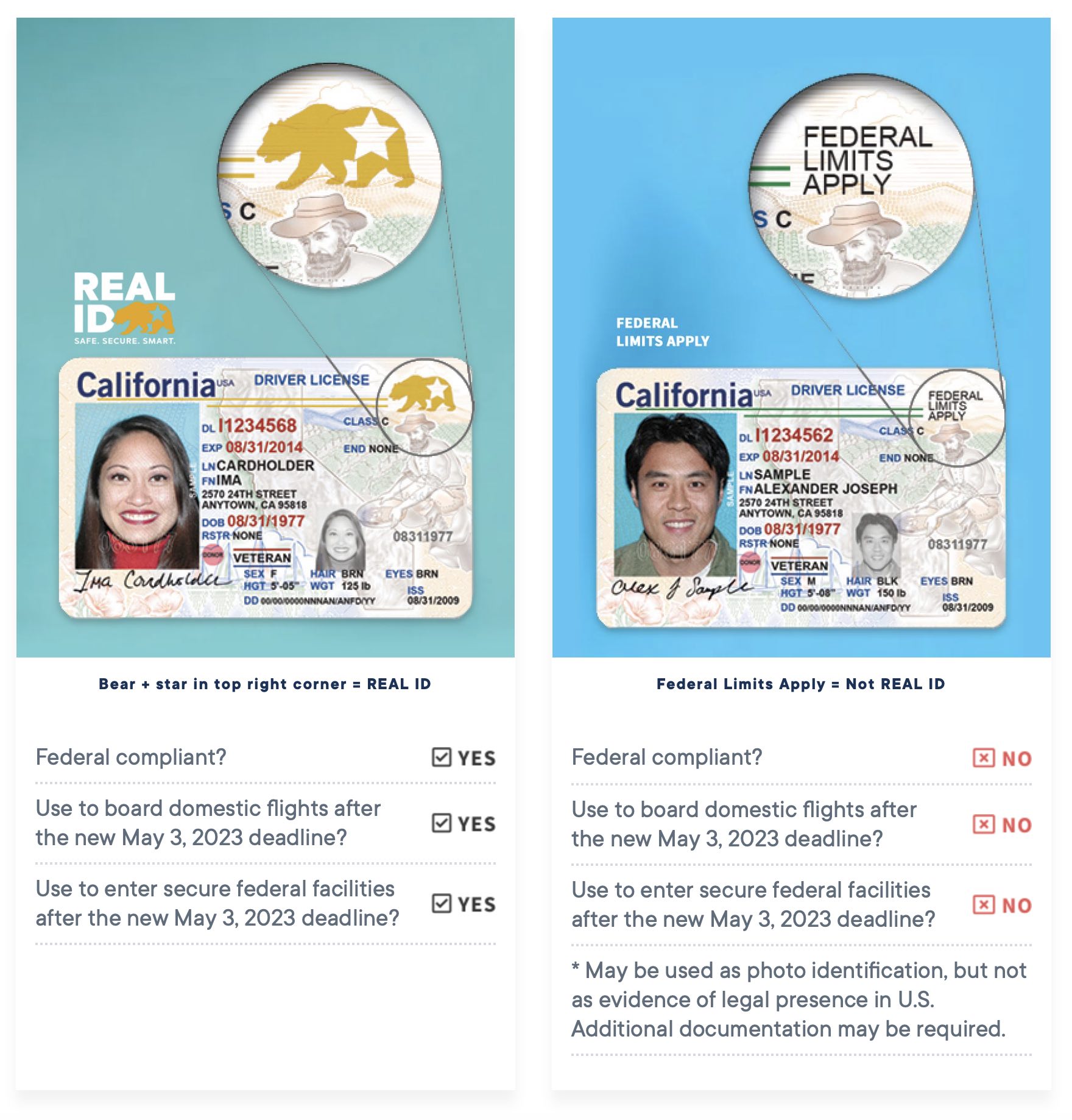
The California Driver’s License
For most residents, a driver’s license serves as the most common and versatile form of identification. It not only permits you to operate a motor vehicle but is also widely accepted for purposes such as boarding airplanes, opening bank accounts, and verifying your age.
- Real ID Driver’s License: This is a federally compliant driver’s license that meets the security standards set by the REAL ID Act. Starting May 7, 2025, a Real ID will be required for boarding domestic commercial flights and entering certain federal facilities. To obtain a Real ID, you will need to provide more extensive documentation proving your identity, residency, and Social Security number.
- Standard Driver’s License: This is a valid form of identification but will not be accepted for federal purposes like flying after the May 7, 2025 deadline. It still serves effectively for state-level identification needs.
The California Identification Card
If you do not drive or prefer not to obtain a driver’s license, the California Identification Card (ID card) is an excellent alternative. It is a government-issued photo identification that is accepted for many of the same purposes as a driver’s license, excluding the privilege of driving.
- Real ID Identification Card: Similar to the driver’s license, you can apply for a Real ID compliant ID card. This also requires the presentation of specific documentation to meet federal security standards.
- Standard Identification Card: This is a non-federal compliant ID card, suitable for state-specific identification needs.
Other Identification Documents
While the DMV is the primary source, other government agencies may issue specific forms of identification. However, for general purposes, the DMV-issued documents are the most widely recognized. This includes individuals who may already possess a U.S. Passport or a military ID, which are also valid forms of identification.
Gathering Your Required Documentation
The key to a smooth application process for any California ID is to arrive at the DMV fully prepared with all the necessary documents. The exact requirements can vary slightly depending on the type of identification you are applying for and your specific circumstances (e.g., U.S. citizen, legal resident). However, there are common categories of documents you will need to present.
Proof of Identity and Date of Birth
You will need to provide at least one document that proves your identity and date of birth. Accepted documents typically include:
- Certified copy of a U.S. birth certificate (issued by a U.S. state or territory).
- U.S. Passport.
- Consular Report of Birth Abroad.
- Certificate of Citizenship or Naturalization.
- Foreign passport with a valid I-94 form and visa.
Proof of Social Security Number (SSN)
You must provide proof of your Social Security number. Accepted documents include:
- Social Security card.
- W-2 form that displays your SSN.
- SSA-1099 form or a 1099 form with your SSN.
- A letter from the Social Security Administration stating you are ineligible for an SSN.
Proof of California Residency
You will need to present at least two different documents that establish your current residency in California. These documents must show your name and California address. Examples include:
- Rental or lease agreements.
- Mortgage statements.
- Utility bills (e.g., gas, electric, water, trash).
- Bank statements or financial institution records.
- Medical documents or bills.
- Insurance documents (e.g., home, renter’s, life).
- School documents (e.g., report cards, transcripts).
- Employer correspondence.
- Property tax bills.
- Court documents.
Important Note: Documents like pay stubs or cell phone bills are generally not accepted as proof of residency. Always check the official California DMV website for the most current and complete list of acceptable documents.
The Application Process Step-by-Step
Once you have gathered all your necessary documents, you are ready to begin the application process. It’s highly recommended to start by visiting the California DMV website to complete the relevant forms online and to schedule an appointment.
Step 1: Complete the Online Application
Before visiting a DMV office, it is strongly encouraged to complete the driver’s license or ID card application online through the California DMV website. This pre-application process helps expedite your visit by allowing you to enter your information in advance. You will need to create a secure online account to do this.
Step 2: Schedule an Appointment
Appointments are essential for a more efficient experience at the DMV. You can schedule an appointment online through the California DMV website. Walk-in customers are accepted, but wait times can be significantly longer.
Step 3: Visit the DMV Office
On the day of your appointment, arrive at the DMV office with all your original documents. Do not bring photocopies unless specifically instructed to do so. At the DMV, you will:
- Present your documents: A DMV representative will review your submitted documentation to verify your identity, Social Security number, and residency.
- Pay the application fee: There is a fee associated with obtaining a driver’s license or ID card. The amount can be found on the California DMV website. You can pay with cash, check, or money order.
- Have your photograph taken: A digital photograph will be taken for your new identification card.
- Provide your thumbprint: A thumbprint will be taken for security purposes.
- Pass a vision test: You will be asked to read letters from a standard eye chart.
- Pass knowledge and/or driving tests (if applicable): If you are applying for a driver’s license for the first time or are renewing an expired license, you may need to pass a written knowledge test and a behind-the-wheel driving test. The requirements for these tests can be found on the California DMV website.
Step 4: Receive Your Interim and Permanent ID
After successfully completing all the requirements, you will be issued an interim (temporary) identification document. This document is valid for a specified period, usually 60 to 90 days, and will serve as your official identification until your permanent card arrives. Your permanent driver’s license or ID card will be mailed to the address you provided on your application and should arrive within a few weeks.
Special Considerations for Various Applicants
The process of obtaining an ID in California can have specific nuances depending on your immigration status, age, or other individual factors. Understanding these can help prevent delays.
Minors (Under 16 Years Old)
For applicants under 16 years of age, additional requirements apply. A parent or legal guardian must be present to sign the application and provide their own identification. The minor will still need to provide proof of identity and date of birth, as well as proof of residency. A minor’s birth certificate is often the primary document used for this age group.
Non-U.S. Citizens
Non-U.S. citizens applying for a driver’s license or ID card will need to provide specific documentation related to their legal presence in the United States. This typically includes:
- A valid foreign passport.
- An I-94 form with a date of admission and visa status.
- Proof of residency in California.
The California DMV has detailed information available on its website for various immigration statuses, including individuals with work authorization, asylum seekers, and undocumented individuals, all of whom may be eligible for a driver’s license or ID card under specific programs like AB 60.

Applying for a Real ID
As mentioned earlier, obtaining a Real ID requires a more stringent verification process. You will need to present documents that definitively prove:
- Your identity and date of birth.
- Your Social Security number.
- Your lawful presence in the United States.
- Your California residency.
It is crucial to ensure that the names on all your documents match. If there are discrepancies (e.g., a different name on your birth certificate and your Social Security card), you may need to provide additional legal documents, such as a marriage certificate or court order, to explain the difference. The California DMV website offers a handy online checklist to help you confirm you have all the necessary items before your visit.
By thoroughly understanding the requirements, gathering all your documentation in advance, and utilizing the online resources provided by the California DMV, you can navigate the process of getting an ID in California efficiently and successfully.