
The prospect of navigating child custody in Texas can feel overwhelming, particularly for parents seeking to establish or modify orders that best serve their child’s well-being. This guide aims to demystify the process, offering insights into the legal framework, key considerations, and strategic approaches that are crucial for a successful outcome. While this article focuses on the legal and procedural aspects of obtaining child custody in Texas, it is imperative to remember that every case is unique, and consulting with a qualified Texas family law attorney is strongly recommended.
Understanding Texas Custody Laws: Best Interest of the Child
At the heart of all Texas custody determinations is the “best interest of the child” standard. This principle guides judges in making decisions about conservatorship (custody) and possession and access (visitation). The court will consider a multitude of factors to ascertain what arrangement will promote the child’s physical, emotional, and mental well-being.

Key Factors Considered by the Court:
- The child’s physical and emotional needs: This encompasses the child’s need for a stable, nurturing environment, adequate food, shelter, clothing, and medical care. The court will assess which parent is better equipped to provide these necessities consistently.
- The child’s developmental needs: Different ages have different needs. A court will consider how each parent can support the child’s age-appropriate development, including education, socialization, and emotional growth.
- Any danger to the child’s physical or emotional safety: This is a paramount concern. The court will scrutinize any history of family violence, abuse, neglect, or substance abuse by either parent that could put the child at risk.
- The stability of each parent’s home environment: A stable home provides a sense of security for the child. The court looks at the overall living situation, including the parent’s living arrangements, employment stability, and community ties.
- Each parent’s ability to provide a safe and stable home: This goes beyond just the physical space and delves into the parent’s capacity to manage household responsibilities, maintain a healthy routine, and ensure the child’s safety.
- The child’s wishes (if the child is 12 years of age or older): While not determinative, a judge may interview children aged 12 and above in chambers to understand their preferences regarding conservatorship and possession. The weight given to the child’s wishes depends on their maturity and the reasonableness of their request.
- The child’s adjustment to their home, school, and community: Significant disruptions to a child’s established life can be detrimental. The court will consider which parent can facilitate a smoother transition and maintain continuity in the child’s life.
- The plans for the child by each parent: Each parent will present their vision for raising the child, including decisions about education, extracurricular activities, religious upbringing, and healthcare. The court will evaluate these plans for their feasibility and alignment with the child’s best interests.
- The mental and physical health of each parent: The court may consider any mental or physical health issues that could impact a parent’s ability to care for the child.
- Any history of domestic violence or child abuse: This is a critical factor. If domestic violence has occurred, the court will make findings regarding it and may restrict the abusive parent’s access to the child.
Types of Conservatorship in Texas:
Texas law generally favors Joint Managing Conservatorship (JMC). This means both parents share rights and responsibilities in raising the child, even if one parent has the primary residence. JMC does not necessarily mean an equal 50/50 split of time; rather, it signifies shared decision-making authority.
The court may also appoint Sole Managing Conservatorship (SMC) if it is in the child’s best interest. In SMC, one parent is granted the exclusive right to make certain decisions for the child, and the other parent is typically designated as the Possessory Conservator. This is often ordered in cases involving family violence or a parent’s inability to provide adequate care.
Initiating a Texas Custody Case
The process for obtaining child custody in Texas typically begins with filing a lawsuit. The most common type of lawsuit is an Original Suit Affecting the Parent-Child Relationship (SAPCR).
Filing the SAPCR:
- Petition: The case is initiated by filing a Petition in a Texas District Court. This document outlines the basic information about the parents and child, the relief sought (e.g., conservatorship, child support, visitation), and the legal grounds for the requested orders.
- Service: Once the Petition is filed, the other parent must be formally notified of the lawsuit. This is done through a process called “service,” where a neutral third party (like a sheriff or a private process server) delivers a copy of the lawsuit to the other parent.
- Response: The served parent has a specific period to file a written response with the court. If no response is filed, the court may enter a default order.
Temporary Orders:
It is common for parents to need orders in place while the final custody case is pending. A hearing can be requested for Temporary Orders that will govern conservatorship, possession, access, and child support until a final order is entered. These temporary orders are based on the immediate best interests of the child and often reflect the status quo to maintain stability.
Negotiating and Litigating Custody Arrangements
The path to securing custody can be achieved through negotiation, mediation, or litigation. Each approach has its own advantages and considerations.
Negotiation and Settlement:
Many custody cases are resolved outside of court through negotiation between the parents, often with the assistance of their attorneys. This allows parents to have greater control over the outcome and tailor an agreement that works best for their family. The goal is to create a Settlement Agreement that outlines conservatorship rights, responsibilities, and a detailed possession schedule.
Mediation:
Mediation is a mandatory step in many Texas custody cases. A neutral third-party mediator helps facilitate discussions between the parents to reach a mutually agreeable solution. The mediator does not make decisions but assists the parties in exploring options and finding common ground. If an agreement is reached, it is presented to the court for approval.
Litigation and Trial:
If negotiations and mediation fail, the case will proceed to trial. At trial, both parents present evidence and arguments to the judge, who will then make a binding decision based on the best interest of the child. This is the most adversarial and often the most expensive and time-consuming route.
Crafting a Possession Schedule
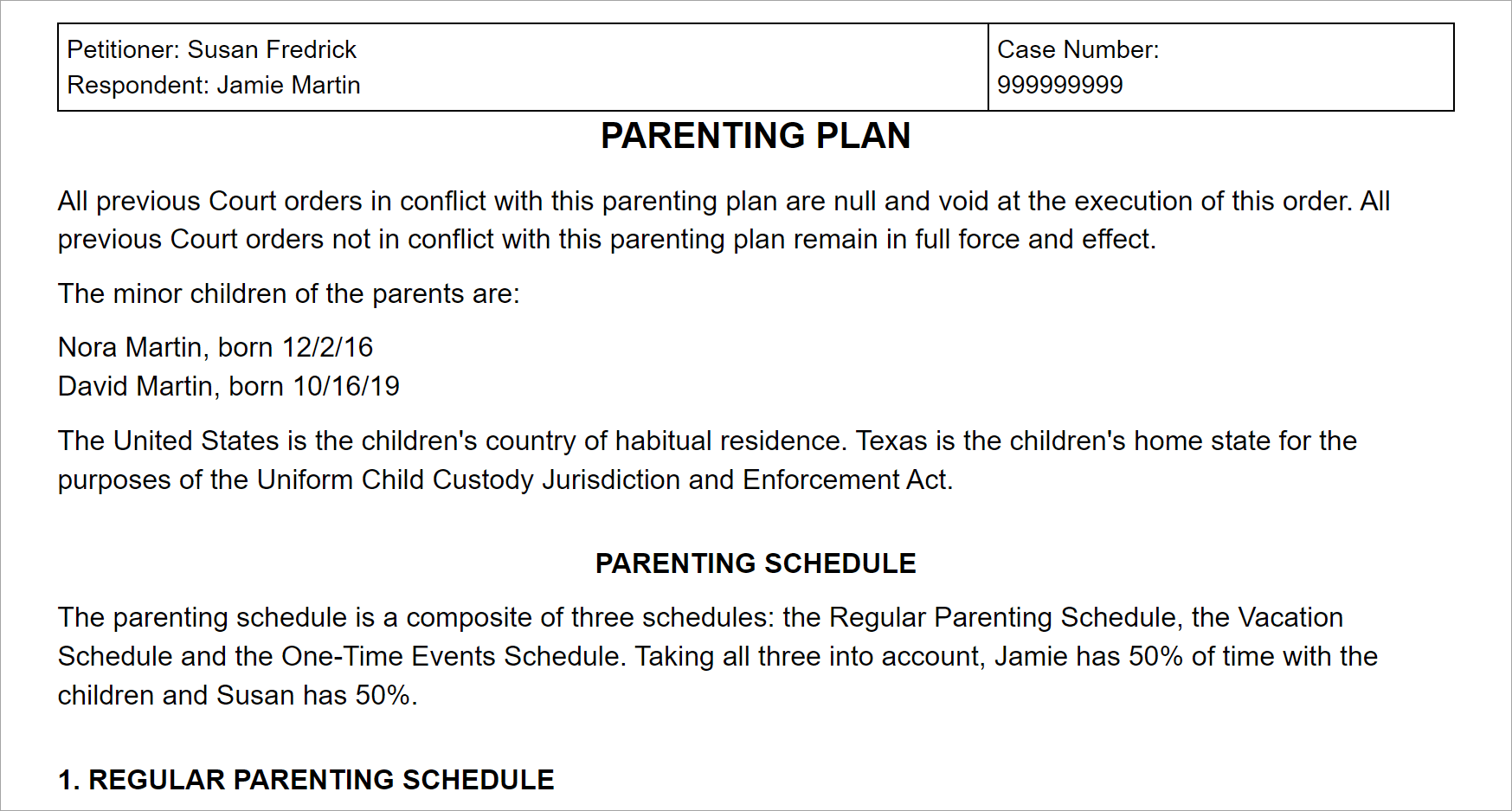
A crucial component of any custody order is the possession schedule, which dictates when each parent has physical possession of the child. Texas law presumes that it is in the child’s best interest for parents to have a structured possession schedule.
The Standard Possession Order:
The Standard Possession Order (SPO) is the default possession schedule in Texas. It is designed to provide children with frequent and continuing contact with both parents. The SPO typically includes:
- Weekends: The non-custodial parent usually has possession on the first, third, and fifth weekends of a month.
- Holidays: Holidays are typically divided between parents, often alternating years for major holidays like Thanksgiving and Christmas.
- Summer: The non-custodial parent usually has an extended period of possession during the summer, often 30 days.
Deviations from the Standard Possession Order:
While the SPO is presumed to be in the child’s best interest, courts can deviate from it if it is not appropriate for a particular family. Modifications may be necessary in situations such as:
- Geographic distance: If parents live a significant distance apart, the SPO may need to be adjusted to account for travel time and costs.
- Children with special needs: Children with significant medical or educational needs may require a more structured or specialized visitation schedule.
- Family violence: In cases of proven family violence, the SPO may be significantly modified or suspended to protect the child.
- Parental unreliability: If one parent has a history of substance abuse or unreliability, the possession schedule may be supervised or restricted.
Parents can agree to a customized possession schedule that differs from the SPO, provided the court finds it to be in the child’s best interest. This can include schedules like a 2-2-3 rotation or other arrangements that better suit the family’s circumstances.
Key Considerations for Seeking Custody
When seeking custody in Texas, parents should be prepared to present a compelling case that demonstrates their commitment to the child’s well-being and their ability to provide a stable, nurturing environment.
Gathering Evidence:
- Documentation: Collect all relevant documents, including birth certificates, school records, medical records, and any communications with the other parent that support your case.
- Witnesses: Identify individuals who can testify about your parenting abilities, the child’s well-being in your care, or any concerns about the other parent. This could include teachers, therapists, family members, or friends.
- Financial Records: Be prepared to provide detailed financial information, as child support is a significant component of custody orders.
- Home Study (if applicable): In certain complex or contested cases, the court may order a social study or home study conducted by a professional to assess the living environments of both parents.
Demonstrating Parental Fitness:
- Consistency: Show a pattern of consistent involvement in the child’s life, including school events, doctor’s appointments, and extracurricular activities.
- Communication: Maintain open and respectful communication with the other parent, even during difficult times. Document any instances of harassment or non-cooperation.
- Stability: Demonstrate a stable living situation, a reliable source of income, and a commitment to providing a secure and loving home.
- Child’s Best Interest: Continuously focus on how your proposed arrangement truly serves the child’s needs and overall well-being, rather than simply seeking to limit the other parent’s involvement.
Navigating the complexities of child custody in Texas requires patience, diligence, and a steadfast focus on the child’s best interest. By understanding the legal framework, preparing thoroughly, and seeking appropriate legal counsel, parents can work towards achieving a custody order that promotes their child’s healthy development and future.
LifeOutOfTheBox is a participant in the Amazon Services LLC Associates Program, an affiliate advertising program designed to provide a means for sites to earn advertising fees by advertising and linking to Amazon.com. Amazon, the Amazon logo, AmazonSupply, and the AmazonSupply logo are trademarks of Amazon.com, Inc. or its affiliates. As an Amazon Associate we earn affiliate commissions from qualifying purchases.