
Navigating the vibrant landscape of Florida, a state renowned for its sunshine, captivating beaches, and world-class attractions, can be an incredibly rewarding experience. Whether you’re planning a leisurely escape to the theme parks of Orlando, a tranquil retreat in the Florida Keys, or an exploration of the historic charm of St. Augustine, ensuring accessibility is paramount for a truly enjoyable journey. For individuals with disabilities, a disabled parking permit can significantly enhance their travel experience, providing convenient access to parking spaces closer to their destinations. This comprehensive guide aims to demystify the process of obtaining a disabled parking permit in Florida, ensuring you can fully embrace all the state has to offer.

The Sunshine State is committed to providing accessible experiences for all its residents and visitors. Obtaining a disabled parking permit in Florida is a straightforward process designed to facilitate easier access to public spaces, accommodations, and attractions. This permit, often referred to as a “handicapped placard” or “accessible parking permit,” is issued by the Florida Department of Highway Safety and Motor Vehicles (FLHSMV) and allows eligible individuals to utilize designated accessible parking spaces. Understanding the eligibility criteria, the application process, and the types of permits available will empower you to secure this essential travel companion.
Understanding Eligibility and Permit Types
To successfully obtain a disabled parking permit in Florida, it’s crucial to understand who qualifies and the different forms these permits can take. The state defines eligibility based on specific medical conditions that substantially limit an individual’s mobility or ability to walk. This ensures that the permits are issued to those who genuinely require them to access parking more conveniently.
Who Qualifies for a Disabled Parking Permit?
Florida law outlines several conditions that may qualify an individual for a disabled parking permit. These generally include:
- Blindness: Individuals who are legally blind in Florida are eligible.
- Lung Disease: Those suffering from chronic lung disease that impairs their respiratory function, leading to a forced expiratory volume of one second, or a maximum mid-expiratory flow rate, are eligible.
- Vascular Disease: Individuals with vascular disease that causes an insufficient vascular system and an exertional capacity less than one MET unit are also considered for a permit.
- Disability Requiring Ambulance: Any disability that necessitates the use of an ambulance or other vehicle for transportation as a result of a medical condition.
- Inability to Walk 200 Feet: A significant limitation in the ability to walk 200 feet without stopping to rest. This is a common criterion and is often assessed by a medical professional.
- Arthritis, Neurological Condition, or Orthopedic Condition: Any condition, such as severe and permanent arthritis, orthopedic conditions, or neurological conditions, that severely limits one’s mobility.
- Loss of Limb or Use of Limb: The permanent loss of, or loss of the use of, one or both arms or legs.
- Other Qualifying Conditions: Any other medical condition that substantially impairs a person’s mobility.
It’s important to note that temporary conditions are generally not eligible for permanent disabled parking permits. However, Florida does offer temporary permits for individuals with conditions that are expected to improve.
Types of Disabled Parking Permits in Florida
Florida offers two primary types of disabled parking permits:
- Permanent Disabled Parking Permit: This permit is issued to individuals with a long-term or permanent disability that significantly impacts their mobility. It is valid for a period of three years and can be renewed. The application process for a permanent permit involves a medical professional certifying the applicant’s condition.
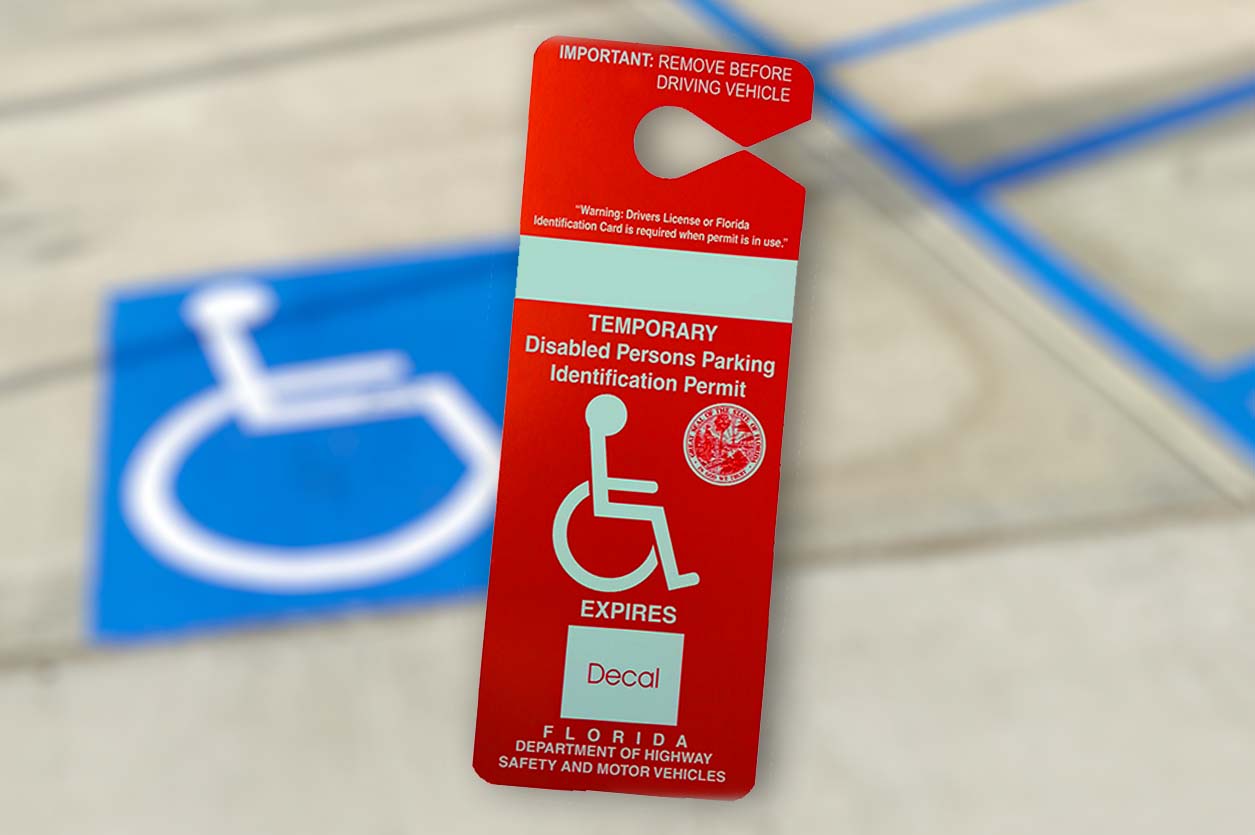
- Temporary Disabled Parking Permit: This permit is designed for individuals with a temporary disability, such as those recovering from surgery or a temporary illness. These permits are typically valid for a period of six months or less, depending on the physician’s assessment of the recovery timeline. They can be renewed if the medical condition persists beyond the initial validity period.
In addition to these, there are also disabled license plates available for vehicles owned by individuals with disabilities. These plates serve the same purpose as permits, offering accessible parking privileges.
The Application Process: Step-by-Step Guidance
Securing a disabled parking permit in Florida requires a few key steps, primarily involving a medical certification and completing the necessary application forms. The process is designed to be thorough yet manageable, ensuring that permits are issued appropriately.
Step 1: Obtain a Medical Certification
The cornerstone of your disabled parking permit application is a certification from a qualified medical professional. This professional will assess your medical condition and determine if you meet Florida‘s eligibility criteria for a disabled parking permit.
- Who can certify? The following licensed medical professionals are authorized to certify eligibility in Florida:
- Physicians (M.D.)
- Osteopathic physicians (D.O.)
- Podiatric physicians (D.P.M.)
- Chiropractors (D.C.) – for temporary permits only, for conditions related to spinal manipulation.
- Optometrists (O.D.) – for blindness.
- Physician Assistants (P.A.) and Advanced Practice Registered Nurses (A.P.R.N.) – when supervised by a physician.
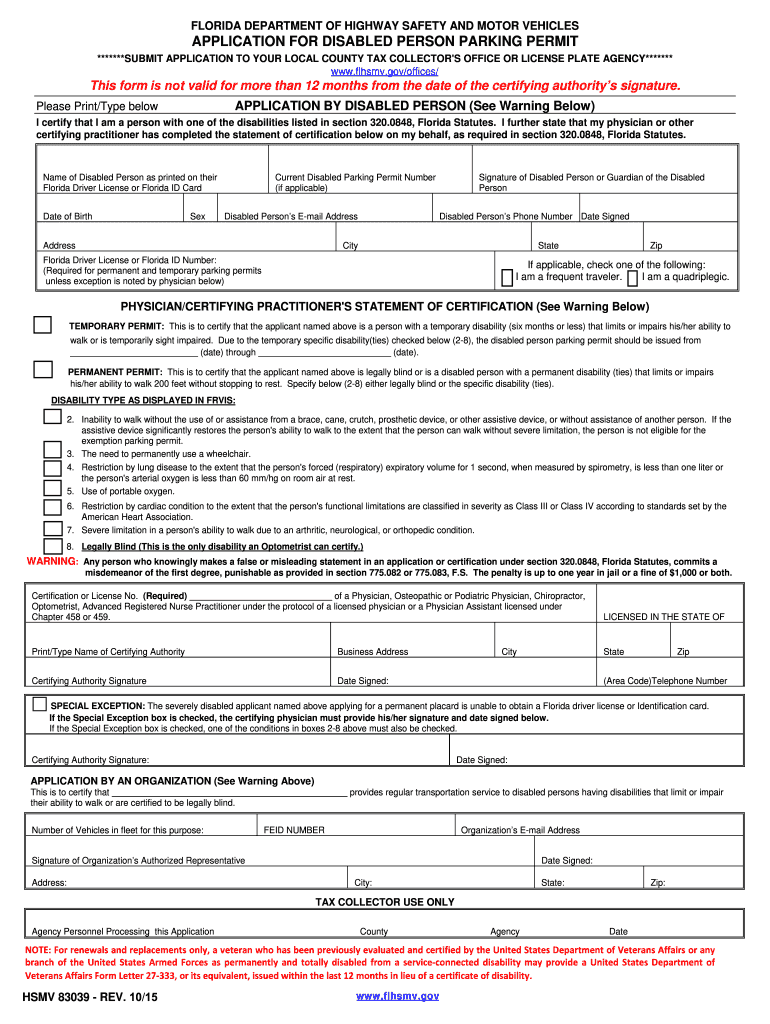
- What to expect during the medical assessment: The medical professional will review your medical history and conduct an examination to evaluate the extent of your mobility limitation. They will then complete the “Certificate of Disability” section of the official Florida Disabled Parking Permit Application form (HSMV 83007). Ensure you bring all relevant medical documentation to your appointment.
Step 2: Complete the Application Form
Once you have your medical certification, you’ll need to complete the Florida Disabled Parking Permit Application (HSMV 83007). This form requires your personal information, including your name, address, and date of birth. It also includes a section for the applicant or their legal guardian to sign, attesting to the accuracy of the information provided.
- Applicant Information: Fill in all requested personal details accurately.
- Medical Professional Information: The medical professional will complete their section, detailing the diagnosis and certifying your eligibility.
- Permit Type: You will indicate whether you are applying for a permanent or temporary permit.
Step 3: Submit Your Application and Fees
After completing the application form and having it certified by a medical professional, you are ready to submit it. You have several options for submission:
- Local County Tax Collector’s Office: This is the most common and recommended method. Visit your local Florida County Tax Collector’s office. They are equipped to process your application, issue your permit on the spot, and collect the necessary fees. You will need to bring your completed application form, proof of identity (such as a Florida driver’s license or identification card), and the required fee.
- By Mail (for renewals or specific circumstances): In some cases, particularly for renewals, you might be able to submit your application by mail. However, for initial applications, visiting a Tax Collector’s office is generally more efficient. Check with your local Tax Collector’s office for their specific mailing procedures.
Fees: There is a nominal fee associated with obtaining a disabled parking permit in Florida. As of recent updates, the fee for a disabled parking permit is $15 for a permanent permit and $15 for a temporary permit. These fees are subject to change, so it’s advisable to confirm the current fee structure with your local County Tax Collector’s office.
Documentation: When visiting the Tax Collector’s office, ensure you have the following:
- Completed Application for Disabled Parking Permit (HSMV 83007).
- Proof of Identity: A valid Florida driver’s license or identification card. If you don’t have one, other forms of identification may be accepted, but it’s best to verify with the office beforehand.
- Payment for the fee.
Maximizing Your Florida Experience with Your Permit
Once you have successfully obtained your disabled parking permit, you are well on your way to enjoying Florida‘s many offerings with greater ease and convenience. The permit is a valuable tool that opens up access to designated parking spaces across the state, making travel to various attractions, accommodations, and landmarks more manageable.
Utilizing Your Permit at Attractions and Destinations
Florida is a treasure trove of experiences, from the magical theme parks of Walt Disney World Resort and Universal Orlando Resort to the natural beauty of the Everglades National Park and the historical significance of Key West. Your disabled parking permit will be instrumental in accessing these popular destinations:
- Theme Parks: Major theme parks like Walt Disney World Resort, Universal Orlando Resort, and SeaWorld Orlando provide accessible parking areas near park entrances. Having your permit ensures you can utilize these convenient spots.
- Beaches and State Parks: Florida boasts numerous beautiful beaches and state parks. Accessible parking is typically available at these locations, allowing for easier access to the shoreline or trailheads. For instance, parking at Clearwater Beach or within Myakka River State Park becomes more convenient.
- Museums and Cultural Sites: Cities like Miami with its vibrant arts scene, or Tampa with its museums, offer accessible parking near their cultural institutions. Historic sites such as Fort Lauderdale‘s Bonnet House Museum & Gardens also benefit from designated accessible parking.
- Shopping and Entertainment Districts: Areas like Brickell in Miami or International Drive in Orlando have ample shopping and entertainment options, all of which should provide accessible parking facilities.
Remember to always display your permit correctly on your vehicle’s rearview mirror or dashboard when parked in a designated accessible space.
Accommodation and Travel Tips
When planning your stay in Florida, whether it’s a luxurious resort on Miami Beach, a charming villa in the Florida Keys, or an apartment rental in a bustling city like Jacksonville, your disabled parking permit will be a significant asset.
- Hotels and Resorts: Many hotels, from large chains like the Ritz-Carlton to boutique hotels in Savannah, offer accessible parking. It’s always a good idea to confirm their accessible parking availability and any specific procedures when booking your accommodation. Websites that offer hotel comparisons can help you identify properties with good accessibility features.
- Rental Cars: If you’re renting a car, inquire about accessible parking options or whether they can accommodate any specific needs related to your permit.
- Long-Term Stays: For longer visits, consider accommodations with dedicated accessible parking. Apartments or vacation rentals might offer more consistent access to designated spots.
- Travel Planning: When planning your itinerary, research the accessibility of each destination. Many tourism websites and attraction guides provide information on accessible facilities, including parking. Websites focused on Florida travel often highlight accessible routes and services.
By understanding the process of obtaining a disabled parking permit and knowing how to utilize it effectively, you can ensure a smoother, more enjoyable, and fully immersive experience in the diverse and captivating state of Florida. From the thrilling adventures in Orlando to the serene beauty of the Florida Keys, your permit is your key to unlocking effortless access.
LifeOutOfTheBox is a participant in the Amazon Services LLC Associates Program, an affiliate advertising program designed to provide a means for sites to earn advertising fees by advertising and linking to Amazon.com. Amazon, the Amazon logo, AmazonSupply, and the AmazonSupply logo are trademarks of Amazon.com, Inc. or its affiliates. As an Amazon Associate we earn affiliate commissions from qualifying purchases.