
Navigating the legal landscape of relationships can sometimes feel complex, especially when seeking formal recognition for your partnership. In California, domestic partnership offers a legal framework that grants many of the same rights and responsibilities as marriage. This guide delves into the intricacies of establishing a domestic partnership in the Golden State, outlining the eligibility requirements, the application process, and the benefits you can expect. Understanding this pathway is crucial for couples who wish to solidify their commitment and access important legal protections.
Understanding Domestic Partnership in California
A domestic partnership in California is a legally recognized union between two adults who are not married to each other and who share a common residence. Established by the Domestic Partner Registration Act of 2000 and expanded through subsequent legislation, California‘s domestic partnership laws provide significant legal protections and benefits to registered partners, mirroring many of those afforded to married couples. This includes areas such as inheritance, healthcare, and employee benefits.
Eligibility Criteria
To register as domestic partners in California, specific criteria must be met. These are designed to ensure that the union is genuine and that both individuals are legally capable of entering into such a relationship.
Age and Capacity
Both individuals must be at least 18 years of age. They must also be capable of consenting to the partnership. This means neither individual can be legally incapacitated or under the influence of substances that would impair their judgment at the time of registration.
Relationship Status
Neither party can be married to anyone else at the time of registration. Similarly, neither party can be currently registered as a domestic partner with another individual. California law prohibits bigamy and simultaneous domestic partnerships.
Shared Residence and Financial Interdependence
A crucial element of a California domestic partnership is that the two individuals must share a common residence. This signifies that they live together and consider themselves to be in a committed, cohabiting relationship. While not strictly a requirement for the initial registration, demonstrating financial interdependence is often a factor in proving the existence of a domestic partnership, especially if legal disputes arise later. This can include jointly owning property, sharing bank accounts, or jointly filing taxes (if legally permissible).
Not Closely Related
The law prohibits domestic partnerships between individuals who are closely related by blood. This is a standard legal prohibition to prevent incestuous relationships.
Benefits of Domestic Partnership
Registering as domestic partners in California unlocks a range of legal and practical benefits. These are designed to provide security and support for the couple, both individually and collectively.
Healthcare and Medical Decisions
One of the most significant benefits is the ability to make medical decisions for your partner. This includes the right to receive information from healthcare providers, to consent to or refuse medical treatment on behalf of your partner, and to visit them in the hospital, even if other visitors are restricted. This is particularly important for couples who may not have immediate family in the area or wish to ensure their partner’s wishes are respected during medical emergencies.
Inheritance and Property Rights
Domestic partners in California have rights concerning inheritance and property. If one partner dies without a will, the surviving partner may be entitled to inherit property, similar to a surviving spouse. Property acquired during the domestic partnership is generally considered community property, subject to division in the event of dissolution, much like in a divorce.
Employee Benefits
Many employers in California offer benefits to domestic partners that are equivalent to those offered to spouses. This can include health insurance, dental and vision coverage, life insurance, and retirement plan benefits. It’s essential to check with your employer’s human resources department to confirm the specific benefits available.
Tax Benefits
While domestic partnerships are not recognized at the federal level for tax purposes, California does recognize them. This means registered domestic partners can file their state income taxes as married filing jointly or as registered domestic partners, which can offer tax advantages.
Other Legal Protections
Domestic partners are generally afforded other legal protections, including the right to sue for wrongful death, the right to make funeral arrangements for a deceased partner, and the ability to claim spousal privilege in legal proceedings.

How to Register a Domestic Partnership in California
The process for registering a domestic partnership in California is straightforward and can be completed by mail or in person. The key is to accurately complete the necessary forms and ensure all eligibility requirements are met.
Step 1: Obtain the Necessary Forms
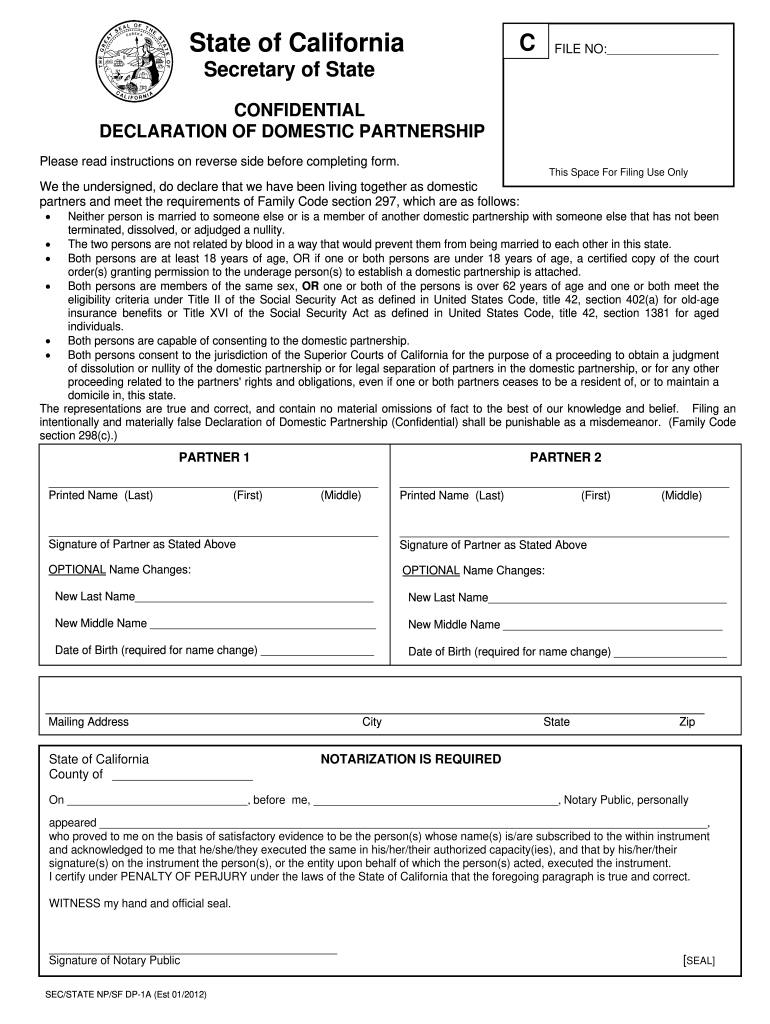
The primary document required is the “Declaration of Domestic Partnership” (Form NP-101) available from the California Secretary of State’s office. This form can be downloaded from their official website or obtained by mail.
Step 2: Complete the Declaration of Domestic Partnership
This form requires detailed information about both individuals, including their full legal names, addresses, dates of birth, and social security numbers. It also includes a section where both partners must affirm that they meet all the eligibility requirements for registering a domestic partnership in California. Both individuals must sign the declaration in the presence of a notary public.
Step 3: Notarize the Declaration
The signature of both partners on the Declaration of Domestic Partnership must be notarized. A notary public is an official who witnesses the signing of documents and verifies the identity of the signatories. You can find notaries at banks, post offices, and through various online services. Ensure that you bring valid identification with you to the notary appointment.
Step 4: Submit the Completed Form
Once the Declaration of Domestic Partnership is completed and notarized, it must be submitted to the California Secretary of State’s office. You can submit the form by mail or in person. There is a filing fee associated with the registration, which is subject to change. The current fee can be found on the Secretary of State’s website.
Step 5: Receive Your Certificate of Registration
After the Secretary of State’s office processes your application and fee, they will issue a Certificate of Registration of Domestic Partnership. This official document serves as proof of your registered domestic partnership and should be kept in a safe place. It is the legal evidence of your union.
Dissolving a Domestic Partnership
Similar to marriage, domestic partnerships can be dissolved. The process for dissolution in California depends on whether the couple has children and the complexity of their shared assets and debts.
Simplified Dissolution
If the domestic partners have no children, have not acquired significant real property together, and agree on the division of their assets and debts, they may be able to pursue a simplified dissolution process, often referred to as a “summary dissolution.” This is similar to a summary dissolution of marriage and can be a more straightforward and less costly option.
Dissolution Through Court Proceedings
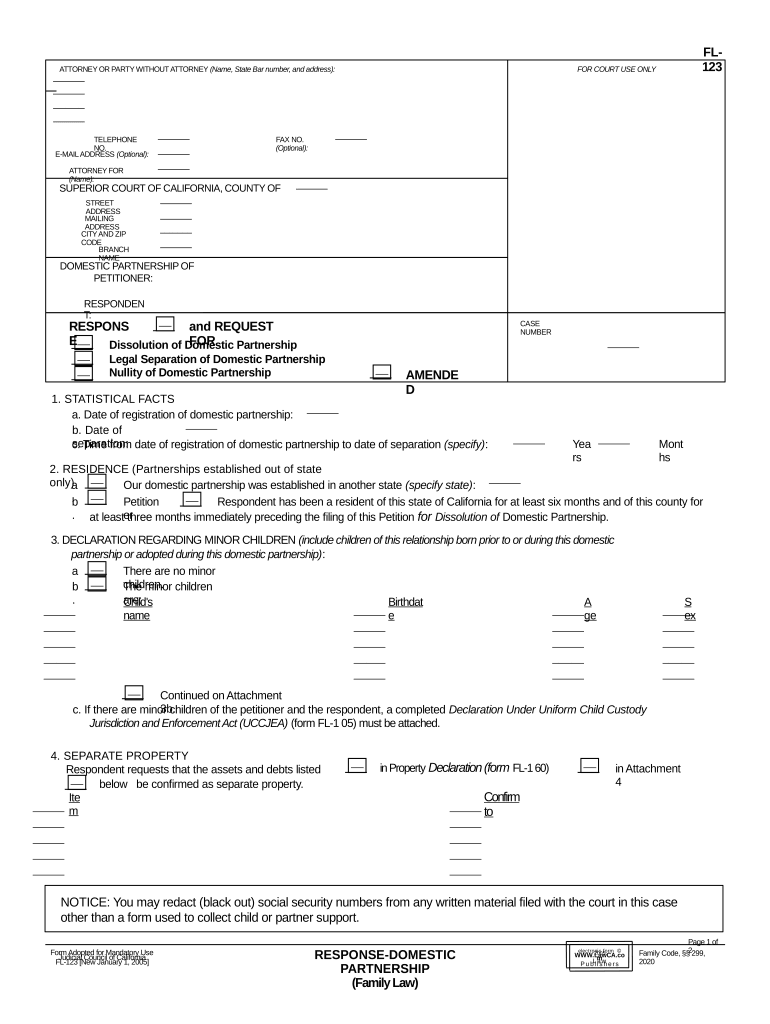
For domestic partnerships that involve children, substantial assets, or disagreements regarding property division or support, a more formal court proceeding is required. This process is analogous to divorce proceedings and will involve filing specific legal documents with the court, potentially engaging in negotiation, mediation, or litigation to resolve issues such as child custody, child support, spousal support, and the division of community property. Legal counsel is highly recommended for these more complex dissolutions.
Key Considerations and Legal Advice
While California law provides a clear framework for domestic partnerships, there are nuances that couples should be aware of. Seeking legal counsel can provide invaluable guidance, especially when dealing with complex financial situations or anticipating potential future needs.
State vs. Federal Recognition
It is crucial to remember that California‘s recognition of domestic partnerships is primarily at the state level. At the federal level, same-sex marriage is recognized following the Supreme Court’s decision in Obergefell v. Hodges. However, for heterosexual couples, domestic partnership remains a distinct legal status separate from marriage, with varying implications for federal benefits and recognition.
Choosing Between Marriage and Domestic Partnership
The decision between marriage and domestic partnership is a personal one. Domestic partnership can offer flexibility for couples who may not wish to marry for various reasons but still desire legal recognition and protection. However, marriage generally offers a broader and more universally recognized set of rights and benefits, both at the state and federal levels. Consulting with an attorney can help you weigh the advantages and disadvantages of each option based on your specific circumstances.
Updating Beneficiary Designations
After registering as domestic partners, it is highly advisable to update beneficiary designations on life insurance policies, retirement accounts, and wills. This ensures that your partner is recognized as your intended beneficiary and will receive these assets as per your wishes in the event of your death.
In conclusion, establishing a domestic partnership in California is a significant step for couples seeking formal recognition and legal protections. By understanding the eligibility requirements, the registration process, and the associated benefits, you can confidently navigate this legal avenue and secure the well-being of your partnership. For situations involving complex assets, children, or uncertainties, consulting with a qualified legal professional specializing in family law in California is always recommended.
LifeOutOfTheBox is a participant in the Amazon Services LLC Associates Program, an affiliate advertising program designed to provide a means for sites to earn advertising fees by advertising and linking to Amazon.com. Amazon, the Amazon logo, AmazonSupply, and the AmazonSupply logo are trademarks of Amazon.com, Inc. or its affiliates. As an Amazon Associate we earn affiliate commissions from qualifying purchases.