
Navigating the process of obtaining a driving permit in a new state can often feel like a complex journey, filled with forms, tests, and specific requirements. For those looking to get behind the wheel in the Sunshine State, understanding the exact steps for “How To Get Driving Permit In Florida” is crucial. Florida boasts vibrant cities, stunning coastlines, and a vast landscape best explored by car, making a driving permit an essential document for residents and long-term visitors alike. This comprehensive guide will demystify the process, providing a professional, insightful, and engaging roadmap to securing your learner’s permit and eventually, a full driver’s license in Florida.
Understanding Florida’s Driving Permit System
Before embarking on the application process, it’s vital to grasp the foundational structure of Florida’s driving permit system. The state operates under a Graduated Driver Licensing (GDL) program, designed to provide new drivers with supervised experience and progressively introduce them to more complex driving situations. This structured approach aims to enhance safety for young drivers and other road users.
Who Needs a Driving Permit in Florida?
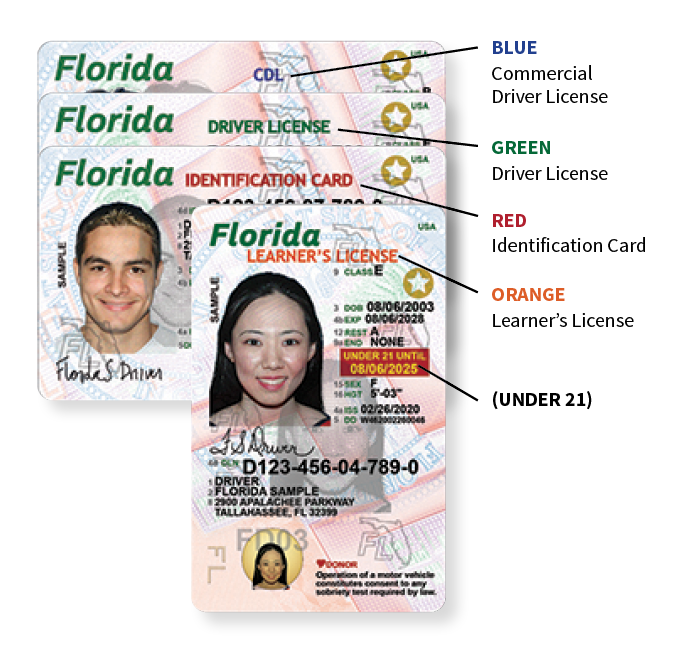
Primarily, the learner’s permit (also known as a Restricted Driver’s License or Class E Learner’s License) is for individuals who are learning to drive and have not yet obtained a full driver’s license. This applies predominantly to teenagers and new adult drivers who are establishing residency in Florida and lack prior driving credentials recognized by the state. If you’re new to Florida and hold a valid driver’s license from another U.S. state or territory, you can typically convert it directly to a Florida license without needing a learner’s permit. However, if you’re an international resident, your situation might require obtaining a permit first, depending on your visa status and the validity of your foreign license.
Key Differences: Learner’s Permit vs. Full License
The most significant distinction lies in the restrictions placed on a learner’s permit. A learner’s permit holder is always required to have a licensed driver, who is at least 21 years old and occupies the front passenger seat, supervising them. This supervisor must hold a valid Class E or higher driver’s license. Furthermore, permit holders are typically restricted from driving during certain late-night hours without direct supervision, and there are often limitations on the types of vehicles they can operate. A full Class E driver’s license, conversely, grants the holder the freedom to drive independently, without supervision, and typically without time restrictions (though specific endorsements might be needed for certain vehicle types).
The Florida Graduated Driver Licensing (GDL) Program
Florida’s GDL program is a three-stage system designed to allow new drivers, particularly those under 18, to gain experience safely.
- Learner’s Permit (Stage 1): This is the entry point, requiring supervised driving, specific age requirements, and knowledge tests.
- Intermediate License (Stage 2): For drivers aged 16 and 17 who have held their learner’s permit for at least one year without major traffic convictions. This stage comes with fewer restrictions than the learner’s permit but still includes some nighttime driving curfews and limits on unsupervised passengers.
- Full Driver’s License (Stage 3): Achieved at age 18, or when a 16- or 17-year-old completes the intermediate license stage successfully without convictions, offering full driving privileges.
Understanding which stage you are entering is fundamental to navigating the requirements set forth by the Florida Department of Highway Safety and Motor Vehicles (DHSMV).
Eligibility Requirements for a Florida Learner’s Permit
Before you can even consider submitting an application, you must meet a specific set of eligibility criteria established by the Florida DHSMV. Adhering to these requirements will ensure a smooth application process and prevent unnecessary delays.
Age Restrictions and Parental Consent
To apply for a learner’s permit in Florida, you must be at least 15 years old. If you are under 18, a crucial step involves obtaining parental consent. Your parent or legal guardian must sign a Parental Consent Form (Form HSMV 71142) and have it notarized or sign it in the presence of a DHSMV examiner. This form grants permission for you to apply for the permit and acknowledges their financial responsibility for your driving activities. Without this essential consent, minors will not be able to proceed with their application.
Residency and Identification Proof
Establishing your identity and residency is paramount. You will need to provide documentation to prove who you are and that you are a resident of Florida.
Typically, this includes:
- Primary Identification: An original or certified birth certificate (U.S. issued), a valid U.S. passport, or a Certificate of Naturalization.
- Proof of Social Security Number (SSN): Your Social Security card, a W-2 form, or a pay stub showing your full SSN.
- Proof of Residential Address: Two different documents showing your name and Florida residential address. Examples include utility bills, a deed, rental agreement, or a bank statement. If you are a minor, a parent’s proof of residency along with their consent form can sometimes suffice.
It’s always best to check the official Florida DHSMV website for the most current and comprehensive list of acceptable documents, as these can occasionally change.
Social Security Number Requirement
As mentioned, providing proof of your Social Security Number (SSN) is a mandatory component of the application process. This typically involves presenting your original Social Security card. If you do not have an SSN, or if you are not eligible for one but are legally present in the U.S., you may be required to provide a letter from the Social Security Administration stating your ineligibility. This ensures that the DHSMV has a complete record and can verify your identity through federal systems.
Mandatory Traffic Law and Substance Abuse Education (TLSAE) Course
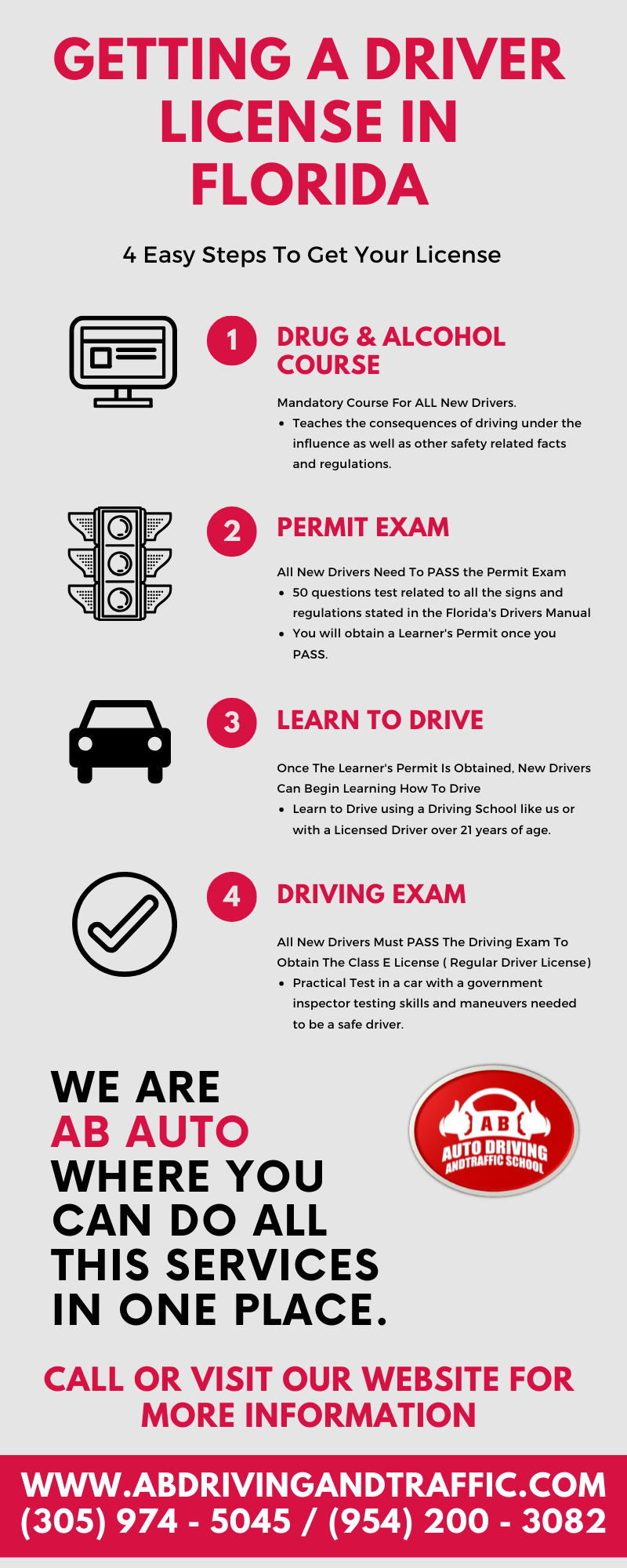
Before you can take the knowledge exam for your learner’s permit, all first-time drivers in Florida are required to complete a Traffic Law and Substance Abuse Education (TLSAE) course. This four-hour course covers vital information about Florida traffic laws, the dangers of driving under the influence of alcohol and drugs, and safe driving practices. The TLSAE course can be taken online or in person through various approved providers. Upon successful completion, the course provider will electronically report your completion to the DHSMV system, making you eligible to proceed with the permit test.
The Application Process: Step-by-Step Guide
Once you’ve confirmed your eligibility and completed the necessary prerequisite course, the actual application process at a DHSMV office or authorized tax collector’s office is the next major hurdle. Being prepared and knowing what to expect will streamline your visit.
Gathering Your Documentation
Before heading to the DHSMV office, meticulously gather all required documents. This typically includes:
- Primary Identification: e.g., certified birth certificate, U.S. passport.
- Proof of Social Security Number: e.g., Social Security card.
- Two Proofs of Residential Address: e.g., utility bills, bank statements.
- Parental Consent Form (HSMV 71142) if under 18: signed by a parent/guardian.
- TLSAE Course Completion: This is usually reported electronically, but having a printout of your certificate of completion as a backup is advisable.
- Non-U.S. Citizens: May require additional documents like an Alien Registration Card (Green Card), Employment Authorization Card, or a valid passport with a U.S. visa and I-94 form.
Ensure all documents are originals or certified copies, as photocopies are generally not accepted.
Completing the Application Form
At the DHSMV office, you will be given an application form to fill out. This form will request personal information, including your full name, date of birth, address, and other relevant details. It’s important to complete this form accurately and legibly. If you have questions, the staff at the office can assist you.
Passing the Vision and Hearing Tests
As part of the application, you will undergo basic vision and hearing screenings. The vision test typically involves reading letters or numbers on an eye chart from a specific distance. If you wear corrective lenses (glasses or contacts), you should wear them during the test. For the hearing test, it’s generally a simple check to ensure you can hear tones at different frequencies. Failing either of these tests may require a visit to an optometrist or audiologist for a more comprehensive evaluation and possibly a medical report to be submitted to the DHSMV.
Acing the Knowledge Exam (Road Rules and Road Signs)
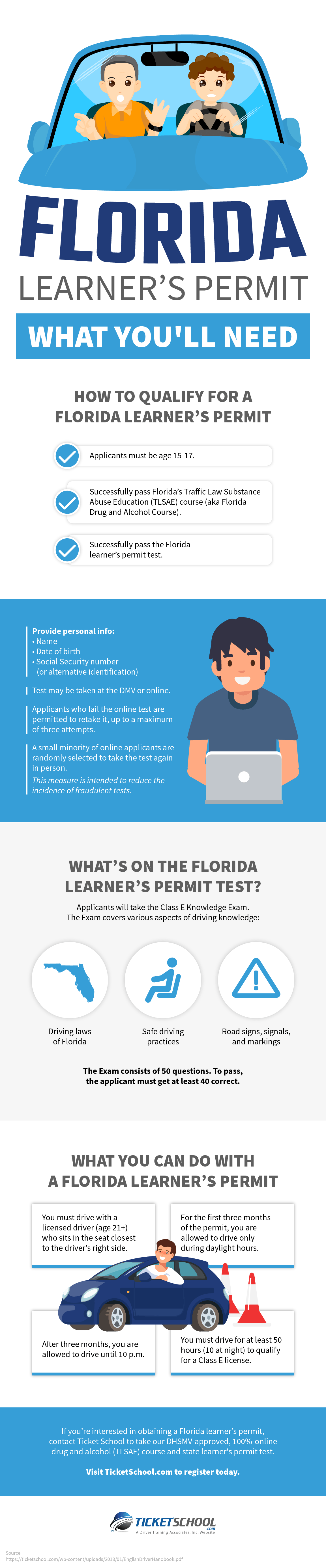
This is one of the most critical steps. The knowledge exam consists of 50 multiple-choice questions covering Florida traffic laws (road rules) and road signs. You must answer at least 40 questions correctly (80%) to pass. The best way to prepare is to thoroughly study the official Florida Driver Handbook, available on the DHSMV website. Many online practice tests are also available to help you familiarize yourself with the format and content. For applicants under 18, the knowledge exam can sometimes be taken online through approved third-party providers, but a parent or guardian must verify the identity of the applicant.
Paying the Fees
There are fees associated with obtaining a Florida learner’s permit. These fees are subject to change, so it’s wise to check the current schedule on the DHSMV website before your visit. Payments can typically be made by cash, credit/debit card, or check. Once all requirements are met and fees are paid, your learner’s permit will be issued, usually on the same day.
Rules and Restrictions for Learner’s Permit Holders
The issuance of a learner’s permit comes with a distinct set of rules and restrictions designed to ensure the safety and supervised learning of new drivers. Adhering to these regulations is not just a matter of compliance; it’s crucial for developing responsible driving habits.
Supervised Driving Requirements
The most significant restriction for a Florida learner’s permit holder is the mandatory supervision. You must always be accompanied by a licensed driver who is at least 21 years old and occupies the front passenger seat. This supervising driver must hold a valid Class E or higher driver’s license. The primary purpose of this requirement is to provide real-time guidance and intervention, allowing the permit holder to gain practical experience under safe conditions. It’s an opportunity to learn from an experienced driver and apply the theoretical knowledge gained from the TLSAE course and the driver handbook.
Curfew and Passenger Restrictions
While holding a learner’s permit, there are specific time restrictions for driving. Initially, a learner’s permit holder is only allowed to drive during daylight hours for the first three months. After these first three months, driving is permitted between 6 AM and 10 PM. Driving outside of these hours is strictly prohibited, even with a supervisor, unless it’s for specific, documented reasons such as employment or emergencies. Furthermore, while the permit itself doesn’t explicitly restrict the number of passengers (beyond requiring a supervisor in the front seat), it is highly advisable to minimize distractions by limiting additional passengers, especially during the initial learning phases. This allows the permit holder to focus entirely on the road and developing their skills.
Duration of the Learner’s Permit
A Florida learner’s permit is valid for a period of one year from its issuance date. For individuals under 18, they must hold their learner’s permit for at least 12 months (or until their 18th birthday, whichever comes first) without any traffic convictions before they are eligible to apply for an intermediate or full driver’s license. This minimum holding period ensures that new drivers accumulate substantial supervised driving experience across various conditions before being granted more driving autonomy. This is a critical component of the GDL program, reinforcing the importance of practical, hands-on learning over an extended period.
Transitioning to a Full Florida Driver’s License
The learner’s permit is just the first step. The ultimate goal for most new drivers is to transition to a full Florida driver’s license, which grants unrestricted driving privileges. This final stage involves demonstrating proficiency in practical driving skills.
Behind-the-Wheel Driving Experience
Before you can apply for a full license, you must accumulate a significant amount of supervised behind-the-wheel driving experience. For those under 18, the DHSMV requires a minimum of 50 hours of supervised driving practice, with at least 10 of those hours completed at night. This experience must be certified by a parent or guardian on an Affirmation of Driving Experience of a Minor form (Form HSMV 71144). This extensive practice ensures that new drivers are comfortable and competent in various driving scenarios, including different lighting conditions and traffic situations. Without this documented experience, you will not be able to proceed to the driving skills test.
Scheduling and Passing the Driving Skills Test
Once you have held your learner’s permit for the required duration and accumulated the necessary supervised driving hours, you can schedule your driving skills test. This test, also known as the road test, assesses your ability to safely operate a vehicle in real-world conditions. You will typically use your own vehicle, which must be properly registered, insured, and in safe working condition. The examiner will evaluate your control of the vehicle, adherence to traffic laws (such as stopping at stop signs, turning signals, lane changes), parking skills (e.g., three-point turn, parallel parking), and overall safe driving judgment. Common test locations include Orlando, Miami, Tampa, and Jacksonville, but specific offices can be found in most counties. Failing the driving test means you will need to reschedule and retake it, often after a waiting period, so thorough practice is highly recommended.
Final Steps to Obtain Your Provisional License
Upon successfully passing your driving skills test, you will return to the DHSMV service counter. If you are under 18, you will be issued an intermediate license with specific restrictions (like nighttime driving curfews and passenger limits) that lessen as you gain more experience. If you are 18 or older, or have completed the intermediate stage successfully, you will receive your full Class E Florida driver’s license. You may be required to pay an additional fee for the new license. After this final step, you’ll be officially licensed to drive independently throughout the state of Florida, opening up a world of exploration from the vibrant streets of Tallahassee to the scenic routes of the Florida Keys. Remember to always carry your license with you when driving and to abide by all traffic laws to maintain your driving privileges.
LifeOutOfTheBox is a participant in the Amazon Services LLC Associates Program, an affiliate advertising program designed to provide a means for sites to earn advertising fees by advertising and linking to Amazon.com. Amazon, the Amazon logo, AmazonSupply, and the AmazonSupply logo are trademarks of Amazon.com, Inc. or its affiliates. As an Amazon Associate we earn affiliate commissions from qualifying purchases.