
Obtaining a GED (General Educational Development) credential in Texas is a significant achievement that can open doors to higher education, career advancement, and personal growth. This testament to a high school level of academic knowledge is recognized by employers and educational institutions nationwide. For residents of the Lone Star State, the path to earning a GED is well-defined, offering flexibility and support for individuals seeking to further their education. This comprehensive guide will navigate you through the essential steps, requirements, and resources available to help you successfully acquire your GED in Texas.
The journey begins with understanding the eligibility criteria and the testing process. Texas adheres to specific regulations for GED candidates, ensuring that the credential maintains its value and integrity.

Understanding the GED Requirements in Texas
Before embarking on your GED preparation, it’s crucial to familiarize yourself with the fundamental requirements set forth by the State of Texas. These criteria are designed to ensure that candidates are prepared for the rigor of the GED exam and are eligible to receive the official credential.
Eligibility Criteria
To be eligible to take the GED test in Texas, you must meet the following conditions:
- Age Requirement: You must be at least 16 years old. However, individuals aged 16 and 17 require specific documentation and parental/guardian consent to be able to take the exam. Candidates under 18 will need to provide proof of withdrawal from high school or a waiver from their last school attended. For individuals 18 and older, the process is more straightforward, provided they meet the other criteria.
- Residency: You must be a resident of Texas. While specific proof of residency might not always be required upfront for registration, it’s generally expected that you reside in the state when you intend to test. If you are not a resident, you may need to obtain a GED in your home state or country.
- Not Enrolled in High School: You must not be currently enrolled in a high school program or have already graduated from high school. The GED is an alternative to a traditional high school diploma, and therefore, it is not intended for individuals who have already completed or are currently pursuing a high school education.
- Understanding of English or Spanish: The GED test is offered in both English and Spanish. You must be able to understand the test questions in the language you choose to take it in.
The GED Test Battery
The GED test itself is comprised of four subject areas, assessing core academic skills essential for success in college and careers. These subjects are:
- Reasoning Through Language Arts (RLA): This section tests your ability to read and comprehend informational and fictional texts, as well as your writing skills, including essay composition.
- Mathematical Reasoning: This part evaluates your understanding of mathematical concepts, problem-solving, and data interpretation. You will be expected to use a calculator for some parts of this test.
- Science: This subject covers life science, physical science, and Earth and space science. It assesses your ability to understand scientific principles, interpret data, and apply scientific reasoning.
- Social Studies: This section examines your knowledge of history, civics, economics, and geography. It focuses on critical thinking and the ability to analyze historical and societal information.
Each subject test is computer-based and includes a variety of question formats, such as multiple-choice, fill-in-the-blank, and extended response (essay) for the RLA section.
Passing Scores
To earn your GED credential, you must achieve a minimum score of 145 on each of the four subject tests. This translates to a total score of at least 580. Additionally, there’s a “High Desert” score of 170 on the RLA essay, indicating college-ready writing skills. Achieving these scores signifies that you have demonstrated a level of knowledge comparable to that of a high school graduate.
Preparing for Your GED Test in Texas
Effective preparation is key to successfully passing the GED exam. Texas offers a variety of resources to help you acquire the knowledge and skills necessary for each subject area. Whether you prefer structured classroom learning, self-paced online study, or one-on-one tutoring, there are options to suit your learning style and schedule.
GED Preparation Programs
Many institutions across Texas offer GED preparation classes, often referred to as adult education or literacy programs. These programs are typically free or low-cost and are designed to help individuals review the subject matter and develop test-taking strategies.
- Community Colleges: Most community colleges in Texas have robust adult education departments that offer GED preparation courses. These courses provide a structured curriculum covering all four GED subjects and are taught by experienced instructors. Some colleges also offer integrated English as a Second Language (ESL) programs for non-native English speakers. For example, Austin Community College and Dallas College are well-regarded institutions with comprehensive GED programs.
- Public Libraries: Many public libraries across Texas offer GED preparation resources, including study materials, practice tests, and sometimes even free classes or tutoring services. They can be a valuable and accessible resource for individuals seeking to study independently.
- Non-Profit Organizations: Various non-profit organizations and community centers in Texas are dedicated to providing educational opportunities for adults. These organizations often partner with local governments or educational institutions to offer free GED classes and support services.
When choosing a preparation program, consider factors such as class schedules, location, teaching methods, and the availability of practice tests.
Online Study Options
For individuals who require more flexibility or prefer to study at their own pace, online GED preparation is an excellent option. Numerous online platforms offer comprehensive courses, practice tests, and study guides designed to align with the GED testing content.
- Official GED Prep Resources: The official GED website provides access to GED Ready™ practice tests. These are official practice tests that simulate the actual GED exam and can help you gauge your readiness and identify areas where you need more study.
- Third-Party Online Platforms: Several reputable online platforms offer GED preparation courses. These can range from comprehensive video lessons and interactive exercises to full-length practice exams. When selecting an online provider, ensure they are reputable and their content is up-to-date with the current GED test.
Study Strategies
Regardless of the preparation method you choose, incorporating effective study strategies will significantly enhance your chances of success:
- Create a Study Schedule: Develop a realistic study schedule that allocates sufficient time for each subject. Consistency is crucial, so aim for regular study sessions rather than cramming.
- Utilize Practice Tests: Regularly taking practice tests is vital. They help you become familiar with the test format, identify your strengths and weaknesses, and improve your time management skills. Analyze your practice test results to pinpoint areas requiring further attention.
- Focus on Weak Areas: Dedicate more time and effort to the subjects or topics where you consistently score lower on practice tests.
- Review Key Concepts: Ensure you have a solid understanding of the fundamental concepts in each subject area. Refer to your study materials, textbooks, and online resources to reinforce your learning.
- Develop Test-Taking Strategies: Learn effective strategies for answering different question types, managing your time during the exam, and approaching essay writing.
Taking the GED Test in Texas
Once you feel adequately prepared, the next step is to schedule and take your GED test. Texas has specific procedures for registration and testing to ensure a smooth and secure experience.
Scheduling Your Test
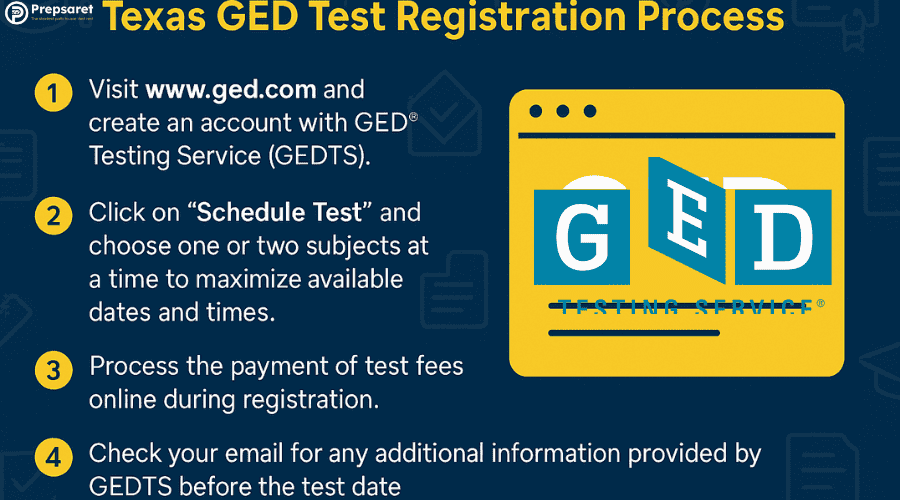
The GED test in Texas is administered through authorized Pearson VUE test centers. You will need to create an account on the official GED website (GED.com) to register and schedule your exams.
- Create an Account: Visit GED.com and create a secure online account. This account will be your central hub for managing your GED journey, including registration, scheduling, viewing scores, and accessing resources.
- Find a Test Center: Through your GED account, you can locate the nearest authorized Pearson VUE GED test center in Texas. It’s advisable to choose a center that is conveniently located and offers testing sessions that fit your schedule. Popular locations may include cities like Houston, San Antonio, and El Paso.
- Schedule Your Tests: You can choose to take all four subject tests in one session or schedule them individually. It is often recommended to take them one or two at a time to avoid burnout and allow for focused preparation for each subject. You can pay for each test individually or purchase a voucher for all four tests.
- Understand Fees: There are fees associated with taking the GED test. These fees vary and are subject to change, so it’s important to check the most current pricing on GED.com. Financial assistance may be available through some adult education programs.
What to Expect on Test Day
On the day of your GED test, arriving at the test center prepared and knowing what to expect can help alleviate anxiety.
- Identification: You will need to bring valid, government-issued photo identification to the test center. This is a mandatory requirement for admission to the exam. Acceptable forms of ID typically include a driver’s license, state ID card, passport, or military ID.
- Arrival Time: Arrive at the test center at least 30 minutes before your scheduled appointment. This allows ample time for check-in and any necessary procedures.
- Security Measures: Test centers have strict security protocols in place. Personal belongings such as cell phones, bags, and outerwear are usually not permitted in the testing room and must be stored in provided lockers.
- Test Environment: The GED test is administered on computers in a quiet, supervised testing room. You will be provided with scratch paper and pencils, which must remain at the test center after your exam.
- Breaks: You are allowed scheduled breaks between subject tests. The duration of these breaks will be explained to you by the test administrator.
- Test Duration: Each subject test has a specific time limit. The total time for all four tests, including breaks, can be several hours.

After You Test
Once you have completed all four subject tests, the waiting period for your official scores begins.
- Score Reporting: GED scores are typically available online through your GED.com account within a few business days to a couple of weeks, depending on the subject. Some subject tests, like the RLA, may have essays that require human grading, which can extend the score reporting time.
- Receiving Your GED Credential: Upon successfully passing all four GED subject tests, you will be eligible to receive your official GED credential from the Texas Education Agency. The credential is then typically mailed to your address or made available for download from your GED.com account.
- Retesting: If you do not pass one or more of the subject tests, you will have the opportunity to retake them. There may be specific policies regarding retake fees and waiting periods, so it’s important to consult GED.com for the latest information. Many preparation programs offer resources and support for individuals who need to retake portions of the exam.
Earning your GED in Texas is a commendable goal that signifies your commitment to lifelong learning and personal development. By understanding the requirements, utilizing available preparation resources, and following the testing procedures, you can confidently navigate the path to obtaining this valuable credential. Whether you are dreaming of attending college, seeking better employment opportunities, or simply aiming for personal accomplishment, your GED in Texas is within reach.
LifeOutOfTheBox is a participant in the Amazon Services LLC Associates Program, an affiliate advertising program designed to provide a means for sites to earn advertising fees by advertising and linking to Amazon.com. Amazon, the Amazon logo, AmazonSupply, and the AmazonSupply logo are trademarks of Amazon.com, Inc. or its affiliates. As an Amazon Associate we earn affiliate commissions from qualifying purchases.