
Embarking on a career in the insurance industry in the Lone Star State can be a rewarding venture, offering the opportunity to help individuals and businesses protect their assets and navigate financial complexities. Texas, with its robust economy and diverse population, presents a fertile ground for insurance professionals. To officially practice as an insurance agent or broker in Texas, however, you’ll need to obtain a valid Texas insurance license. This process, while straightforward, requires careful attention to detail and adherence to the regulations set forth by the Texas Department of Insurance (TDI). This comprehensive guide will walk you through each step, from understanding the licensing requirements to the ongoing responsibilities of maintaining your license, ensuring you’re well-prepared to launch your insurance career.

Understanding Insurance Licensing in Texas
Before diving into the specifics of obtaining your license, it’s crucial to understand the fundamental requirements and the different types of licenses available. The Texas Department of Insurance (TDI) oversees all insurance licensing within the state, ensuring that individuals meet the necessary qualifications to act ethically and competently in the industry.
Types of Insurance Licenses in Texas
Texas offers various insurance licenses, each permitting you to sell specific types of insurance products. Identifying the type of license that aligns with your career aspirations is the first strategic step. The most common licenses include:
- Property and Casualty (P&C) License: This license allows you to sell insurance policies covering property damage and liability, such as auto insurance, homeowners insurance, and commercial property insurance. It’s a broad license suitable for agents who want to offer a wide range of protection for personal and business assets.
- Life and Health (L&H) License: This license enables you to sell life insurance policies (term, whole, universal life) and health insurance policies, including medical, disability, and long-term care insurance. This is ideal for agents focused on helping individuals secure their financial future and health.
- Personal Lines License: This license is specifically for selling insurance policies for individuals’ personal property and liability, such as auto and homeowners insurance. It’s often a stepping stone for those new to the industry.
- Adjuster Licenses: These licenses are for individuals who investigate insurance claims, assess damages, and negotiate settlements on behalf of insurance companies or policyholders. There are various levels of adjuster licenses, from staff adjusters to independent adjusters.
The specific requirements for each license type can vary slightly, but the core process of application, examination, and background checks remains consistent. It’s essential to research the exact scope of each license to ensure it matches your intended career path.
Eligibility Requirements
To be eligible for an insurance license in Texas, you must meet the following general criteria:
- Age: You must be at least 18 years old.
- Residency: You must be a resident of Texas or a resident of another state that has a reciprocal licensing agreement with Texas.
- Criminal Background: You must not have any felony convictions or misdemeanors that would prevent you from obtaining a license, as determined by the TDI. The TDI reviews each application on a case-by-case basis, considering the nature of the offense and its relevance to the insurance profession.
- Pre-Licensing Education: You are required to complete a specific number of hours of approved pre-licensing education for the type of license you are seeking.
The Licensing Process: Step-by-Step
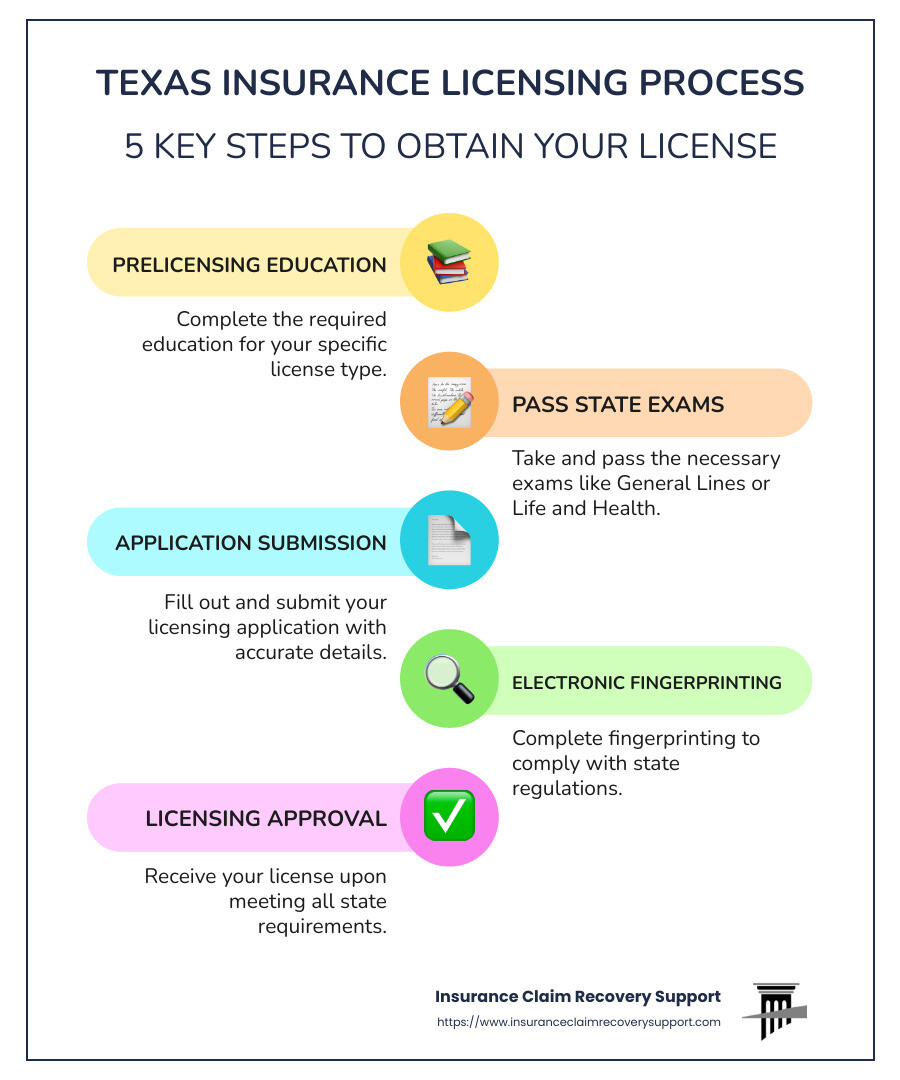
Navigating the process of obtaining your Texas insurance license involves several distinct stages. By following these steps diligently, you can ensure a smooth and successful application.
Step 1: Complete Pre-Licensing Education
The Texas Department of Insurance mandates that all prospective insurance agents complete a state-approved pre-licensing education course. The number of hours required varies by license type:
- Property & Casualty: Typically 40 hours.
- Life & Health: Typically 40 hours.
- Personal Lines: Typically 40 hours.
- Combination of P&C and L&H: You may need to complete a combined course or separate courses totaling a higher number of hours.
These courses are designed to provide you with the foundational knowledge necessary to pass the state licensing exam and to understand insurance principles, Texas insurance laws, and ethical conduct. You can find a list of approved education providers on the TDI website. Many providers offer flexible learning options, including online courses, self-study materials, and in-person classes, allowing you to choose a format that best suits your learning style and schedule. It’s advisable to choose a reputable provider with a high pass rate for their students.
Step 2: Pass the State Licensing Exam
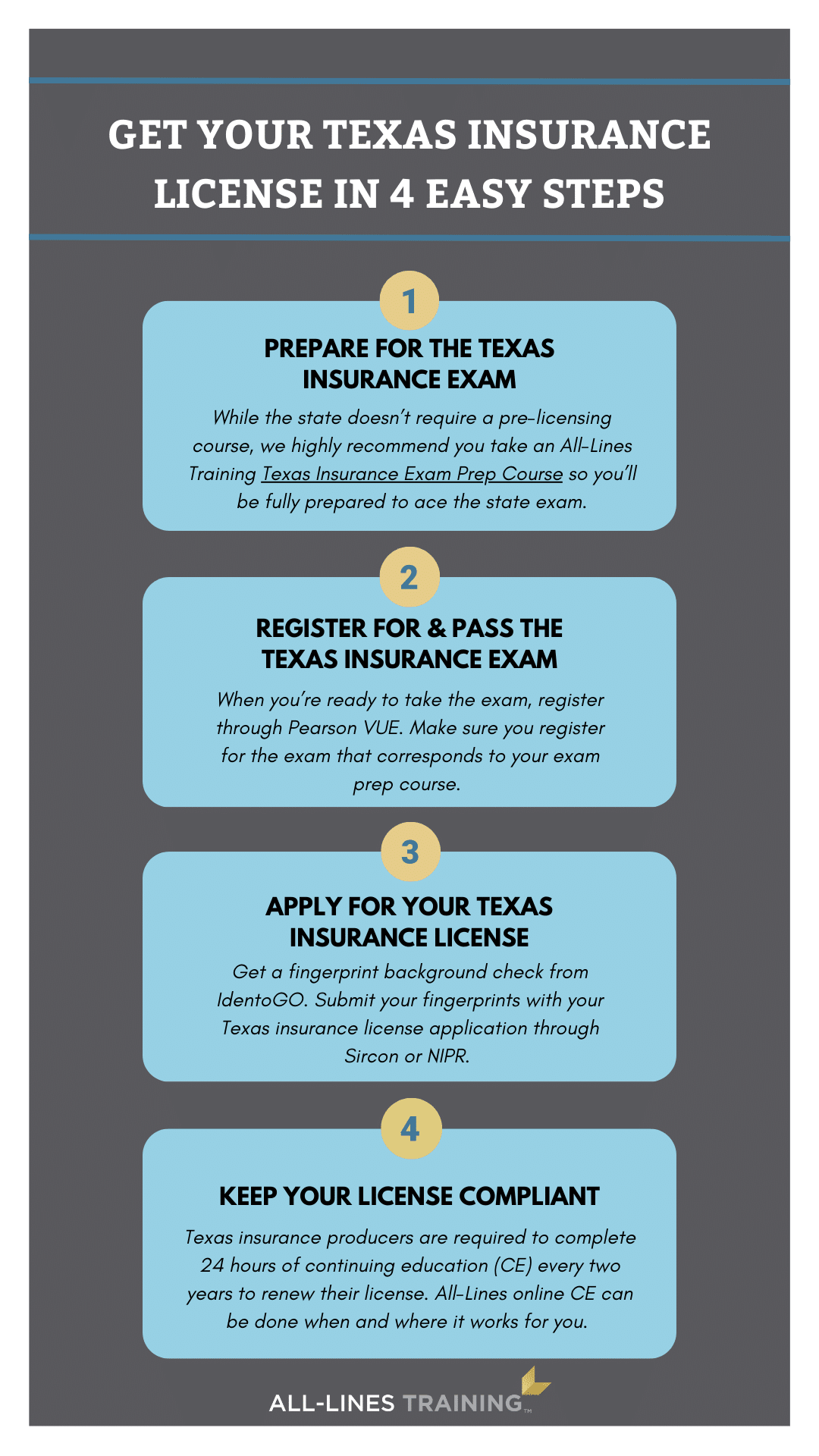
Upon completion of your pre-licensing education, the next crucial step is to pass the state licensing examination administered by Pearson VUE. You will need to register for the exam through the Pearson VUE website and pay the required examination fee.
The exams are designed to test your comprehension of the material covered in your pre-licensing course, including insurance terms, policy provisions, Texas insurance regulations, and specific product knowledge. The exam format typically consists of multiple-choice questions. It is highly recommended to dedicate sufficient time to studying the course material thoroughly and to take practice exams to gauge your readiness. Many pre-licensing education providers offer practice exams as part of their course package, which are invaluable tools for identifying areas where you may need further review.
Step 3: Submit Your Application and Fingerprinting
Once you have successfully passed your licensing exam, you can proceed with submitting your official license application to the Texas Department of Insurance. You can typically do this online through the TDI website or via mail.
As part of the application process, you will be required to submit your fingerprints for a criminal background check. This is a mandatory step for all applicants and is conducted by IdentoGO (now part of MorphoTrust). You will receive instructions on how to schedule your fingerprinting appointment. The background check is an important part of the TDI‘s commitment to ensuring that only trustworthy individuals are licensed to handle insurance matters. Any discrepancies or concerns arising from the background check may require further explanation or documentation from the applicant.
Step 4: Await License Approval
After submitting your application, fingerprints, and fees, the Texas Department of Insurance will review your information. This review process includes verifying your exam results, assessing your background check, and confirming that you meet all eligibility requirements. The processing time can vary, but typically it takes a few weeks. You can often track the status of your application online through the TDI portal. If your application is approved, your insurance license will be issued electronically, and you can download and print it.
Maintaining Your Texas Insurance License
Obtaining your Texas insurance license is a significant achievement, but it’s also the beginning of your journey as a licensed professional. To ensure your license remains active and you can continue to practice legally, you must adhere to ongoing requirements.
Continuing Education (CE) Requirements
Texas requires licensed insurance agents to complete a certain number of Continuing Education (CE) hours every two years to maintain their licenses. The specific number of hours and the types of courses required depend on the type of license you hold.
- General Requirement: Most agents are required to complete 24 hours of CE every two years, with at least two hours dedicated to ethics.
- Specific Courses: Some licenses may have specific course requirements. For example, agents licensed for flood insurance must complete a flood insurance training course every two years. Similarly, agents selling annuities may need to complete specific annuity training.
It is your responsibility to track your CE credits and ensure that your completed courses are from TDI-approved providers. Keeping accurate records of your completed CE courses is essential in case of an audit. Failure to meet the CE requirements can result in the suspension or revocation of your license. Many insurance carriers offer CE courses as a benefit to their agents, and numerous third-party providers offer a wide array of approved courses online and in person.
License Renewal
Your Texas insurance license is valid for two years. You will receive notification from the TDI when your license is due for renewal. You can typically renew your license online through the TDI website. The renewal process involves submitting a renewal application, paying the renewal fee, and attesting that you have met all CE requirements. It’s advisable to start the renewal process well in advance of your expiration date to avoid any last-minute issues. Renewing your license promptly ensures uninterrupted practice and continued service to your clients.
Ethical Conduct and Compliance
As a licensed insurance professional in Texas, you are held to a high standard of ethical conduct and must comply with all Texas insurance laws and regulations. This includes, but is not limited to, providing accurate information to clients, acting in their best interest, avoiding deceptive practices, and maintaining proper record-keeping. The Texas Department of Insurance enforces these regulations, and violations can lead to disciplinary actions, including fines, license suspension, or even revocation. Staying informed about any changes in insurance laws or regulations is crucial for maintaining compliance and upholding your professional integrity. Many professional organizations and industry publications provide updates on regulatory changes, helping you stay current.
By understanding and diligently following these steps and ongoing requirements, you can successfully obtain and maintain your Texas insurance license, paving the way for a fulfilling and prosperous career in the insurance sector. This journey, much like planning an unforgettable trip to a new destination or finding the perfect accommodation for a long-term stay, requires preparation, diligence, and a commitment to excellence.
LifeOutOfTheBox is a participant in the Amazon Services LLC Associates Program, an affiliate advertising program designed to provide a means for sites to earn advertising fees by advertising and linking to Amazon.com. Amazon, the Amazon logo, AmazonSupply, and the AmazonSupply logo are trademarks of Amazon.com, Inc. or its affiliates. As an Amazon Associate we earn affiliate commissions from qualifying purchases.